
When maintaining your vehicle, choosing the correct brake fluid for your car is one of the most critical safety decisions you can make. The braking system relies on hydraulic pressure to transfer the force of your foot on the pedal directly to the brake pads. If this fluid fails, your ability to stop the vehicle is severely compromised. Many drivers find themselves standing in an auto supply shop or browsing online marketplaces, wondering whether to purchase DOT3 or DOT4 brake fluid. The correct choice depends entirely on your vehicle manufacturer’s (OEM) specifications, which are clearly detailed in your owner’s manual or stamped directly onto the brake fluid reservoir cap.
While it is tempting to assume that a higher number like DOT4 represents an automatic upgrade, this is not always true. Using the incorrect fluid type without verifying compatibility can lead to degraded braking performance, damaged internal rubber seals, or even unexpected brake failure under heavy loads. Safety and system integrity must always take priority over generic performance promises. To make an informed decision, you must understand how these fluids differ chemically, how they handle heat and moisture, and how the tropical climate of the Philippines affects their performance.
What Are DOT3 and DOT4 Brake Fluids?
To understand the differences between these two fluids, it is helpful to look at the regulatory standards that govern them. The acronym “DOT” stands for the Department of Transportation, which establishes the Federal Motor Vehicle Safety Standard (FMVSS) No. 116. This standard defines the physical and chemical requirements that hydraulic brake fluids must meet to be legally sold and used in passenger vehicles. These standards ensure that regardless of the brand you buy, any fluid labeled as DOT3 or DOT4 meets a baseline level of performance and safety.
Products mentioned in this guide
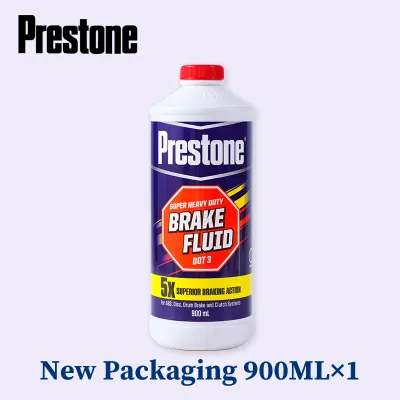
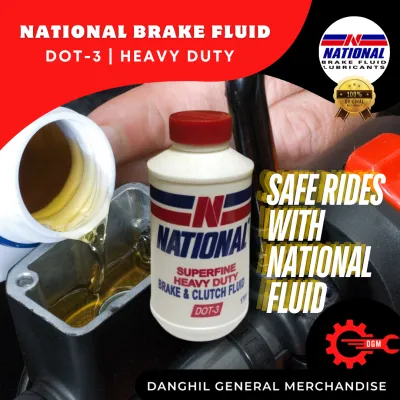
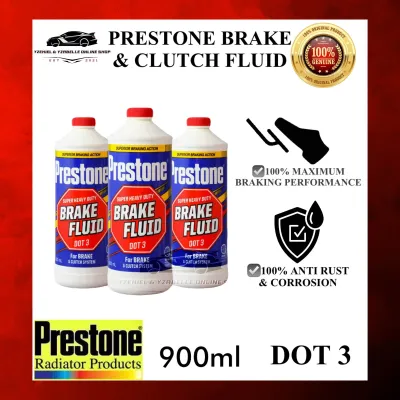
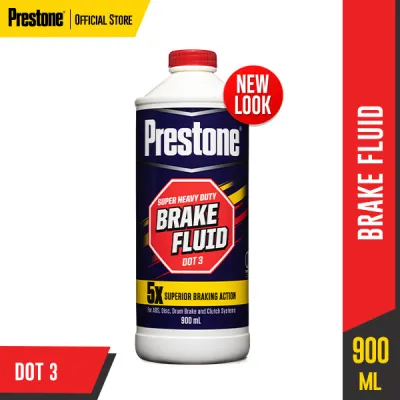
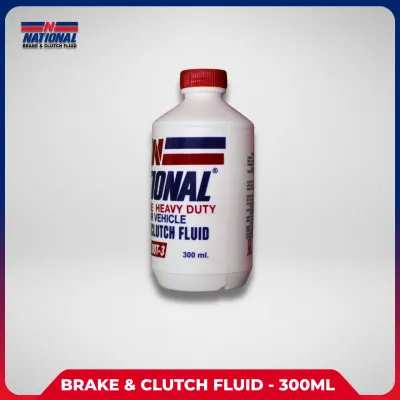
Prices are valid at publication and may change. Please refer to the product page for the latest price.
Both DOT3 and DOT4 are non-petroleum, glycol-ether-based fluids. This chemical foundation allows them to remain stable across a wide range of operating temperatures while maintaining the viscosity required to flow smoothly through the complex channels of your braking system. However, they are not identical. The primary difference lies in their chemical additive packages. DOT4 brake fluid is formulated with additional borate esters. These compounds are specifically designed to enhance the fluid’s thermal stability and alter how it interacts with moisture over its service life.
These chemical variations directly impact how the fluids perform under pressure. When you press your brake pedal, the hydraulic fluid transfers this mechanical force through the brake lines to the calipers. The friction generated by the brake pads clamping onto the spinning rotors creates intense heat. The brake fluid must be able to withstand this heat without boiling. If the fluid reaches its boiling point, it vaporizes, creating gas bubbles within the lines. Because gas is compressible, pressing the brake pedal will merely compress the bubbles instead of moving the brake pads, resulting in a soft or “spongy” pedal and a dangerous loss of stopping power.
DOT3 vs DOT4: Boiling Points, Compatibility, and Performance
Comparing DOT3 and DOT4 requires looking closely at three critical dimensions: boiling points, moisture management, and material compatibility. Understanding these technical metrics helps you verify if a specific brake fluid for car safety meets your vehicle’s requirements, rather than simply purchasing the most expensive option on the shelf.

Dry vs. Wet Boiling Points
Brake fluid performance is primarily measured by two distinct temperature thresholds: the dry boiling point and the wet boiling point. The dry boiling point refers to the temperature at which fresh, uncontaminated fluid from a newly opened, hermetically sealed container will begin to boil. The wet boiling point, on the other hand, represents the boiling temperature of the fluid after it has absorbed 3.7% water by volume. This level of contamination typically represents about two years of real-world vehicle operation in average driving conditions.
According to the FMVSS 116 standards, DOT3 brake fluid must have a minimum dry boiling point of 205°C (401°F) and a minimum wet boiling point of 140°C (284°F). In contrast, DOT4 fluid must meet a higher safety threshold, requiring a minimum dry boiling point of 230°C (446°F) and a minimum wet boiling point of 155°C (311°F). It is important to note that these are merely the legal minimum standards; many premium manufacturers formulate their fluids to exceed these numbers significantly. Always check the exact specifications printed on the product label of your chosen brake fluid for car maintenance to verify its actual performance margins.
Moisture Absorption and Fluid Lifespan
Both DOT3 and DOT4 are hygroscopic, meaning they naturally attract and absorb moisture from the surrounding atmosphere. This moisture absorption is inevitable and occurs continuously, as water molecules slowly penetrate the microscopic pores of the flexible rubber brake hoses, system seals, and the reservoir cap vent. As water mixes with the brake fluid, it lowers the fluid’s overall boiling point, bringing it closer to the boiling point of water.
The borate esters in DOT4 fluid play a crucial role in managing this moisture. These chemical additives react with the absorbed water to neutralize its negative effects more efficiently than the standard glycol-ether formulation of DOT3. This allows DOT4 to maintain a higher wet boiling point even as moisture enters the system. However, this superior moisture management does not mean DOT4 lasts forever. Because of its chemical composition, DOT4 can sometimes absorb moisture at a slightly faster rate than DOT3 once exposed to the air. To ensure safety, do not rely on generic lifespan estimations; instead, consult your vehicle manufacturer’s specific maintenance schedule to determine the exact time-based or mileage-based flush intervals.
Vehicle Compatibility and Seal Safety
A common misconception among car owners is that because DOT4 has higher boiling points, it is always a safe and superior upgrade for any vehicle designed for DOT3. While DOT4 is engineered to be backward-compatible with DOT3 systems in many modern vehicles, this is not a universal rule. The chemical additives that give DOT4 its high-temperature resilience can interact differently with the internal components of certain braking systems.
Older vehicles, classic cars, or specific anti-lock braking system (ABS) and Electronic Stability Program (ESP) modules may feature rubber seals, gaskets, and internal valves formulated specifically for the chemical profile and viscosity of DOT3. Using DOT4 in these systems without manufacturer approval can cause the rubber seals to swell, shrink, or degrade prematurely. This degradation leads to internal fluid leaks, pressure drops, and potential system failure. Always review your vehicle’s approved fluid list or consult the manufacturer’s documentation before changing fluid types.
How Hot and Humid Climates Affect Brake Fluid Choice
Operating a vehicle in a tropical country like the Philippines introduces unique environmental challenges that directly impact braking performance. The combination of high ambient temperatures, heavy stop-and-go traffic in congested urban centers like Metro Manila, and steep mountain descents—such as those encountered when driving to Baguio or Tagaytay—places an immense thermal load on your car’s braking system. When descending a steep mountain pass, constant braking converts kinetic energy into extreme heat at the wheels, which quickly transfers to the brake calipers and the fluid inside them.
In these high-heat scenarios, the superior wet boiling point of DOT4 brake fluid provides a significant safety margin. If your vehicle’s manufacturer permits the use of DOT4, upgrading to it can help prevent the onset of brake fade—a dangerous condition where the brake pedal goes soft and the vehicle fails to slow down effectively due to vapor bubbles in the lines.
However, the thermal load is only half of the equation; the high relative humidity characteristic of the Philippine climate is equally critical. Because glycol-based brake fluids are highly hygroscopic, they absorb moisture from the humid air much faster than they would in dry, arid regions. This accelerated moisture absorption means that the brake fluid’s boiling point can drop to dangerous levels much sooner than the vehicle’s standard maintenance schedule might suggest.
For drivers in tropical regions, regular maintenance is paramount. Regardless of whether your vehicle requires DOT3 or DOT4, you should be exceptionally diligent about inspecting the condition of your fluid. Regularly checking the fluid’s moisture content with a dedicated electronic tester and adhering strictly to localized maintenance recommendations will help ensure that your brakes remain responsive and reliable, even under the most demanding tropical driving conditions.
How to Decide: Choose DOT3, DOT4, or Verify First
To help you navigate the selection process safely and effectively, use this structured decision framework based on your vehicle’s specific requirements, age, and operating conditions.
- Choose DOT3 if:
- Your vehicle's owner's manual or the brake fluid reservoir cap explicitly specifies DOT3 as the required fluid.
- You drive an older or classic vehicle model where the original rubber seals, hoses, and internal ABS components are designed specifically for the chemical formulation and viscosity profile of DOT3.
- The manufacturer does not list DOT4 as an approved alternative or upgrade.
- Choose DOT4 if:
- Your vehicle manufacturer explicitly specifies DOT4 in the owner's manual or on the reservoir cap.
- Your vehicle specifies DOT3, but the manufacturer's documentation explicitly approves DOT4 as a backward-compatible upgrade, and you frequently drive in high-temperature environments, carry heavy loads, or navigate steep, hilly terrain.
- Verify First if:
- Your owner's manual is missing, or the text on the reservoir cap has worn off, faded, or become unreadable.
- Your vehicle is equipped with advanced electronic braking assist systems, such as Electronic Stability Control (ESC) or traction control, which often require specialized low-viscosity fluids (such as DOT4 Class 6) to ensure the rapid pressure modulation needed for these safety systems to function correctly.
- You are unsure of the vehicle's service history or whether any aftermarket modifications have been made to the braking system.
- Neither may fit if:
- Your vehicle's specifications call for DOT5 brake fluid. DOT5 is a silicone-based fluid that has an entirely different chemical structure. It does not absorb moisture and is completely incompatible with glycol-ether-based fluids like DOT3, DOT4, and DOT5.1. Mixing silicone-based DOT5 with glycol-based fluids will cause immediate chemical clumping, seal destruction, and catastrophic brake failure.
Flushing, Mixing, and Safety Boundaries for Brake Systems
When performing brake maintenance, understanding the safety boundaries of the system is vital for protecting your vehicle and your life. Under normal operating conditions, you should avoid mixing DOT3 and DOT4 brake fluids. While they are chemically compatible because of their shared glycol base, mixing them alters the chemical balance and lowers the overall boiling point of the system to a level that is difficult to predict. Absolutely never mix glycol-based fluids with silicone-based DOT5.
If you are transitioning your vehicle from DOT3 to DOT4 (where approved by the manufacturer), or if your fluid has reached the end of its service life, a complete system flush is required. A proper flush does not mean simply suctioning the old fluid out of the reservoir and topping it off with fresh fluid. This lazy practice leaves the most contaminated, moisture-laden, and heat-degraded fluid deep inside the brake lines and calipers, where temperatures are highest. A complete flush involves forcing fresh fluid through the entire system until clean, clear fluid emerges from all four caliper bleed screws, effectively purging all old fluid, moisture, and micro-particles.
Because the braking system is a critical, life-saving safety component, you must recognize your technical limitations before attempting any service. Performing a brake flush requires specialized tools, such as a pressure bleeder or a vacuum pump, along with precise knowledge of the vehicle’s specific bleeding sequence and ABS module requirements. If you do not have the proper equipment, original-vehicle service instructions, or the experience to bleed the system without introducing air bubbles, do not attempt this as a DIY project. Introducing air into the brake lines can cause a sudden and complete loss of pedal pressure. Always prioritize safety by checking the applied product’s label and your vehicle manufacturer’s instructions; if you encounter any conflicting information or feel unsure, stop immediately and seek the services of a qualified professional mechanic.
Frequently Asked Questions (FAQ)
Proper brake fluid management is crucial for vehicle safety. Here are answers to some of the most common questions regarding DOT3 and DOT4 fluids.
Can I mix DOT3 and DOT4 brake fluid in an emergency?
While DOT3 and DOT4 are chemically similar glycol-ether-based fluids, mixing them alters the system’s chemical balance and reduces the overall wet and dry boiling points. You should only mix them in a dire roadside emergency to safely reach a service station. Once you arrive, you must have the entire system professionally flushed and refilled with the correct fluid.
Does using DOT4 instead of DOT3 improve my car's braking power?
No, upgrading to DOT4 brake fluid will not increase your vehicle’s mechanical braking power, shorten your stopping distances, or improve pedal feel under normal driving conditions. Brake fluid simply transfers hydraulic force. The advantage of DOT4 is its higher boiling point, which prevents brake fade under extreme, repeated braking, but it does not alter the physical grip of your tires or brake pads.
How do I know if my brake fluid needs to be replaced?
You can inspect the fluid’s color inside the reservoir; fresh fluid is clear or slightly amber, while degraded, moisture-contaminated fluid turns dark brown or black. For an accurate assessment, use a dedicated electronic brake fluid moisture tester to measure water content. However, visual and electronic checks are secondary; your primary rule should always be to follow the specific time or mileage intervals mandated in your vehicle’s maintenance schedule.
Community discussion
Share your experience or ask a question. Comments are reviewed before publication.