
The hydraulic braking system of your vehicle is its most critical safety feature, relying entirely on a clean, high-quality fluid to function. When you press the brake pedal, this fluid transfers hydraulic force directly through the brake lines to the calipers, squeezing the brake pads against the rotors to slow your vehicle down. Because this process generates immense friction and heat, the fluid you use must be capable of operating under extreme thermal stress without boiling.
Choosing between DOT3 and DOT4 brake fluid is not a matter of personal preference or a simple performance upgrade. The correct fluid for your vehicle is determined strictly by your car manufacturer’s engineering specifications. Using the wrong fluid type can compromise your braking efficiency, damage internal components, or even lead to catastrophic brake failure under demanding driving conditions.
To find your vehicle’s specific requirements, you must consult your owner’s manual or inspect the brake fluid reservoir cap located under the hood. While both DOT3 and DOT4 are glycol-based fluids that share similar chemical foundations, they possess distinct boiling points, moisture absorption behaviors, and viscosity profiles. Understanding these technical differences is essential for maintaining your vehicle’s safety, especially when driving in challenging environments.
Products mentioned in this guide
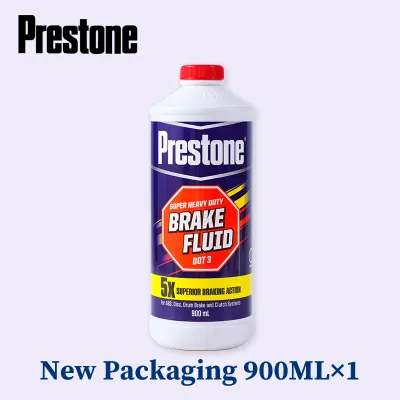
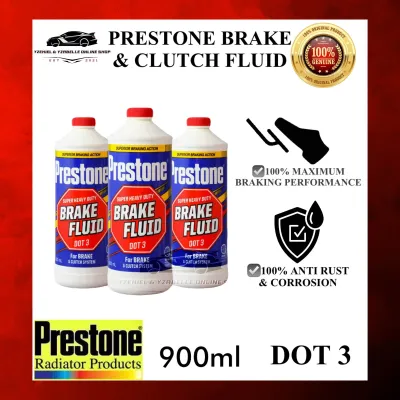
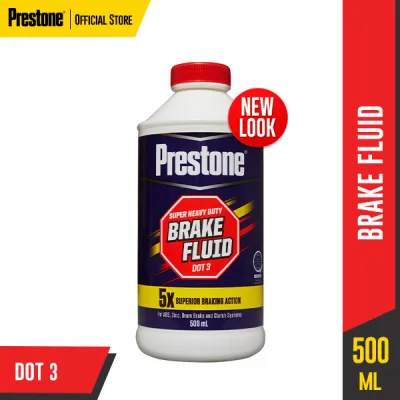
Prices are valid at publication and may change. Please refer to the product page for the latest price.
In tropical climates like the Philippines, where high relative humidity and intense seasonal rains are common, brake fluid maintenance is even more critical. The moisture in the air naturally finds its way into your braking system over time, gradually lowering the fluid’s boiling point. Consequently, selecting the correct fluid and adhering to a strict maintenance schedule is paramount to ensuring your vehicle remains safe on the road.
Key Differences: Boiling Points, Moisture, and Performance
Brake fluids are classified by the Department of Transportation (DOT) according to strict performance standards established under the Federal Motor Vehicle Safety Standard (FMVSS) 116. These standards ensure that any fluid sold on the market meets minimum safety thresholds regarding thermal limits, chemical stability, and compatibility with braking system components. The primary distinctions between DOT3 and DOT4 fluids lie in how they manage heat and how they interact with moisture over their service life.
Because brake systems operate in a wide range of temperatures, from cold starts to the extreme heat generated during prolonged braking, the fluid must remain stable. If the fluid reaches its boiling point, it turns into gas bubbles within the brake lines. Unlike liquid, gas is highly compressible, which means pressing your brake pedal will simply compress the gas bubbles rather than transferring force to the brake pads—a dangerous condition known as vapor lock.
Boiling Points and Heat Resistance
Every brake fluid has two critical temperature ratings that define its thermal limits: the dry boiling point and the wet boiling point. The dry boiling point refers to the temperature at which fresh fluid, straight from a newly opened and sealed container, will begin to boil. The wet boiling point represents the temperature at which the fluid will boil after it has absorbed a specific volume of water (typically 3.7% water by volume) from the surrounding atmosphere.
DOT4 brake fluids generally offer higher dry and wet boiling points compared to standard DOT3 fluids. This higher thermal limit makes DOT4 more resistant to vapor lock under heavy braking conditions, such as driving down steep mountain roads or navigating heavy stop-and-go traffic in hot weather. The added heat resistance provides a larger safety margin before the fluid begins to degrade or boil.
When purchasing brake fluid, it is important to check the specific product label for exact temperature ratings rather than relying solely on generic classifications. For example, standard Prestone brake fluid DOT3 or equivalent DOT4 formulations will clearly print their wet and dry boiling points on the back of the container. These ratings often exceed the minimum FMVSS 116 standards, allowing you to choose a product that matches your driving demands.
Moisture Absorption Rates
Both DOT3 and DOT4 brake fluids are glycol-based, which makes them hygroscopic. This means they naturally attract and absorb moisture from the air. Water enters the braking system through microscopic pores in the rubber brake hoses, master cylinder reservoir seals, and during routine maintenance when the reservoir cap is removed.
Interestingly, DOT4 fluids typically absorb moisture at a faster rate than DOT3 fluids. While a fresh bottle of DOT4 starts with a significantly higher dry boiling point, its wet boiling point can drop more rapidly over time as it pulls water from the atmosphere. In highly humid environments, this rapid moisture absorption can shorten the effective lifespan of the fluid.
Because of this rapid absorption rate, vehicles using DOT4 fluid may require more frequent system flushes to maintain their high-temperature performance. If you drive a vehicle in a humid coastal region or an area prone to heavy monsoon seasons, keeping a close eye on your fluid’s condition is vital. Slower moisture absorption in DOT3 fluids can sometimes translate to a more stable, though lower, boiling threshold over a longer period in standard commuter vehicles.
Viscosity and ABS Compatibility
Viscosity refers to the thickness or resistance to flow of the fluid. In modern vehicles equipped with advanced safety systems, fluid viscosity plays a critical role in how quickly and effectively these systems can respond. Anti-lock Braking Systems (ABS) and Electronic Stability Control (ESC) rely on rapid micro-adjustments, pulsing the brakes multiple times per second through tiny valves.
Standard DOT3 and DOT4 fluids have similar viscosity profiles under normal operating temperatures. However, standard DOT4 can sometimes be slightly thicker at extremely low temperatures compared to specialized low-viscosity formulations. If a vehicle’s safety systems require ultra-fast valve response times, the manufacturer may specify a low-viscosity variant, such as DOT4 LV or ISO Class 6.
Always verify if your vehicle’s manufacturer explicitly requires a low-viscosity fluid. Using a standard, higher-viscosity fluid in a system engineered for low-viscosity fluid can delay the activation of ABS or ESC during emergency maneuvers. This delay, even if measured in milliseconds, can affect your stopping distance and overall vehicle control on slippery roads.
Compatibility Rules: Can You Mix or Switch DOT3 and DOT4?
Understanding the compatibility rules between DOT3 and DOT4 is essential for avoiding costly repairs and ensuring passenger safety. Because both types are glycol-based, they are chemically compatible to a certain degree, but mixing them or switching between them carries specific rules and consequences that must be strictly followed.

- Upgrading from DOT3 to DOT4: If your vehicle's manufacturer specifies DOT3, upgrading to DOT4 is generally safe and acceptable. The DOT4 fluid will mix with any residual DOT3 in the system and provide a higher boiling point margin. However, keep in mind that upgrading the fluid does not change the physical limits of your braking hardware, such as the size of your rotors or the heat dissipation capacity of your calipers.
- Downgrading from DOT4 to DOT3: You must never use DOT3 fluid in a vehicle that explicitly requires DOT4. Doing so lowers the system's boiling point below the safe threshold established by the manufacturer. Under demanding driving conditions, this can lead to premature fluid boiling, a spongy brake pedal, and severe brake fade, creating a highly dangerous driving situation.
- Mixing Brands: Mixing different brands of brake fluid that share the same DOT rating is generally safe, provided they both meet FMVSS 116 standards. For instance, mixing Prestone brake fluid DOT3 with another reputable DOT3 brand will not cause chemical damage. However, performing a complete system flush is always the best practice to ensure consistent performance and prevent any unpredictable chemical interactions.
- Safety Boundary: If your brake fluid reservoir cap or owner's manual specifies DOT4, do not substitute it with DOT3 under any circumstances. Additionally, always consult a qualified professional for complete system flushes and bleeding. Improper bleeding can trap air bubbles in the brake lines, which compromises hydraulic pressure and severely reduces braking efficiency.
Decision Framework: Which Brake Fluid Fits Your Vehicle?
Selecting the right brake fluid involves evaluating your vehicle’s specifications, your typical driving conditions, and your willingness to adhere to regular maintenance schedules. This framework helps you make an informed decision based on your specific driving scenario.
Choose DOT3 if:
- Your vehicle's owner's manual or reservoir cap explicitly specifies DOT3.
- You use your vehicle primarily for daily commuting, urban driving, and standard highway travel.
- You prefer a highly stable fluid with a slower moisture absorption rate, which is well-suited for standard commuter cars in humid climates.
- You want a widely available and cost-effective solution; products like Prestone brake fluid DOT3 are specifically formulated to meet standard OEM requirements for older or everyday passenger vehicles.
Choose DOT4 if:
- Your vehicle manufacturer explicitly specifies DOT4 or a low-viscosity DOT4 variant.
- You frequently drive in demanding conditions, such as towing heavy loads, carrying heavy cargo, or navigating steep mountain descents.
- You drive a modern vehicle equipped with advanced ABS, traction control, and stability control systems that benefit from higher thermal thresholds.
- You are willing to commit to more frequent brake fluid inspections and shorter flush intervals to counter the fluid's faster moisture absorption rate.
Verify First if:
- You are unsure of the fluid type currently in your braking system, or if the fluid appears dark, cloudy, or contaminated.
- Your vehicle is a modern European or Japanese model that may require a specialized low-viscosity fluid (such as DOT4 LV) rather than standard DOT4.
- You notice any changes in brake pedal feel, such as sponginess or increased travel distance before the brakes engage.
Regardless of the fluid type you choose, regular maintenance is the key to preserving your braking system’s integrity. Because moisture absorption is inevitable, most manufacturers recommend performing a complete brake fluid flush every 1 to 2 years, or every 20,000 to 40,000 kilometers, depending on your driving habits and local climate. Regularly checking the fluid level and color through the translucent reservoir under the hood is a simple yet highly effective way to monitor your vehicle’s safety.
Frequently Asked Questions (FAQ)
Is DOT5 the same as DOT4?
No, DOT5 is completely different and entirely incompatible with DOT4. DOT5 is a silicone-based fluid, whereas DOT3, DOT4, and DOT5.1 are glycol-based. Mixing silicone-based DOT5 with glycol-based fluids will cause a chemical reaction, resulting in a thick, sludge-like mixture that can destroy seals, clog valves, and cause complete braking system failure. If your system is designed for glycol-based fluids, never use DOT5. Note that DOT5.1 is glycol-based and can be compatible, but DOT5 must never be mixed with any other DOT rating.
How do I know if my brake fluid needs to be changed?
Visual inspection is the easiest way to start: fresh brake fluid is clear with a light amber tint, while contaminated or old fluid turns dark brown or black due to heat degradation and moisture absorption. However, visual checks alone cannot measure exact water content. The most reliable method is to use electronic brake fluid testers or moisture test strips, which measure the precise percentage of water in the fluid. If the water content exceeds 3%, or if you notice a spongy brake pedal, the fluid must be flushed immediately.
Can I use any standard DOT3 brand in my car?
Yes, you can use any reputable brand of DOT3 brake fluid, provided it meets FMVSS 116 standards. High-quality products, such as Prestone brake fluid DOT3, are engineered to meet or exceed these federal safety specifications, making them suitable for any vehicle requiring DOT3. Always ensure you purchase your fluid from an authorized retailer to avoid counterfeit products. Additionally, only use fluid from a freshly opened, sealed container, as brake fluid left in an open bottle will quickly absorb moisture from the air and lose its effectiveness.
Community discussion
Share your experience or ask a question. Comments are reviewed before publication.