
Choosing the right brake fluid is one of the most critical maintenance decisions you will make for your vehicle’s safety. The correct choice depends entirely on the vehicle manufacturer’s specification, which you can find in your owner’s manual or stamped directly onto the brake master cylinder reservoir cap. While it is tempting to view different Department of Transportation (DOT) ratings as sequential upgrades, selecting the wrong fluid can compromise your stopping power and jeopardize your safety on the road.
Brake fluid serves as the vital hydraulic medium that transfers the force of your foot on the pedal directly to the brake calipers and pads, clamping the rotors to bring your vehicle to a halt. Because this process generates immense friction and heat, the fluid must remain stable under extreme thermal stress. If the fluid boils, it creates gas bubbles within the hydraulic lines. Unlike liquid, gas is highly compressible, meaning that pressing the brake pedal will merely compress the gas bubbles rather than engaging the brakes, resulting in a terrifying loss of stopping power known as vapor lock.
To prevent this catastrophic scenario, the automotive industry relies on standardized DOT ratings to classify fluids based on their boiling points, chemical composition, and performance characteristics. Understanding these classifications is essential for every vehicle owner, particularly when deciding between the two most common types found on the market: DOT3 and DOT4. While DOT4 generally offers superior resistance to high temperatures, it is not a universal solution for every vehicle, and substituting one for the other without careful verification can lead to unexpected mechanical issues.
Products mentioned in this guide
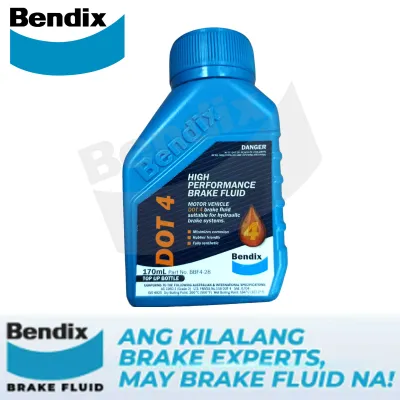
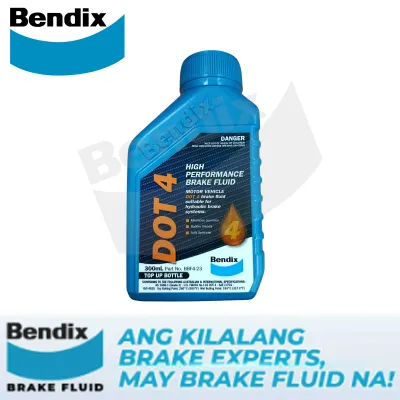
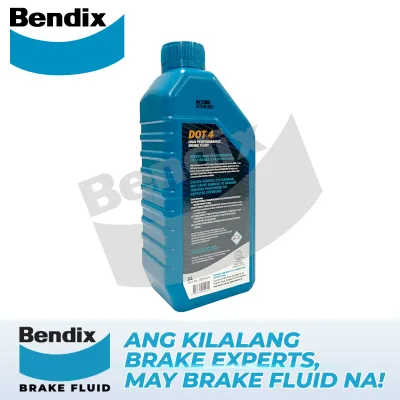
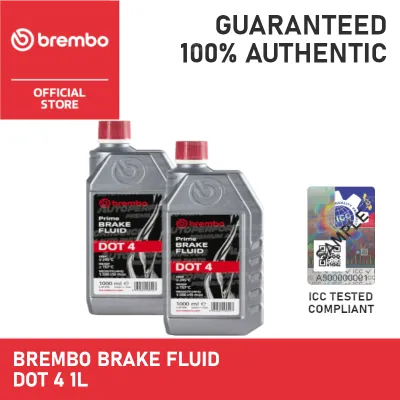
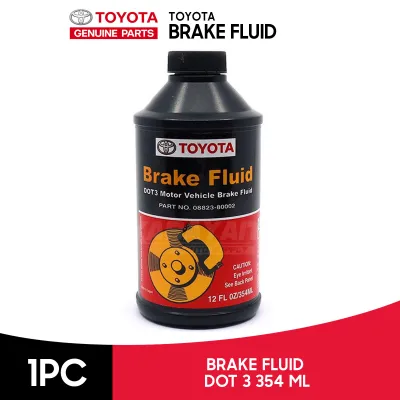
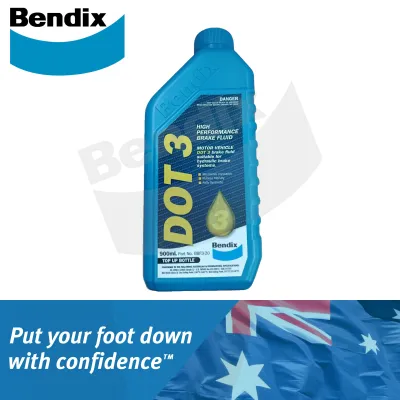
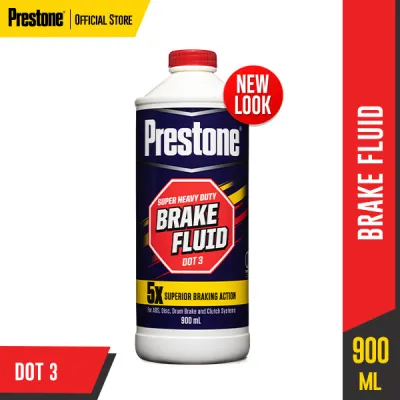
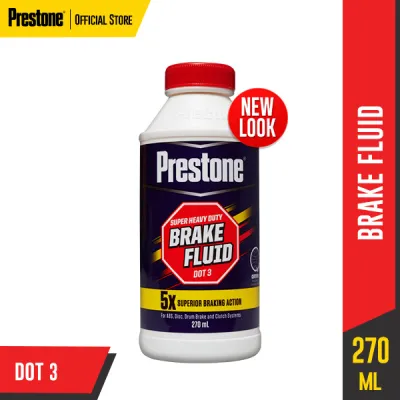
Prices are valid at publication and may change. Please refer to the product page for the latest price.
When selecting a fluid, a straightforward decision framework should guide your choice. Always prioritize the exact specification outlined by your vehicle’s manufacturer. If your owner’s manual is missing, inspect the master cylinder reservoir cap under the hood, where the required rating is typically embossed. Generally, DOT3 is specified for older or standard commuter vehicles with less demanding thermal requirements, while DOT4 is designated for modern vehicles equipped with advanced active safety systems or those subjected to heavy-duty towing and high-performance driving. Guessing the fluid type is never acceptable when dealing with your vehicle’s primary safety system.
Key Differences: How Brake Fluid Ratings Define Performance
To make an informed decision, you must understand the underlying technical specifications that differentiate DOT3 and DOT4. The Department of Transportation rating system establishes strict performance baselines that manufacturers must meet. These standards focus primarily on two critical metrics: dry boiling point and wet boiling point. The dry boiling point refers to the temperature at which fresh, uncontaminated fluid from a sealed container begins to boil. The wet boiling point, which is a far more realistic indicator of real-world performance, measures the boiling threshold after the fluid has absorbed a specific percentage of water from the surrounding environment.
Both DOT3 and DOT4 are glycol-ether-based hydraulic fluids, which means they are naturally hygroscopic. This chemical property causes them to actively absorb moisture from the air over time, even through microscopic pores in the rubber brake hoses and seals. As water enters the system, it lowers the boiling point of the fluid. To combat this inevitable degradation, DOT4 fluids are formulated with borate ester additives. These additives chemically react with the absorbed water, neutralizing its impact more effectively than standard glycol-ether formulations and allowing DOT4 to maintain a significantly higher wet boiling point over its service life compared to DOT3.
Beyond boiling points, viscosity is another crucial differentiator that impacts modern vehicle safety. Viscosity refers to the fluid’s resistance to flow, particularly at low temperatures. Modern vehicles are equipped with sophisticated electronic driver aids, such as Anti-lock Braking Systems (ABS) and Electronic Stability Control (ESC). These systems operate by rapidly modulating hydraulic pressure through incredibly narrow valves, pulsing the brakes dozens of times per second to prevent wheel lockup and maintain steering control during emergency maneuvers.
To ensure these safety systems react instantaneously, manufacturers developed low-viscosity variants of brake fluid, which are frequently specialized sub-types of DOT4. Standard DOT3 fluid is thicker and flows more slowly at cold temperatures, which can delay the response times of ABS and ESC modulators in critical situations. Consequently, if your vehicle’s manufacturer specifies a low-viscosity DOT4 fluid, substituting a standard DOT3 fluid can impair the performance of these electronic safety systems, even if the ambient temperature in your region rarely drops to freezing.
The following table outlines the conceptual differences between these two common fluid types to help you visualize their distinct operational characteristics:
| Performance Dimension | DOT 3 Brake Fluid | DOT 4 Brake Fluid |
|---|---|---|
| Base Chemical Formulation | Standard glycol-ether base | Glycol-ether base with borate ester additives |
| Relative Dry Boiling Point | Standard boiling resistance | Higher boiling resistance |
| Relative Wet Boiling Point | Lower resistance to moisture degradation | Higher resistance to moisture degradation |
| Low-Temperature Viscosity | Higher viscosity (thicker flow) | Lower viscosity (thinner, faster response in ABS/ESC) |
| Typical Vehicle Applications | Older passenger cars and light commuter vehicles | Modern vehicles, heavy-duty trucks, and ABS-equipped cars |
| Moisture Absorption Rate | Steady absorption over time | Steady absorption, but maintains safety margin longer |
Safety Boundaries: The Risks of Downgrading and Mixing Brake Fluid
Because the braking system is a non-negotiable safety component, any modification or deviation from the manufacturer’s specified fluid carries substantial risk. Downgrading your fluid—such as using DOT3 in a system designed for DOT4—is an extremely dangerous practice. If a vehicle engineered for DOT4 is driven under demanding conditions, such as descending steep mountain passes in Benguet or navigating stop-and-go traffic in intense tropical heat, the braking system can easily generate temperatures that exceed the boiling point of DOT3 fluid. This leads to immediate vapor lock, causing the brake pedal to sink uselessly to the floorboard and leaving you without stopping power.

Conversely, the concept of “upgrading” a DOT3 system to DOT4 is often misunderstood. While DOT4 is chemically compatible with DOT3 because both share a glycol-ether base, switching to DOT4 does not automatically guarantee better performance. Older vehicles designed for DOT3 may have rubber seals and hoses formulated specifically for that fluid’s chemical makeup. The aggressive additive packages and borate esters present in DOT4 can occasionally interact differently with older elastomer compounds, potentially accelerating seal wear or causing minor leaks over extended periods. Furthermore, upgrading to DOT4 does not extend your maintenance intervals; in fact, because DOT4 can absorb moisture rapidly, it may require more frequent inspections and changes to maintain its performance advantages.
Mixing different grades of brake fluid is another area where drivers must exercise extreme caution. While mixing DOT3 and DOT4 will not cause an immediate chemical reaction that destroys your rubber seals, it compromises the overall safety margin of your braking system. When you mix the two, the boiling point of the entire hydraulic system is degraded toward the level of the lower-rated fluid. This unpredictable performance makes mixing highly discouraged under normal operating conditions. If you must mix them in an emergency, the system should be treated as containing the lower-spec fluid until a proper service can be performed.
A critical safety boundary that must never be crossed is the introduction of DOT5 brake fluid into a system designed for DOT3 or DOT4. Unlike glycol-based fluids, DOT5 is a silicone-based fluid developed primarily for specialized military or classic show vehicles that sit idle for long periods. Silicone fluid does not mix with glycol fluid, does not absorb water, and behaves entirely differently under pressure. If DOT5 is introduced into a glycol-based system, the fluids will separate, creating pockets of water and silicone that cause immediate seal swelling, rapid corrosion, and complete hydraulic failure. Never attempt to mix or substitute silicone-based fluids with glycol-based fluids.
Before purchasing any fluid or attempting to service your vehicle’s brakes, always verify the exact model year, interface requirements, and safety boundaries outlined in your vehicle’s original documentation. If you are planning a complete fluid change, system bleed, or any component replacement, keep in mind that air bubbles in the hydraulic lines can lead to immediate brake failure. For this reason, we strongly recommend having all major brake services, flushing, and bleeding performed by a qualified professional mechanic with the proper diagnostic and safety equipment.
Maintenance, Lifespan, and Tropical Climate Challenges
Maintaining the health of your brake fluid requires a clear understanding of how environmental factors influence its lifespan. Because glycol-based fluids are highly hygroscopic, they continuously draw moisture out of the atmosphere. In a highly humid, tropical climate like that of the Philippines, this process is significantly accelerated. The air carries a high concentration of water vapor year-round, which slowly permeates the flexible rubber brake lines and enters the hydraulic reservoir whenever the cap is opened or through the reservoir’s tiny vent holes.
This continuous moisture absorption has two major destructive effects. First, it drastically reduces the fluid’s boiling point, bringing it closer to its wet boiling limit and increasing the risk of vapor lock during sudden, heavy braking. Second, water is highly corrosive to metal. As moisture accumulates inside the steel brake lines, aluminum master cylinders, and cast-iron calipers, it initiates internal rust and corrosion. This corrosion creates fine abrasive particles that can score cylinder bores, damage delicate rubber piston seals, and clog the microscopic valves within ABS and ESC control modules, leading to expensive mechanical failures.
While DOT4 fluid offers a higher wet boiling point that provides a safer thermal buffer, its chemical composition does not make it immune to moisture. In fact, many DOT4 formulations absorb moisture at a faster initial rate than DOT3. Therefore, using DOT4 does not allow you to neglect your maintenance schedule. Regardless of which fluid your vehicle requires, adhering to a strict, time-based replacement interval is essential for protecting your hydraulic components from internal decay.
Monitoring the condition of your fluid is a straightforward visual process that every vehicle owner should practice. Fresh, high-quality brake fluid is virtually clear with a very light yellow or amber tint. As the fluid ages, absorbs water, and accumulates microscopic debris from wearing seals and corroding metal lines, it undergoes a distinct color change. It gradually darkens to a medium amber, then to a deep brown, and finally to a murky black. If your fluid resembles dark coffee or soy sauce, it is severely contaminated, saturated with moisture, and must be replaced immediately to restore safety.
To determine the correct replacement interval, always consult your vehicle’s specific preventive maintenance service (PMS) schedule. While generic guidelines often suggest replacing the fluid every two years or 40,000 kilometers, severe driving conditions can shorten this window dramatically. In the Philippines, factors such as navigating deep floodwaters during the monsoon season, enduring prolonged stop-and-go traffic on major thoroughfares like EDSA, and climbing steep, winding routes to high-altitude destinations like Baguio or Tagaytay subject your brakes to extreme thermal cycles. These demanding conditions demand more frequent inspections and proactive fluid replacements to guarantee your vehicle remains safe to operate.
Step-by-Step: How to Verify and Safely Manage Your Brake Fluid
Performing basic inspections and managing your brake fluid level is a vital part of routine car care. However, because the hydraulic braking system is highly sensitive to contamination and air intrusion, you must follow precise steps to avoid introducing hazards. Always refer to your product’s label and your vehicle manufacturer’s step-by-step instructions before opening any reservoir or adding fluid.
Step 1: Locate the Reservoir and Verify the Specification Park your vehicle on a flat, level surface, engage the parking brake, and shut off the engine. Open the hood and locate the brake master cylinder reservoir, which is typically mounted on the driver’s side firewall. Before touching anything, clean the exterior of the reservoir and the cap thoroughly with a clean, dry microfiber cloth. This prevents dirt, road grime, or moisture from falling into the fluid when you open it. Look closely at the top of the reservoir cap; the required fluid rating (such as “Use Only DOT 3” or “Use Only DOT 4”) is almost always clearly embossed on it.
Step 2: Perform a Visual Level Check Brake fluid reservoirs are constructed from translucent plastic, allowing you to check the fluid level without removing the cap. Locate the embossed “MIN” (minimum) and “MAX” (maximum) lines on the side of the reservoir. The fluid level should ideally rest near the MAX line. If the level is resting at or below the MIN line, it indicates one of two scenarios: either your brake pads are significantly worn down, causing the caliper pistons to extend and draw more fluid into the lines, or there is an active hydraulic leak in the system. Never ignore a low fluid level; have the entire system inspected by a professional mechanic immediately.
Step 3: Inspect the Fluid Color and Clarity Shine a flashlight through the side of the translucent reservoir to inspect the color and clarity of the fluid. Avoid opening the reservoir cap just to check the color, as exposing the fluid to the open air allows ambient humidity to enter the system. If the fluid is clear or pale yellow, it is in good condition. If it appears dark brown, cloudy, or contains visible floating particles, it is time to schedule a professional system flush.
Step 4: Top Up Safely (If Absolutely Necessary) If you must top up the fluid to reach a safe service center, use only a fresh, sealed bottle of the exact DOT rating specified on your reservoir cap. Never use a bottle of brake fluid that has been sitting open on a garage shelf for months, as it has already absorbed significant moisture from the air. Carefully unscrew the clean cap, pour the fluid slowly to prevent air bubbles, and fill only to the MAX line. Reinstall the cap immediately and tighten it securely to restore the airtight seal.
Critical Safety and Handling Precautions Brake fluid is a highly hazardous chemical substance that requires careful handling. It is extremely corrosive to automotive paint, clear coats, and many plastics; even a single stray droplet can quickly blister and ruin your vehicle’s finish. If a spill occurs, do not attempt to wipe it off dry, as this can smear the chemical and damage the paint further. Instead, immediately flush the area with copious amounts of clean water and car wash soap to neutralize and rinse the fluid away.
Additionally, brake fluid is highly toxic to humans and pets. Always wear protective nitrile gloves and safety eyewear when handling it, and wash your hands thoroughly afterward. Never pour old or unused fluid down household drains, onto the ground, or into municipal trash bins. Collect any waste fluid in a secure, clearly labeled container and transport it to an authorized hazardous waste disposal or automotive recycling center.
Remember, while topping up your reservoir is a simple task, a complete brake fluid flush and system bleeding is a highly technical procedure. Bleeding the brakes requires specific tools to purge trapped air from the hydraulic lines and ABS modulators. If air is left in the system, it can cause immediate, catastrophic brake failure on the road. For your safety and the safety of others, always entrust complete fluid replacements to a qualified professional mechanic.
Frequently Asked Questions (FAQ)
We have compiled answers to some of the most common questions vehicle owners ask regarding brake fluid selection, emergency situations, and local environmental impacts.
Can I mix DOT3 and DOT4 brake fluid in an emergency?
While DOT3 and DOT4 are both glycol-ether-based fluids and are chemically compatible, mixing them should only be done as a last resort in a genuine emergency. If you find your fluid level dangerously low and only have access to the non-specified grade, adding it to reach a safe location is acceptable because it will not immediately damage your rubber seals or cause physical separation. However, mixing the two lowers the overall boiling point of the system closer to the DOT3 threshold, compromising your vehicle’s braking performance under heavy loads. Once you reach safety, you should have the entire system flushed and refilled with the correct, manufacturer-specified fluid by a professional mechanic.
Is DOT4 always better for high-performance or track driving?
Standard DOT4 fluid offers a higher boiling point than standard DOT3, making it better suited for modern vehicles and spirited daily driving. However, true high-performance driving, track days, or racing generate extreme temperatures that can easily exceed the limits of standard passenger-car DOT4 fluids. For these demanding scenarios, specialized high-performance or racing DOT4 fluids, or even DOT5.1 fluids (which are also glycol-based and compatible), are required. These specialized racing fluids feature exceptionally high dry boiling points but often absorb moisture much faster than standard fluids, requiring them to be flushed and replaced far more frequently, sometimes after every single track event.
Does the humid climate in the Philippines affect brake fluid maintenance?
Yes, the tropical and highly humid climate of the Philippines significantly accelerates the rate of moisture absorption in glycol-based brake fluids. High ambient humidity means that water vapor constantly permeates the flexible rubber brake hoses and enters the reservoir over time. This rapid moisture accumulation lowers the wet boiling point much faster than it would in drier climates, increasing the risk of vapor lock and promoting internal corrosion within your steel brake lines and calipers. Because of this environmental factor, vehicle owners in the Philippines must strictly adhere to time-based fluid replacement intervals (typically every 18 to 24 months) rather than relying solely on mileage, and proactively inspect fluid color for signs of contamination.
Community discussion
Share your experience or ask a question. Comments are reviewed before publication.