
When maintaining your vehicle’s stopping power, choosing the correct brake fluid—often searched by car owners as a single term, brakefluid—is one of the most critical safety decisions you will make. This hydraulic fluid is the literal lifeblood of your vehicle’s braking system, translating the physical pressure of your foot on the pedal into the clamping force that stops several tons of moving metal. Because brake systems operate under extreme heat and pressure, using a fluid with the wrong specifications can lead to a soft pedal, reduced stopping power, or complete brake failure.
To keep your vehicle safe on the road, you must understand how different fluid ratings behave under stress. While DOT3 and DOT4 are both glycol-based fluids widely used in modern passenger vehicles, they possess distinct chemical properties and thermal thresholds. Choosing between them requires a careful look at your vehicle manufacturer’s design requirements, your typical driving environment, and the specific demands of your local climate.
Quick Answer: Should You Use DOT3 or DOT4?
The absolute authority for choosing your vehicle’s brake fluid is the original vehicle manufacturer. You can find this specification clearly printed on the top of your master cylinder reservoir cap under the hood, or detailed within the maintenance section of your owner’s manual. Never deviate from this specification without consulting official manufacturer guidelines, as your entire braking system—including the rubber seals, hoses, and anti-lock braking components—was engineered around the chemical properties of that specific fluid type.
Products mentioned in this guide
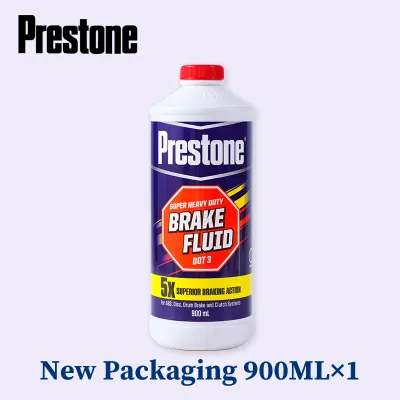
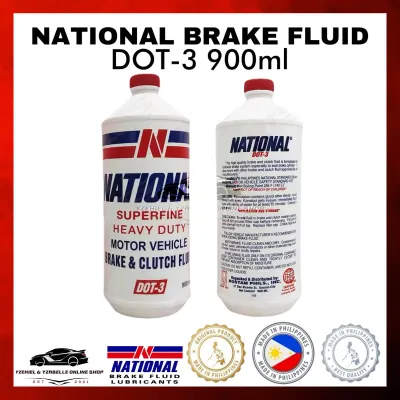
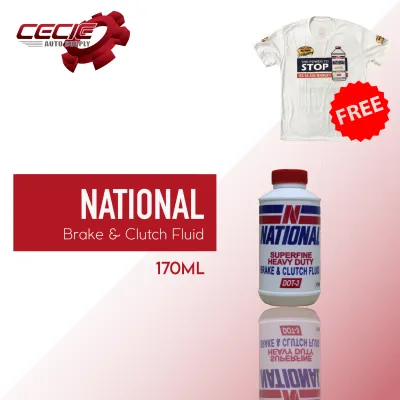
Prices are valid at publication and may change. Please refer to the product page for the latest price.
As a general rule, DOT4 offers higher dry and wet boiling points than DOT3, making it better suited to handle the elevated thermal loads of heavy-duty driving, towing, or frequent stop-and-go traffic. DOT3 remains the standard factory fill for many older or lighter-duty passenger vehicles that do not generate extreme braking temperatures during daily operation. However, simply choosing the fluid with the higher rating is not always a direct upgrade; you must first verify that your vehicle’s system is fully compatible with the chemical additives found in DOT4.
Ignoring your manufacturer’s designated fluid specification or adding the wrong fluid type to your reservoir can severely compromise your braking safety. Under demanding driving conditions, using an incorrect or degraded fluid can cause the liquid to boil inside your brake lines. This creates highly compressible gas bubbles that prevent hydraulic pressure from reaching the brake calipers, resulting in a sudden and dangerous loss of stopping power.
Core Differences: Boiling Points and Moisture Absorption
To understand why these fluids cannot always be interchanged, you must look at how they manage heat and moisture. Brake systems rely on the fact that liquids are virtually incompressible, allowing them to transmit hydraulic force instantly. However, if the fluid gets hot enough to boil, it turns into a gas. Because gases are highly compressible, pressing the brake pedal will simply compress the gas bubbles instead of pushing the brake pads against the rotors, a dangerous condition known as vapor lock.

Dry vs. Wet Boiling Points
Automotive safety regulations, such as the Federal Motor Vehicle Safety Standard (FMVSS 116) and ISO 4925, establish minimum temperature thresholds that brake fluids must withstand before boiling. These standards define two critical measurements:
- Dry Boiling Point: This measures the boiling temperature of fresh, uncontaminated fluid straight from a sealed container, containing zero percent water content.
- Wet Boiling Point: This measures the boiling temperature of the fluid once it has absorbed a specific volume of water (typically around 3.7 percent by volume) from the surrounding atmosphere.
Under these standardized safety regulations, DOT4 is formulated to meet higher minimum boiling temperatures than DOT3 in both dry and wet states. This means a system filled with DOT4 can endure much higher thermal stress before reaching its boiling threshold, making it highly resistant to vapor lock during prolonged or aggressive braking.
Moisture Absorption (Hygroscopy)
Both DOT3 and DOT4 are glycol-based fluids, which makes them highly hygroscopic. This means they naturally and actively absorb moisture from the surrounding air over time. Moisture enters the braking system through microscopic pores in the rubber flexible hoses, through the breather hole in the master cylinder reservoir cap, or whenever the reservoir is opened for inspection.
As water mixes with the glycol-based fluid, it rapidly lowers the overall boiling point of the mixture. Over months of exposure, a fluid’s boiling point will steadily drop from its dry rating toward its wet rating. If the water content rises too high, the fluid’s boiling point can drop to a level that is easily reached during routine driving, significantly increasing the risk of sudden brake fade.
Chemical Composition
To combat this drop in boiling point, chemical manufacturers alter the molecular structure of the fluids. DOT4 formulations typically incorporate borate esters alongside the standard glycol ethers found in DOT3. These borate ester compounds chemically react with free water molecules that enter the system, effectively binding them and neutralizing their ability to lower the fluid’s boiling point as quickly.
Additionally, these chemical additives help buffer the acidity that naturally develops as moisture mixes with the fluid. By maintaining a more stable pH level, DOT4 helps protect internal metal components and delicate electronic valves within modern braking systems from internal corrosion. However, these same chemical additives can behave differently when in contact with older rubber compounds, which is why system compatibility must always be verified.
How the Philippine Climate Affects brakefluid Performance
Operating a vehicle in a tropical country like the Philippines places unique environmental demands on your braking system. High ambient temperatures, intense seasonal rainfall, and localized driving habits combine to accelerate the degradation of your vehicle’s consumables, making regular fluid inspection a critical safety task.
High Humidity and Moisture Ingress
With relative humidity levels in the Philippines frequently exceeding 80 percent throughout the year, the rate of moisture ingress into your braking system is significantly higher than in drier, temperate climates. The constant exposure to warm, moisture-laden air accelerates the speed at which both DOT3 and DOT4 fluids absorb water through rubber lines and reservoir seals. This means your fluid’s boiling point will drop toward its wet limit much faster, shortening the effective lifespan of the fluid and requiring more frequent maintenance intervals.
Heavy Traffic and Stop-and-Go Driving
Navigating the congested roads of Metro Manila, Cebu, or Davao requires continuous, low-speed braking that generates substantial heat within the brake calipers. Because there is minimal airflow to cool the braking components while idling in heavy traffic, this thermal energy conducts directly from the brake pads and calipers into the brake fluid. If your fluid has already absorbed a high level of moisture due to the humid climate, this persistent heat buildup can easily push the fluid past its degraded boiling point, leading to a spongy pedal feel when you need to stop suddenly.
Mountainous and Provincial Routes
Driving on steep, winding provincial routes—such as the climbs and descents of Baguio, Tagaytay, or the Sierra Madre range—places immense physical stress on your vehicle’s brakes. Continuous application of the brakes on long downhill stretches generates extreme temperatures at the wheel hubs. Under these conditions, the superior thermal capacity of DOT4 provides a critical safety margin, preventing the fluid from boiling under sustained high-heat loads, provided your vehicle’s manufacturer approves its use.
Compatibility Rules: Mixing and Upgrading Fluids
When servicing your braking system, you must adhere strictly to compatibility rules to prevent chemical reactions that could damage your vehicle’s hydraulic components or compromise your safety.
Upgrading from DOT3 to DOT4
Because both DOT3 and DOT4 share a glycol ether base, they are chemically compatible in terms of basic mixing. However, simply pouring DOT4 into a system currently filled with DOT3 is not recommended as a standard upgrade. To truly benefit from the higher boiling point of DOT4, you must perform a complete system flush to purge all old fluid, moisture, and contaminants.
Furthermore, you must verify that your vehicle’s older rubber hoses, piston seals, and master cylinder cups are compatible with the specific chemical additives and borate esters found in DOT4. In some older or vintage vehicles, these additives can cause older rubber formulations to swell, soften, or degrade prematurely, leading to internal leaks and a loss of hydraulic pressure. Always check your vehicle manufacturer’s guidelines before attempting an upgrade.
Downgrading from DOT4 to DOT3
Under no circumstances should you ever use DOT3 in a vehicle that explicitly specifies DOT4. If a manufacturer designed a vehicle’s braking system to use DOT4, they did so because the vehicle’s weight, engine power, braking system design, or electronic safety systems (like Electronic Stability Control or Traction Control) generate thermal loads that exceed the safety limits of DOT3. Using a lower-rated fluid in these systems introduces a severe risk of vapor lock and catastrophic brake failure under heavy braking.
The Dangers of Topping Off
If you notice that your master cylinder reservoir is low, do not simply grab whatever bottle of fluid is closest and top it off. Mixing different ratings or brands of fluid within the reservoir dilutes the chemical properties of both, resulting in an unpredictable mixture with an unknown boiling point. A low fluid level is also a primary indicator of either worn brake pads or a physical leak in the system; you should always have the system inspected by a professional rather than simply adding fluid to mask the underlying issue.
Decision Framework: Which Fluid Fits Your Driving Needs?
To make the right choice for your vehicle, use this structured framework based on your vehicle’s design, your driving habits, and the physical condition of your braking system.
Choose DOT3 if:
- Your vehicle manufacturer explicitly specifies DOT3 on the reservoir cap or in the owner's manual.
- Your vehicle is an older or vintage model engineered before DOT4 formulations were widely standardized, and you want to protect older rubber seals from modern chemical additives.
- Your daily driving consists primarily of light, flat-city commuting with minimal passenger loads and no heavy towing.
Choose DOT4 if:
- Your vehicle manufacturer explicitly designates DOT4 as the required fluid for your system.
- You frequently drive in dense, stop-and-go urban traffic, carry heavy passenger or cargo loads, or regularly navigate steep mountain descents.
- Your vehicle's manufacturer permits the use of DOT4 as an approved alternative to DOT3, and you are performing a complete, professional system flush to upgrade.
Verify First if:
- The markings on your master cylinder reservoir cap have worn away, or the cap is missing entirely.
- The fluid inside your reservoir appears dark, cloudy, or contains visible floating particles.
- Your vehicle has an aftermarket or modified high-performance braking system installed.
In any of these uncertain scenarios, stop immediately. Do not add any fluid to your reservoir. Instead, consult a qualified mechanic or your vehicle’s authorized dealership to verify the correct specification and inspect the system for safety.
Maintenance: When to Flush and Replace Your Brake Fluid
Brake fluid is not a lifetime fluid; it degrades continuously from the moment the bottle is opened. Regular inspection and timely replacement are essential to ensure your vehicle remains safe to operate.
Visual Inspection
You should visually check your master cylinder reservoir during every routine oil change. Fresh, clean brake fluid is typically clear with a light amber or yellowish tint. If the fluid in your reservoir has turned dark brown, cloudy, or black, it is a clear sign of severe moisture contamination, oxidized additives, and microscopic debris from wearing rubber seals. Dark fluid has a significantly reduced boiling point and must be flushed immediately.
Replacement Intervals in Humid Climates
While some manufacturers in temperate regions suggest replacing brake fluid every two to three years, the high humidity of the Philippines requires a more proactive approach. Automotive professionals generally recommend a complete brake system flush every 1 to 2 years, regardless of the mileage driven. This preventative maintenance ensures that moisture levels are kept well below the threshold where they can cause internal corrosion or lower the fluid’s boiling point to dangerous levels.
Professional vs. DIY Service
Flushing a modern braking system is a precise task that requires specialized knowledge. Vehicles equipped with Anti-lock Braking Systems (ABS), Electronic Brakeforce Distribution (EBD), or Electronic Stability Control (ESC) feature complex hydraulic modulator blocks with internal valves that can easily trap air. If air is introduced into these modules during a DIY bleed, standard pedal-pumping methods may not be able to purge it, requiring a professional diagnostic scan tool to electronically cycle the valves.
For your safety and the safety of others on the road, it is highly recommended to have your brake system flushed and bled by a qualified professional. A certified technician has the proper pressure-bleeding equipment to thoroughly flush the entire system without exposing the fresh fluid to atmospheric moisture, ensuring your brakes remain firm, responsive, and reliable under all driving conditions.
Frequently Asked Questions (FAQ)
Can I use DOT5 or DOT5.1 instead of DOT3 or DOT4?
No, you cannot use DOT5 in a system designed for DOT3 or DOT4. DOT5 is a silicone-based fluid that is completely incompatible with glycol-based fluids. Mixing them will cause the fluids to chemically react, forming a thick, jelly-like sludge that will quickly destroy your braking system’s rubber seals, clog internal valves, and cause complete brake failure.
Conversely, DOT5.1 is a glycol-based fluid and is chemically compatible with DOT3 and DOT4 systems. However, DOT5.1 is typically formulated for high-performance track vehicles or heavy-duty specialty applications. It is generally unnecessary for standard passenger vehicles and is much more expensive. If you wish to use DOT5.1, you must perform a complete system flush and verify that your vehicle’s manufacturer explicitly supports its use.
Does the brand of the brake fluid matter?
Meeting the correct DOT rating and international safety standards (such as FMVSS 116 or ISO 4925) is far more important than the specific brand name printed on the bottle. All reputable manufacturers must formulate their fluids to meet or exceed these minimum regulatory standards.
When purchasing fluid, prioritize buying from authorized dealerships or reputable auto parts stores to avoid counterfeit products, which are common in online marketplaces. Always ensure the container’s foil seal is completely intact before use; a bottle that has been previously opened or improperly stored will have already absorbed moisture from the air, rendering its dry boiling point rating useless.
Community discussion
Share your experience or ask a question. Comments are reviewed before publication.