
Quick Answer: Which Brake Fluid Should You Use?
Determining whether to use DOT3 or DOT4 brake fluid in your car requires looking first at your vehicle manufacturer’s owner’s manual. The manual serves as the ultimate authority on all fluid specifications, detailing the exact hydraulic requirements designed for your specific make, model, and year. When maintaining your vehicle’s stopping power, choosing a reliable product like sure brake fluid 900ml requires understanding how these standards interact with your braking system’s design.
A clear, conditional decision framework governs this choice. You should select DOT3 fluid if your owner’s manual explicitly specifies it and you drive an older or standard commuter vehicle that operates under normal daily driving conditions. Conversely, you must select DOT4 fluid if your manual mandates it, which is common for modern, heavier, or high-performance vehicles equipped with advanced braking systems.
The golden rule of brake fluid maintenance is to never downgrade from DOT4 to DOT3. Doing so significantly lowers the boiling threshold of your hydraulic system, creating a severe safety hazard under heavy braking conditions. While DOT4 generally offers higher thermal performance margins, adhering to the exact specification recommended by your automaker ensures optimal anti-lock braking system (ABS) operation, electronic stability control compatibility, and internal rubber seal longevity.
Products mentioned in this guide
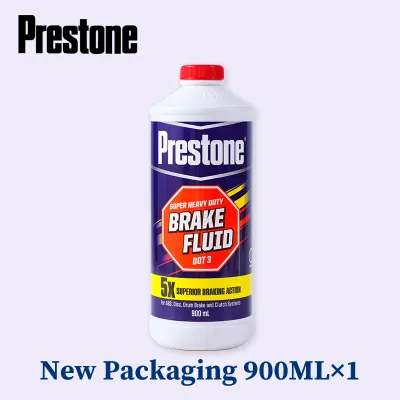
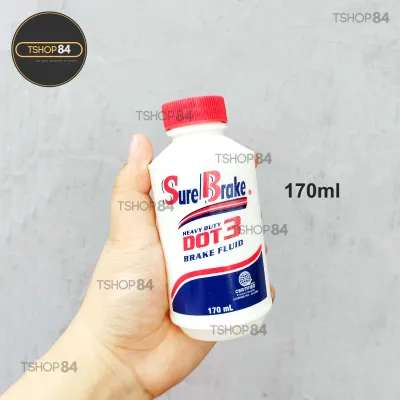
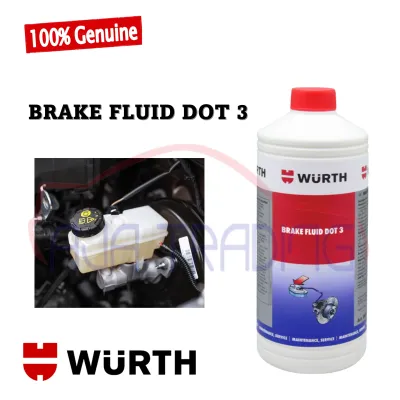
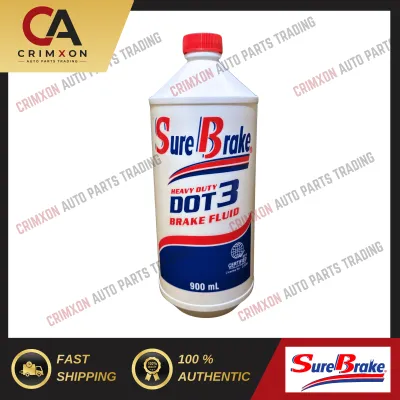
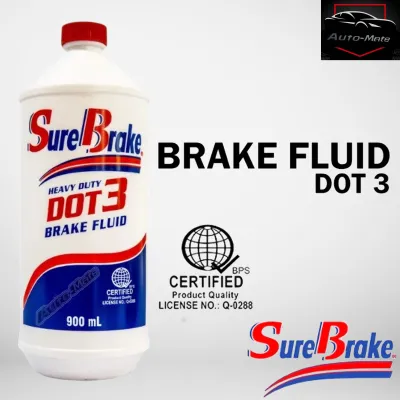
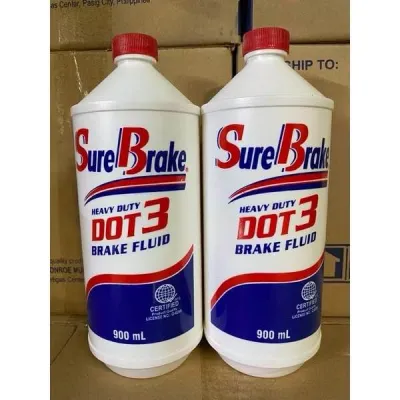
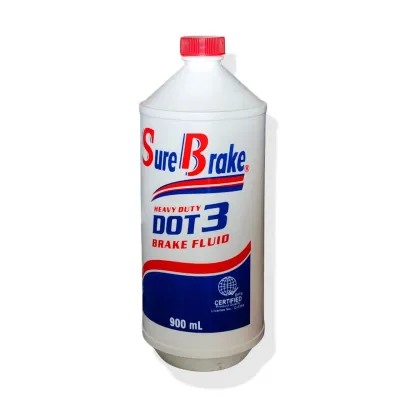
Prices are valid at publication and may change. Please refer to the product page for the latest price.
DOT3 vs DOT4: Key Differences in Boiling Points and Moisture
To understand why choosing the correct fluid is vital for safety, you must examine the technical specifications established by the Federal Motor Vehicle Safety Standard (FMVSS) No. 116. This standard defines the performance criteria for different classes of brake fluids, focusing primarily on their “dry” and “wet” boiling points. The dry boiling point refers to the temperature at which the fluid will boil when it is brand new, fresh from a sealed container, and completely free of water contamination. The wet boiling point represents the temperature at which the fluid will boil after it has absorbed 3.7% water by volume, which typically occurs after one to two years of real-world vehicle operation.

Both DOT3 and DOT4 are glycol-ether-based fluids, which makes them highly hygroscopic. This chemical property means they naturally and continuously absorb moisture from the surrounding atmosphere. The primary difference between the two lies in their chemical formulation; DOT4 fluids contain added borate esters. These esters chemically bind with free water molecules that enter the system, neutralizing their impact and allowing DOT4 to maintain a higher wet boiling point than DOT3 over its service life.
While a higher dry boiling point is beneficial, the wet boiling point is the more critical metric for long-term road safety. As brake fluid degrades and absorbs water, its boiling point drops rapidly. If the fluid’s boiling point falls below the temperatures generated during braking, the water within the fluid will vaporize into gas. Because gas is highly compressible—unlike liquid—this vaporization leads to a spongy brake pedal and a catastrophic loss of hydraulic pressure, commonly known as brake fade.
Because exact temperature thresholds, chemical additives, and compatibility standards vary across different brands and formulations, you must verify these details directly. Always check the product label on your brake fluid container and cross-reference it with your vehicle’s documentation to confirm that the fluid meets or exceeds the specific standards required for your car’s braking system.
How Tropical Traffic and Humidity Affect Brake Fluid Performance
Driving in the Philippines presents unique environmental and operational challenges that directly accelerate brake fluid degradation. Heavy, stop-and-go urban traffic in metropolitan areas like Manila, Cebu, or Davao forces drivers to constantly apply the brakes. This continuous friction between the brake pads and rotors generates extreme thermal energy. This heat conducts directly through the brake calipers and into the hydraulic fluid, pushing the fluid toward its boiling point.
Sustained high temperatures are also common when navigating steep, winding mountain passes, such as the roads leading to Baguio or Tagaytay. Descending these inclines requires prolonged braking, which can quickly overheat a compromised hydraulic system. If your brake fluid has absorbed excessive moisture, this thermal stress can trigger vapor lock, leaving you with little to no stopping power when you need it most. A higher wet boiling point, typically found in DOT4 fluids, provides a crucial safety buffer against this phenomenon.
The high ambient relative humidity characteristic of a tropical climate further compounds this risk. Moisture does not just enter the system when the reservoir cap is opened; it continuously permeates through microscopic pores in the flexible rubber brake hoses and the reservoir cap vent seal. Over time, this constant exposure accelerates the rate of water absorption, causing the wet boiling point of your fluid to drop much faster than it would in a dry, temperate climate.
Given these intense tropical conditions, relying solely on a high DOT rating is not enough to guarantee safety. Regular testing, preventative maintenance, and strict adherence to fluid replacement intervals are far more critical than simply upgrading your fluid type. Even a premium DOT4 fluid will fail to protect your vehicle if it is left in the system long enough to become saturated with tropical moisture.
Can You Mix DOT3 and DOT4 or Upgrade Your System?
Mixing different DOT ratings within the same brake reservoir is strongly discouraged by automotive professionals. While both DOT3 and DOT4 are glycol-ether-based and will physically mix without immediate chemical coagulation, doing so compromises your safety. Mixing the two fluids dilutes the advanced additive packages of the DOT4 fluid, dropping the overall boiling point of the mixture close to the lower DOT3 standard. This unpredictable reduction in thermal resistance can lead to unexpected brake fade under heavy loads.
If you decide to upgrade your vehicle’s braking system from DOT3 to DOT4, you must perform a complete, professional system flush. Simply topping up a DOT3 system with DOT4 fluid will not deliver the intended performance benefits. A professional flush involves purging every drop of old fluid from the master cylinder, lines, and calipers, and then refilling the system with fresh DOT4 fluid.
Before undertaking an upgrade, you must verify that your vehicle’s rubber seals, hoses, and ABS modules are fully compatible with the chemical profile of DOT4. Although modern synthetic rubbers are generally designed to handle both, some older vehicles or specific aftermarket components may experience accelerated seal wear, swelling, or degradation when exposed to the borate esters present in DOT4. If you are unsure of your system’s compatibility, consult a qualified mechanic or the vehicle manufacturer before proceeding.
Downgrading a system designed for DOT4 to DOT3 is a severe safety hazard. Vehicles engineered for DOT4 rely on its higher boiling point and specific viscosity characteristics to maintain safe stopping distances and ensure the rapid response times required by modern electronic stability control systems. Using DOT3 in these systems can lead to rapid fluid boiling under normal operating temperatures, resulting in sudden brake failure. Always prioritize original-vehicle instructions over generic compatibility claims.
How to Inspect, Buy, and Replace Your Brake Fluid Safely with Sure Brake Fluid 900ml
Maintaining your vehicle’s braking system requires regular visual inspections. Locate your brake fluid reservoir under the hood—it is typically a translucent plastic container mounted near the firewall on the driver’s side. Check the fluid level against the molded “MIN” and “MAX” markings on the side of the reservoir. The fluid level should always sit comfortably between these two lines; a level near or below the minimum mark indicates either worn brake pads or a physical leak in the hydraulic system.
Next, observe the color and clarity of the fluid through the reservoir wall. Fresh, healthy brake fluid ranges from clear to a light amber hue. If the fluid appears dark brown, cloudy, or contains visible black flecks, it is heavily contaminated with moisture, oxidized additives, and microscopic debris from deteriorating rubber seals. Contaminated fluid requires an immediate system flush to protect the expensive metal and rubber components of your master cylinder and ABS modulator.
When purchasing fluid for a complete maintenance service, ensuring you have the correct volume is essential. A standard system flush requires running fresh fluid through all four brake lines to completely displace the old, dirty fluid. Purchasing a sure brake fluid 900ml container provides the necessary volume to thoroughly flush and bleed the entire system of most passenger cars, crossovers, and light SUVs. Relying on smaller bottles often leaves you short of fluid mid-procedure, forcing you to pause or risk drawing air into the hydraulic lines.
Before opening a new bottle of brake fluid, inspect the factory foil seal under the cap. If this seal is broken, punctured, or compromised in any way, do not use the fluid, as it has already begun absorbing moisture from the air. Always purchase brake fluid from reputable, authorized retailers to avoid counterfeit products that may not meet FMVSS safety standards.
When performing any brake maintenance, remember that brake fluid is highly toxic, corrosive to automotive paint, and damaging to plastic body panels. If you spill any fluid on your vehicle’s paint, wash it off immediately with copious amounts of soapy water. Finally, dispose of your old, used brake fluid responsibly by taking it to an authorized hazardous waste collection center or a professional service shop; never pour it down household drains, onto the ground, or into local waterways.
Frequently Asked Questions (FAQ)
How often should I change my brake fluid in a humid climate?
In highly humid environments like the Philippines, you should test your brake fluid annually and replace it every 1 to 2 years, regardless of mileage. High humidity accelerates moisture absorption through rubber hoses and seals. Instead of relying solely on time or mileage, use a digital brake fluid moisture tester pen to check the water content during your regular oil changes. If the moisture level exceeds 2%, schedule a complete system flush to prevent internal corrosion and maintain safe boiling points.
What happens if I accidentally use the wrong DOT rating?
If you accidentally put DOT3 into a system that requires DOT4, you risk experiencing brake fade, a spongy pedal, or complete brake failure under heavy braking due to the lower boiling point. If you accidentally mix glycol-based fluid (DOT3 or DOT4) with silicone-based fluid (DOT5), the fluids will not mix; they will separate, form a thick, gel-like sludge, and completely ruin your master cylinder, calipers, and ABS valves. If you suspect the wrong fluid has been introduced, do not drive the vehicle; have it towed to a professional shop for a complete system flush.
Is DOT5.1 a better alternative to DOT4 for daily commuting?
While DOT5.1 is glycol-based and chemically compatible with DOT3 and DOT4 systems, it is generally not necessary or practical for daily commuting. DOT5.1 offers exceptionally high boiling points designed for extreme racing conditions, but it is highly hygroscopic, meaning it absorbs moisture much faster than DOT4 and requires far more frequent replacement intervals. It is also significantly more expensive, making DOT4 the more balanced and cost-effective choice for standard daily driving in tropical climates.
Community discussion
Share your experience or ask a question. Comments are reviewed before publication.