
Choosing the correct brake fluid for car maintenance is one of the most critical decisions you can make for your vehicle’s safety and operational integrity. The correct choice depends entirely on the vehicle manufacturer’s engineering specifications, which you can find in your owner’s manual or stamped directly on the brake fluid reservoir cap. While DOT4 generally offers higher boiling points and is standard in most modern vehicles, using it in a system designed strictly for DOT3—or vice versa—without verification can severely compromise your braking performance. Brake fluid is a safety-critical hydraulic consumable, and the manufacturer’s exact specification must always override general comparisons or aftermarket trends.
What DOT Ratings Mean for Your Braking Safety
The “DOT” rating on a bottle of brake fluid stands for the Department of Transportation, which sets the rigorous safety standards that these fluids must meet to be deemed road-worthy. These classifications, governed by regulations such as the Federal Motor Vehicle Safety Standard No. 116 (FMVSS 116) and ISO 4925, categorize fluids based on their chemical composition, viscosity, and minimum boiling points. Both DOT3 and DOT4 are glycol-ether-based fluids designed to transfer hydraulic pressure from your foot on the brake pedal directly to the brake calipers and pads near the wheels.
Because liquids are virtually incompressible, they transfer this physical force instantly. However, the friction between your brake pads and rotors generates extreme thermal energy, which is transferred directly into the brake calipers and the surrounding fluid. If the brake fluid reaches its boiling point, it undergoes a phase change from a liquid to a gas. Unlike liquids, gases are highly compressible. When you press the brake pedal in a system with boiled fluid, the pedal will feel soft or spongy, and the vehicle may fail to slow down—a highly dangerous condition known as brake fade.
Products mentioned in this guide
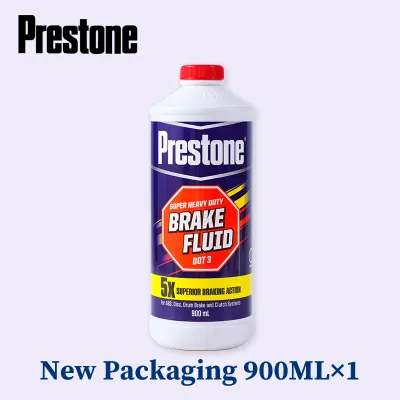
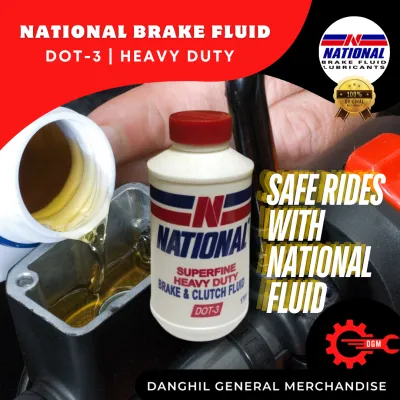
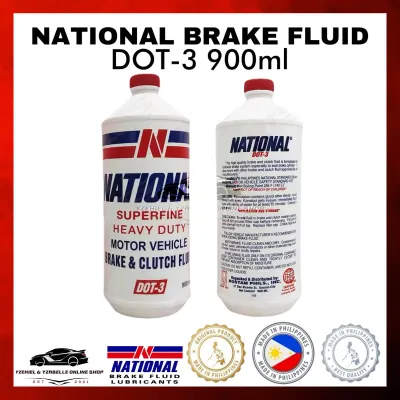
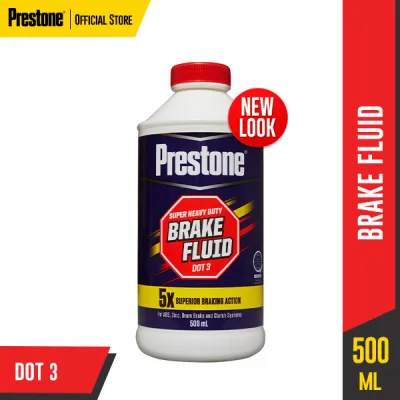
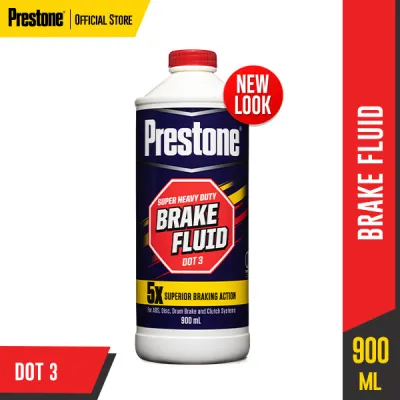
Prices are valid at publication and may change. Please refer to the product page for the latest price.
Selecting the correct DOT rating is a fundamental safety requirement to ensure your hydraulic system maintains predictable braking performance. This is especially critical under heavy loads, during prolonged descents, or when navigating punishing stop-and-go traffic in hot, tropical climates. The DOT rating serves as a guarantee that the fluid can withstand these extreme operational environments without vaporizing.
Key Differences: Boiling Points, Moisture, and Viscosity
While DOT3 and DOT4 fluids share a similar chemical foundation, their performance characteristics differ significantly across three critical technical dimensions: boiling points, moisture management, and fluid viscosity.

Boiling Points (Dry vs. Wet)
When comparing brake fluids, manufacturers specify two distinct boiling points: “dry” and “wet.” The dry boiling point refers to the temperature at which fresh, uncontaminated fluid from a newly opened, sealed container will boil. The wet boiling point represents the boiling temperature of the fluid after it has absorbed 3.7% water by volume, which is the typical amount of moisture contamination found in a hydraulic system after approximately two years of real-world service.
Under FMVSS 116 standards, the minimum temperature thresholds are strictly defined:
- DOT 3: Minimum dry boiling point of 205°C (401°F); minimum wet boiling point of 140°C (284°F).
- DOT 4: Minimum dry boiling point of 230°C (446°F); minimum wet boiling point of 155°C (311°F).
DOT4 fluids are formulated with borate esters, which chemically bind with water molecules to maintain higher boiling points under both dry and wet conditions compared to DOT3. This higher thermal resistance reduces the risk of brake fade during intense braking scenarios, such as driving down steep mountain routes like Kennon Road or Marcos Highway. Always check the specific product label for these ratings, as premium formulations often exceed these minimum regulatory standards.
Moisture Absorption and Maintenance Intervals
Glycol-ether-based brake fluids are highly hygroscopic, meaning they actively absorb moisture from the surrounding atmosphere. Even in a sealed braking system, moisture slowly permeates through microscopic pores in the flexible rubber brake hoses, reservoir seals, and threaded connections over time.
In high-humidity environments, such as the tropical climate of the Philippines, this moisture ingress occurs at an accelerated rate. When water mixes with brake fluid, it drastically lowers the fluid’s boiling point and introduces oxygen into the system, which can cause internal rust and corrosion on steel brake lines, caliper pistons, and expensive anti-lock braking system (ABS) valves.
While the borate esters in DOT4 fluid help preserve its boiling point as it absorbs water, they do not stop the absorption process. In fact, some DOT4 formulations can absorb moisture more rapidly than DOT3 under high-humidity conditions. Consequently, choosing DOT4 does not mean you can neglect your maintenance; you must strictly adhere to the manufacturer’s recommended fluid flush intervals to prevent internal corrosion and maintain safety margins.
Chemical Composition and Viscosity
Viscosity refers to the fluid’s thickness and its resistance to flow at specific temperatures. This physical property is critical for the proper operation of modern electronic driver-assist systems, such as Anti-lock Braking Systems (ABS) and Electronic Stability Control (ESC).
These safety systems operate by rapidly modulating hydraulic pressure to individual wheels through highly sensitive, micro-sized solenoid valves. If the brake fluid is too thick, the response time of these valves can be delayed, reducing the system’s effectiveness during an emergency maneuver. Standard DOT4 fluid generally has a higher viscosity at low temperatures compared to DOT3.
To address this, automotive manufacturers often require low-viscosity formulations, commonly designated as “DOT4 LV” or complying with “ISO 4925 Class 6” standards. If your vehicle’s manual specifies a low-viscosity fluid, using a standard, thicker DOT4 fluid can compromise the rapid response times of your ABS and ESC modules, potentially affecting your vehicle’s stability and safety.
How to Find the Exact Brake Fluid Spec for Your Car
To ensure your vehicle’s braking system operates exactly as the engineers intended, you must verify its specific fluid requirements before purchasing any product or performing maintenance.
- Step 1: Inspect the Reservoir Cap. Open your vehicle's hood and locate the translucent plastic brake fluid reservoir, typically mounted on the driver's side firewall near the brake booster. Before opening or touching the cap, wipe it thoroughly with a clean microfiber cloth to prevent dirt, dust, or moisture from falling inside. Look closely at the embossed text on the cap, which will usually state the required specification, such as "Use Only DOT 3" or "DOT 4."
- Step 2: Consult the Owner's Manual. The owner's manual is the definitive authority for your vehicle. It provides comprehensive fluid specifications, including proprietary manufacturer or Original Equipment Manufacturer (OEM) standards that go beyond basic DOT classifications. This is especially true for European and modern Asian vehicles, which may require specific fluid approvals.
- Step 3: Check for Electronic System Requirements. Review the manual's technical specifications section to determine if your vehicle requires a low-viscosity variant (such as DOT4 LV). This is common in vehicles equipped with advanced electronic stability control systems.
Safety Boundary: Never guess your vehicle’s brake fluid type based on the color of the fluid currently in the reservoir or what a previous owner might have used. If the reservoir cap is missing, damaged, or the text is illegible, do not guess. Consult an authorized dealership or a certified mechanic to verify the original specifications. Additionally, brake fluid is highly corrosive to automotive paint, clear coats, plastics, and rubber seals; handle it with extreme care, protect surrounding surfaces, and clean any accidental spills immediately with copious amounts of soapy water.
Can You Mix DOT3 and DOT4 Brake Fluid? (Risks and Rules)
Because both DOT3 and DOT4 are glycol-ether-based fluids, they are chemically miscible. This means that if they are combined, they will physically mix together without immediately separating, forming distinct layers, or turning into a jelly-like sludge. However, physical compatibility does not mean they are safe to mix in your vehicle.
Mixing DOT3 and DOT4 fluid is strongly discouraged for several reasons. When you add DOT4 fluid to a system currently filled with DOT3, or vice versa, you alter the chemical balance of the fluid in the lines. The resulting mixture will have an unpredictable boiling point, reduced chemical stability, and a compromised balance of corrosion inhibitors. This can lead to accelerated wear on internal components and unpredictable braking performance under high-temperature conditions.
Topping off a system with a different fluid grade should only be treated as an absolute emergency measure to restore pedal pressure until you can safely reach a service center. It is never a viable long-term solution.
If you have accidentally mixed different grades, or if you plan to upgrade your vehicle’s fluid from DOT3 to DOT4 (only where explicitly permitted or recommended by the vehicle manufacturer), you must perform a complete professional system flush. This process involves draining all the old fluid from the reservoir and lines, flushing the system with fresh fluid, and meticulously bleeding the brakes to ensure no air bubbles, moisture, or old fluid remnants remain in the hydraulic circuits.
Decision Framework: When to Use DOT3 vs DOT4
To finalize your maintenance or purchase decision, use the following structured, conditional framework based on your vehicle’s specific engineering and operational requirements.
Choose DOT3 if:
- Your vehicle's owner's manual or brake fluid reservoir cap explicitly specifies DOT3.
- You are maintaining an older model vehicle that does not feature complex electronic driver-assist systems like ABS or ESC.
- You want a stable, cost-effective fluid that matches the vehicle's original engineering parameters without paying for unnecessary high-temperature additives.
Choose DOT4 if:
- Your vehicle manufacturer explicitly specifies DOT4 in the documentation or on the reservoir cap.
- You drive a modern vehicle equipped with standard ABS and frequently operate in demanding driving environments, such as heavily congested urban traffic or steep mountain passes where frequent, heavy braking is required.
- You require a higher wet boiling point to ensure a safety margin against brake fade in high-humidity regions.
Verify First if:
- Your vehicle's manual calls for a low-viscosity fluid like DOT4 LV or ISO 4925 Class 6. Using a standard, thicker DOT4 fluid in these systems can delay ABS response times.
- The manufacturer mandates a proprietary OEM-branded fluid to maintain your vehicle's warranty.
Neither may fit if:
- Your vehicle requires DOT5 brake fluid. DOT5 is a silicone-based fluid that is completely incompatible with glycol-ether fluids (DOT3, DOT4, and DOT5.1). Mixing silicone and glycol fluids will cause them to gel, leading to complete brake system failure.
- Your vehicle requires DOT5.1, which is a high-performance glycol-based fluid but has distinct viscosity and boiling point profiles. Always defer to the exact manufacturer specification.
Frequently Asked Questions (FAQ)
How often should I change my brake fluid?
Always consult your vehicle’s owner’s manual for the official schedule, which typically ranges from every 2 to 3 years or every 40,000 to 60,000 kilometers. In tropical, high-humidity environments like the Philippines, moisture contamination occurs much faster. It is highly recommended to have your brake fluid tested annually using professional moisture test strips or an electronic optical refractometer. If the moisture content exceeds 3%, a complete fluid flush is necessary to prevent corrosion and maintain a safe boiling point.
Does the color of the brake fluid matter?
Yes, visual inspection is a useful diagnostic tool. Fresh glycol-based brake fluid (both DOT3 and DOT4) should be clear to very pale amber. Over time, as the fluid absorbs moisture, oxidizes under high heat, and collects microscopic debris from degrading rubber seals and metal lines, it will darken. If your brake fluid looks dark brown, black, or cloudy, it has lost its protective additives and thermal resistance. Dark fluid requires an immediate professional system flush, regardless of the vehicle’s mileage or age, to protect your braking system from internal damage.
Community discussion
Share your experience or ask a question. Comments are reviewed before publication.