
When maintaining your vehicle’s braking system, selecting the correct brake fluid for car safety is one of the most critical decisions you will make. The braking system relies on hydraulic pressure to transfer the force of your foot on the pedal directly to the brake pads at the wheels. Because liquid is virtually incompressible, this system works flawlessly under normal conditions. However, the intense friction generated during braking produces extreme heat, which transfers directly into the hydraulic fluid. If the fluid cannot withstand this heat, it can boil, leading to a catastrophic loss of braking power.
The correct brake fluid for your vehicle is strictly determined by the original equipment manufacturer (OEM) specifications, rather than an assumption that a higher Department of Transportation (DOT) number is always superior. While DOT4 fluid generally offers higher boiling points designed to handle more demanding driving conditions, DOT3 remains the standard specification for many older or standard commuter vehicles. Under no circumstances should you ever downgrade from a specified DOT4 fluid to a DOT3 fluid. Doing so compromises the high-temperature safety margins of your braking system, putting you and your passengers at significant risk.
DOT3 vs DOT4: Key Differences in Boiling Points and Chemistry
To understand why these two fluids cannot be swapped arbitrarily, it is necessary to examine their chemical composition and thermal properties. Both DOT3 and DOT4 are glycol-ether-based hydraulic fluids, but their additive packages and chemical structures differ. The most critical performance metric for any brake fluid is its boiling point, which is categorized into two distinct measurements: the dry boiling point and the wet boiling point.
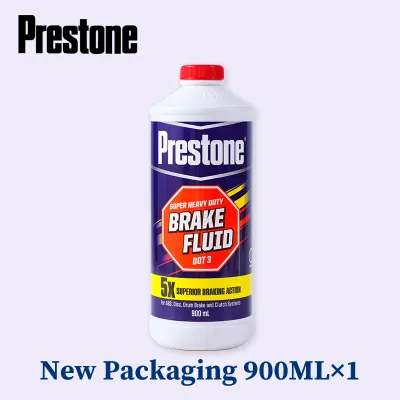
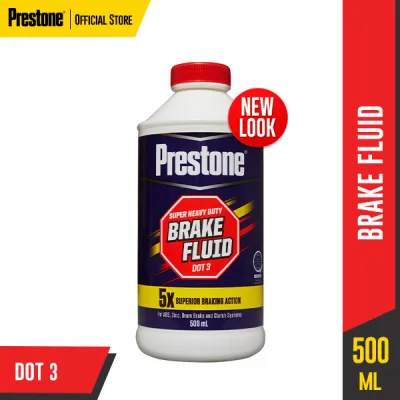
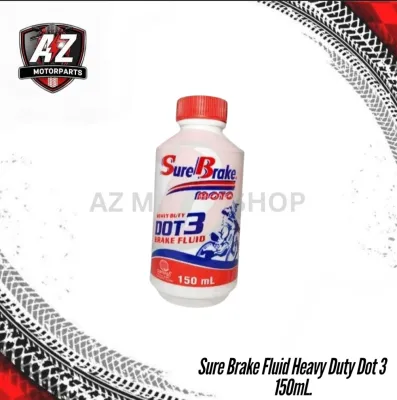
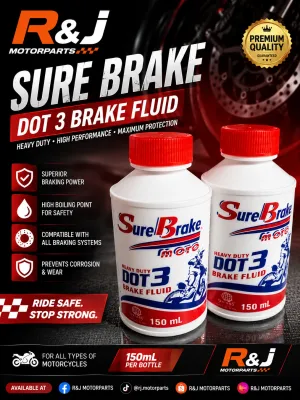
Products mentioned in this guide
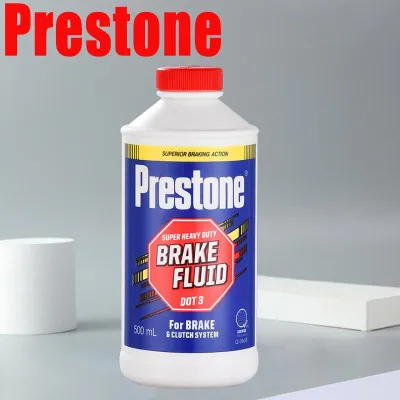
Prices are valid at publication and may change. Please refer to the product page for the latest price.
The dry boiling point refers to the temperature at which fresh, uncontaminated fluid from a newly opened container will begin to boil. The wet boiling point, on the other hand, represents the boiling temperature of the fluid after it has absorbed a specific volume of water (typically around 3.7% water by volume). Because glycol-ether fluids are highly hygroscopic—meaning they actively attract and absorb moisture from the surrounding atmosphere—the wet boiling point is a much more realistic indicator of how the fluid will perform after it has been in your vehicle’s braking system for a year or more.
According to international safety standards, such as the Federal Motor Vehicle Safety Standard (FMVSS) 116, DOT4 fluids must meet higher minimum boiling point thresholds than DOT3 fluids. For instance, standard DOT3 fluid has a minimum dry boiling point requirement of 205°C (401°F) and a minimum wet boiling point of 140°C (284°F). DOT4 fluid raises these minimum requirements to 230°C (446°F) dry and 155°C (311°F) wet. However, these are merely the baseline regulatory minimums. Actual formulations vary significantly between manufacturers, and high-performance fluids often exceed these standards. You must always check the specific product label of your chosen brake fluid to verify its exact temperature ratings.
The superior thermal performance of DOT4 is primarily achieved through the addition of borate esters. These chemical compounds react with water molecules that enter the system, chemically binding them and mitigating their ability to lower the fluid’s boiling point. This chemical difference is particularly important in tropical, high-humidity environments like the Philippines. During the wet season, when relative humidity levels consistently hover near or above 90%, moisture permeates through the microscopic pores of flexible rubber brake hoses at an accelerated rate. While DOT4 handles this moisture ingress better by maintaining a higher wet boiling point, both fluids will eventually degrade and require replacement.
Another key difference lies in viscosity, which refers to the fluid’s thickness and resistance to flow. Viscosity becomes a critical safety factor when dealing with modern electronic braking aids, such as Anti-lock Braking Systems (ABS), Electronic Stability Control (ESC), and Traction Control Systems (TCS). These systems rely on rapid, micro-second pressure adjustments executed by a hydraulic modulator unit containing tiny valves and passages. If the fluid’s viscosity is too high, the response time of these safety systems can be delayed, especially in colder temperatures or rapid-cycling scenarios.
Standard DOT4 fluid typically has a higher viscosity at low temperatures compared to DOT3. To address this, chemical manufacturers developed specialized low-viscosity formulations, often labeled as DOT4 LV, Class 6, or ISO 4925 Class 6. These low-viscosity fluids are engineered specifically to ensure rapid modulator response in modern vehicles equipped with advanced electronic stability programs. Using a standard, high-viscosity DOT4 in a system that specifically demands a low-viscosity fluid can compromise the effectiveness of your ABS and ESC systems. Always consult your vehicle’s documentation to confirm if a low-viscosity variant is required.
| Dimension | DOT3 Standard | DOT4 Standard | Key Consideration |
|---|---|---|---|
| Base Chemistry | Glycol-ether | Glycol-ether with borate esters | Borate esters in DOT4 improve moisture handling and heat resistance. |
| Minimum Dry Boiling Point | 205°C (401°F) | 230°C (446°F) | Baseline regulatory minimums; check product label for exact ratings. |
| Minimum Wet Boiling Point | 140°C (284°F) | 155°C (311°F) | Represents performance after absorbing approximately 3.7% water. |
| Moisture Tolerance | Standard | Higher | High humidity accelerates moisture absorption in both fluid types. |
| Viscosity at Low Temps | Lower (Standard) | Higher (Standard DOT4) | Modern ABS/ESC systems may require specialized low-viscosity DOT4. |
| Typical Application | Older or standard commuter vehicles | Modern vehicles, heavy-duty, or high-performance cars | Always verify the specific requirement on your reservoir cap. |
Can You Mix DOT3 and DOT4? Compatibility and Safety Rules
A frequent question among car owners is whether DOT3 and DOT4 brake fluids can be mixed in an emergency or during routine maintenance. Because both fluids share a similar glycol-ether base, they are chemically compatible. This means that if you mix them, they will not undergo a volatile chemical reaction, cause immediate damage to standard rubber seals, or precipitate solid sludge within your brake lines.

However, chemical compatibility does not imply performance parity. When you mix DOT3 and DOT4 fluids, you immediately compromise the performance characteristics of the superior fluid. The resulting mixture will have a boiling point that is closer to that of the lower-rated DOT3 fluid. If your vehicle’s manufacturer engineered the braking system to operate with the high thermal capacity of DOT4, reducing that safety margin by diluting it with DOT3 can lead to premature fluid boiling under heavy braking. This can cause a sudden loss of hydraulic pressure, resulting in brake fade or complete system failure.
To clarify the rules of mixing, we must distinguish between an emergency top-off and standard maintenance procedures. If you are on the road and discover that your brake fluid level is dangerously low—perhaps due to a slow leak or worn brake pads—and you only have access to a different DOT rating, topping off the reservoir is acceptable solely as a temporary measure to safely reach a professional repair shop. For example, adding DOT4 to a system that specifies DOT3 is generally safe, as it slightly raises the boiling point. Conversely, adding DOT3 to a system that specifies DOT4 should only be done in an absolute emergency, and the vehicle should be driven with extreme caution.
Once you reach a safe destination or service center, any mixed fluid must be treated as a compromised system. A proper maintenance procedure always requires a complete system flush rather than a simple top-off. A full flush involves pushing all the old, contaminated, or mixed fluid out of the master cylinder, lines, and calipers, and replacing it entirely with fresh fluid from a sealed container that matches your vehicle’s OEM specifications.
As a strict safety warning, mixing different brake fluid types should never be adopted as a standard maintenance practice. If you suspect that the wrong fluid has been added to your reservoir, or if a mixture has occurred, do not ignore the issue. Have a qualified mechanic perform a complete system flush as soon as possible. Operating a vehicle with compromised brake fluid places unnecessary strain on the hydraulic components and severely degrades your stopping power during critical, high-heat maneuvers.
Decision Guide: How to Choose the Right Brake Fluid for Car Safety
Selecting the appropriate brake fluid for car performance requires a systematic approach based on your vehicle’s design, driving habits, and regional environment. Before purchasing any fluid, your first step must always be to verify your vehicle’s specific requirements. This information is typically stamped directly onto the brake fluid reservoir cap in the engine bay or detailed in the “Specifications” section of your vehicle’s owner’s manual.
Verify First If…
Your vehicle is currently under manufacturer warranty, features advanced driver assistance systems (ADAS) linked to the brakes, or is a high-performance or heavy-duty model. Using a non-compliant fluid can void your warranty and, more importantly, impair the active safety systems designed to protect you. Always prioritize the exact OEM specifications over any aftermarket recommendations or general advice.
Choose DOT3 If…
Your vehicle’s manufacturer explicitly specifies DOT3, the car is an older model whose braking system components and seals were designed specifically around DOT3 chemistry, and your daily driving consists of standard commuting. If your typical route involves flat, low-speed city driving—such as daily commutes within urban areas where braking demands are moderate—DOT3 provides reliable, cost-effective hydraulic performance without the need for the more expensive additive packages found in DOT4.
Choose DOT4 If…
Your owner’s manual or reservoir cap explicitly specifies DOT4. Additionally, you should choose DOT4 if you regularly subject your vehicle to severe operating conditions that generate substantial brake heat. In the Philippines, this includes frequent travel through mountainous regions with steep descents, such as driving up to Baguio via Kennon Road or navigating the winding routes of the Sierra Madre. It also applies if you frequently carry heavy passenger loads, tow trailers, or operate in severe stop-and-go traffic under high ambient temperatures, where continuous braking prevents the brake rotors and calipers from cooling down effectively.
Neither May Fit If…
Your vehicle requires specialized hydraulic fluids that fall outside the glycol-ether family. For example, some classic cars, military vehicles, or specific motorcycles require DOT5 brake fluid. DOT5 is a silicone-based fluid that is completely incompatible with glycol-ether fluids like DOT3 and DOT4. Mixing silicone-based and glycol-based fluids causes the mixture to gel, leading to immediate valve clogging and complete brake failure. Alternatively, modern vehicles may require DOT5.1, which is glycol-based but features exceptionally high boiling points and low viscosity, or they may require specific ISO 4925 standards that standard DOT3 or DOT4 fluids cannot satisfy.
Maintenance, Inspection, and Safety Boundaries
Proper brake maintenance extends far beyond simply choosing the right fluid; it requires regular inspection, timely replacement, and strict adherence to safety protocols. Because brake fluid operates within a closed hydraulic system, any change in its volume or physical appearance serves as an important diagnostic indicator of the system’s health.
Inspection Intervals
You should visually inspect your brake fluid level and color during every routine oil change, or at least once every six months. Healthy brake fluid is typically clear with a light amber or yellowish tint. If the fluid appears dark brown, black, cloudy, or contains visible floating debris, it has undergone severe thermal degradation and is heavily contaminated with moisture and particulate matter from wearing rubber seals. Dark fluid must be replaced immediately to prevent internal corrosion of the master cylinder and brake calipers.
Replacement Guidelines
While general industry practices often recommend flushing the brake fluid every two years or every 40,000 kilometers, you must always defer to the specific maintenance schedule provided by your vehicle’s manufacturer. In highly humid tropical climates like the Philippines, the rate of moisture absorption through flexible hoses is significantly accelerated. Consequently, it is highly recommended to have your brake fluid tested for moisture content using an electronic brake fluid tester or an optical refractometer during your annual service. If the moisture content exceeds 3%, a complete flush is necessary, regardless of the mileage accumulated.
Handling and Storage Safety
Brake fluid is a hazardous chemical that requires careful handling. It is highly corrosive to automotive paint, clear coats, and certain plastics; even a small spill can ruin your vehicle’s finish if not cleaned immediately. If a spill occurs, do not attempt to wipe it off dry, as this can smear the chemical and damage the paint; instead, immediately flush the area with copious amounts of soapy water and wipe it clean with a microfiber cloth.
Additionally, glycol-ether is highly toxic if ingested and harmful to the skin. Always wear protective gloves and safety glasses when handling it. When storing brake fluid, ensure the container’s cap is screwed on tightly; an open container will absorb moisture from the air within hours, rendering it useless for future top-offs. Dispose of used brake fluid responsibly by taking it to a local automotive recycling or hazardous waste collection center.
When to Stop and Consult a Professional
Braking systems are the single most critical safety feature on your vehicle. If you experience a spongy or soft brake pedal, if the pedal sinks slowly to the floorboard when constant pressure is applied, or if the ABS or brake warning light illuminates on your dashboard, do not attempt to resolve these issues yourself unless you have the proper training and specialized equipment.
Bleeding modern braking systems—especially those equipped with complex ABS modulators—often requires electronic scan tools to cycle the internal valves. If you are unsure about any part of the maintenance process, stop immediately and consult a qualified professional mechanic to ensure your vehicle remains safe to operate on public roads.
Frequently Asked Questions (FAQ)
Is DOT4 universally better than DOT3 for all cars?
No, DOT4 is not universally better for every vehicle. While DOT4 offers higher boiling points, some older vehicles have internal seals and natural rubber hoses designed specifically for the chemical composition of DOT3. Using DOT4 in these systems without verifying compatibility can sometimes lead to premature seal degradation or leaks. Always consult your vehicle’s owner’s manual to ensure compatibility before upgrading.
Can I use DOT5 instead of DOT3 or DOT4?
No, you must never use DOT5 in a system designed for DOT3 or DOT4. DOT5 is a silicone-based fluid, whereas DOT3 and DOT4 are glycol-ether-based. They are completely incompatible. Mixing them will cause the fluids to react and form a thick, gelatinous substance that will clog the brake lines, seize the ABS valves, and result in immediate and catastrophic brake system failure.
Community discussion
Share your experience or ask a question. Comments are reviewed before publication.