
When driving under the intense heat of a tropical climate, your vehicle’s cooling system operates under constant, severe stress. Selecting the right coolant for car engines in these environments requires looking beyond basic freeze protection—which is virtually irrelevant in a region without winter—and focusing instead on thermal stability, boiling point elevation, and material compatibility. The most critical coolant specifications for your car are a high boiling point to prevent vapor lock, robust corrosion inhibitors to protect engine components under continuous thermal stress, and the correct concentration ratio to maximize heat transfer.
Failing to prioritize these specific properties can lead to localized boiling inside the engine block, accelerated chemical degradation of the fluid, and eventual catastrophic engine failure. By understanding how tropical conditions affect your cooling system, you can make informed decisions at the auto supply shop or service center to keep your engine running at its optimal operating temperature.
Why Tropical Heat Demands Specific Coolant Traits
Operating a vehicle in the Philippines presents unique thermodynamic challenges. High ambient temperatures, often exceeding 35°C, combined with high relative humidity, significantly reduce the temperature differential between the radiator and the surrounding air. Because heat transfer relies on this temperature difference, your car’s radiator must work much harder to shed heat into the hot tropical air than it would in a temperate climate.
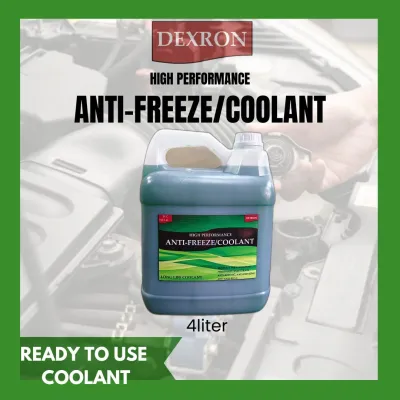
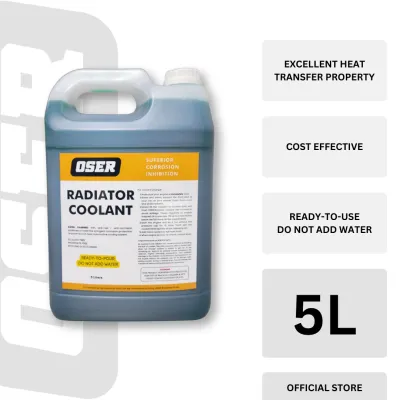
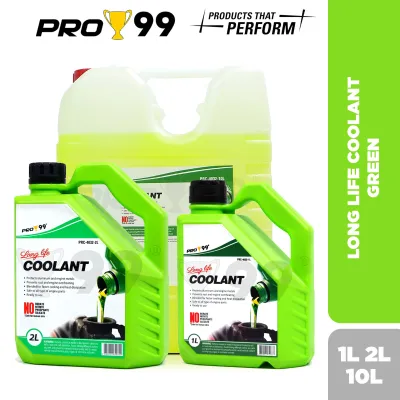
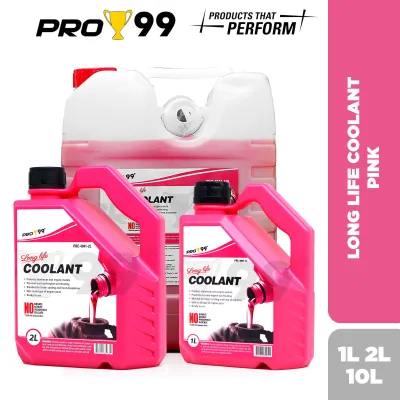
Products mentioned in this guide
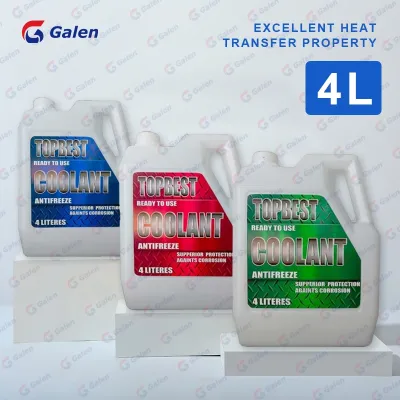
![[YAMAS] 4 LITERS COOLANT TOP BEST BRAND](https://img.lazcdn.com/g/p/ab94097c9549efc206847bd80590eb26.png_400x400q80.png_.webp)
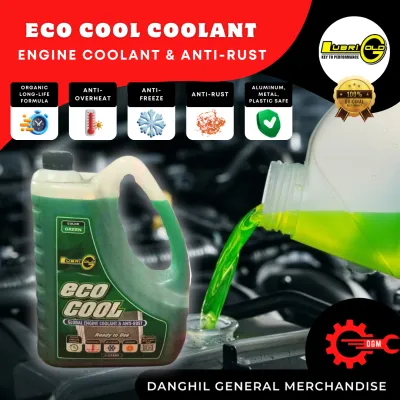
![[1L BLUE] Coolant for Mitsubishi Models 2016 and Up - Pro99 Brand](https://img.lazcdn.com/g/p/82e3a98fc005a8fce2898f0a48e7f42d.jpg_400x400q80.jpg_.webp)
Prices are valid at publication and may change. Please refer to the product page for the latest price.
This challenge is severely compounded by urban driving conditions. In stop-and-go traffic along congested metropolitan corridors, there is minimal ram air flowing through the grille to assist the radiator. The cooling system must rely almost entirely on electric fans, leading to a phenomenon known as thermal soaking. During prolonged idling, heat builds up rapidly in the engine bay, causing coolant temperatures to spike and placing immense pressure on the entire system.
Under these continuous high-temperature cycles, standard or low-quality coolants degrade at an accelerated rate. The protective additives and corrosion inhibitors dissolved in the fluid break down under constant thermal stress. Once these additives deplete, the coolant loses its ability to protect internal metal surfaces, leaving the engine vulnerable to rust, scale buildup, and localized overheating.
Critical Coolant Properties for Hot Weather Operation
To ensure your engine remains protected, you must evaluate coolant products based on their specific chemical and physical properties rather than generic marketing claims. The two primary areas of focus when selecting a coolant are its thermal capacity—how well it absorbs and releases heat—and its chemical protection, which prevents the degradation of internal cooling system components.

Boiling Point and Heat Transfer Efficiency
A coolant’s boiling point is a critical safety margin. When coolant boils, it turns into vapor, and vapor cannot effectively absorb heat from the engine’s metal surfaces. This localized boiling can lead to hot spots, vapor lock, and rapid overheating. The boiling point of a coolant is determined by its chemical formulation and the pressure maintained within the system by the radiator cap.
When inspecting a product label, look for the boiling point specifications. Manufacturers typically list two temperatures: the atmospheric boiling point and the boiling point under system pressure (usually around 15 psi or 103 kPa). A high-quality ethylene glycol or propylene glycol mixture, when pressurized, can raise the boiling point well above 120°C, providing a vital buffer during extreme idling in midday heat.
However, raising the boiling point is only half the battle; the fluid must also transfer heat efficiently. Pure water actually has a higher specific heat capacity than glycol, meaning it absorbs and releases heat more effectively. Therefore, the ideal coolant must balance glycol for boiling point elevation and water for heat transfer. A mixture that contains too much glycol will run hotter because it cannot transfer heat as quickly as a balanced solution.
Corrosion Protection and Material Safety
Modern engines are constructed from a variety of metals, including aluminum, cast iron, steel, brass, and copper. Each of these materials reacts differently to hot water and chemical additives. To prevent galvanic corrosion and cavitation, you must match the coolant’s chemical formulation to your vehicle manufacturer’s exact specifications.
There are three primary coolant technologies available: Inorganic Additive Technology (IAT), Organic Acid Technology (OAT), and Hybrid Organic Acid Technology (HOAT). IAT is typically found in older vehicles and requires frequent changes, while OAT and HOAT are designed for modern aluminum engines and offer extended service intervals. Mixing these different chemistries is highly damaging; doing so can cause a chemical reaction that results in gelation, which clogs the radiator passages and water jacket, leading to immediate overheating.
To avoid compatibility issues, never choose a coolant based solely on its color. Color is simply a dye added by manufacturers for branding and leak identification, and it is not standardized across the industry. Instead, consult your vehicle’s owner’s manual to find the exact specification code (such as G12, G12+, or specific manufacturer standards) and verify that this code is explicitly printed on the coolant container before purchasing.
Concentration Ratios: Premixed vs. Concentrated
When purchasing coolant, you will generally choose between premixed (often labeled as 50/50 or ready-to-use) and concentrated formulas. In a tropical climate where freezing temperatures are non-existent, it is tempting to assume that a lower concentration of glycol is acceptable. However, maintaining the correct ratio remains essential for boiling point elevation and corrosion protection.
Premixed coolants offer the highest level of convenience and safety. They are pre-diluted at the factory with demineralized or deionized water in the precise ratio required for optimal performance. This eliminates the risk of mixing errors and ensures that no harmful minerals are introduced into your cooling system. For most drivers, choosing a high-quality premixed coolant is the safest way to guarantee consistent protection.
If you choose to purchase concentrated coolant, you must dilute it manually, typically aiming for a 50/50 ratio. Never use pure, undiluted concentrate in your engine. Without water, pure glycol has a much lower heat transfer capacity and a lower boiling point under pressure, which will cause the engine to run dangerously hot. Furthermore, you must never use tap water for dilution. Tap water contains minerals like calcium and magnesium that precipitate out under high heat, forming scale deposits that insulate the cooling passages and restrict fluid flow. Always use distilled or deionized water for manual dilution.
Inspecting and Maintaining Your Cooling System
Regular maintenance is the key to preventing unexpected cooling system failures on the road. You should inspect your coolant level and condition at least once a month. Always perform these checks when the engine is completely cold; opening a hot cooling system can release pressurized steam and boiling liquid, causing severe burns.
Begin by checking the fluid level in the transparent plastic overflow reservoir. The level should sit between the minimum and maximum markings. If the level is consistently low, it indicates a leak within the system that must be diagnosed immediately. Next, observe the physical condition of the fluid. Healthy coolant should be clear and vibrant. If you notice discoloration, a muddy appearance, floating debris, or an oily sheen on the surface, the coolant has degraded or become contaminated, indicating the need for a professional system flush.
In addition to the fluid itself, inspect the physical components of the cooling system. Check the radiator hoses for signs of swelling, cracking, or softening, especially near the hose clamps. Inspect the radiator cap’s rubber seal for cracks or loss of elasticity, as a faulty cap cannot maintain the pressure required to keep the coolant’s boiling point elevated.
If you observe any signs of contamination, a burnt smell from the reservoir, or persistent coolant loss, stop driving the vehicle and consult a qualified mechanic. Continuing to operate an engine with a compromised cooling system in tropical heat will quickly lead to warped cylinder heads, blown head gaskets, and permanent engine damage.
Frequently Asked Questions (FAQ)
Can I use plain water instead of coolant in an emergency?
Plain water should only be used as a temporary, emergency measure to reach a nearby service station or safe location. Water lacks the corrosion inhibitors necessary to protect internal engine metals and has a significantly lower boiling point than a proper glycol-water mixture, making it highly susceptible to boiling over in tropical heat. If you must use water in an emergency, use distilled water if available, and have the system completely flushed and refilled with the correct coolant mixture as soon as possible.
Does coolant color indicate its chemical type or quality?
No, coolant color is not a reliable indicator of its chemical composition, quality, or compatibility. Vehicle and coolant manufacturers use various dyes—such as green, red, pink, blue, or yellow—primarily for brand identification and to make leaks easier to spot. Because there is no universal industry standard linking color to chemical type, you must always verify the specific chemical technology (such as OAT or HOAT) and the manufacturer specification codes listed on the product label and in your owner’s manual.

Community discussion
Share your experience or ask a question. Comments are reviewed before publication.