
Navigating the roads in the Philippines presents a unique set of challenges for any driver. From the bumper-to-bumper gridlock of major thoroughfares like EDSA to the narrow, unlit provincial roads, having a reliable dashcam for car is no longer a luxury but a necessity. However, choosing the right device is not simply a matter of picking the model with the highest resolution or the most marketing buzzwords. To ensure your camera actually captures usable footage when an incident occurs, you must match its technical specifications directly to the local climate, road infrastructure, and traffic patterns.
Selecting a dashcam requires a clear understanding of how different features perform under real-world conditions. High temperatures, sudden downpours, unpredictable lane splitting by motorcycles, and poorly lit streets all demand specific hardware capabilities. This guide breaks down the essential features required to withstand intense tropical heat, capture clear details in chaotic traffic, and provide dependable evidence when you need it most.
Core Camera Specs for Heavy Traffic and Narrow Streets
When driving through dense urban areas, the primary goal of a dashcam is to capture clear, indisputable details such as license plates, road markings, and the actions of nearby road users. To achieve this in stop-and-go traffic, resolution is your first line of defense. While standard 1080p (Full HD) is the absolute baseline, upgrading to 1440p (Quad HD) provides a significant boost in pixel density. This extra resolution allows you to zoom in on distant license plates or low-contrast text without the image pixelating into an unreadable blur.
Products mentioned in this guide
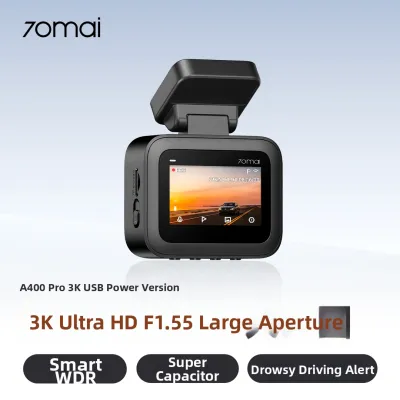
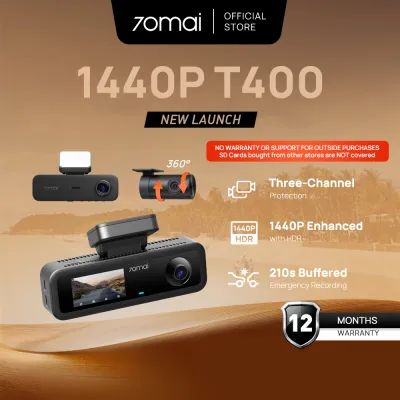
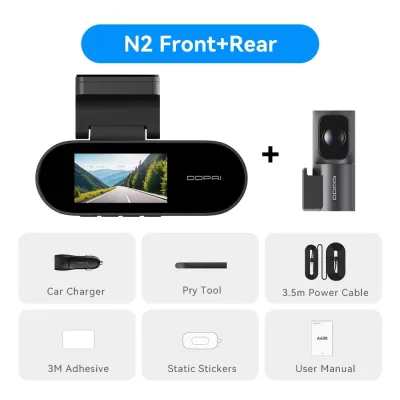

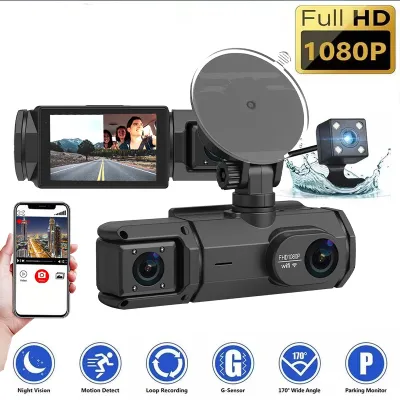
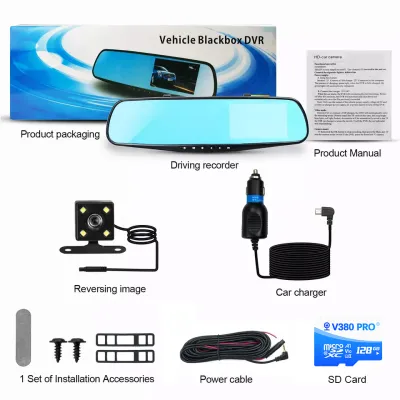
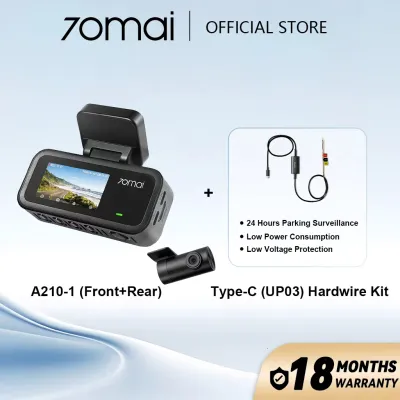
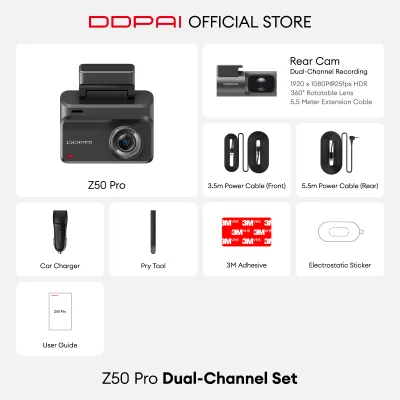
Prices are valid at publication and may change. Please refer to the product page for the latest price.
Frame rate is equally critical when dealing with fast-moving traffic and lane-filtering motorcycles. A standard recording speed of 30 frames per second (fps) is generally sufficient for slow commutes, but a higher frame rate of 60 fps is highly effective at reducing motion blur. When a motorcycle or vehicle cuts closely across your lane at speed, a higher frame rate ensures that individual frames remain sharp when paused, making it much easier to identify license plates or specific vehicle markings.
Field of view (FOV) determines how much of the road ahead is captured in the frame. A wide-angle lens is necessary to record incidents occurring in adjacent lanes or at intersections. However, you must avoid the temptation to choose an excessively wide FOV, such as 170 degrees or more. Extreme wide-angle lenses introduce severe fisheye distortion, which bends the edges of the image and makes vehicles directly in front of you appear much farther away than they actually are. A balanced FOV between 130 and 140 degrees provides ample side-to-side coverage while maintaining realistic depth and clarity in the center of the frame.
Furthermore, the tropical sun creates extreme lighting contrasts that can easily blind a standard camera sensor. Driving under flyovers, entering covered parking structures, or navigating tree-lined streets can cause sudden shifts from blinding sunlight to deep shadows. To combat this, look for a dashcam equipped with High Dynamic Range (HDR) or Wide Dynamic Range (WDR) technology. These features allow the camera sensor to combine multiple exposures in real-time, preventing the sky from being overexposed while ensuring details in the shadows remain visible.
Heat Resistance and Cabin Durability
The climate in the Philippines poses a severe threat to electronic devices mounted directly behind a vehicle’s windshield. During the dry season, outdoor temperatures regularly exceed 35°C, which means the cabin of a car parked under direct sunlight can easily surpass 60°C. Under these extreme conditions, dashcams powered by traditional lithium-ion batteries are highly susceptible to hardware failure. Over time, intense heat causes lithium batteries to swell, degrade, leak, or even pose a fire hazard inside the cabin.

To ensure long-term safety and reliability, a high-quality dashcam should utilize a supercapacitor instead of a lithium-ion battery. Supercapacitors do not store energy to run the camera for extended periods; instead, they hold just enough charge to safely save the current recording and shut down the device once the vehicle’s ignition is turned off. Supercapacitors are significantly more resistant to extreme heat, have a much longer operational lifespan, and eliminate the risk of battery-related swelling or thermal runaway.
When evaluating a dashcam, always check the manufacturer’s specification sheet for the rated operating and storage temperature ranges. A reliable unit designed for tropical climates should support operating temperatures up to at least 60°C or 70°C. If a manufacturer does not clearly state the operating temperature limits of their device, it is generally safer to assume the hardware may not be built to withstand prolonged exposure to intense tropical sunlight.
Physical mounting stability is another crucial factor for local road conditions. Constant vibrations from uneven asphalt, potholes, and speed bumps can cause weak mounts to rattle or fall off entirely. Adhesive mounts utilizing high-grade, heat-resistant double-sided tape are far more dependable than traditional suction cups. Suction cups rely on a vacuum seal that naturally degrades and fails when the windshield glass heats up, whereas high-quality adhesive mounts remain securely bonded to the glass regardless of temperature fluctuations.
Night Vision for Unlit Roads and City Glare
Nighttime driving introduces a completely different set of visual challenges, particularly on provincial highways that lack consistent street lighting, or in busy commercial districts filled with glare from neon signs and LED headlights. To capture usable footage in low-light environments, a dashcam must have a high-quality image sensor and a wide lens aperture. The aperture is denoted by an f-number, such as f/1.8 or f/2.0; a lower number indicates a wider aperture, which allows more light to reach the sensor.
An image sensor with large physical pixels is highly effective at gathering light without introducing excessive digital noise or graininess. When shopping for a dashcam, look for models that specify the use of specialized low-light sensors. These sensors are designed to maximize light sensitivity, allowing the camera to resolve shapes, pedestrians, and road hazards on dark roads where your headlights are the only source of illumination.
Headlight bloom and streetlamp flare are common issues that can render nighttime footage useless by completely obscuring license plates. High-quality dashcams address this by incorporating anti-reflective lens coatings or physical polarizing filters, such as a Circular Polarizing Filter (CPL). A CPL filter attaches to the front of the camera lens to cut down on windshield reflections and reduce the glare from oncoming headlights, ensuring that the license plates of vehicles directly in front of you remain legible.
To verify a dashcam’s actual low-light performance, do not rely solely on marketing terms like “Super Night Vision” printed on the packaging. Instead, consult the user manual to verify the specific image sensor model and lens aperture. Additionally, search for raw, unedited user-uploaded footage online recorded in similar low-light environments to observe how the camera handles oncoming headlights and unlit streets before making your purchase.
Reliable Power, Storage, and Incident Capture
A dashcam must operate seamlessly in the background without requiring constant manual intervention. This reliability depends on how the device manages its storage media and power supply. Dashcams use a process called loop recording, where the camera divides the footage into short segments (usually one to three minutes long) and automatically overwrites the oldest unprotected files once the memory card reaches its capacity limit.
To prevent critical footage from being overwritten during an accident, dashcams feature a built-in G-sensor that detects sudden changes in motion, such as hard braking or a physical impact. When the G-sensor is triggered, the camera automatically locks the current video file, saving it to a protected folder. However, on local roads filled with potholes, speed bumps, and uneven patches, a highly sensitive G-sensor will constantly trigger false locks. Over time, these locked files will fill up your memory card, leaving no room for normal loop recording. It is essential to choose a dashcam that allows you to adjust the G-sensor sensitivity to a lower setting so that only actual collisions trigger the file-locking mechanism.
The choice of storage media is equally critical to the reliability of your setup. Continuous video recording puts immense strain on memory cards, causing standard cards designed for smartphones or cameras to fail prematurely. You must use a high-endurance microSD card specifically rated for continuous write cycles. Look for cards labeled as Class 10, U3, or V30, and verify the maximum storage capacity supported by your dashcam. Regularly formatting the memory card—ideally once a month—helps maintain its performance and prevents file corruption.
If you want to monitor your vehicle while it is parked, you will need a dashcam that supports parking mode. This feature allows the camera to record footage if it detects motion or an impact while the engine is turned off. To use parking mode, the dashcam must be connected to the vehicle’s constant power supply using a hardwiring kit.
Before attempting to install a hardwiring kit, consult your vehicle’s original owner’s manual to understand the fuse box layout and warranty terms. Incorrectly tapping into the electrical system can void your manufacturer’s warranty, drain your battery, or cause electrical malfunctions. For safety and reliability, it is highly recommended to have the installation performed by a qualified automotive technician who can ensure the hardwiring kit’s low-voltage cutoff feature is properly configured to protect your car battery from draining completely.
Building Your Shortlist: Feature Matrix and Buying Checklist
To help you evaluate different models and finalize your purchase, use the following comparison framework to map essential features to your typical driving scenarios:
| Driving Scenario | Essential Feature | Why It Matters |
|---|---|---|
| Heavy City Commutes | High Frame Rate (60 fps) & HDR | Captures fast-moving motorcycles and handles sudden lighting changes under flyovers. |
| Provincial Highways | Wide Aperture (f/1.8) & Night Vision | Ensures visibility on unlit roads and reduces headlight glare from oncoming vehicles. |
| Outdoor Parking | Supercapacitor | Prevents battery swelling and hardware failure under intense tropical heat. |
| Rough Roads / Potholes | Adjustable G-Sensor | Prevents the memory card from filling up with locked files from normal road vibrations. |
When compiling your shortlist, be vigilant against common red flags. Avoid unbranded or extremely cheap models that do not specify their image sensor, aperture, or operating temperature limits. Be skeptical of units that claim ultra-high resolutions like 4K but use cheap interpolation software to artificially stretch a lower-resolution image, resulting in blurry and unusable footage.
To ensure you receive genuine hardware and reliable after-sales support, purchase your dashcam through authorized brand stores on reputable online marketplaces or directly from established physical automotive accessory shops. Buying from authorized local distributors ensures you receive a valid local warranty, which is crucial for resolving any hardware issues caused by electrical fluctuations or extreme heat exposure.
Frequently Asked Questions (FAQ)
Is it legal to use a dashcam for car in the Philippines?
Yes, it is entirely legal to use a dashcam in your vehicle. However, you must comply with the guidelines set by the Anti-Distracted Driving Act. The dashcam must be mounted in a position that does not obstruct your direct line of sight as a driver. The recommended mounting position is directly behind or near the rearview mirror, where it can capture a clear view of the road without blocking your view of the windshield.
From a privacy perspective, recording video in public spaces is generally permitted, and dashcam footage is widely accepted by local insurance companies and law enforcement as evidence for accident claims or traffic disputes. However, you should avoid recording inside private properties without permission, and you must not use the recorded footage to violate the personal privacy of individuals in a manner that violates local data privacy laws.
Do I need a dual-channel front and rear setup?
While a single front-facing dashcam is a highly effective starting point, a dual-channel (front and rear) setup provides much more comprehensive protection. Rear-end collisions are incredibly common in heavy, stop-and-go traffic, and having a rear-facing camera ensures you have clear evidence if another vehicle bumps into you from behind.
Keep in mind that a dual-channel setup involves higher hardware costs and a more complex installation process, as you must route a cable from the front windshield to the rear window. If you choose a dual-channel system, ensure the wiring is routed carefully to avoid interfering with your vehicle’s side curtain airbags. If you are on a tight budget, a high-quality front-only camera is far better than a cheap, low-quality dual-channel system that captures blurry footage on both ends.

Community discussion
Share your experience or ask a question. Comments are reviewed before publication.