
Quick Answer: Must-Have Dashcam Features for Philippine Roads
Navigating the roads in the Philippines presents a unique set of challenges. From the intense, bumper-to-bumper congestion of Metro Manila highways to the pitch-black stretches of provincial bypass roads, your daily drive demands constant vigilance. Installing a high-quality dash camera for car is an essential tool for liability protection, insurance claims, and peace of mind. However, choosing the right device requires looking beyond generic marketing promises and understanding which specific features directly address local driving hazards.
To protect yourself against sudden cut-ins, motorcycle filtering, unlit roads, and parking lot scrapes, your dashcam must possess a balanced set of features. The most critical capabilities include a wide diagonal field of view to capture adjacent lanes, high resolution (at least 1080p, though 2K is preferred) to resolve license plates, advanced low-light sensors for provincial night driving, and a reliable parking mode backed by a G-sensor for unattended security. This guide breaks down why these features are indispensable for Philippine roads and how to verify them on product spec sheets.
Heavy Traffic and Stop-and-Go: Wide Angle and High Resolution
Urban driving in major Philippine metropolitan areas—such as traversing EDSA, C5, or Commonwealth Avenue—is characterized by dense, multi-lane traffic, frequent lane-splitting by motorcycles, and sudden lane changes by public utility vehicles. In these highly congested, stop-and-go environments, a dash camera for car must document events occurring not just directly in front of your bumper, but also along the sides of your vehicle.
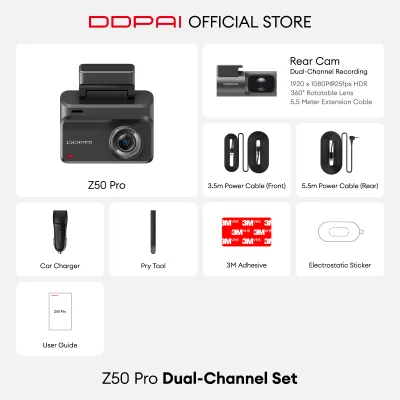
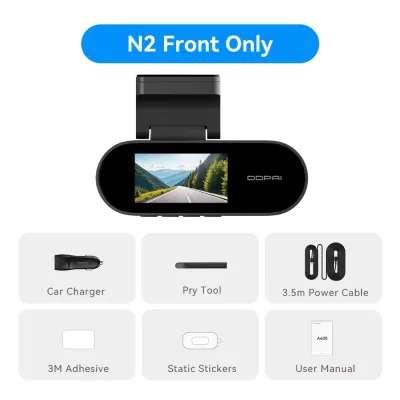
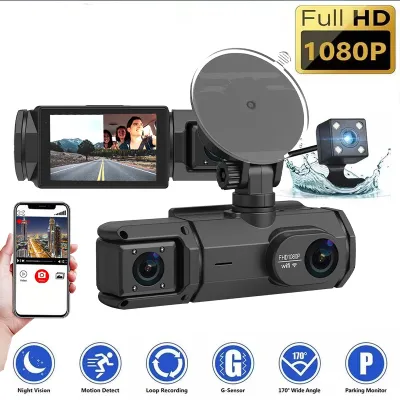
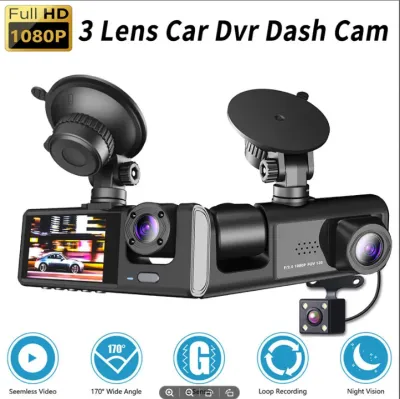
Products mentioned in this guide
![[NEW LAUNCH] DDPAI N1 Pro 2.5K 1440P Front & Rear Super Capacitor Dash Cam with ADAS & NightVIS](https://img.lazcdn.com/g/p/5e2a8a5912e3629586677944a07b376b.png_400x400q80.png_.webp)
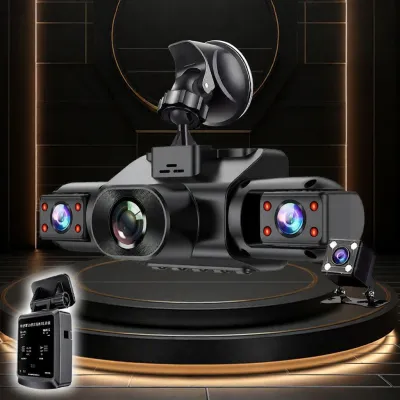
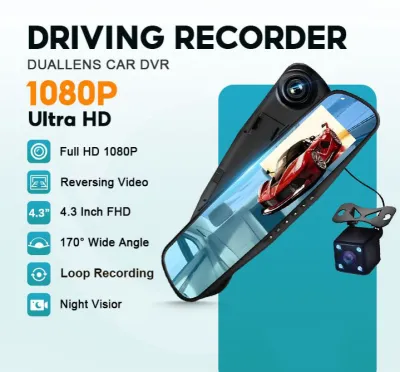
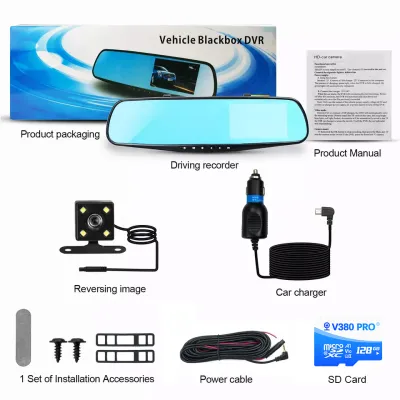
Prices are valid at publication and may change. Please refer to the product page for the latest price.

The field of view (FOV) determines how much of the road ahead and to the sides the camera can capture. A wide-angle lens is essential for documenting motorcycles filtering through tight spaces or vehicles merging abruptly. However, there is a distinct trade-off. While an ultra-wide lens of 170 degrees or more might sound appealing, it often introduces severe “fisheye” distortion. This distortion bends the edges of the image, making objects appear much farther away than they actually are and significantly reducing the clarity of details at the periphery. For local traffic, a diagonal field of view between 130 and 150 degrees represents the ideal sweet spot. It provides ample coverage of adjacent lanes and sidewalks without sacrificing image geometry. Always check the manufacturer’s technical specifications for the “diagonal FOV” rather than relying on vague marketing claims.
Resolution is the next critical factor. Standard High Definition (1080p) is the absolute baseline, but in dense traffic, it often falls short when you need to read license plates on moving vehicles. Upgrading to 2K (1440p) or 4K (2160p) resolution provides the pixel density necessary to crop or zoom into a video frame to identify a license plate or a driver’s face after an incident. This is particularly important when a vehicle cuts in closely and then speeds away.
Furthermore, pay attention to the frame rate, measured in frames per second (fps). While 30fps is standard, a camera capable of recording at 60fps in 1080p or 2K provides much smoother playback. A higher frame rate reduces motion blur, making it far easier to pause a video and capture a clear, legible screenshot of a fast-moving vehicle or motorcycle as it passes your car.
When shopping, verify whether the advertised resolution is “native” or “interpolated.” Interpolated resolution uses software to upscale a lower-resolution image, which adds pixels without adding actual detail, resulting in a blurry image when zoomed. True native resolution is tied directly to the physical capabilities of the camera’s image sensor. Look for spec sheets that explicitly state the native sensor resolution (such as a 5-megapixel or 8-megapixel sensor) to ensure you are getting genuine high-definition clarity.
Poorly Lit Provincial Roads: Low-Light Performance and Clarity
Leaving the brightly lit streets of major cities often means encountering provincial highways, bypass roads, and rural barangay roads that completely lack street lighting. Driving at night in these areas requires a dash camera for car that can navigate extreme contrasts—such as the pitch-black darkness of the countryside punctuated by the blinding glare of oncoming high-beam headlights.
For night driving, raw resolution or high megapixel counts are secondary to the physical quality of the camera’s image sensor. A cheap 4K camera with a low-grade sensor will perform poorly in the dark, producing grainy, unusable footage. Instead, look for dashcams equipped with high-quality, brand-name low-light sensors, such as the Sony Starvis or Starvis 2 series. These sensors are specifically engineered to maximize light sensitivity in low-light environments, allowing the camera to resolve road signs, pedestrians, and hazards that are barely visible to the naked eye.
The lens aperture is another critical specification to check. The aperture determines how much light reaches the image sensor and is represented by an f-number (such as f/1.6, f/1.8, or f/2.0). A lower f-number indicates a wider aperture, which lets in significantly more light. For unlit provincial roads, look for a dashcam with an aperture of f/1.8 or wider (lower). This physical design allows the camera to maintain a faster shutter speed in the dark, reducing motion blur and keeping images sharp.
Additionally, High Dynamic Range (HDR) or Wide Dynamic Range (WDR) technology is indispensable for handling local night driving challenges. On provincial roads, you will frequently encounter oncoming vehicles using high-beam headlights or aftermarket LED light bars. Without HDR or WDR, these intense light sources will completely blow out the exposure, blinding the camera and turning the oncoming vehicle’s license plate into a solid white blur. HDR works by combining multiple exposures of the same frame in real-time, balancing the brightest highlights and the darkest shadows so that both the oncoming headlights and the surrounding dark road remain visible and detailed.
To verify a dashcam’s low-light capabilities, do not rely on polished daytime promotional clips provided by the manufacturer. Instead, search for independent, unedited night-time test footage or verified user reviews filmed on poorly lit roads. Pay close attention to how well the camera handles oncoming headlights and whether you can read the license plates of vehicles driving ahead of the test car under headlight illumination alone.
Unattended Parking and Security: Parking Mode and G-Sensor
In the Philippines, parking spaces can be highly congested, and street parking is often a necessity. This exposes your vehicle to risks such as parking lot scrapes, hit-and-runs, and vandalism when left unattended. To protect your vehicle while you are away, your dash camera for car must feature a reliable parking mode paired with a sensitive G-sensor.
A G-sensor, or accelerometer, is a built-in sensor that measures gravitational forces and sudden physical impacts. During normal driving, if you are involved in a collision or sudden braking event, the G-sensor detects the sharp change in motion and automatically “locks” the current video file. This prevents the dashcam’s loop recording feature from overwriting the crucial footage of the incident. When the vehicle is parked, the G-sensor acts as a trigger to wake the camera up and record an event if someone bumps into your car.
Parking mode functions in several different ways depending on the dashcam model:
- Impact Detection: The camera remains in a low-power standby state and only turns on to record a short clip when the G-sensor detects a physical impact or vibration.
- Motion Detection: The camera monitors the scene and starts recording whenever it detects movement within its field of view, which is useful for catching vandals or keying incidents.
- Time-Lapse or Low-Bitrate Recording: The camera records continuously at a very low frame rate (e.g., 1 to 5 frames per second) or lower quality, compressing hours of parking footage into a short, easily reviewable video file without filling up your storage card.
Operating a true parking mode requires a continuous power supply. Because a dashcam’s internal battery or supercapacitor is only designed to provide enough power to save the final file when the engine turns off, it cannot run the camera for hours while parked. To enable parking mode, you must use a dedicated hardwire kit or an external dashcam battery pack. A hardwire kit connects the dashcam directly to your vehicle’s fuse box, tapping into a constant power source (such as the hazard lights or central locking system) while also connecting to an ignition-switched source so the camera knows when the engine is on or off.
Because hardwiring involves making modifications to your vehicle’s electrical system, it carries inherent risks if performed incorrectly. Improper installation can drain your car’s main starter battery, cause electrical faults, or potentially void your vehicle’s manufacturer warranty. Most high-quality hardwire kits feature an adjustable low-voltage cutoff, which automatically cuts power to the dashcam if your car battery’s voltage drops below a safe threshold (such as 12V or 12.4V), ensuring you can still start your engine. Before attempting to install a hardwire kit, always consult your vehicle’s owner’s manual for specific fuse box layouts and electrical guidelines. Additionally, verify your specific vehicle model, year, and electrical interface from both the product documentation and your vehicle’s manual to ensure compatibility before making any modifications. If you are unsure about identifying the correct fuses or routing the wiring safely around side-curtain airbags, seek professional installation from a qualified automotive technician.
Cross-Scenario Compatibility: Finding the Right Dash Camera for Car
Choosing the ideal dash camera for car involves synthesizing these features to match your specific daily driving patterns and budget, rather than simply purchasing the most expensive model on the market. By prioritizing the features that correspond to your primary driving environment, you can make a highly practical and cost-effective decision.
For instance, if your daily commute is primarily within highly urbanized areas like Metro Manila, your primary concerns are likely close-quarters traffic disputes and parking security. In this scenario, you should prioritize a wide-angle lens (130 to 140 degrees), high resolution (at least 2K) to capture fine details of nearby vehicles, and a robust parking mode with a hardwire kit to protect your car while parked in public lots or along busy streets. Conversely, if your routine involves frequent long-distance travel on provincial highways or rural bypass roads, your top priority must be low-light performance. You should invest in a dashcam equipped with a premium low-light image sensor (such as Sony Starvis), a wide aperture (f/1.8 or wider), and effective HDR processing to handle oncoming high beams.
Regardless of your driving environment, two often-overlooked hardware specifications are critical for long-term reliability in the Philippines: the storage media and the power source design.
Because dashcams record continuously, they subject memory cards to intense, non-stop write cycles. Standard microSD cards used in smartphones or action cameras will quickly fail under these conditions. You must use a “high-endurance” microSD card (typically rated Class 10, U3, or V30) specifically designed for security cameras and dashcams. These cards use robust flash memory capable of handling thousands of write-and-overwrite cycles, ensuring your camera doesn’t fail to record during a critical moment.
Additionally, the tropical climate of the Philippines means your vehicle’s cabin can reach extremely high temperatures when parked under direct sunlight. Traditional lithium-ion batteries are highly sensitive to heat; they can swell, degrade rapidly, or even pose a fire hazard when exposed to extreme cabin temperatures. For tropical environments, it is highly recommended to choose a dashcam that utilizes a supercapacitor instead of a lithium-ion battery. Supercapacitors are far more heat-tolerant, offer a significantly wider operating temperature range, and are much safer and more reliable for long-term use in hot climates.
Before finalizing your purchase, use this quick checklist to verify the product’s specifications on the box or official store listing:
- Video Resolution: Native 1080p, 2K, or 4K (avoid interpolated resolutions).
- Field of View: Diagonal FOV between 130 and 150 degrees.
- Image Sensor: Recognized low-light sensor (e.g., Sony Starvis series).
- Lens Aperture: f/1.8 or wider (lower f-number).
- Dynamic Range: True HDR or WDR capability.
- Power Source: Supercapacitor-based design rather than a lithium-ion battery.
- Parking Security: Built-in G-sensor with customizable sensitivity levels.
- Storage Compatibility: Support for high-endurance microSD cards up to 128GB or 256GB.
By systematically verifying these technical details, you can ensure that your chosen dash camera for car will perform reliably under the demanding conditions of Philippine roads, providing clear, indisputable evidence whenever you need it most.

Community discussion
Share your experience or ask a question. Comments are reviewed before publication.