
When the skies open during a daily commute, a standard umbrella or casual windbreaker will not keep you dry on a motorcycle. Finding a specialized rainproof jacket for men that can withstand the intense pressure of riding through a tropical downpour is a necessity for safety, health, and comfort. A proper motorcycle rain jacket must do far more than repel water; it must resist high wind pressures, remain visible in low-light conditions, fit securely over bulky protective armor, and handle intense humidity without trapping sweat.
The Unique Challenges of Motorcycle Commuting in Heavy Rain
Riding a motorcycle in a heavy downpour introduces physical forces that standard rain gear is simply not built to handle. When you walk in the rain, water falls vertically at a relatively low velocity. When you ride at speeds of 50 to 80 kilometers per hour, however, the relative wind speed drives water droplets horizontally against your chest, shoulders, and arms with significant force. This high-velocity impact pushes water through tiny needle holes, weak zippers, and loose cuffs that would normally remain dry during a casual walk.
In the tropical climate of the Philippines, these challenges are compounded by intense weather patterns. The monsoon seasons bring sudden, torrential downpours that can flood roads within minutes, accompanied by high ambient humidity and warm temperatures. If your jacket lacks proper ventilation, the temperature difference between your warm body and the cool rain outside will quickly cause heavy condensation to form on the interior of the fabric, leaving you just as wet from sweat as you would be from the rain.
Products mentioned in this guide
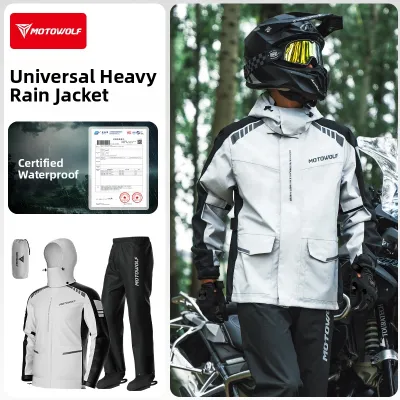
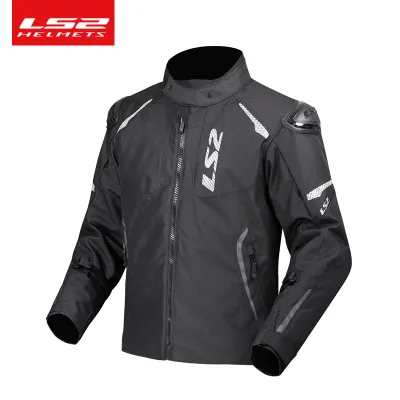
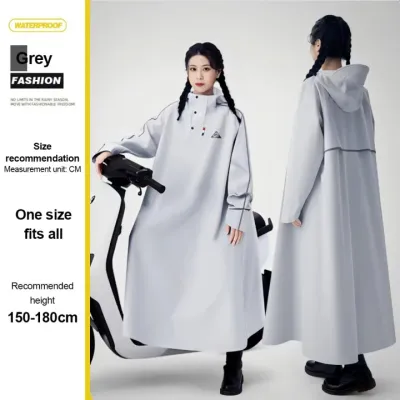
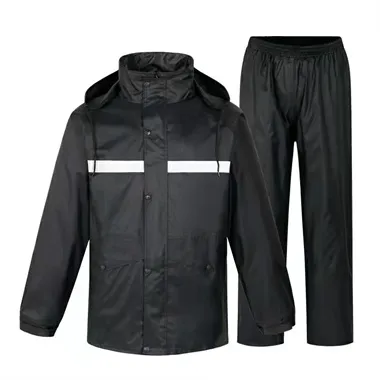
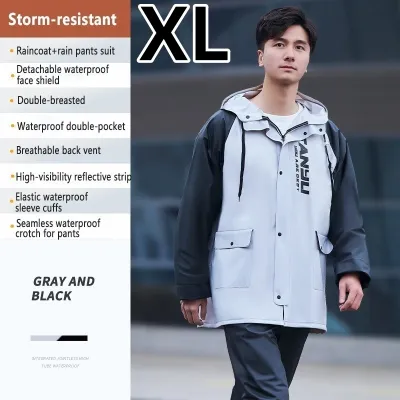
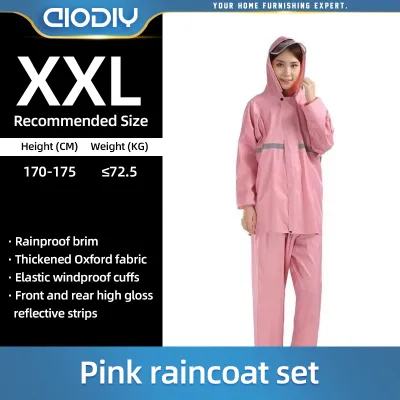
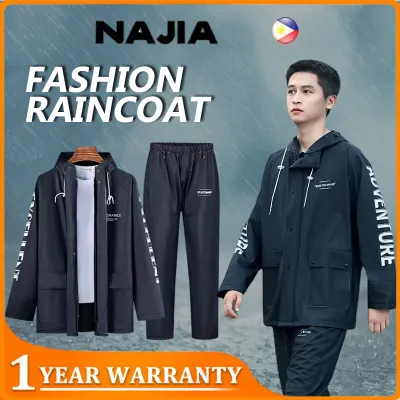
Prices are valid at publication and may change. Please refer to the product page for the latest price.
Ultimately, a commuter’s primary goals during a heavy downpour are to stay completely dry, maintain a stable core body temperature to prevent shivering, and ensure maximum visibility on wet, chaotic roads. Shivering from wind chill slows down reaction times and reduces grip strength on the handlebars, which can be incredibly dangerous when navigating slippery asphalt, hidden potholes, and unpredictable traffic.
Waterproof Ratings and Seam Construction in a Rainproof Jacket for Men
To ensure your rainproof jacket for men can withstand the punishment of highway-speed downpours, you must understand how manufacturers measure water resistance. Look closely at the product specifications for a hydrostatic head rating, which is measured in millimeters (mm). A rating of 5,000 mm is sufficient for light rain or short walks, but for motorcycle commuting, you should seek a minimum rating of 10,000 mm, with 15,000 mm to 20,000 mm being highly recommended for prolonged exposure to heavy, wind-driven rain.

However, even the most advanced waterproof fabric will fail if the construction of the jacket is lacking. Every time a sewing machine punctures the fabric to sew a seam, it leaves behind thousands of microscopic holes. High-quality motorcycle rain jackets feature fully taped or heat-sealed seams on the interior, where a waterproof tape is thermally bonded over every single stitch line to prevent water ingress. Always verify whether a jacket is labeled as “fully seam-taped” rather than merely “critically taped,” which only seals the seams most exposed to rain.
Beyond the fabric and seams, pay close attention to the closure systems. The main front zipper is a primary entry point for water; it must be shielded by double storm flaps that overlap and secure with Velcro or heavy-duty snaps to redirect water away from the zipper track. Pocket zippers should either be fully waterproof polyurethane-coated zippers or protected by deep fabric welts. Finally, inspect the cuffs: adjustable storm cuffs with tight elastic or secure Velcro tabs are essential to create a tight seal around your gloves, preventing rain from forcing its way up your sleeves as you hold the handlebars.
Fit, Layering, and Riding Gear Compatibility
A common mistake when purchasing a rainproof jacket for men is choosing a size based on regular casual wear. A motorcycle rain jacket is designed to function as an “over-garment,” meaning it must fit comfortably over your existing protective riding gear, including bulky textile jackets, elbow armor, shoulder pads, and chest protectors. If the rain jacket is too tight, it will restrict your range of motion, making it difficult to turn your head for blind-spot checks or react quickly to sudden traffic changes.
Conversely, a jacket that is too loose will catch the wind like a sail. At speed, loose fabric flaps violently, which not only causes rapid physical fatigue but can also destabilize your balance on the motorcycle. To prevent this, look for rain jackets equipped with multiple adjustment points. Adjustable waist cinches, forearm straps, snap cuffs, and hem drawcords allow you to customize the fit, pulling the excess fabric tight against your protective gear to maintain a streamlined profile and eliminate wind drag.
The collar design is another critical detail that determines whether you stay dry or end up with water pooling inside your shirt. The collar must rise high enough to cover the neck completely, sealing the gap between the jacket and the bottom of your helmet. Look for adjustable collar closures, such as drawstrings or Velcro tabs, and soft neoprene or microfleece linings that prevent chafing when you turn your head. Some advanced jackets feature a thin, under-helmet hood that fits beneath your full-face or open-face helmet, ensuring that water running off the back of your helmet cannot slip down your collar.
Visibility and Safety Features for Low-Light Riding
Heavy rain and overcast skies drastically reduce visibility for all road users. Water droplets on car windshields and side mirrors, combined with the glare of headlights on wet asphalt, make it incredibly difficult for car drivers to spot a motorcyclist. Therefore, passive safety features on your rain jacket are just as important as its waterproofing capabilities. Choosing a jacket in high-visibility colors—such as neon yellow, bright orange, or high-vis green—ensures you stand out against the dark, gray backdrop of a storm.
If high-visibility colors do not match your aesthetic preferences, you must compensate with extensive reflective elements. Look for strategically placed reflective piping, panels, or retroreflective prints across the upper back, chest, and arms. These placements are crucial because they outline your silhouette to other motorists, catching the headlights of vehicles approaching from the rear, front, and sides at intersections.
Before purchasing, verify that these reflective materials are high-quality and securely bonded to the fabric. Cheap reflective stickers can crack, peel, or delaminate after a few rides in heavy rain. More importantly, ensure that the application of these reflective elements has not compromised the underlying waterproof membrane; high-quality manufacturers bond reflective materials thermally to the outer shell without puncturing the fabric, preserving the jacket’s integrity.
Breathability and Ventilation in a Tropical Climate
In hot, humid environments, wearing a completely sealed, non-breathable plastic or heavy PVC jacket quickly leads to the “boil-in-the-bag” effect. Within minutes of riding, your body heat and sweat become trapped inside, leaving you completely soaked from the inside out. To avoid this uncomfortable scenario, it is vital to choose a jacket that balances waterproofing with breathability.
Breathable waterproof jackets utilize specialized membranes or coatings that feature microscopic pores. These pores are small enough to block external liquid water droplets from entering, yet large enough to allow internal moisture vapor (your sweat) to escape. While these advanced fabrics are generally more expensive than basic PVC options, the dramatic increase in comfort during long, humid commutes in the Philippines makes them well worth the investment.
In addition to breathable fabrics, physical ventilation features are essential for regulating your body temperature. Look for jackets equipped with shielded back vents or underarm zippers (often called pit zips). These vents are designed with overlapping fabric flaps or water-resistant zippers that allow hot air and moisture to escape from high-heat zones without allowing driving rain to enter. A lightweight, polyester mesh inner lining is also highly beneficial, as it keeps the cold, wet outer fabric from sticking directly to your skin or riding gear, allowing air to circulate and making the wet jacket much easier to slide off once you reach your destination.
Care, Drying, and Maintenance for Longevity
A high-quality motorcycle rain jacket is an investment in your daily comfort and safety, and proper maintenance is essential to preserve its waterproof performance over time. After riding through a heavy downpour, never bunch up your wet jacket and throw it into a bag or trunk. This traps moisture, leading to the growth of mold, mildew, and unpleasant odors, which can ruin the fabric and degrade the internal seam tape.
Always hang your jacket on a wide, padded hanger to air dry in a shaded, well-ventilated indoor space. Avoid exposing the jacket to direct sunlight for extended periods, as ultraviolet (UV) rays can degrade the synthetic fibers and weaken the waterproof coatings. Never use high-heat sources, such as clothes dryers, radiators, or irons, to speed up the drying process. High heat can easily melt the adhesive holding the interior seam tape in place, permanently ruining the jacket’s waterproofing.
When the jacket becomes dirty from road grime, oil, and mud, clean it according to the manufacturer’s care label. Machine washing with harsh household detergents and fabric softeners can strip away the Durable Water Repellent (DWR) coating on the outer fabric and clog breathable membranes. Instead, hand wash the jacket using cold water and a specialized technical wash designed for waterproof gear. Finally, store the jacket by hanging it loosely in a closet rather than folding it tightly into a compact pouch; repeated, tight folding creates sharp creases that can eventually crack the internal waterproof membrane, leading to localized leaks.
Frequently Asked Questions (FAQ)
Can I use a standard walking raincoat for motorcycle commuting?
Standard walking raincoats are not designed to handle the unique physical demands of motorcycle riding. At commuting speeds, the high wind pressure will easily force water through the non-reinforced zippers, simple seams, and loose neck openings of a standard raincoat. Furthermore, casual raincoats lack the aerodynamic, adjustable fit required to prevent dangerous wind flapping, which can distract you and affect your balance on the road. They also lack the necessary abrasion-resistant materials, secure armor accommodation, and extensive high-visibility reflective elements required to keep you safe and visible in heavy traffic.

Community discussion
Share your experience or ask a question. Comments are reviewed before publication.