
Riding a motorcycle during the wet season requires specialized gear that goes far beyond a standard plastic poncho. A proper motorcycle raincoat must accommodate bulky protective armor, withstand high-velocity wind, remain highly visible in torrential downpours, and manage internal humidity without leaking. Choosing the right gear is a critical safety decision for daily commuters and long-distance riders alike, as the wrong material can balloon at high speeds, restrict movement, or allow water to seep through within minutes of a tropical storm.
To stay dry and safe on wet roads, riders must look for specific design elements tailored to the unique dynamics of motorcycling. These include articulated cuts that fit over riding jackets, strategically placed retroreflective strips, robust storm flaps, and breathable yet waterproof fabrics. Evaluating these features systematically ensures that your wet-weather gear supports your control of the vehicle rather than creating dangerous distractions.
Ensuring Proper Fit and Coverage Over Riding Gear
A motorcycle raincoat must never be selected based on your standard t-shirt size. Because you will wear it over an armored riding jacket, chest protectors, and elbow guards, the raincoat requires a generous, articulated cut. When trying on a potential suit, wear your complete set of protective gear to verify that the raincoat does not restrict your reach to the handlebars or limit your ability to turn your head.
Products mentioned in this guide
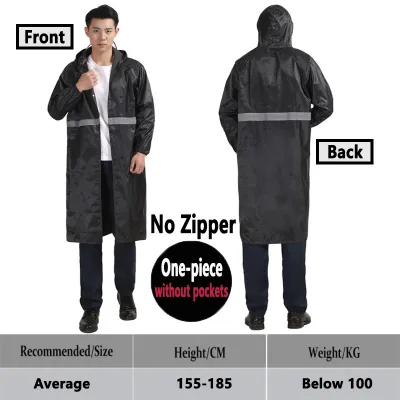
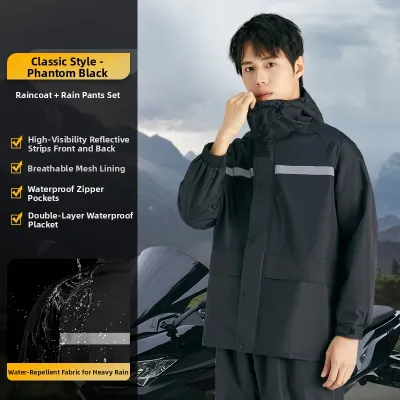
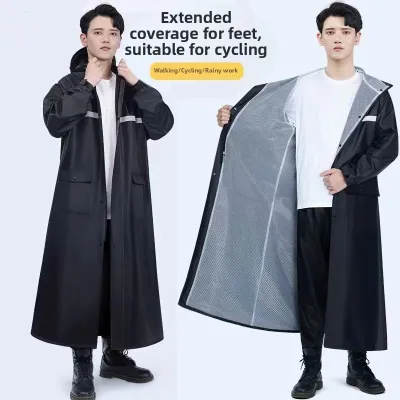
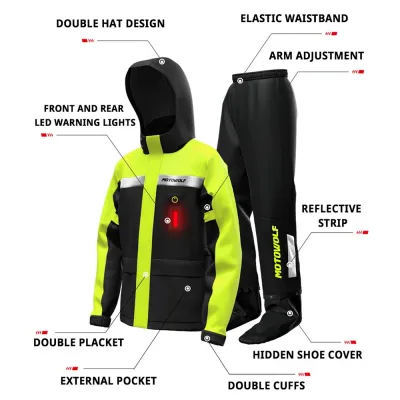
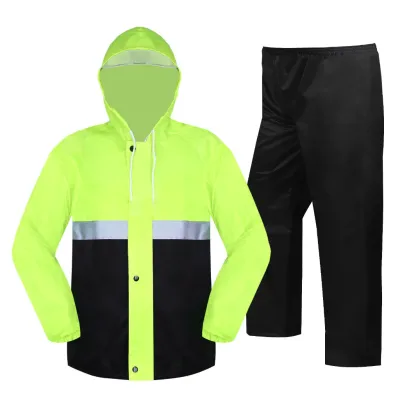
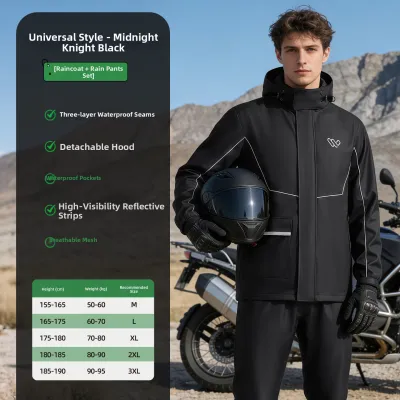
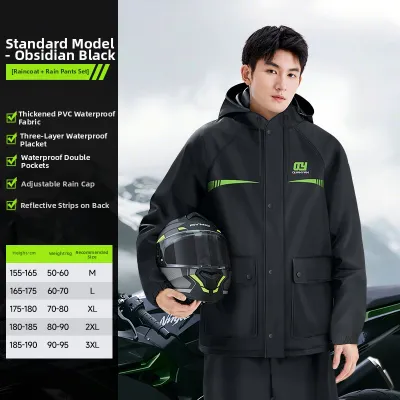
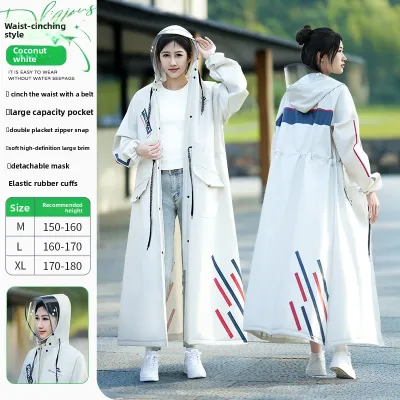
Prices are valid at publication and may change. Please refer to the product page for the latest price.
The seated riding position places unique demands on fabric coverage. Standard jackets often ride up when you reach forward, exposing your lower back to wind and rain. Look for a motorcycle-specific raincoat featuring an extended back panel that remains well below the waistline of your pants even when you are tucked or leaning forward. Articulated sleeves that are pre-curved to match a natural riding posture will also prevent the cuffs from pulling back and exposing your wrists.
For the lower body, rain pants require specific design features to handle the ergonomics of a motorcycle saddle. Standard trousers tend to pull tight across the thighs and rise up the shins when you bend your knees to place your feet on the pegs. To counter this, look for rain pants with a gusseted crotch and a longer inseam than your usual trousers. The extra fabric prevents the material from binding or tearing at the seams, while also ensuring the cuffs continue to cover your riding boots.
Furthermore, look for adjustable straps or hook-and-loop tabs on the upper arms, forearms, and thighs. These adjustment points allow you to cinch down any excess fabric once the raincoat is over your armor. Eliminating loose material is crucial because loose fabric will flap violently at highway speeds, causing rider fatigue, distracting noise, and premature wear on the garment’s seams.
Maximizing Visibility in Heavy Rain and Low Light
During a sudden tropical downpour, visibility drops dramatically for all road users. Motorcyclists, having a smaller road profile, are particularly vulnerable when heavy rain, road spray, and fog obscure the vision of surrounding drivers. A high-quality motorcycle raincoat must serve as an active safety tool by maximizing your presence on the road through color and reflective elements.

While dark colors like black or navy blue are popular for daily wear, they make a rider virtually invisible during a daytime storm. Opting for high-visibility base colors, such as fluorescent yellow, neon green, or bright orange, significantly increases your chances of being noticed by other motorists. These bright hues contrast sharply against grey asphalt, dark storm clouds, and the white spray kicked up by larger vehicles.
In addition to bright base colors, retroreflective materials are essential for low-light and nighttime riding. Inspect the raincoat for retroreflective strips positioned across the upper back, chest, and down the sides of the sleeves. These placements ensure that your silhouette is visible from multiple angles, whether a vehicle is approaching you from behind, from the side at an intersection, or from the front. Verify that these reflective elements meet recognized safety standards, which are typically noted on the product’s inner care label.
The design of the collar and hood also plays a vital role in maintaining your field of vision. Many motorcycle raincoats feature an ultra-thin, stowable hood designed to be worn under your helmet to prevent water from running down your neck. If you choose to use this feature, ensure the hood does not bunch up or create pressure points inside your helmet. When riding without the hood deployed, the collar must sit high enough to seal against the base of the helmet without restricting your ability to perform head checks.
Checking Closures and Seals for High-Speed Wind and Water
At highway speeds, rainwater does not simply fall; it is driven against your body with significant force. Any gap in your raincoat’s closures will quickly become an entry point for water. Therefore, the construction of zippers, cuffs, and collars requires close inspection before purchase.
The main front zipper of the jacket is the most common failure point in heavy rain. A reliable motorcycle raincoat should feature a double-layer storm flap system that covers the zipper entirely. This design typically uses an inner gutter to catch any water that penetrates the outer flap, channeling it down and out of the jacket. The outer flap must be secured firmly with heavy-duty snaps or continuous hook-and-loop strips to prevent the wind from peeling it open at speed.
Cuffs and ankle openings require robust, adjustable sealing mechanisms to interface correctly with your gloves and boots. Look for wide hook-and-loop straps or elasticized cuffs with snap adjusters. When riding, you will need to decide whether to wear your glove gauntlets inside or outside the raincoat cuffs depending on the intensity of the rain; adjustable cuffs allow you to create a tight seal in either configuration. Similarly, wide ankle openings with zippers or gussets make it easier to pull the pants over bulky riding boots, while adjustable straps allow you to cinch the hem tightly around the boot ankle to prevent water from riding up.
The collar design must provide a secure seal around the neck, which is another primary zone for water intrusion. Look for a high collar lined with soft material like fleece or microfiber to prevent chafing during long rides. The collar closure should be easily adjustable, allowing you to tighten it against your neck or the bottom of your helmet while still permitting comfortable breathing and head movement.
Balancing Waterproofing and Breathability in Humid Conditions
In tropical climates, managing internal moisture is just as important as blocking external rain. A completely waterproof but non-breathable plastic suit will quickly turn into a personal sauna, trapping sweat and causing intense discomfort and distraction. Balancing these two factors requires an understanding of fabric technology and ventilation design.
When reviewing product specifications, look for the distinction between basic polyurethane (PU) coatings and advanced breathable membranes. Basic coated fabrics are highly effective at blocking water and are often more budget-friendly, but they offer minimal breathability. Breathable membranes, on the other hand, feature microscopic pores that are too small for liquid water droplets to pass through but large enough to allow sweat vapor to escape. While these technical fabrics may require a higher initial investment, they offer superior comfort during long rides in warm, humid weather.
To supplement the fabric’s natural breathability, effective physical ventilation is essential. Look for raincoats equipped with covered vents on the back, under the arms, or across the chest. These vents must be designed with downward-facing flaps or water-resistant zippers to ensure that air can circulate through the jacket without allowing driving rain to enter. This airflow helps regulate your body temperature and reduces the buildup of condensation inside the suit.
Regardless of the fabric type, the raincoat’s seams are vulnerable points where water can seep through the stitching. Before purchasing, turn the garment inside out to verify that every seam is fully taped or sealed. High-quality motorcycle rain gear features heat-sealed tape applied over all interior stitched seams, ensuring that water cannot penetrate the needle holes even under high wind pressure.
Assessing Storage, Packability, and Off-Bike Practicality
A motorcycle raincoat is only useful if you have it with you when the weather turns. Because tropical downpours can occur suddenly, your rain gear must be easy to pack, store, and deploy at a moment’s notice.
Evaluate the packability of the raincoat by checking if it comes with a dedicated, compact carrying pouch. The packed suit should fit easily into your motorcycle’s under-seat compartment, top box, side panniers, or a daily backpack without taking up excessive space. Lightweight materials that compress easily make it much more convenient to carry the gear on every ride, ensuring you are never caught unprepared.
The placement and design of pockets on the raincoat also affect its daily utility. Look for at least one easily accessible, fully waterproof external pocket to store essential items like toll cards, parking tickets, or a mobile phone. These pockets should feature waterproof zippers or deep fold-over flaps secured with hook-and-loop fasteners to keep your valuables dry and within reach without requiring you to unzip the main jacket.
Finally, consider how the raincoat performs when you step off the motorcycle. If you commute to an office, school, or commercial area, you may need to walk short distances in the rain before removing your gear. A raincoat with a clean, functional design that does not look overly bulky or technical allows you to transition smoothly from riding to walking. Features like a stowable hood that can be deployed off the bike add to the garment’s overall versatility.
Frequently Asked Questions (FAQ)
Can I use a regular hiking or walking raincoat for motorcycle riding?
Using a standard hiking or walking raincoat for motorcycle riding is generally not recommended due to differences in design and material strength. Regular rainwear is designed for low-speed pedestrian movement and lacks the structural reinforcement needed to withstand highway-speed winds. On a motorcycle, a standard raincoat will often flap violently, which can distract the rider, fatigue the neck muscles, and cause the fabric to tear or delaminate rapidly. Furthermore, hiking jackets lack the specific cuts needed to fit comfortably over bulky riding armor, often riding up and exposing the lower back or wrists to water. They also rarely feature the extensive retroreflective elements required for high visibility in heavy road spray.
How should I clean and store my motorcycle raincoat to maintain its waterproofing?
To preserve the waterproof coatings and reflective elements of your motorcycle raincoat, always consult the manufacturer’s care label first. Generally, you should avoid machine washing with harsh detergents, fabric softeners, or bleach, as these chemicals can strip away the durable water repellent (DWR) finish and damage heat-sealed seam tapes. Instead, hand wash the raincoat using cool water and a mild, technical fabric cleaner designed for waterproof gear. Gently wipe away road grime and mud with a soft sponge rather than scrubbing. After washing, hang the garment to air dry completely in a well-ventilated, shaded area away from direct sunlight, as prolonged ultraviolet exposure can degrade the synthetic fibers. Never store your rain gear while it is damp, as this encourages the growth of mold and mildew, which can destroy the waterproof membranes and cause unpleasant odors.
Community discussion
Share your experience or ask a question. Comments are reviewed before publication.