
To choose the right gps tracker for motorcycle use, you must prioritize power supply compatibility, reliable network connectivity, robust weatherproofing, and essential alert systems. Balancing these features ensures your tracker remains active and hidden without draining your motorcycle’s battery or failing during heavy tropical downpours. By focusing on verifiable specifications rather than marketing claims, you can select a device that fits your riding habits and security needs.
Power Supply and Battery Specifications
When selecting a GPS tracker, you must first decide how the device will receive power. Hardwired trackers connect directly to your motorcycle’s battery, providing continuous monitoring without the need for manual recharging. This setup is ideal for daily riders who want uninterrupted security, though it requires routing wires through the motorcycle’s frame.
Battery-powered trackers rely entirely on internal rechargeable batteries, making them highly portable and easy to hide. However, they require periodic removal for recharging, which introduces the risk of downtime if you forget to plug them in. This option is best suited for occasionally used motorcycles or riders who prefer to avoid modifying their electrical wiring.
Products mentioned in this guide
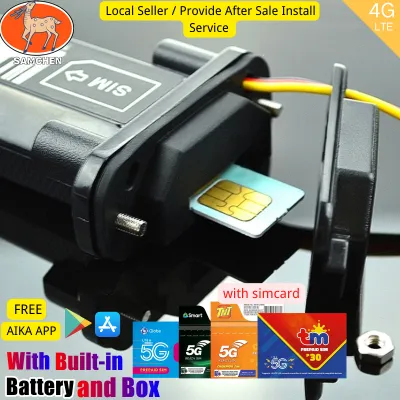
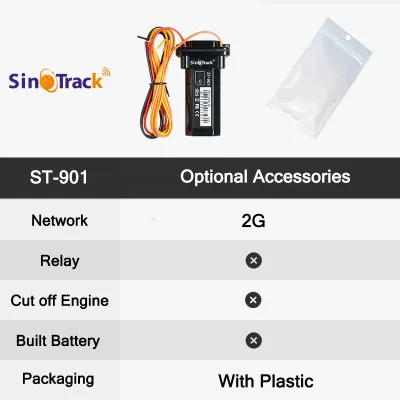
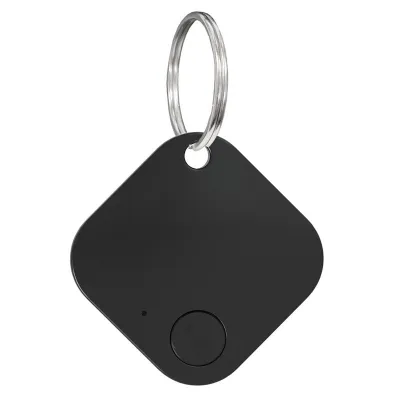
Prices are valid at publication and may change. Please refer to the product page for the latest price.
Before purchasing any hardwired tracker, you must verify its voltage compatibility on the manufacturer’s label. Most motorcycles operate on a 12V electrical system, but some trackers are designed for 5V USB power or wide-voltage ranges like 9V to 90V. Connecting an incompatible tracker directly to your battery can cause permanent electrical damage to both the device and your motorcycle’s wiring harness.
It is also critical to distinguish between advertised standby time and active tracking time. Manufacturers often highlight peak standby figures, which only apply when the motorcycle is completely stationary and the tracker is in a low-power sleep mode. Active tracking time, which occurs when the GPS and cellular modules are constantly transmitting your location, is significantly shorter and represents the real-world battery life you will experience during a ride.
Network Connectivity and Data Plans
A GPS tracker is only useful if it can reliably transmit its location data to your phone or computer. You must check the supported network bands listed on the product’s specification sheet against the active bands of local telecom providers in the Philippines. Many older 2G and 3G networks are being phased out, so choosing a tracker that supports modern 4G LTE or 5G bands ensures long-term reliability and better signal coverage in remote areas.

Trackers generally come with either a built-in SIM card or an open external SIM slot. Built-in SIM models often offer seamless setup out of the box but lock you into the manufacturer’s proprietary data plans. External SIM slots give you the flexibility to choose your own local network provider, allowing you to select the carrier with the strongest signal in your specific riding areas.
You must also calculate the ongoing operational costs before committing to a purchase. Some devices require a monthly or annual subscription fee to access their tracking platform, while others allow you to use prepaid data top-ups in ₱. Be sure to read the product’s terms of service to identify any hidden renewal fees, activation charges, or penalties for temporary service suspension.
Weather Resistance and Build Quality
Motorcycle accessories are constantly exposed to harsh environmental elements, making durability a primary concern. You should interpret the Ingress Protection (IP) ratings printed on the product packaging to determine its level of dust and water resistance. For an exposed mounting position on a motorcycle, look for a minimum rating of IP65, which protects against water jets, or IP67, which allows the device to withstand temporary submersion during heavy tropical downpours.
Operating temperature ranges are another critical specification to verify on the manufacturer’s data sheet. In tropical climates, temperatures inside fairings or under seats can rise significantly when the motorcycle is parked in direct sunlight. Ensure the tracker is rated to operate reliably under high ambient temperatures to prevent thermal shutdown or battery degradation.
Do not rely solely on generic material names like “heavy-duty plastic” as proof of durability. Instead, look for official specifications that confirm UV resistance and vibration resistance. Motorcycles produce constant high-frequency vibrations that can easily damage loose internal components, so a tracker built to withstand these specific forces is essential for long-term survival on the road.
Tracking Features and Alert Systems
The software features of a GPS tracker directly determine how effectively you can monitor your motorcycle and respond to potential theft. Essential alerts to look for include geofencing, which triggers an immediate notification if your motorcycle exits a pre-defined geographic boundary. Tamper notifications are equally important, alerting you instantly if the tracker is disconnected from its power source or if the device is physically moved.
You should also consider how tracking update intervals affect both data consumption and battery life. Real-time tracking with short intervals, such as every 10 seconds, provides highly detailed route histories but drains the battery quickly and consumes more data. Periodic tracking, which updates every few minutes or only when motion is detected, offers a practical balance for daily monitoring.
While advanced features like complex engine telemetry, fuel cutoff, and multi-year historical route storage sound appealing, they may not be necessary for basic theft recovery. Prioritizing core tracking reliability and instant alert delivery over complex add-ons simplifies your purchasing decision and often reduces both the upfront hardware cost and ongoing data fees.
Installation and Concealment Options
The physical installation of your GPS tracker plays a major role in its effectiveness as an anti-theft tool. Magnetic mounts offer a quick, reversible setup that allows you to easily transfer the tracker between vehicles. However, because they are attached externally, they are much easier for a thief to spot and discard during a theft attempt.
Hardwired hidden installations provide the highest level of security because the tracker is tucked deep inside the motorcycle’s bodywork. Before attempting a hardwired setup, you must check the product manual for specific wire gauge requirements, fuse ratings, and connector types. Using the correct fuse is vital to protect your motorcycle’s electrical system from short circuits.
Always prioritize safety and vehicle integrity during installation. If the tracker’s wiring instructions conflict with your motorcycle’s original owner’s manual, or if you are concerned about voiding your vehicle’s manufacturer warranty, stop the installation immediately. In these cases, it is highly recommended to have the tracker installed by a qualified motorcycle mechanic who understands your specific model’s electrical layout.
Frequently Asked Questions (FAQ)
Can I use a car GPS tracker on my motorcycle?
You should avoid using a standard car GPS tracker on a motorcycle unless the manufacturer explicitly states it is compatible. Car trackers are typically designed for protected cabin environments and often lack the IP-rated weatherproofing required to survive rain, dust, and road spray on a motorcycle. Additionally, car trackers may have larger physical dimensions that are difficult to conceal in a motorcycle’s limited space, or they may draw more power than a small motorcycle battery can support.
Do motorcycle GPS trackers require a monthly fee?
Yes, most motorcycle GPS trackers require ongoing payments to keep the tracking service active, though the payment structure varies. Some manufacturers require a monthly or annual subscription fee to cover cellular data and access to their tracking app. Alternatively, some trackers allow you to insert your own prepaid SIM card, where you only pay for the actual data consumed in ₱ through regular top-ups. Always verify these ongoing costs and network requirements before purchasing the hardware.
Community discussion
Share your experience or ask a question. Comments are reviewed before publication.