
Riding a motorcycle during the monsoon season in the Philippines presents a unique set of challenges. Torrential downpours can appear without warning, turning daily commutes into battles against wind-driven water and reduced visibility. Standard, lightweight rain gear often fails within minutes under these extreme conditions, leaving riders soaked, cold, and distracted. To stay safe and dry on the road, investing in a heavy duty motorcycle raincoat is essential. This guide breaks down the critical specifications, material technologies, and design features you must look for to ensure your gear can withstand the harshest tropical storms.
Why Monsoon Conditions Demand Heavy Duty Specifications
Monsoon weather is characterized by intense, sustained rainfall accompanied by strong winds. When you ride a motorcycle, the speed of your travel compounds the force of the falling rain. At speeds of 60 km/h or higher, water droplets do not merely fall on your gear; they are driven into the fabric with significant pressure. Light drizzle gear designed for casual walking lacks the structural integrity and high waterproof ratings required to resist this forced penetration, leading to rapid water ingress.
Furthermore, the tropical climate of the Philippines introduces the challenge of high humidity. When it rains, the air is saturated with moisture, and the temperature often remains warm. Wearing a non-breathable plastic raincoat creates a greenhouse effect inside the suit. Your body heat and sweat cannot escape, leading to heavy condensation on the inner lining. Within a short time, you may find yourself just as wet from your own perspiration as you would be from the rain outside. Heavy duty gear must balance robust water resistance with smart ventilation or breathable membranes to manage this internal moisture.
Products mentioned in this guide
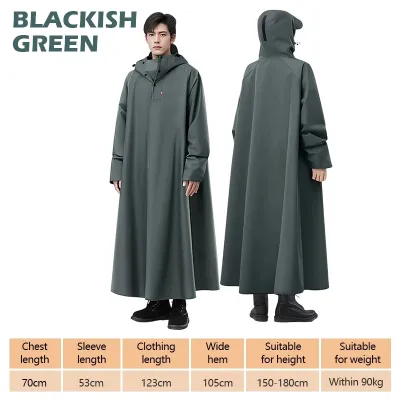
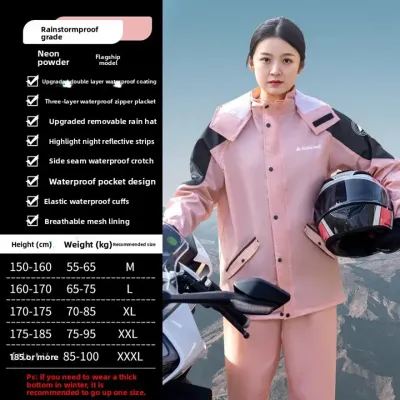
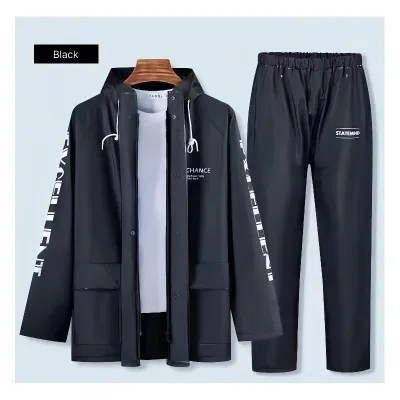
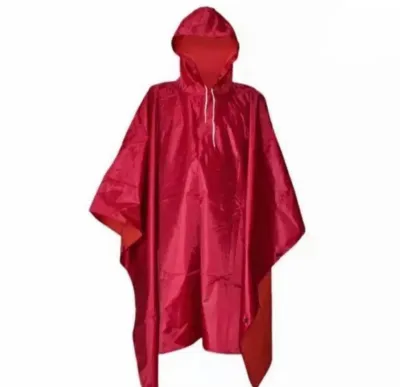
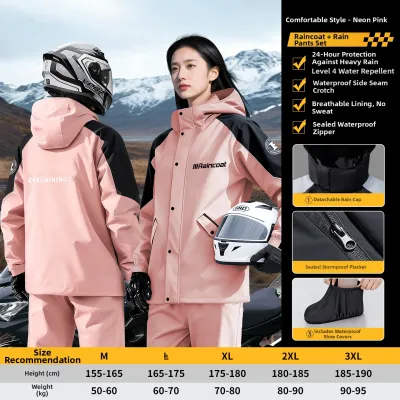
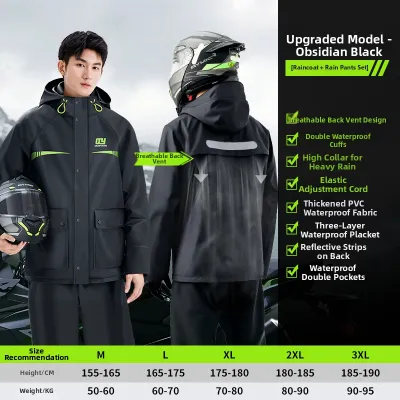
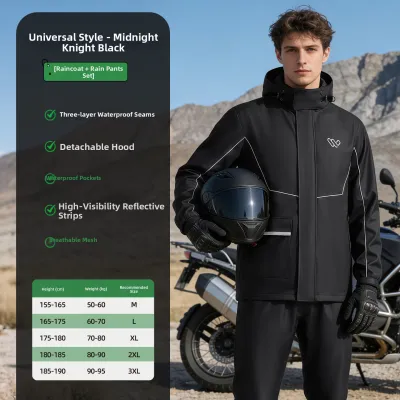
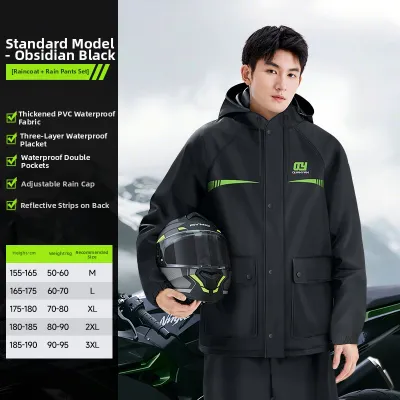
Prices are valid at publication and may change. Please refer to the product page for the latest price.
Finally, high-speed riding subjects rain gear to intense aerodynamic stress. The constant buffeting of the wind can cause thin materials to flutter violently, which quickly fatigues the fabric and leads to tears at stress points like the shoulders and underarms. Heavy duty specifications ensure the garment is constructed from dense, durable materials that maintain their shape and integrity even when subjected to highway-speed winds over extended periods.
Verifying Material and Seam Construction
When evaluating a heavy duty motorcycle raincoat, the fabric composition is your first line of defense. Avoid generic marketing terms like “100% waterproof” and instead look for specific technical details on the manufacturer’s label. High-quality rain gear typically utilizes heavy-denier polyester or nylon coated with polyurethane (PU) or polyvinyl chloride (PVC). While PVC is highly waterproof and durable, it tends to be heavier and less breathable than PU-coated fabrics. Advanced gear may feature breathable, multi-layer membranes that allow moisture vapor to escape while blocking liquid water from entering.

The method used to join the fabric panels is just as important as the material itself. Standard sewing needles create thousands of tiny punctures along every seam. Under the pressure of wind-driven rain, water will inevitably seep through these holes. To prevent this, heavy duty raincoats must feature fully taped or heat-welded seams. Taped seams involve applying a waterproof adhesive tape over the stitched seams on the inside of the garment. Heat-welding, on the other hand, uses heat and pressure to fuse the fabric panels together, eliminating needle holes entirely. When inspecting a raincoat, turn it inside out to verify that every single seam is covered by a smooth, unbroken layer of sealing tape.
Additionally, the outer shell must offer sufficient abrasion resistance. Road spray carries grit, sand, and small debris that can act like sandpaper against your gear. Look for raincoats reinforced with high-denier fabrics (such as 500D or higher) in high-impact zones like the elbows, shoulders, and knees. This reinforcement not only protects the waterproof barrier from premature wear but also provides an extra layer of durability in the event of a minor slide on wet asphalt.
Ensuring Complete Coverage and Secure Fit
A raincoat can have the best waterproof fabric in the world, but it will still fail if water can find its way through gaps in the design. When you sit on a motorcycle, your posture changes: your arms reach forward, your knees bend, and your torso leans. This seated position can cause standard jackets to ride up, exposing your lower back to water pooling on the seat. To counter this, look for a raincoat with an extended rear hem, often called a drop-tail design, which ensures continuous coverage over your waist.
The entry points of the garment—the wrists, ankles, and collar—are primary targets for water ingress. Adjustable cuffs with robust hook-and-loop straps or elastic bands are essential for creating a tight seal around your riding gloves. Similarly, the pants should feature wide ankle openings with adjustable closures, allowing you to easily slip them over bulky riding boots before securing them tightly to block upward road splash. The collar should sit high on the neck and feature a soft, adjustable closure that seals against the bottom of your helmet without causing chafing.
Zippers are another common failure point. A heavy duty raincoat must feature a substantial storm flap—ideally a double flap—that folds over the main zipper and secures with snaps or hook-and-loop fasteners. This design creates a labyrinth barrier that prevents wind-driven water from reaching the zipper teeth. When choosing a size, ensure the raincoat fits comfortably over your standard armored riding jacket and pants. It should allow for full range of motion so you can operate the motorcycle controls without restriction, but it must not be so loose that it flaps excessively in the wind, which can distract you and cause premature wear on the fabric.
Maximizing Visibility and Safety in Low Light
Monsoon downpours drastically reduce visibility on the road, making it difficult for other motorists to see you through heavy rain, road spray, and fogged-up windows. To mitigate this risk, your heavy duty raincoat must incorporate high-visibility design elements. Look for gear that features prominent reflective piping, panels, or tape. These reflective materials should be strategically positioned across the upper back, chest, and the sides of the arms, ensuring you are visible from a 360-degree angle when headlights shine in your direction.
The base color of your rain gear also plays a vital role in daytime and twilight safety. While dark colors like black or navy blue are popular for hiding road grime, they blend seamlessly into gray monsoon skies and dark, wet asphalt. Opting for high-visibility colors such as neon yellow, high-vis green, or bright orange significantly increases your visual contrast, making you stand out to other drivers even in torrential downpours.
Additionally, pay close attention to the design of the collar and hood. If the raincoat includes a hood, it must be designed to fit comfortably underneath your motorcycle helmet without bunching up or creating pressure points. Alternatively, many riders prefer a detachable hood or one that rolls neatly into the collar. A bulky, poorly designed hood can restrict your neck movement, preventing you from performing quick shoulder checks and limiting your peripheral vision, which is highly dangerous when navigating busy, wet roads.
Maintaining Waterproof Integrity Over Time
To ensure your heavy duty motorcycle raincoat survives multiple monsoon seasons, proper maintenance is essential. Always refer to the manufacturer’s care label before cleaning your gear. Standard household laundry detergents and fabric softeners can be highly abrasive; they can strip away the durable water repellent (DWR) coating on the outer fabric or degrade the adhesive used on seam tapes. Instead, wash your raincoat using a mild, technical liquid soap formulated specifically for waterproof outerwear, and wash it by hand or on a gentle machine cycle.
Drying your rain gear correctly is just as important as washing it. Never place a waterproof raincoat in a high-heat clothes dryer, and avoid hanging it in direct, intense sunlight for extended periods. High heat can melt the seam sealing tape, crack polyurethane coatings, and weaken the fabric fibers. Instead, hang the raincoat on a wide, padded hanger in a well-ventilated, shaded indoor area or a covered outdoor space, allowing it to air-dry completely before storing it.
Over time, even the highest quality DWR coating will naturally wear off due to friction, road grime, and exposure to the elements. You will know the coating is degrading when water stops beading on the outer fabric and instead begins to soak into the material, a phenomenon known as “wetting out.” While the inner waterproof membrane may still keep you dry, a wet-out outer fabric makes the garment heavy and cold. To restore its performance, apply a compatible aftermarket reproofing spray or wash-in treatment designed for technical motorcycle gear, following the product’s specific application instructions. Always verify that any aftermarket care product is authorized for use on your specific raincoat material to avoid damaging the waterproof membrane or outer fabric.
Creating Your Pre-Purchase and Pre-Ride Checklist
Before investing in a new heavy duty motorcycle raincoat, use this quick checklist to verify its monsoon readiness:
- Check the manufacturer's label for a waterproof rating of at least 10,000 mm.
- Turn the garment inside out to confirm all seams are fully taped or heat-welded.
- Try the raincoat on over your armored riding gear to ensure a secure fit with full mobility.
- Verify the presence of wide storm flaps over all zippers and pockets.
- Ensure there are high-visibility colors and reflective panels on the front, back, and sides.
For your existing gear, perform a pre-ride inspection at the start of the rainy season. Lay the raincoat flat and inspect the interior seams for any signs of peeling or cracking tape. Check the zippers for smooth operation and ensure the hook-and-loop fasteners are free of lint and debris. If you discover extensive peeling of the seam tape, cracked waterproof coatings, or tears that cannot be reliably patched with specialized gear repair tape, retire the garment. Riding with compromised gear in a severe monsoon downpour will quickly lead to water ingress, compromising your comfort, focus, and safety on the road.
Frequently Asked Questions (FAQ)
Can I use a standard lightweight poncho instead of a heavy duty raincoat?
Using a standard lightweight poncho while riding a motorcycle is highly discouraged due to severe safety risks. At riding speeds, the loose, unanchored fabric of a poncho will flap violently in the wind. This flapping can block your mirrors, obscure your vision, or even catch on your motorcycle’s handlebars, wheels, or drive chain, leading to a loss of control. Furthermore, ponchos offer virtually no protection against upward road splash and wind-driven rain, leaving your lower body completely soaked.
How do I know if the waterproof rating on the label is sufficient for monsoon riding?
To determine if a raincoat can handle monsoon conditions, look for the hydrostatic head rating on the product label, which is measured in millimeters (mm). For motorcycle riding, where wind and speed force water against the fabric, you should look for a rating of at least 10,000 mm, though 20,000 mm is ideal for prolonged exposure. A rating of 10,000 mm means the fabric can withstand the pressure of a 10,000 mm tall column of water before any leakage occurs, providing the necessary resistance against high-speed rain impact.
Should I buy a one-piece suit or a two-piece jacket and pants set?
Both designs have distinct advantages depending on your riding needs. A two-piece jacket and pants set offers greater convenience and versatility, making it ideal for daily commuting and urban riding where you may need to quickly remove the jacket during stops. A one-piece suit, however, provides the ultimate level of waterproof protection because it eliminates the waist seam entirely, preventing water from pooling at your lap and seeping in. This makes one-piece suits highly recommended for long-distance touring or extended highway riding in severe weather.

Community discussion
Share your experience or ask a question. Comments are reviewed before publication.