
Every car owner who plans to perform intermediate DIY maintenance should equip their garage with a versatile selection of heavy duty pullers, specifically a multi-jaw gear puller, a steering wheel and harmonic balancer puller set, and a bearing separator. These specialized mechanical tools are designed to safely extract tightly fitted, pressed, or seized automotive components such as pulleys, gears, bearings, and steering linkages. In tropical environments like the Philippines, where high humidity, coastal salt air, and intense heat cycles accelerate galvanic corrosion between dissimilar metals, components frequently become fused to their shafts. Attempting to remove these parts without the correct puller almost always results in broken components, damaged threads, or personal injury. By applying controlled, precisely aligned axial force, a heavy duty puller isolates the stress to the target component, allowing for a smooth and damage-free extraction.
Why Improvised Prying Fails: The Case for Dedicated Pullers
When confronted with a stubborn alternator pulley, a frozen wheel bearing, or a seized steering joint, the temptation to reach for a pry bar, a flathead screwdriver, or a heavy ball-peen hammer is incredibly common. However, these improvised methods rely on uneven, lateral force and high-impact shocks that are highly destructive to modern automotive assemblies. Prying against a component applies force from only one side, which cocks the part on its shaft, increasing friction and jamming it tighter. This uneven pressure easily bends shafts, warps pulleys, and cracks delicate cast-aluminum or plastic engine housings. Furthermore, striking a shaft directly with a hammer can mushroom the metal end, ruining the threads and making future nut installation impossible without extensive re-threading or complete component replacement.
A dedicated heavy duty puller operates on the principle of controlled mechanical advantage, converting rotational torque into massive, linear axial force. By anchoring the puller’s jaws or bolts securely to the outer edge of the component and aligning the central forcing screw directly with the center of the shaft, the tool ensures that the extraction force is evenly balanced and parallel to the shaft’s axis. This precise alignment eliminates lateral binding, allowing the pressed fit to slide apart smoothly. The force is distributed evenly across multiple contact points, protecting fragile edges from chipping or fracturing. Investing in the correct puller not only saves money by preventing accidental damage to expensive vehicle parts but also protects the DIYer from the physical hazards of flying metal shards or slipping tools.
Products mentioned in this guide
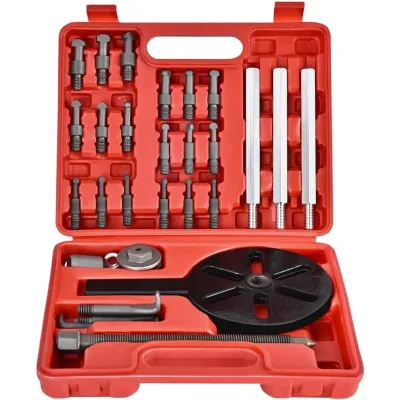
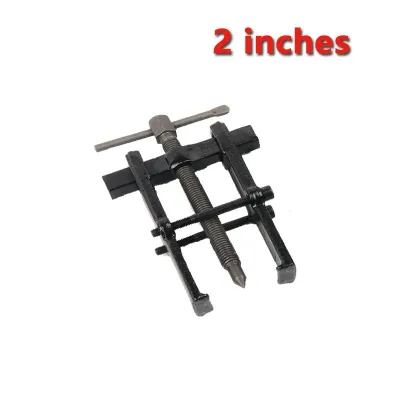
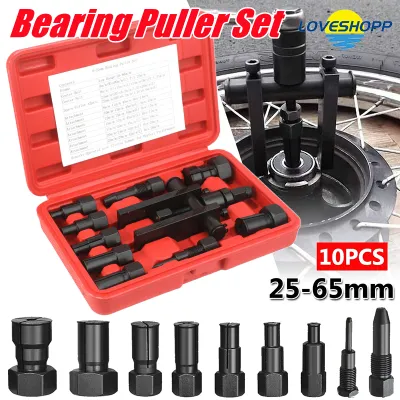
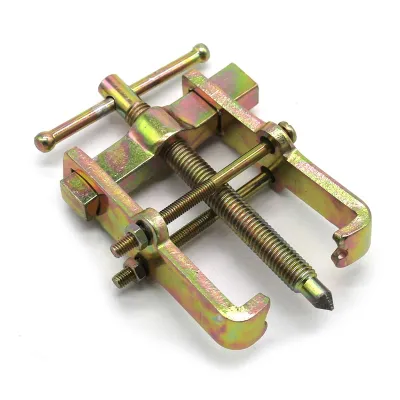
Prices are valid at publication and may change. Please refer to the product page for the latest price.
Essential Puller Categories for Common DIY Repairs
To build a highly functional automotive toolbox, a car owner should focus on three primary categories of heavy duty pullers, each tailored to handle specific mechanical interfaces found throughout the vehicle.

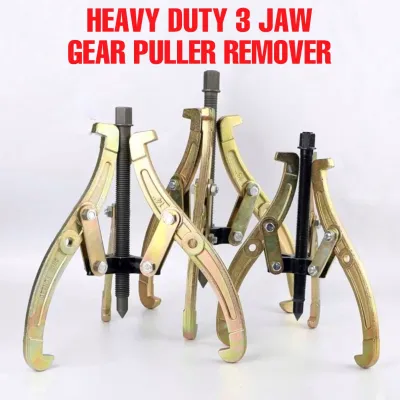
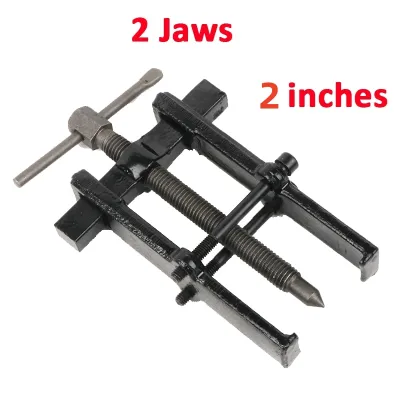
The first essential category is the gear and pulley puller, often available in adjustable two-jaw or three-jaw configurations. These tools are indispensable for removing harmonic balancers, alternator pulleys, power steering pump pulleys, and timing gears. The jaws hook securely around the outer rim of the pulley, while the central forcing screw presses against the shaft. Because engine bay space is often highly restricted, having a puller with reversible jaws that can grip both internally and externally is highly beneficial. When working on engine pulleys, always verify the specific mounting style in your vehicle’s service manual, as some harmonic balancers require specialized pullers that bolt directly into the hub rather than gripping the outer ring, which can separate the outer rubber dampener from the inner sleeve.
The second category consists of steering wheel and pitman arm pullers, which are engineered for steering column and steering linkage maintenance. A steering wheel puller typically utilizes a yoke with slots and a variety of bolts that thread directly into the steering wheel hub, allowing the central screw to push against the steering shaft. Because steering wheels house critical safety components, specifically the airbag module and clockspring of the vehicle’s restraint system, you must observe strict safety boundaries. Always disconnect the vehicle battery, wait for the system to fully discharge according to the original-vehicle instructions, and consult the manufacturer’s documentation before attempting disassembly. If you are uncomfortable handling restraint system components, seek qualified professional installation and service. Pitman arm pullers, on the other hand, feature a heavy, forged jaw that slips over the steering gear arm, providing the extreme rigidity needed to break loose tapered steering joints.
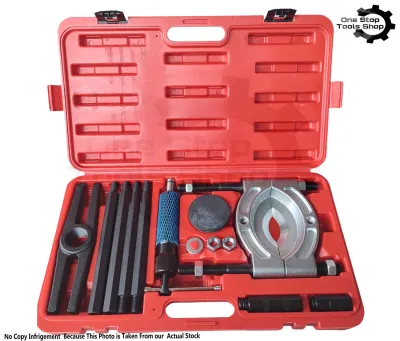
The third category is the bearing separator and puller set, which is crucial for axle, hub, and blind-hole bearing extraction. Standard jaw pullers cannot grip a bearing that is flush against a housing or shoulder because there is no space for the jaw tips to slip behind the inner race. A bearing separator solves this by utilizing two knife-like, wedge-shaped halves that are bolted together behind the bearing, forcing themselves under the race as the bolts are tightened. Once the separator is secured, a yoke and puller legs are attached to draw the bearing off the shaft. This tool is vital for replacing worn wheel bearings, differential bearings, and transmission shaft bearings. Because vehicle designs vary wildly, always check your vehicle’s specific dimensions, clearance, and mounting points to ensure the puller’s jaw reach and spread are compatible with your target component.
Sizing and Build Criteria for Safe Extraction
Selecting the right heavy duty puller requires a careful evaluation of the tool’s structural capacity and build quality to ensure it can withstand the immense forces required during extraction. The first criterion to consider is the rated tonnage of the puller. Seized or corroded automotive parts often require several tons of force to break the initial bond. For general passenger car maintenance, a puller set rated between 2 to 5 tons is typically sufficient for light-duty pulleys and steering components, while heavier tasks like hub or axle bearing removal on larger sports utility vehicles or pickup trucks may require tools rated for 7 to 10 tons or more. Never attempt to exceed the rated capacity of a tool; if a component does not budge under reasonable force, a higher-capacity puller or alternative extraction method is required.
The jaw configuration is another critical factor that dictates grip security and load distribution. A three-jaw puller is generally preferred for most circular components because it distributes the pulling force more evenly at 120-degree intervals, reducing the risk of bending the pulley or slipping off the edge. However, a two-jaw puller is essential when working in tight, confined spaces where a third jaw cannot fit due to surrounding engine brackets or chassis components. Many high-quality heavy duty puller kits feature a convertible yoke that allows the user to switch between two-jaw and three-jaw configurations depending on the clearance available.
Finally, inspect the physical construction and materials of the puller before use. The forcing screw is the heart of the tool and must feature fine, high-density threads to maximize mechanical advantage and prevent slipping. Look for indicators of professional heat treatment, such as a dark, matte finish on the screw and jaws, which signifies hardened steel capable of resisting thread stripping and jaw bending under load. The tip of the forcing screw should feature a hardened, free-spinning swivel shoe or a pointed center adapter. This design allows the screw to rotate smoothly against the shaft without grinding into the metal, protecting the shaft’s center hole and preventing the puller from walking off-center during high-torque applications.
Operational Boundaries and Stop Conditions
Using a heavy duty puller safely requires strict adherence to operational boundaries to prevent catastrophic tool failure, component destruction, or severe personal injury. Before applying any torque to the forcing screw, proper preparation of the seized component is mandatory. Begin by thoroughly cleaning the shaft and threads with a wire brush to remove rust, dirt, and road debris. Apply a high-quality penetrating fluid to the seized joint and allow it to soak for several minutes according to the product label’s instructions. In cases of severe galvanic corrosion, controlled thermal expansion using a heat gun may be applied to the outer component to expand it slightly, but only if authorized by the vehicle manufacturer and kept far away from rubber seals, wiring, or fuel lines.
Once the puller is aligned and hand-tightened, always wear heavy-duty work gloves and impact-resistant safety glasses before applying tools. Use a manual hand wrench or socket to turn the forcing screw; never use an impact wrench on a standard mechanical puller unless the tool is explicitly rated for impact use by the manufacturer, as the rapid hammering action can shatter hardened steel jaws or strip the threads instantly. As you turn the wrench, feel for smooth resistance. If the screw becomes exceptionally difficult to turn, stop immediately and inspect the setup.
You must recognize and act upon immediate stop conditions to avoid dangerous failures. If you observe any visible bending of the puller jaws, stripping of the forcing screw threads, slipping of the jaw tips, or if you hear sharp, abnormal cracking sounds from the tool itself, cease operation immediately. These are clear signs that the breakaway force required exceeds the mechanical limits of your tool. Continuing to apply torque under these conditions can cause the puller to violently shatter or slip, launching metal fragments at high velocity. If the component remains seized after applying penetrating fluid, moderate heat, and maximum safe manual torque, abandon the DIY extraction. At this point, the assembly should be removed from the vehicle and taken to a professional automotive machine shop equipped with heavy-duty hydraulic pressing equipment to complete the extraction safely.
Frequently Asked Questions (FAQ)
Can I use a standard gear puller to remove a steering wheel?
No, you should not use a standard jawed gear puller to remove a steering wheel. Standard gear pullers rely on curved jaws that grip the outer edge of a component, which will easily crack, warp, or tear the soft plastic, leather, or foam trim of a steering wheel. Furthermore, the uneven pressure can bend the steering wheel frame or damage the delicate steering column shaft. Steering wheels are designed with specific threaded holes in the center hub meant to accept the bolts of a dedicated steering wheel yoke puller. Using the correct yoke puller ensures the force is applied directly to the metal core of the wheel, preventing cosmetic and structural damage. Always remember to follow original-vehicle instructions regarding battery disconnection and airbag safety before servicing any steering wheel component.
What should I do if the puller screw binds under pressure?
If the forcing screw of your heavy duty puller begins to bind or stick under pressure, stop turning it immediately to prevent thread galling or stripping. Back the screw off slightly to relieve the tension, then clean the threads of the forcing screw thoroughly with a wire brush to remove any metal shavings or debris. Apply a high-quality extreme-pressure lubricant, such as anti-seize compound or heavy-duty gear grease, directly to the screw threads and the swivel tip before reassembling. If the screw continues to bind, it indicates that the threads may already be deformed, or the force required for the extraction is exceeding the tool’s capacity. In this scenario, do not force the tool; instead, inspect the threads for damage and consider upgrading to a higher-tonnage puller or seeking professional assistance.

Community discussion
Share your experience or ask a question. Comments are reviewed before publication.