
Before using heavy duty jack stands for DIY car repair, you must perform a rigorous pre-use safety checklist every single time: inspect the stands for structural damage, verify their weight rating against your vehicle’s specifications, ensure they are placed on a flat concrete surface, fully engage the locking mechanisms, and perform a physical stability shake test. Working under a vehicle supported only by a hydraulic jack is extremely dangerous, as hydraulic systems can fail without warning. Heavy duty jack stands are designed to provide stable, mechanical support, but their safety depends entirely on proper inspection and setup.
In the Philippines, the combination of high humidity and intense tropical heat can accelerate the wear and corrosion of garage tools. If you are performing DIY maintenance like oil changes, brake pad replacements, or suspension work, your safety relies entirely on the physical integrity of your support equipment. A reliable jack for car heavy duty lifting is only the first step; the actual job of holding the vehicle up falls on your jack stands.
Skipping even one safety check can lead to catastrophic equipment failure. This guide walks you through the essential steps to verify your equipment, secure your vehicle, and ensure you return safely from under the chassis.
Products mentioned in this guide
943 Lazada user ratings
🔨Durability:Provides excellent stability, Secure double locking mechanism, 👌Ease of Use:easy to manuever when installed Thanks for this affo…Read full reviewShow less
🔨Durability:Provides excellent stability, Secure double locking mechanism, 👌Ease of Use:easy to manuever when installed Thanks for this affordable and durable jack stand.
Durable and sturdy construction, Provides excellent stability, Perfect for car maintenance, Easy to use and adjust, Reliable and trustworthy…Read full reviewShow less
Durable and sturdy construction, Provides excellent stability, Perfect for car maintenance, Easy to use and adjust, Reliable and trustworthy product,
Perfect for car maintenance, Great value for the price, No brand, but great quality, Red color adds a stylish touch,
Red color adds a stylish touch, Durable and sturdy construction,
Prices are valid at publication and may change. Please refer to the product page for the latest price.
Inspect the Jack Stands for Physical Damage and Wear
Begin your safety routine with a systematic visual and physical inspection of each jack stand before they bear any load. Look closely at the main support tube and the base plate. In humid tropical climates, surface rust can quickly turn into deep structural corrosion if tools are stored in damp carports or outdoor sheds. Check the welds where the legs meet the center column, looking for hairline fractures, flaking paint, or signs of metal fatigue. Any visible bend, crack, or severe rust means the stand must be decommissioned immediately.
Next, inspect the locking mechanism thoroughly. For ratchet-style stands, examine the pawl and the individual teeth on the support column. Debris like grease, road grit, or dirt can accumulate in these teeth, preventing the pawl from seating fully. Clean the teeth with a wire brush if you notice any buildup. Look for rounded, chipped, or worn teeth that could slip under pressure. For pin-style stands, ensure the locking pin is perfectly straight, free of cracks, and that the safety retaining clip or lanyard is intact.
Examine the saddle, which is the top contact point that meets your vehicle’s frame. The saddle must be free of cracks, deep gouges, or structural deformation. If your stands came equipped with rubber saddle pads to protect pinch welds, ensure they are not split, rotting, or missing entirely. A damaged saddle can cause the vehicle’s lift point to slip off center, leading to a sudden shift in weight.
Finally, verify that all moving parts operate smoothly. Raise and lower the support column several times to check for binding or sticking. If the column does not slide freely, inspect it for internal debris or warping. If lubrication is required, apply only the specific lubricants recommended in your manufacturer’s manual. Avoid using general-purpose oils or sticky greases that can attract dirt and clog the locking teeth over time.
Verify Weight Ratings and Vehicle Compatibility
Never guess the capacity of your jack stands or assume they can handle any vehicle. Locate the manufacturer’s stamped metal plate or high-durability safety label on the side of the stand. The weight rating is typically listed per pair, not per individual stand. Ensure this rated capacity comfortably exceeds the gross vehicle weight rating (GVWR) of your car, SUV, or utility vehicle. For safety, many DIYers prefer to use stands rated for at least double the weight they expect to support.

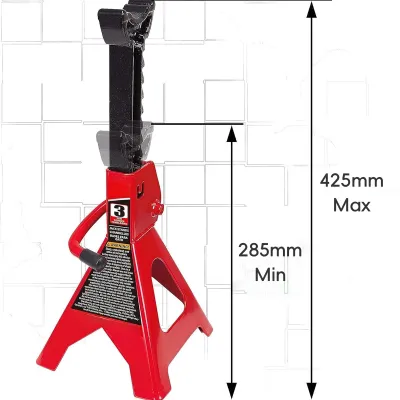
Check the minimum and maximum height specifications on the label. Attempting to use a stand at its absolute maximum extension reduces its footprint stability and increases the risk of lateral tipping. Conversely, if the stand is too tall at its lowest setting, you will not be able to slide it under the designated lift points after raising the car with your floor jack. Plan your lifting height so that the stands can support the vehicle while remaining at a mid-range extension level.
Confirm that the stand’s saddle design matches your vehicle’s designated lift points. Unibody cars typically require support at the pinch welds, which benefit from deep-grooved saddles or specialized adapters to prevent folding. Body-on-frame vehicles, such as pickup trucks common in the Philippines, require flat or curved saddles that securely cradle the solid frame rails. Placing a pinch weld on a flat saddle can cause the weld to fold or the vehicle to slip off the stand.
Ensure Proper Setup and Locking Mechanism Engagement
Always set up your jack stands on a solid, level concrete surface. Asphalt can soften under the intense Philippine sun, causing the narrow legs of a heavy duty jack stand to sink and tilt the vehicle. Never use jack stands on dirt, grass, gravel, or sloped driveways. If you must work in an area where the ground is slightly uneven, consult the manufacturer’s instructions regarding approved load-spreading base plates, though solid concrete remains the safest standard.
Position the stands directly under the manufacturer-approved lift points. Slowly and carefully lower the hydraulic floor jack to transfer the weight. Watch the contact point closely as the vehicle settles. The lift point must sit perfectly in the center of the saddle. If the frame rests on the edge of the saddle, raise the vehicle again and realign the stand.
Once the weight is transferred, visually inspect the locking mechanism. For ratchet-style stands, ensure the pawl is fully engaged in the tooth pocket. For pin-style stands, verify the pin is pushed completely through both sides of the column and the safety clip is locked in place. Never rely on a partially engaged lock.
Safety requires redundancy. Place heavy duty wheel chocks behind and in front of the tires remaining on the ground to prevent the vehicle from rolling. After lowering the vehicle onto the jack stands, do not remove the hydraulic floor jack completely. Instead, leave the jack positioned under a secondary structural point, lowered just a fraction of an inch below the frame, to act as an emergency backup.
Perform the Stability Test Before Getting Under the Vehicle
Before you grab your tools or slide your body under the chassis, you must perform a physical stability test. Stand next to the vehicle and apply firm, deliberate force by shaking the bumper or a solid frame member. Push the vehicle from side to side and front to back. The vehicle should not budge, slide, or rock on the stands.
While performing the shake test, listen closely for any metallic popping, clicking, or creaking sounds. Watch the base of the jack stands to ensure the legs are not lifting off the concrete or shifting. If you hear or see any movement, it indicates that the stands are not seated correctly or the ground is uneven.
After shaking the vehicle, inspect the locking pins or ratchet pawls once more. The physical movement of the shake test can sometimes cause a poorly positioned stand to settle, which might dislodge a loose pin or reveal a misaligned saddle.
If the vehicle moves, shifts, or feels unstable during the shake test, abort the procedure immediately. Use your hydraulic floor jack to lift the vehicle off the stands, inspect the setup, choose a flatter surface, or realign the lift points. Never assume a slight wobble will “settle itself” once you start working.
Recognize When to Stop and Seek Professional Help
If your pre-use inspection reveals any structural cracks, deep rust, bent legs, or missing safety pins, stop immediately. Do not attempt to weld, bend, or repair a damaged jack stand yourself. Using compromised equipment under a multi-ton vehicle is extremely hazardous.
If your driveway is sloped or made of loose gravel, or if your vehicle’s designated lift points are severely corroded, soft, or damaged by rust, do not attempt to lift the car. Corroded frame rails can collapse under the concentrated pressure of a jack stand saddle, causing the vehicle to fall.
If your vehicle requires a lifting height that forces your jack stands to their maximum extension, or if you are unsure of the vehicle’s actual weight distribution, stop and consult a professional. It is always safer to have the vehicle serviced at a professional automotive shop with a hydraulic post lift than to risk a DIY accident with inadequate tools.
Frequently Asked Questions (FAQ)
Can I use cinder blocks or wood instead of heavy duty jack stands?
No, you should never use cinder blocks, bricks, or scrap wood as a substitute for engineered jack stands. Cinder blocks are highly brittle and designed to bear static, distributed loads in masonry; they can shatter explosively and without warning under the concentrated point load of a vehicle. Wood can compress, split along the grain, or rot internally, making its load capacity completely unpredictable. Only use certified, heavy duty metal jack stands specifically engineered and rated for automotive support.
How often should I replace my jack stands?
There is no fixed calendar expiration date for jack stands, as their lifespan depends on usage frequency, storage conditions, and physical wear. In humid tropical environments like the Philippines, stands stored in open carports may degrade faster due to moisture. You must replace your jack stands immediately if you observe deep structural rust, bent metal components, worn or rounded ratchet teeth, or if the stands have ever been dropped from a height or subjected to a sudden shock load. Always consult your product manual for specific inspection and retirement guidelines.
Community discussion
Share your experience or ask a question. Comments are reviewed before publication.