
Performing a basic wheel alignment in your home garage requires a reliable set of measuring and adjusting tools: a camber/caster gauge (either magnetic or wheel-mounted), a set of toe plates with high-precision tape measures (or a string alignment system), slip plates to relieve tire tension, and robust lifting equipment like heavy-duty jack stands. While professional shops rely on advanced 3D imaging machines, manual tools allow you to achieve highly accurate static alignments if used with patience and precision. By understanding how each tool functions and verifying compatibility with your vehicle’s specific suspension design, you can maintain optimal tire wear and handling characteristics without relying on a commercial garage.
Understanding the Scope of DIY Wheel Alignment
Before investing in home alignment equipment, it is essential to understand what static measurements can achieve compared to professional dynamic systems. Professional alignment machines use optical sensors and rolling compensation to measure alignment angles while the vehicle is in motion or simulated load states. In contrast, DIY alignment relies on static measurements, where the vehicle remains completely stationary on a level surface.
With the right home tools, you can realistically measure and adjust three primary angles: camber, caster, and toe. Camber refers to the inward or outward tilt of the tire when viewed from the front. Caster is the forward or backward tilt of the steering axis when viewed from the side, which influences steering returnability and high-speed stability. Toe measures the degree to which the front or rear wheels point toward or away from each other from a bird’s-eye view.
Products mentioned in this guide
11 Lazada user ratings
Thank you, the material is very good, and I like the appearance very much.
Not aluminum and not the same as per photo
Received in good packaging
5 Lazada user ratings
Orange color design, Accurate measurement,
1 Lazada user ratings
he gave me 1pcs! i dont like this seller. check the other store i post
30 Lazada user ratings
good, Improves driving stability, Easy to install and use, Compact and portable design, tapos na gamitin, tago mina, private use only
👌Ease of Use:10 🔨Durability:10 thick enough 🔄Versatility:10
goods kung ano ung nakita ko sya den ung dumating
51 Lazada user ratings
Suitable for DIY car maintenance, Clear step-by-step instructions,
Ok yong appearance.... Magagamit ko to soon.
Helps adjust tire angles,
🔄Versatility:good 👍 👌
very good quality
51 Lazada user ratings
dapat kasi nasa good condition ang items bago nyo ideliver sa buyer at gumagana ng maayos ... nag grinder pa ako at nagwelding,naputol kasi …Read full reviewShow less
dapat kasi nasa good condition ang items bago nyo ideliver sa buyer at gumagana ng maayos ... nag grinder pa ako at nagwelding,naputol kasi pundido ang bakal konting pukpok lang naputol na sya para lang maalign ang items na binili ko ..WALA SA ALIGNMENT..
🔨Durability:legit talaga c seller, ang bilis damating High-quality materials for long-lasting use, Perfect alignment every time, magagamit t…Read full reviewShow less
🔨Durability:legit talaga c seller, ang bilis damating High-quality materials for long-lasting use, Perfect alignment every time, magagamit talaga ng anak ko sa business niya
dumating na Thanks seller maganda di pa nagamit hehe. thanks din sa Nag deliver medyo kinabahan kala nya di kukunin. hehe
Thank you IFMoto nice item not yet try but look durable.thank you sa Lazada at Kay Boss Rider
Oky nmn yng items
Prices are valid at publication and may change. Please refer to the product page for the latest price.
However, modifying suspension components carries inherent safety risks and can impact your vehicle’s road legality and handling dynamics. Always consult your vehicle’s original service manual for factory specifications, torque values, and safety boundaries before loosening any chassis bolts. If your vehicle features advanced driver assistance systems (ADAS)—such as lane-keep assist or collision avoidance—any change in alignment angles may require professional sensor recalibration. In such cases, or if you are uncomfortable working on critical steering linkages, you must seek qualified professional installation and calibration to ensure safe operation on public roads.
Must-Have Tools for Measuring Camber and Caster
Measuring camber and caster requires specialized gauges that can detect minute angular deviations, often down to fractions of a degree. The two most common options for home mechanics are magnetic bubble camber gauges and digital camber/caster gauges.

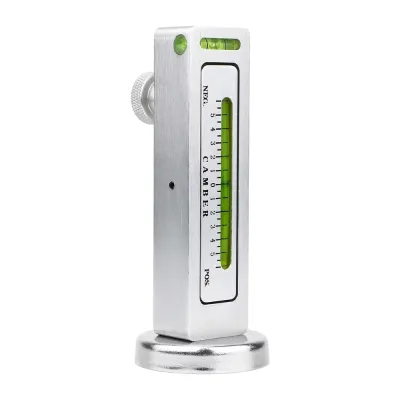
Magnetic bubble gauges are highly affordable and simple to use, attaching directly to the steel brake rotor or wheel hub. However, their utility is limited if your vehicle features aluminum alloy wheels or decorative center caps that prevent direct magnetic contact with the hub. In these scenarios, you must use a wheel-clamp adapter that securely grips the outer lip of the rim, allowing you to mount the gauge externally.
Digital camber gauges offer superior readability and often include built-in calibration features to compensate for slightly unlevel ground. These digital units typically attach to a universal wheel-rim adapter, which must be carefully adjusted to match your specific wheel diameter. Before purchasing, verify the adapter’s maximum clamping range to ensure it accommodates your wheel size, especially if you run oversized aftermarket rims.
Measuring caster is slightly more complex than measuring camber, as it cannot be read directly while the wheels are pointing straight ahead. Instead, you must turn the front wheels a precise number of degrees—typically 20 degrees inward and then 20 degrees outward—and calculate the difference in camber angle. To perform this sweep accurately without binding the tires or damaging your steering components, you need turn plates or slip plates placed directly under the front tires. These plates allow the wheels to pivot freely under the full weight of the vehicle, ensuring your caster measurements are accurate and repeatable.
Essential Equipment for Measuring and Adjusting Toe
Toe is the most critical alignment angle for preventing rapid tire wear, and even minor errors can cause your vehicle to pull or scrub its tread. To measure and adjust toe at home, you must choose between toe plates and string alignment kits.
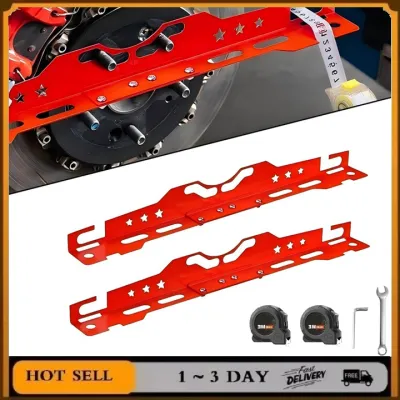
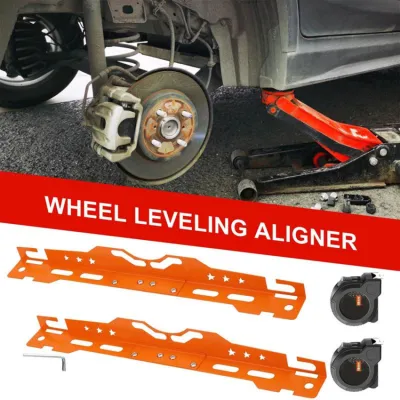
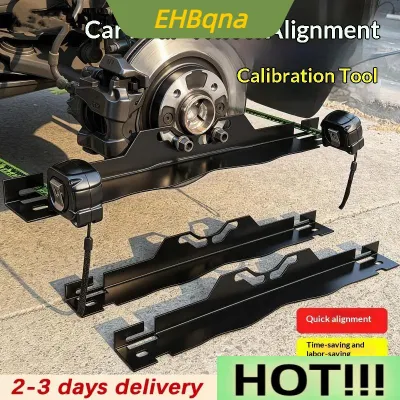
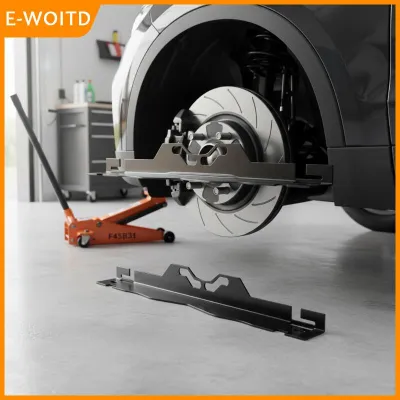
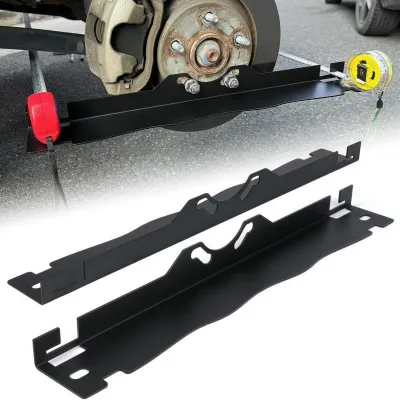
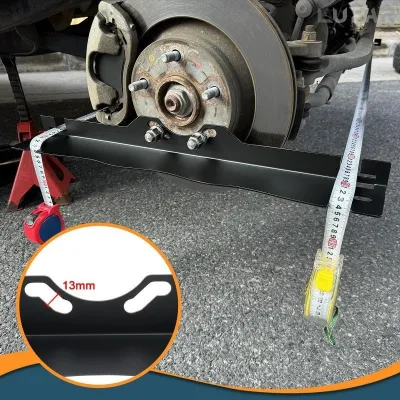
Toe plates are flat metal sheets designed to rest flat against the sidewalls of your tires on both sides of the vehicle. You run two tape measures through slots in the plates, one in front of the tire and one behind it, to measure the difference in distance. While toe plates are incredibly fast to set up and require minimal storage space, they only measure total toe. They cannot determine if one wheel is pointing further outward than the other relative to the vehicle’s centerline, which can result in a crooked steering wheel.
For greater precision, a string alignment kit establishes a perfectly parallel “string box” around the entire perimeter of the vehicle. By measuring the distance from the string to the front and rear lips of each wheel rim, you can determine individual toe angles and align the wheels relative to the vehicle’s true thrust line. This method takes longer to set up but is highly favored by motorsport enthusiasts and meticulous home mechanics for its accuracy.
Once you have measured the toe, you will need the correct hand tools to make adjustments. This typically involves loosening the lock nuts on your inner tie rods and rotating the rods to extend or shorten the steering linkage. Standard open-end wrenches can easily slip and round off these nuts, particularly on older vehicles exposed to road grime or coastal humidity. Investing in high-quality flare nut wrenches or specialty tie-rod adjusting tools ensures a secure grip and prevents damage to these critical steering parts.
To keep your measurements consistent while you work underneath the vehicle, you must use a steering wheel lock and a brake pedal depressor. A spring-loaded steering wheel holder clamps between the seat and the steering wheel, keeping it dead-center while you adjust the tie rods. A brake pedal depressor locks the brakes, preventing the front wheels from rotating forward or backward while you perform caster sweeps or make physical adjustments to the suspension linkages.
Lifting and Safety Gear for Garage Alignment
Working underneath a vehicle to adjust suspension components requires robust lifting and safety gear that keeps both you and the vehicle secure. The absolute foundation of any accurate home alignment is a perfectly level working surface. In many residential properties, concrete carports and garage floors are built with a slight slope to facilitate water drainage during heavy tropical rainstorms. Even a fraction of a degree of slope can distort your camber and caster readings, rendering your measurements useless. You must verify your floor’s levelness using a high-precision digital level before starting.
When lifting the vehicle to access adjustment points, you must never rely solely on a hydraulic jack. Always support the vehicle on heavy-duty jack stands with rated weight capacities that exceed your vehicle’s gross weight. Ensure the jack stands are placed on flat, solid ground at the manufacturer-approved chassis lifting points.
Because suspension geometry changes when the wheels hang free in the air, you cannot take accurate alignment measurements while the vehicle is supported by its frame. The vehicle’s full weight must rest on its tires, and the suspension must be fully settled. To achieve this, you can use drive-on ramp systems or lower the vehicle’s tires onto slip plates resting on top of your jack stands or floor.
If you do not have commercial slip plates, you can construct DIY slip plates using two smooth metal sheets with a layer of heavy-duty grease sandwiched between them, or even heavy-duty plastic bags sprayed with a silicone lubricant. These plates allow the tires to slide outward and relieve the lateral binding forces created when the vehicle is lowered from a jack. Without relieving this tension, your suspension will sit artificially high, leading to incorrect camber and toe readings.
How to Choose the Right Alignment Tools for Your Vehicle
Selecting the right alignment tools depends heavily on your vehicle’s specific suspension design, your mechanical experience, and your long-term goals. Before purchasing any equipment, inspect your vehicle’s suspension layout to determine its level of adjustability.
Many modern vehicles utilize a MacPherson strut front suspension, which often does not feature factory adjustments for camber or caster. On these vehicles, you may only be able to adjust toe unless you install aftermarket camber bolts or adjustable strut mounts. If your vehicle has a double-wishbone suspension, it likely features eccentric cam bolts on the control arms that allow for comprehensive camber and caster adjustments. Understanding these design limitations prevents you from purchasing expensive measuring gauges for angles you cannot physically adjust without aftermarket modifications.
Durability and material quality are also critical considerations, especially in warm, humid climates where bare steel tools are highly susceptible to rust and corrosion. Look for alignment tools constructed from anodized aluminum, stainless steel, or powder-coated finishes. Precision measuring instruments, such as digital gauges and tape measures, should be stored in padded, airtight cases to protect their calibration and prevent moisture damage over time.
Finally, evaluate whether to purchase individual tools as needed or invest in a complete, pre-packaged home alignment kit. A basic setup consisting of a magnetic bubble gauge, a set of toe plates, and two high-quality tape measures is highly cost-effective and sufficient for basic maintenance. However, if you regularly modify your suspension, participate in track days, or drive on rough roads that frequently disrupt your steering geometry, investing in a comprehensive string alignment system and professional turn plates offers superior long-term utility and precision.
Building Your Home Alignment Workflow
To achieve accurate and repeatable results, you must follow a systematic workflow that minimizes measurement errors. Before turning a single wrench, perform a thorough pre-alignment inspection. Check your tires for uneven wear patterns and verify that all four tires are inflated to the exact pressures specified on your vehicle’s door placard. Inspect your suspension for worn ball joints, loose tie-rod ends, damaged control arm bushings, or leaking struts. Attempting to align a vehicle with worn suspension components is futile, as the play in the parts will cause the alignment angles to shift constantly while driving.
Once you have confirmed that your suspension is in good structural condition and the vehicle is resting on level ground with settled suspension, proceed with your measurements in the correct geometric order. You must always adjust caster first, followed by camber, and finally toe. This sequence is critical because adjustments to caster and camber will directly alter your toe settings. If you adjust toe first, any subsequent changes to camber or caster will throw your toe measurements out of specification, forcing you to repeat the entire process.
While performing a DIY alignment can be highly rewarding, you must recognize when to stop and seek professional assistance. If you encounter heavily seized adjustment bolts, do not apply excessive heat or force that could damage steering racks, temper suspension metals, or compromise structural integrity. If your measurements remain inconsistent after multiple attempts, or if the vehicle exhibits severe pulling, steering wheel vibration, or unusual handling characteristics during a low-speed test drive, halt your work immediately. Re-tighten all fasteners to their factory torque specifications and transport the vehicle to a professional alignment facility equipped with a calibrated 3D alignment machine.
Frequently Asked Questions (FAQ)
Can I align my wheels with just a smartphone app?
While smartphone apps utilizing built-in accelerometers can provide a rough estimate of camber angles, they are not a reliable substitute for dedicated physical alignment tools. Smartphone sensors are highly susceptible to calibration drift, and the phone’s outer casing or protective cover can introduce physical misalignments when pressed against a wheel face. Additionally, apps cannot measure caster sweeps or toe angles with the precision required to prevent tire wear. For accurate and safe suspension adjustments, always rely on dedicated physical gauges designed specifically for automotive use.
Do I need alignment tools if I only lower my car's suspension?
Yes, lowering your vehicle’s suspension fundamentally alters its suspension geometry, making a comprehensive alignment absolutely necessary. When a vehicle is lowered, it typically experiences camber gain, where the tops of the tires tilt inward, along with significant changes to the toe angles. Operating a lowered vehicle without correcting these geometric changes will lead to rapid, uneven tire wear and compromised handling. To restore proper handling and tire longevity, you will need alignment tools to measure the new ride height baseline and likely install adjustable control arms or camber bolts to bring the angles back within safe operating specifications.
Community discussion
Share your experience or ask a question. Comments are reviewed before publication.