
Evaluating whether an Ataka raincoat is suitable for your daily motorcycle commute requires looking closely at its material specifications, seam construction, and design features against the demanding conditions of the rainy season. In the tropical climate of the Philippines, where sudden downpours and high humidity are daily realities, choosing the right protective layer is critical for both comfort and safety. Rather than assuming every raincoat performs identically, riders must evaluate key features like seam sealing, material thickness, and fit to ensure safety and dryness on the road. This guide provides a practical framework to inspect your specific gear and identify when additional protection is necessary.
Core Requirements for Rainy Season Motorcycle Commuting
Riding a motorcycle in heavy rain is vastly different from walking with an umbrella. The forward motion of the motorcycle creates wind pressure that actively forces water through fabric pores, meaning standard water-resistant windbreakers will quickly saturate and leak. To stay dry during a sustained tropical downpour, a raincoat must be constructed from fully waterproof materials that can withstand high hydrostatic pressure.
Beyond keeping water out, a riding raincoat must also serve as an effective wind barrier. Wet clothing combined with high riding speeds accelerates evaporative cooling, which can rapidly lower your body temperature. This wind chill not only causes discomfort but can also stiffen your muscles and slow your reaction times, posing a direct threat to your safety on busy roads.
Products mentioned in this guide
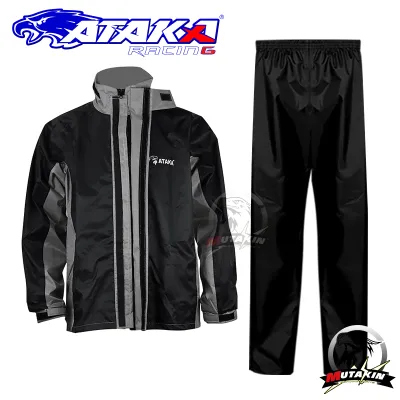
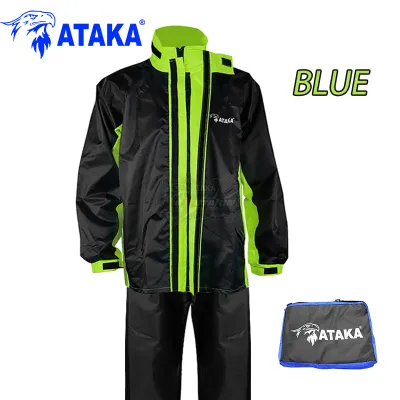
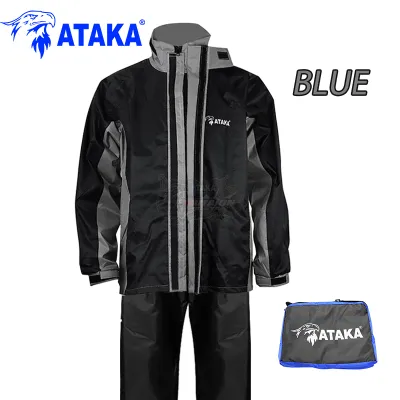
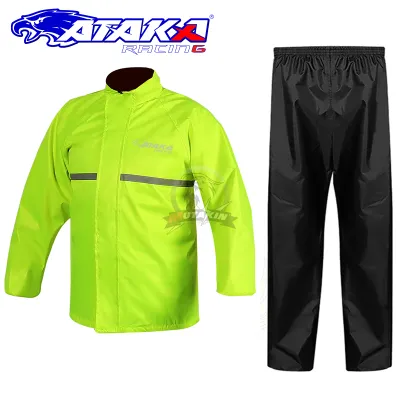
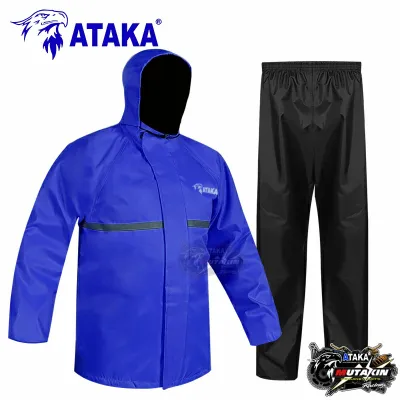
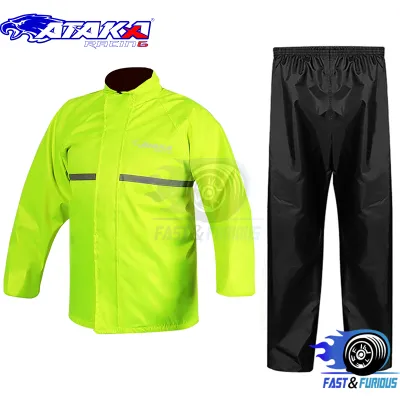
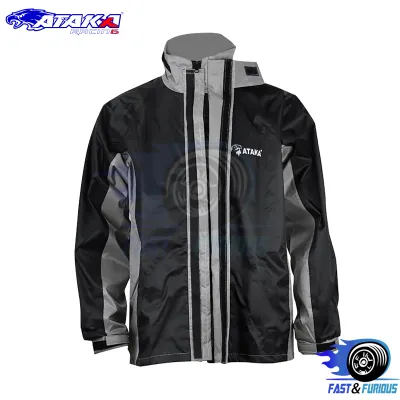
Prices are valid at publication and may change. Please refer to the product page for the latest price.
Visibility is another critical factor during severe weather. Heavy rain, road spray, and fog create a gray environment that makes motorcycles incredibly difficult for other motorists to see. A suitable commuting raincoat must feature high-visibility colors, such as neon yellow, orange, or bright green, along with retroreflective strips on the chest, back, and sleeves to ensure you remain visible through rain-streaked visors and windshields.
How to Inspect Your Ataka Raincoat for Riding Suitability
Before trusting your daily commute to an Ataka raincoat, you should perform a thorough physical inspection of the garment to verify its construction quality and suitability for motorcycle use.

Start by reading the manufacturer’s material tag or product specifications to confirm the outer shell and inner coating materials. Many budget-friendly riding suits utilize polyvinyl chloride (PVC) or polyurethane (PU) coatings. PVC is exceptionally waterproof and durable, but it is heavy and traps body heat, which can make you feel sweaty in hot, humid tropical weather. PU coatings are lighter, more flexible, and offer some breathability, but they require more careful maintenance to prevent the waterproof layer from peeling over time.
Next, turn the raincoat inside out to examine the seam construction. Water rarely leaks through the middle of a solid fabric panel; instead, it seeps through the tiny needle holes created during stitching. High-quality riding raincoats feature seams that are reinforced with heat-sealed waterproof tape. Inspect the critical stress points—such as the shoulders, underarms, and crotch area—to ensure the tape is flat, fully adhered, and free of bubbles or lifting edges.
The hood and collar mechanism also require close attention. A riding raincoat should have a high, adjustable collar that seals tightly around your neck to prevent water from running down your chest. The hood must be designed to roll up and secure into a collar pocket, or be completely detachable. A loose hood left flapping in the wind can inflate like a parachute, pulling back on your neck and creating a dangerous distraction at higher speeds.
Finally, verify the placement and quality of the reflective elements. Shine a flashlight at the raincoat in a dark room to check the reflectivity. The reflective strips should be wide enough to catch light from various angles and securely bonded to the fabric so they do not crack or peel after a few uses.
Design and Fit Considerations for the Riding Posture
A raincoat that fits perfectly while you are standing up may perform poorly once you assume a riding posture on your motorcycle. When you sit on your bike and reach for the handlebars, your body bends, your arms extend, and your knees flex, which changes how the garment covers your body.
Pay close attention to the length of the jacket’s back and the design of the front zipper. When leaning forward, the back of the jacket must remain long enough to cover your waist and prevent water from entering your pants. The front zipper should be protected by a wide storm flap secured with snap buttons or hook-and-loop fasteners. Without this flap, wind-driven rain will easily penetrate the zipper teeth, leading to water pooling in your lap.
Wrist and ankle cuffs must feature secure, adjustable closures to stop water from riding up your limbs. Elastic bands or hook-and-loop straps allow you to seal the cuffs tightly over your riding gloves and boots. If these closures are too loose, the wind pressure at commuting speeds will force road spray directly up your sleeves and pant legs.
Lastly, ensure the overall fit allows for comfortable layering without being excessively loose. The raincoat needs to fit over your daily clothing or a padded riding jacket, but it should not have excess, baggy fabric. Loose material will flap violently in the wind, which increases drag, causes rider fatigue, and risks catching on moving motorcycle parts like footpegs, gear shifters, or the drive chain.
Recognizing the Limits and When to Supplement Your Gear
Even a well-constructed raincoat has its limitations, and understanding when to supplement or replace your gear is essential for maintaining safety and comfort throughout the rainy season.
Over time, regular use, folding, and exposure to tropical heat will cause any waterproof garment to degrade. Keep an eye out for early signs of gear failure, such as dampness on your inner clothing, peeling seam tape, or a stiff, brittle texture in the fabric. If the waterproof coating begins to flake off, the raincoat can no longer provide reliable protection and should be replaced.
For complete protection, a rain jacket must be paired with dedicated waterproof rain pants and shoe covers. Your lower body is highly exposed to road spray kicked up by your own front tire and passing vehicles. Standard pants will quickly soak through, so a complete two-piece rain suit is highly recommended for daily commuters.
If your daily route involves high-speed highway riding or long-distance travel, standard commuter raincoats may not offer enough durability or protection. In these scenarios, you should consider transitioning to specialized, heavy-duty motorcycle touring rain suits. These premium options are designed to withstand extreme wind pressures, feature integrated armor pockets, and offer superior breathability for long hours on the road.
Frequently Asked Questions (FAQ)
Can I wear a standard raincoat hood over my motorcycle helmet?
No, you should never attempt to stretch a standard raincoat hood over your motorcycle helmet. Doing so severely restricts your peripheral vision and prevents you from making crucial blind-spot checks before turning or changing lanes. Additionally, a hood stretched over a helmet can catch the wind, pulling your head back and straining your neck. Always tuck the hood securely inside the collar or detach it completely, and wear your helmet normally over your head to maintain full visibility and ensure the helmet’s safety harness fits correctly.
How should I dry and store my raincoat after a wet commute?
After a wet ride, never fold your wet raincoat and stuff it into a motorcycle storage box or a plastic bag, as the trapped moisture and engine heat will quickly ruin the waterproof coating and cause mold to grow. Instead, hang the raincoat on a wide hanger in a well-ventilated, shaded indoor area away from direct sunlight and direct heat sources. Allow it to air-dry completely on both the outside and inside before folding it gently and storing it in a cool, dry, breathable bag.

Community discussion
Share your experience or ask a question. Comments are reviewed before publication.