
Are EVO Full-Face Helmets Safe? Understanding Local Certification Marks
When you ride on Philippine roads, your helmet is your primary line of defense against severe head injuries. If you are considering purchasing an EVO helmet full face model, you have likely noticed stickers on the back labeled with “PS” or “ICC” markings. You might also hear local riders refer to these as “PSB” certifications. Authentic EVO full-face helmets are safe and legal for road use in the Philippines, provided they bear these official marks. These stickers are not just decorative decals; they are legally mandated proofs of compliance regulated by the Bureau of Philippine Standards (BPS), an agency under the Department of Trade and Industry (DTI).
Riders often use the term “PSB” interchangeably with the PS mark, which can cause confusion. Historically, some riders associate “PSB” with the Productivity and Standards Board of Singapore, a foreign testing body. However, in the local context, any reference to “PSB” is typically a colloquial misnomer for the Philippine Standard (PS) mark or the BPS itself. When evaluating an EVO helmet full face design, your focus should remain on the official PS mark or the Import Commodity Clearance (ICC) sticker. These certifications guarantee that the helmet has undergone and passed rigorous physical tests, including impact absorption, penetration resistance, and chin strap retention strength, ensuring it can withstand the harsh realities of local traffic incidents.
What the PS and ICC Labels Actually Guarantee for Rider Safety
The presence of a PS mark or an ICC sticker on your helmet is a guarantee that the protective gear is not merely a novelty item. These certifications represent a systematic verification process that tests the structural integrity of the helmet under simulated crash conditions. Without these marks, a helmet cannot be legally sold or used on public roads in the Philippines. Understanding the distinction between the two labels helps you appreciate how your riding gear is regulated and verified.
Products mentioned in this guide
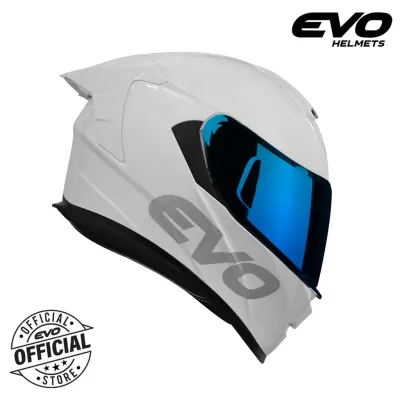
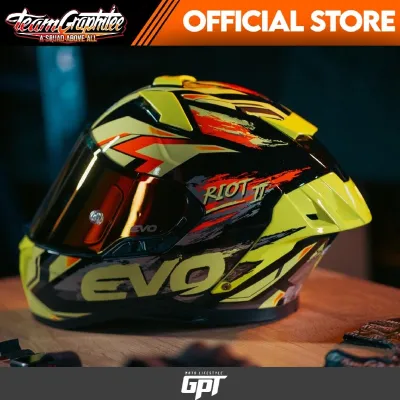
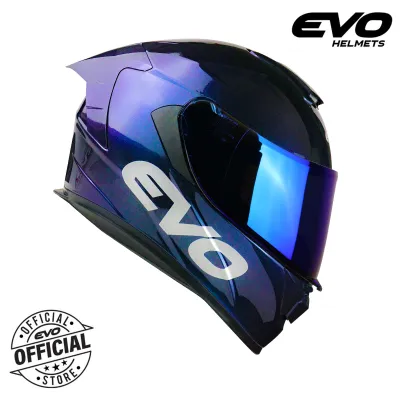
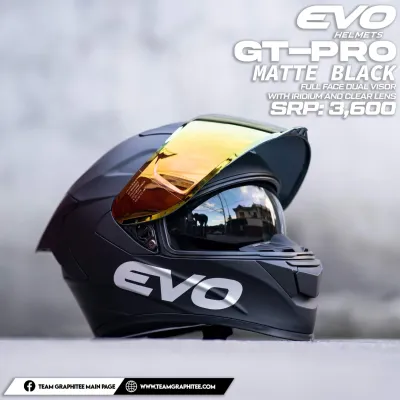
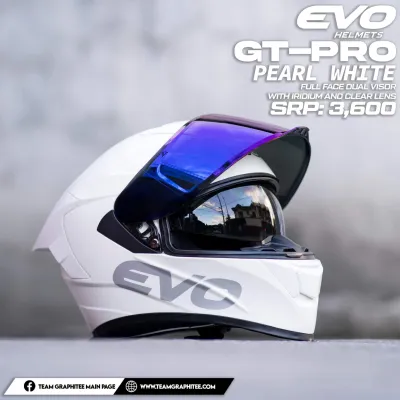
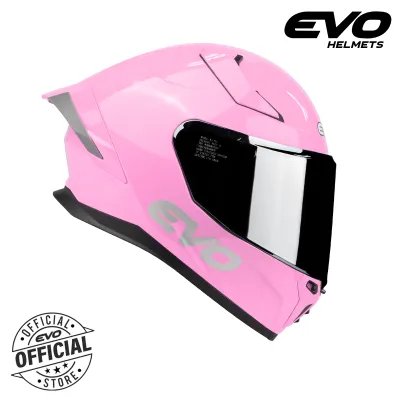
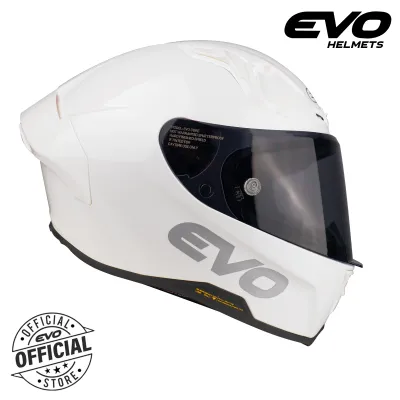
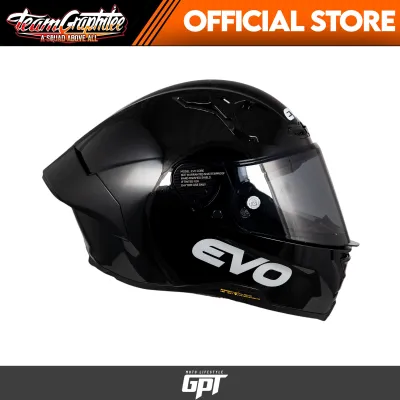
Prices are valid at publication and may change. Please refer to the product page for the latest price.

The PS Mark (Philippine Standard) for Local Compliance
The PS mark is issued to manufacturers whose production facilities undergo regular audits by the BPS. For EVO helmets that are manufactured or locally assembled under strict quality control systems, the PS mark serves as a testament to consistent manufacturing standards. This certification indicates compliance with the Philippine National Standard (PNS) UNECE R22.05 or R22.06, which are aligned with international safety benchmarks.
When an EVO helmet full face model receives a PS mark, it means that random samples from the production line have successfully passed a battery of mechanical tests. First, the outer shell—typically made of advanced polycarbonate or ABS plastic—is tested for penetration resistance to ensure sharp objects cannot easily pierce the helmet. Second, the thick Expanded Polystyrene (EPS) inner liner is evaluated for shock absorption, measuring how well it dissipates kinetic energy during a sudden impact. Third, the retention system, including the chin strap and quick-release buckle, is subjected to load tests to guarantee the helmet remains securely fastened to your head during a collision. Each authentic PS mark features a unique license number that links directly to the manufacturer’s certified facility, allowing for complete traceability.
The ICC Sticker (Import Commodity Clearance) for Imported Batches
For batches of EVO helmets that are manufactured abroad and imported into the Philippines, the BPS issues the Import Commodity Clearance (ICC) sticker. Rather than auditing the foreign factory continuously, the BPS subjects each imported shipment to rigorous batch testing. This process ensures that the specific container of helmets arriving at the port meets the exact safety criteria required by Philippine law before they are distributed to retail stores.
The ICC sticker is a highly secure, serialized label placed on the helmet shell. It serves as proof that the imported batch has been legally cleared, custom duties have been settled, and representative samples have passed local laboratory tests. Because imported goods are susceptible to transit damage or unauthorized product substitutions, the ICC sticker acts as a safeguard for consumers. It guarantees that the EVO helmet you purchase in Manila, Cebu, or Davao is identical in protective capability to the units tested in the laboratory. Unlike standard printed stickers, genuine ICC labels feature holographic elements and unique serial numbers that make them exceptionally difficult to replicate.
How to Spot Fake Stickers and Verify Authentic EVO Certifications
As the popularity of the EVO helmet full face brand has grown, so has the market for counterfeit products and fake safety stickers. Unscrupulous sellers often print replica ICC or PS stickers and apply them to substandard, uncertified helmets to deceive budget-conscious riders. Riding with a helmet that features a fake sticker puts your life at extreme risk, making it crucial to know how to verify the authenticity of these safety marks.
To begin your inspection, look at the physical location of the certification marks. On an authentic EVO full-face helmet, the PS mark or ICC sticker is permanently affixed to the lower rear portion of the outer shell, usually near the base of the neck. In addition to the external sticker, genuine helmets often feature secondary labels inside the comfort liner, detailing the manufacturing date, model name, size, and compliance with international standards like DOT or ECE.
When examining an ICC sticker, pay close attention to its security features. A genuine ICC sticker is not a simple paper label. It is made of a durable, tamper-evident material that shreds or leaves a distinct pattern if anyone attempts to peel it off. It features a metallic, holographic background that shifts colors when tilted under light, displaying the official logo of the Bureau of Philippine Standards. Furthermore, look for clean micro-printing and a clear, unique serial number printed at the bottom of the sticker. If the printing appears blurry, the colors look dull, or the sticker peels off cleanly in one piece, it is highly likely a counterfeit.
For helmets bearing the PS mark, you can verify the validity of the printed BPS license number. The license number should follow a specific format issued by the DTI. You can cross-reference this number on the official DTI or BPS website registry to confirm that the license matches the brand and manufacturer of your helmet.
The most effective way to avoid counterfeit labels is to control where you buy your gear. Always purchase your EVO helmet from official EVO flagship physical stores, authorized motorcycle accessory dealers, or well-established riding gear shops. Be highly cautious of unverified listings on online marketplaces or social media groups offering EVO helmets at prices that seem too good to be true. Authentic safety comes with a standard manufacturing cost, and a heavily discounted helmet is often a red flag for a counterfeit product.
Safety and Legal Risks of Riding With Uncertified Helmets
Choosing to ride with an uncertified or counterfeit helmet is a gamble with severe physical and legal consequences. In the tropical climate of the Philippines, where road conditions can be unpredictable and traffic density is high, a split-second accident can have life-altering outcomes if your headwear fails to protect you.
The physical risks of using an uncertified helmet are catastrophic. Substandard helmets often look identical to genuine EVO full-face models on the outside, but they lack the engineered internal components necessary for energy management. During an impact, a cheap plastic outer shell can shatter into sharp fragments, causing secondary puncture wounds. More importantly, uncertified helmets often use cheap, low-density packing foam instead of genuine, high-density Expanded Polystyrene (EPS). This low-grade foam cannot absorb or dissipate the kinetic energy of a crash, transferring the full force of the impact directly to your skull and brain, leading to severe trauma. Additionally, weak chin straps can snap instantly upon impact, ejecting the helmet from your head before your skull hits the pavement.
Legally, riding with an uncertified helmet violates Republic Act No. 10054, also known as the Motorcycle Helmet Act of 2009. Under this law, all motorcycle riders must wear standard protective helmets that bear the official PS or ICC marks. Land Transportation Office (LTO) officers, Highway Patrol Group (HPG) personnel, and local traffic enforcers actively conduct checkpoints to verify helmet compliance.
If you are caught wearing a helmet without the proper, authentic stickers, you face substantial penalties. First-time offenders are subject to a fine of ₱1,500. Subsequent offenses carry escalating fines: ₱3,000 for the second offense, ₱5,000 for the third offense, and up to ₱10,000 along with the confiscation of your driver’s license for fourth and succeeding violations. In some cases, enforcers may impound your motorcycle if you cannot provide a compliant helmet on the spot. Do not let a false sense of security or a cheap purchase price expose you to these severe physical and financial liabilities.
Beyond the Sticker: Fitment and International Safety Standards
While local PS and ICC certifications are legally required to ride on Philippine roads, they represent the baseline of safety compliance. To maximize your protection, you should look beyond the local stickers and evaluate international safety standards as well as the physical fit of the helmet on your head.
Many premium EVO helmet full face models carry dual or triple certifications, featuring international marks such as DOT (Department of Transportation, USA) or ECE (Economic Commission for Europe). The ECE 22.06 standard, in particular, is highly respected globally as it subjects helmets to rigorous testing protocols, including rotational impact tests that simulate how a helmet behaves when sliding or rolling during a crash. Choosing an EVO helmet that carries both the local ICC/PS marks and an ECE 22.06 certification ensures you are getting an advanced level of protection.
However, even the most highly certified helmet will fail to protect you if it does not fit your head correctly. When buying an EVO helmet, perform these vital fitment checks:
- The Snugness Test: The helmet should feel snug around your entire head, applying even pressure without causing painful hot spots, especially on your forehead or temples.
- The Cheek Pad Check: Your cheeks should be slightly pushed up, resembling a "chipmunk face." If your jaw moves freely or the helmet rotates when you shake your head, the size is too large.
- The Roll-Off Test: Fasten the chin strap securely, grab the rear base of the helmet, and try to pull it forward off your head. If it slips off or exposes your forehead, the fit is unsafe.
- The Field of Vision: Ensure the helmet's eye port does not create excessive blind spots, allowing you to maintain clear peripheral vision in busy city traffic.
Remember that helmets degrade over time due to exposure to tropical heat, humidity, sweat, and UV rays. Inspect your helmet regularly for signs of wear, such as a crumbling EPS liner, loose chin straps, or a compromised visor mechanism. If your helmet experiences a drop from a significant height or is involved in a crash, the internal EPS liner will compress permanently to absorb the energy, rendering it useless for future impacts. In such cases, the helmet must be replaced immediately, regardless of how pristine the outer shell or the ICC sticker appears.
Frequently Asked Questions (FAQ)
Is it legal to ride with an EVO helmet that only has a DOT sticker but no ICC or PS mark?
No, it is not legally sufficient on Philippine roads. Under Republic Act No. 10054, all motorcycle helmets used in the Philippines must feature either the local PS mark or the ICC sticker issued by the Bureau of Philippine Standards. Even if your EVO helmet has a valid DOT or ECE sticker from abroad, local traffic enforcers do not recognize foreign marks as a substitute for local certification. Riding without the official PS or ICC label can still result in LTO apprehension and a fine starting at ₱1,500.
Can I replace a damaged or peeling PS or ICC sticker on my EVO helmet?
No, you cannot legally obtain, reprint, or replace a damaged PS or ICC sticker yourself. These stickers are strictly controlled security labels designed to prevent tampering and counterfeiting. If your helmet’s sticker is peeling or has become completely illegible, traffic enforcers may flag it as non-compliant. To avoid issues at checkpoints, always keep your original official receipt of purchase and the helmet’s original packaging as secondary proof of authenticity. If the helmet shell or the sticker is severely deteriorated, it is highly recommended to replace the helmet entirely to ensure your safety is not compromised.
Community discussion
Share your experience or ask a question. Comments are reviewed before publication.