
When navigating the busy, high-humidity streets of Philippine cities, protective gear is your primary line of defense. If you are looking at the evo full face helmet xt 300, you will likely notice specific safety markings on the shell, namely the Import Commodity Clearance (ICC) or Philippine Standard (PS) stickers. These certifications are not mere decorative decals; they are legal and physical indicators that the helmet has undergone standardized evaluations to protect your head during an impact. Understanding what these safety stamps guarantee—and what they do not—is essential for every rider trying to balance daily road safety with legal compliance.
Decoding the PSB and ICC Marks on the EVO Full Face Helmet XT 300
The Bureau of Philippine Standards (BPS), an agency under the Department of Trade and Industry (DTI), is responsible for regulating the safety of motorcycle helmets sold in the local market. To ensure that riders are protected by reliable gear, the BPS enforces mandatory compliance with the Philippine National Standard (PNS) for protective helmets and their visors. When you inspect a helmet, you will generally encounter one of two primary marks: the PS mark or the ICC sticker.
The PS mark is typically issued to local manufacturers whose production facilities undergo regular audits to ensure consistent quality control. Conversely, the ICC sticker is designated for imported helmets, verifying that a specific batch of imported products has been sampled and tested to meet local safety requirements. For an imported option like the evo full face helmet xt 300, the presence of a genuine ICC sticker indicates that the model has successfully passed the government’s minimum safety and quality benchmarks.
Products mentioned in this guide
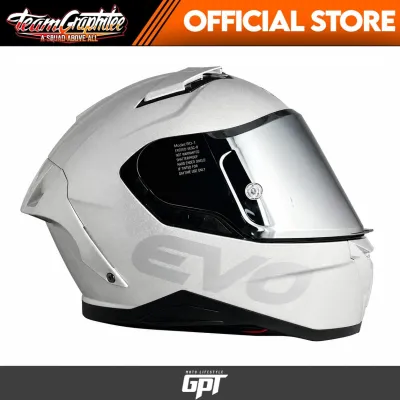
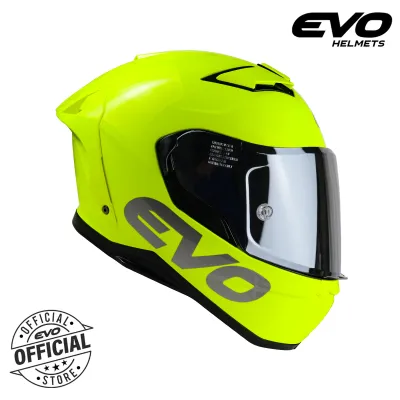
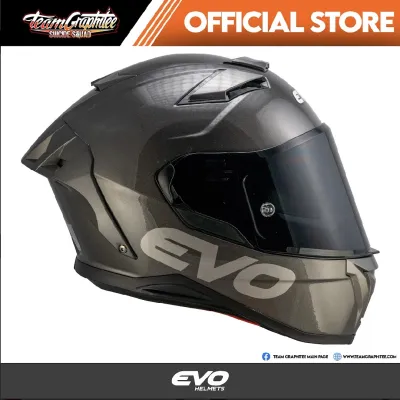
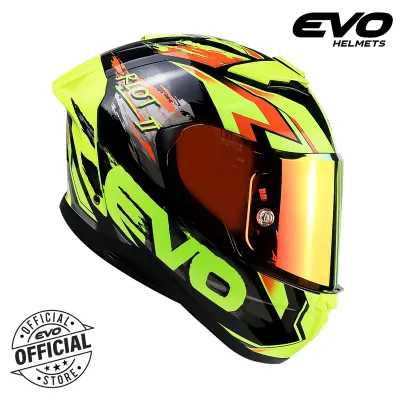
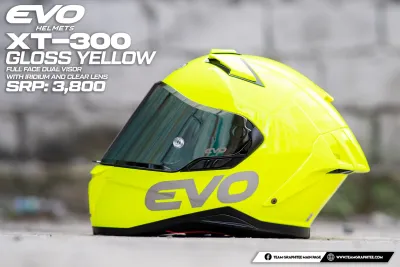
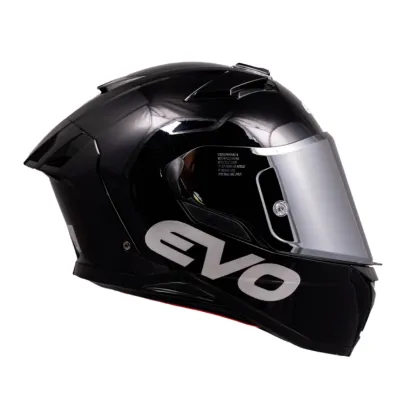
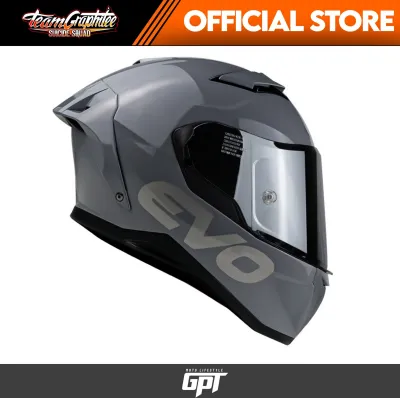
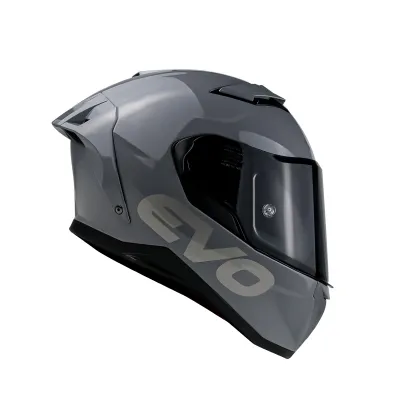
Prices are valid at publication and may change. Please refer to the product page for the latest price.
Legally, having these marks means the helmet is approved by the Land Transportation Office (LTO) for use on public roads. Riding with an uncertified helmet, or one lacking the official sticker, can lead to traffic apprehensions, vehicle impoundment, or fines. To stay updated on the exact legal penalties and administrative procedures, riders should regularly consult the latest official guidelines published by the LTO and the BPS, as regulations may be updated periodically.
What the National Safety Standard Actually Tests
A safety certification is only as good as the physical tests a helmet must survive to earn it. The Philippine National Standard subjects helmets to a battery of laboratory tests designed to simulate the most common and dangerous forces experienced during a motorcycle accident. These evaluations focus on structural integrity, retention, and visibility under controlled conditions.

The first and most critical evaluation is the impact energy absorption test. During this procedure, the helmet is fitted onto a heavy headform and dropped from a specific height onto steel anvils of varying shapes, such as flat or hemispherical surfaces. Sensors inside the headform measure the acceleration transmitted through the outer shell and the Expanded Polystyrene (EPS) foam liner. A passing grade means the helmet successfully dampens the shock, reducing the peak forces that would otherwise cause severe traumatic brain injuries.
Another crucial test is shell penetration resistance, where a pointed striker is dropped onto the helmet to ensure sharp objects cannot pierce the outer shell and reach the rider’s skull. Additionally, the retention system—the chin strap and buckle—is subjected to dynamic load testing to verify it will not stretch, slip, or snap under sudden tension. Finally, peripheral vision tests ensure that the helmet’s shell design and visor do not obstruct the rider’s lateral sightlines, which is vital for spotting hazards in dense traffic.
While these standardized pass/fail evaluations confirm a baseline level of structural integrity, riders must recognize the safety boundaries of any helmet. A certified helmet is designed to manage and dissipate a specific threshold of impact energy, but it is not indestructible. No certification can guarantee absolute protection or zero injury in high-speed, catastrophic, or highly unusual collision scenarios.
Is the Baseline Certification Enough for Your Daily Commute?
Determining whether a baseline PS or ICC certification provides sufficient protection depends heavily on your daily riding environment, average speeds, and risk exposure. For the typical Filipino commuter navigating congested urban avenues, stop-and-go traffic, and moderate-speed filtering, a helmet meeting the national standard offers highly relevant protection. Most urban accidents occur at low-to-medium speeds where managing direct blunt-force trauma is the primary safety requirement.
However, it is valuable to conceptually compare our national standards with prominent international benchmarks, such as the United States Department of Transportation (DOT) standard or the Economic Commission for Europe (ECE) regulations. While all these standards aim to protect the rider, they differ in testing methodologies. For instance, ECE testing protocols often involve more rigorous multi-angle impact assessments, rotational force measurements, and strict batch-testing of helmets directly from retail shelves.
If your daily route consists primarily of high-speed highway touring, long-distance provincial travel, or expressways, you may want to consider a helmet that carries both the local ICC sticker and reputable international certifications like ECE 22.06. Higher-speed environments introduce greater kinetic energy during a crash, where advanced multi-density EPS liners and sophisticated shell composites—often validated by international standards—can offer an extra margin of safety. For standard city commutes, however, a properly fitted, genuine ICC-certified helmet like the evo full face helmet xt 300 serves as a legally compliant and physically capable baseline.
How to Verify Your Helmet's Compliance and Condition
With counterfeit products and unauthorized replicas circulating in the marketplace, verifying the authenticity of your helmet’s certifications is a critical safety step. Before purchasing or wearing any helmet, perform a thorough physical inspection of both its external markings and internal labels.
First, locate the official BPS sticker on the rear or lower side of the helmet shell. Genuine ICC stickers feature distinct security elements, such as unique serial numbers and holographic patterns that are difficult to replicate. Next, peel back a portion of the comfort padding to inspect the permanent manufacturer labels stitched into the fabric or stamped onto the EPS liner. These labels should clearly display the brand name, model designation, manufacturing date, and size.
In addition to checking for authenticity, you must regularly assess the physical condition of your helmet. Use the following inspection checklist before heading out on the road:
- Strap and Buckle Function: Ensure the quick-release buckle or double-D ring system locks securely and does not slip when tension is applied.
- EPS Liner Integrity: Press firmly on the black or white foam liner inside the helmet shell. It should feel firm and show no signs of cracking, deep indentation, or crumbling.
- Shell and Visor Condition: Check the outer shell for deep cracks or structural deformities. The visor should lock securely in place without obstructing your view with heavy scratches.
Finally, understand that helmet safety certifications only apply to a helmet in its original, undamaged state. A helmet is a single-use safety device designed to deform and destroy itself to absorb impact energy. If your helmet is subjected to a drop or a crash—even if there is no visible external damage—the internal EPS liner may have collapsed permanently, rendering it useless for future impacts. Always replace a crashed helmet immediately, and pay close attention to the manufacturer’s recommended lifespan, which is typically five years from the production date, as sweat, hair oils, and tropical humidity can degrade the internal materials over time.
Frequently Asked Questions (FAQ)
Is it legal to ride without a PS or ICC certified helmet in the Philippines?
No, it is strictly illegal to ride a motorcycle on public roads in the Philippines without a certified helmet. The LTO mandates that both motorcycle operators and their pillion passengers must wear standard protective motorcycle helmets that bear the official PS or ICC marks. Wearing non-compliant headgear, such as industrial construction hats, bicycle helmets, or uncertified novelty helmets, does not meet the legal requirement and will result in traffic apprehensions, fines, or other penalties during roadside inspections.
Does a higher price always mean a better safety certification?
A higher price tag does not automatically guarantee superior safety certifications. While premium, expensive helmets often carry multiple rigorous international certifications (such as ECE or SNELL) and utilize lightweight composite fibers, a significant portion of their cost also covers brand prestige, advanced aerodynamics, ventilation systems, graphic designs, and interior comfort features. A budget-friendly helmet that carries a valid, genuine PS or ICC mark has still met the mandatory legal safety thresholds required to protect your head in a standard accident.
Community discussion
Share your experience or ask a question. Comments are reviewed before publication.