
Rebuilding a motorcycle engine is a major undertaking, especially when that motorcycle is your primary daily commuter navigating the demanding roads of the Philippines. When faced with a worn-out crankshaft, the decision between buying an Original Equipment Manufacturer (OEM) part and an aftermarket alternative like Faito often comes down to balancing your immediate budget against your long-term reliability expectations.
The “better” choice depends heavily on your budget, the age of your motorcycle, and your tolerance for ongoing maintenance. For riders who prioritize maximum longevity, exact factory tolerances, and hassle-free reliability for long-term daily commuting, an OEM crankshaft remains the gold standard. OEM components are engineered to match the exact specifications of your engine, ensuring that your commuter runs smoothly for tens of thousands of kilometers without unexpected hiccups.
Conversely, a Faito aftermarket crankshaft is an excellent, budget-friendly alternative for riders operating on a tight budget, those repairing older or out-of-production models, or anyone needing a cost-effective solution to get a daily commuter back on the road quickly. Faito offers a practical balance of affordability and availability, making it a popular choice across local parts shops. However, regardless of the brand you choose, professional installation and a meticulous break-in procedure are non-negotiable requirements for your engine’s survival.
Products mentioned in this guide
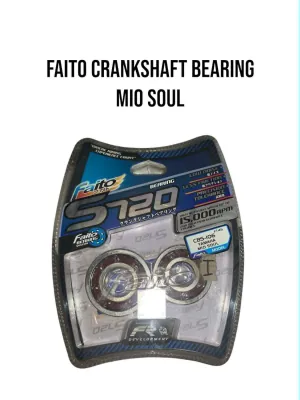
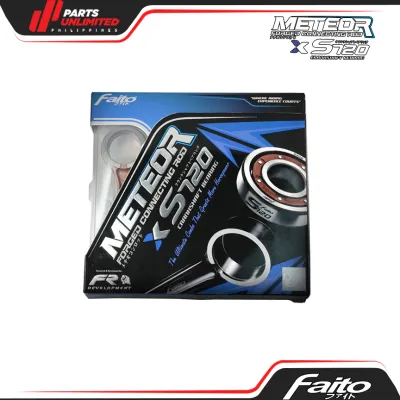
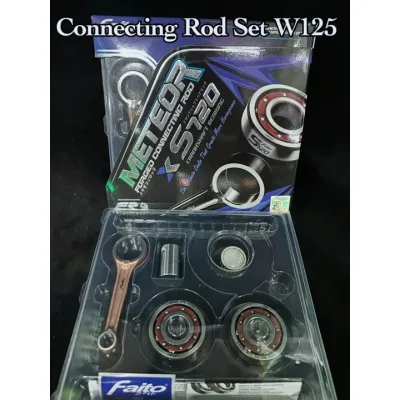
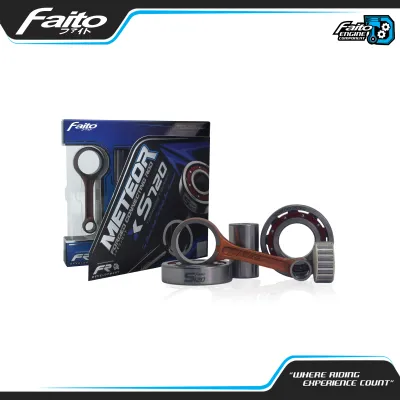

Prices are valid at publication and may change. Please refer to the product page for the latest price.
Why the Crankshaft Matters for Daily Commuting
The crankshaft is the mechanical heart of your motorcycle’s engine, serving as the critical link in the transmission and drive system. Its primary role is to convert the linear, up-and-down motion of the piston into rotational power, which is then transferred through the transmission to drive the rear wheel. Because it bears the brunt of every combustion cycle, any imperfection or wear in this component directly threatens the operational life of the entire vehicle.
Daily commuting in the Philippines exposes a motorcycle to exceptionally harsh operating conditions. Commuters routinely face grueling stop-and-go traffic in dense urban centers like Metro Manila or Metro Cebu, where engines idle for extended periods under intense tropical heat. This constant thermal stress is compounded by frequent clutch engagement, rapid throttle modulation, and the occasional necessity of navigating flooded streets during the monsoon season. These factors put immense pressure on the crankshaft’s bearings and journals, demanding high-strength materials and precise lubrication.
When a crankshaft begins to fail, the symptoms can start subtly before turning catastrophic. Initial signs like excessive engine vibration, knocking sounds, or a loss of power usually point to bearing wear, journal scoring, or excessive play in the connecting rod. Ignoring these warning signs can lead to a complete structural failure, where a snapped rod or seized bearing can punch a hole through the crankcase, turning a routine rebuild into a total engine write-off. Consequently, choosing the right replacement crankshaft is the single most critical decision in securing your motorcycle’s future reliability.
OEM Crankshafts: The Baseline for Reliability
Choosing a genuine OEM crankshaft provides a level of reassurance that aftermarket options struggle to match. The primary advantage of an OEM part lies in its guaranteed material consistency and exact factory machining tolerances. Because the manufacturer designs the crankshaft specifically for the thermal, mechanical, and rotational loads of that exact engine blueprint, you can trust that the metallurgy, balancing, and oil-passage locations are optimized for long-term durability.

This precision engineering translates directly into a predictable and extended lifespan. When you install a genuine manufacturer crankshaft, you are restoring the engine to its original factory state, which minimizes the risk of premature wear on adjacent components like the main bearings, pistons, and crankcases. For a daily commuter who relies on their motorcycle to earn a living or travel to work without fail, this predictability is invaluable.
However, the uncompromising quality of OEM parts comes with a few distinct disadvantages, most notably a premium price tag. In the Philippine market, a genuine crankshaft can cost significantly more than aftermarket alternatives, sometimes representing a substantial portion of an older motorcycle’s total market value. This high upfront cost in Philippine Pesos (₱) can be a tough pill to swallow for budget-conscious riders.
Additionally, supply chain limitations can pose a major challenge for those seeking OEM parts. Authorized dealerships do not always keep crankshafts for every model year in stock, leading to long backorder wait times that can stretch from weeks to months. For a daily rider, keeping a motorcycle off the road for an extended period while waiting for a part is often not an option, forcing them to look toward the aftermarket.
Despite these drawbacks, the value proposition of an OEM crankshaft remains strong. While the initial investment is high, the cost-per-kilometer over several years of trouble-free daily commuting is remarkably low. If your livelihood depends on your motorcycle’s daily availability, investing in a genuine part minimizes the risk of costly unscheduled downtime and repeated mechanic fees.
Faito Aftermarket Crankshafts: The Budget-Friendly Alternative
Faito has established a strong presence in the Philippine motorcycle aftermarket by offering components that balance performance and affordability. For riders faced with a sudden engine failure, a Faito crankshaft represents a highly accessible alternative to OEM replacements. The most immediate benefit is the significant cost savings, as Faito parts are generally priced much lower than their genuine counterparts, allowing riders to complete a full engine overhaul without draining their savings.
Another major advantage of Faito is its widespread availability across the country. Whether you visit a local motorcycle parts shop in your neighborhood or browse established online marketplaces, you are highly likely to find a Faito crankshaft compatible with popular commuter models. Faito also frequently supports older or discontinued motorcycle models, providing a lifeline for riders whose bikes are no longer supported by official manufacturer parts networks.
Nevertheless, opting for an aftermarket crankshaft introduces variables that require careful management. While Faito maintains respectable manufacturing standards, aftermarket production runs can occasionally exhibit minor variations in metallurgical composition, bearing clearances, and overall balancing compared to strict OEM standards. These subtle differences can affect how smoothly the engine runs and how well the crankshaft handles extreme thermal cycles over time.
To mitigate these risks, it is critical to perform a thorough physical inspection of the Faito crankshaft immediately upon delivery or purchase. Do not assume out-of-the-box perfection; instead, carefully inspect the packaging for signs of tampering or damage. Remove the crankshaft and examine the journal surfaces for any rough spots, corrosion, or machining burrs, and verify that the pre-installed bearings rotate smoothly without any catching or radial play.
Ultimately, Faito’s value proposition is centered on practical utility and cost management. It serves as an ideal choice for secondary family motorcycles, budget-constrained rebuild projects, or situations where you plan to use the motorcycle for only a few more years before upgrading. By choosing Faito, you can restore your daily commuter to working order quickly and affordably, keeping your daily routine on track.
Head-to-Head Comparison: Durability, Fitment, and Value
To help you weigh these two options, it is helpful to look at how they compare across several key performance and ownership dimensions. The table below outlines the practical differences you can expect when choosing between an OEM and a Faito crankshaft for your daily commuter.
| Feature | OEM Crankshaft | Faito Aftermarket Crankshaft |
|---|---|---|
| Material & Machining Tolerances | Factory exact; optimized metallurgical composition for maximum fatigue resistance. | Acceptable aftermarket variance; reliable for daily use but may have wider tolerances. |
| Bearing Quality & Clearances | Pre-matched to factory specifications; requires minimal verification if paired with OEM bearings. | Decent quality pre-installed bearings; manual clearance verification is highly recommended. |
| Upfront Cost | Premium pricing; represents a significant investment in Philippine Pesos (₱). | Budget-friendly; significantly lower cost, leaving room in your budget for other rebuild parts. |
| Availability for Older Models | Limited; often discontinued or subject to long dealership backorder wait times. | Generally high; widely stocked by local shops and online sellers for popular commuter models. |
| Expected Lifespan under Daily Use | Maximum; engineered to last for tens of thousands of kilometers under proper maintenance. | Moderate to variable; highly dependent on installation quality and strict adherence to maintenance. |
Beyond the specifications listed in the table, the dimension of fitment requires special attention. While Faito crankshafts are marketed as direct, drop-in replacements for specific motorcycle models, aftermarket manufacturing can occasionally result in minor physical differences. These variations might include slight differences in spline counts on the drive side, keyway dimensions for the flywheel, or the exact outer diameter of the bearing seats.
To prevent costly delays and assembly issues, never assume compatibility based solely on a generic product title. Before finalizing your purchase, cross-reference the manufacturer’s exact part number with your motorcycle’s specific model year, engine code, and variant. If your motorcycle has multiple sub-models or has undergone minor mid-generation updates, verify these details with the seller or consult official parts catalogs to ensure a perfect mechanical match.
Professional Installation and Break-In Safety Boundaries
Replacing a motorcycle crankshaft is a highly complex, high-risk procedure that requires splitting the engine crankcases. This is an irreversible teardown that should never be attempted as a casual DIY project by beginners. An improperly installed crankshaft can fail within minutes of starting the engine, resulting in catastrophic damage to the cylinder, piston, and crankcases, which can create severe safety hazards on the road.
To ensure a successful rebuild, the technician must strictly follow the specifications detailed in your motorcycle’s official service manual. Always check the treated item’s manufacturer instructions and any applied product labels (such as engine assembly lubricants or liquid gaskets) before beginning. If instructions conflict, or if the specific vehicle model is unidentified, stop immediately and consult the manufacturer or a qualified professional. The job cannot be completed safely with basic hand tools; it demands specialized equipment, including crankcase splitters, crankshaft pullers, flywheel pullers, and high-quality torque wrenches. Additionally, precision measuring instruments such as dial indicators, micrometers, and feeler gauges are required to verify that all components are aligned within factory limits.
Before final assembly, the builder must perform critical clearance checks, regardless of whether you are installing an OEM or a Faito crankshaft. Never rely blindly on pre-assembled tolerances. Use a dial indicator to measure the radial and axial runout of the crankshaft journals to ensure the shaft is perfectly straight. Additionally, measure the connecting rod side clearance and the big-end bearing oil clearance using precision gauges to confirm they fall within the manufacturer’s allowable wear limits.
Once the engine is reassembled, the break-in period is the next critical phase for long-term survival. For the first 500 to 1,000 kilometers, you must avoid high RPMs, heavy passenger or cargo loads, and prolonged idling in heavy traffic. This careful operation allows the new bearings, journals, and piston rings to seat properly without overheating. It is also highly recommended to perform an early oil and filter change after the first 100 kilometers to flush out any microscopic metallic debris generated during initial run-in.
If at any point during the assembly or initial startup you encounter binding when rotating the engine by hand, hear unusual metallic noises, or find that measurements do not meet the service manual’s specifications, stop immediately. Do not attempt to force the engine to run. Halt the rebuild process and consult a qualified, professional motorcycle mechanic to diagnose and correct the issue before proceeding.
Decision Framework: Which Crankshaft Should You Choose?
To make your final decision easier, consider how your specific commuting needs, budget, and long-term plans align with the characteristics of each crankshaft option.
Choose OEM if:
- You plan to keep and ride the motorcycle for several more years as your primary, daily mode of transport.
- You demand the highest possible peace of mind and want to minimize the risk of unexpected mechanical breakdowns.
- You have the budget to afford premium genuine parts and are willing to wait if the part needs to be ordered from a dealership.
- You want to maintain the motorcycle's original factory specifications and resale value.
Choose Faito if:
- You are working with a strict repair budget and need to get your daily commuter back on the road without spending a fortune.
- You are rebuilding an older or discontinued motorcycle model for which OEM parts are no longer manufactured or are extremely difficult to source.
- The motorcycle is a secondary vehicle or a backup commuter where absolute maximum longevity is less critical.
- You plan to sell or upgrade the motorcycle in the near future and want to avoid over-investing in a depreciating asset.
Verify first if:
- You are purchasing the crankshaft from an online marketplace or an independent local shop. Always send your exact engine code, chassis number, and model year to the seller to confirm compatibility before checking out.
- You are hiring a mechanic; ensure they have the necessary precision tools and experience with engine splitting to handle the installation correctly.
Frequently Asked Questions (FAQ)
Can I reuse my old crankshaft bearings with a new Faito or OEM crankshaft?
Reusing old bearings with a new crankshaft is a critical mistake that will likely lead to rapid engine failure. Over time, bearings wear to match the unique microscopic wear patterns of the old crankshaft journals. If you pair these worn bearings with a new, perfectly round crankshaft, the uneven contact will cause accelerated friction, localized overheating, and rapid oil pressure loss. Always install brand-new, high-quality main bearings that match the manufacturer’s specified clearances whenever you replace a crankshaft.
Does a heavier aftermarket crankshaft improve low-end torque for city traffic?
While a heavier crankshaft can increase rotational inertia, standard replacement crankshafts from both OEM and aftermarket brands like Faito are carefully balanced to match original factory weight specifications. Attempting to install an aftermarket crankshaft with an incorrect weight or balance profile in a daily commuter will not provide a meaningful boost in low-end torque. Instead, it will introduce severe engine vibrations that can accelerate bearing wear, loosen engine mounting bolts, and ultimately cause premature engine failure. Stick to direct-replacement specifications for daily commuting.
How can I tell if a Faito crankshaft is genuine and not a lower-tier counterfeit?
To protect your investment, only purchase Faito components from authorized distributors, highly rated local motorcycle shops, or official brand stores on established e-commerce platforms. When the package arrives, inspect it for high-quality printing, intact security seals, and official holographic stickers. Genuine Faito crankshafts feature clean, precise machining marks without rough burrs or uneven finishes. If the price of the crankshaft seems suspiciously low compared to typical market rates, or if it arrives in generic, unlabeled packaging, avoid installing it on your motorcycle.
Community discussion
Share your experience or ask a question. Comments are reviewed before publication.