
Finding a reliable half face motorcycle helmet under ₱2,000 in the Philippines requires balancing affordability with strict safety standards. In a country where daily commutes involve navigating dense traffic, sudden tropical downpours, and intense humidity, a half-face (or open-face) helmet offers a practical mix of ventilation and convenience. However, the market is flooded with cheap, uncertified options that put riders at risk. To protect yourself on the road, you must know how to identify genuine safety certifications, understand what features to prioritize, and learn how to spot counterfeit products.
Setting Realistic Expectations for a ₱2,000 Helmet Budget
A budget of ₱2,000 is entirely feasible for securing a safe, certified helmet, but buyers must manage their expectations regarding comfort and premium features. At this price point, manufacturers focus their resources on meeting basic safety standards rather than luxury add-ons. You can expect a sturdy outer shell made of standard ABS thermoplastic and a reliable impact-absorbing liner, but you will likely miss out on advanced features like ultra-lightweight composite materials, complex multi-channel ventilation systems, or premium moisture-wicking interior fabrics.
The trade-offs in a budget helmet typically manifest in the overall weight, wind noise, and longevity of the moving parts. Budget helmets tend to be slightly heavier because cheaper plastics must be thicker to achieve the same impact resistance as expensive carbon fiber or fiberglass composites. Additionally, the visor mechanisms on lower-priced models may feel less smooth and wear out faster over time. The interior padding is often basic, and while some models offer removable cheek pads for washing, others have fully fixed liners that make cleaning more challenging in the humid Philippine climate.
Products mentioned in this guide
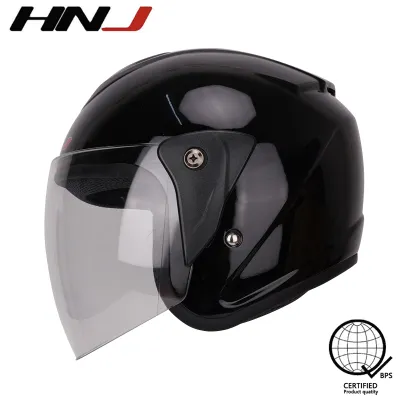
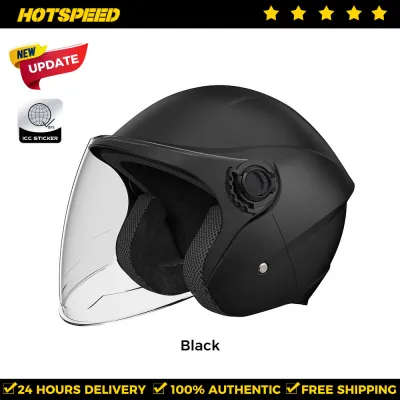
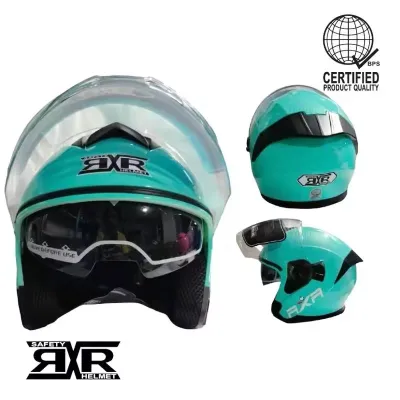
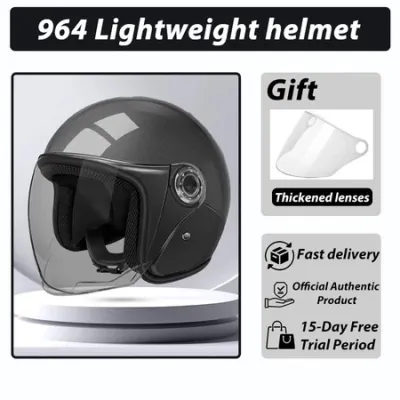
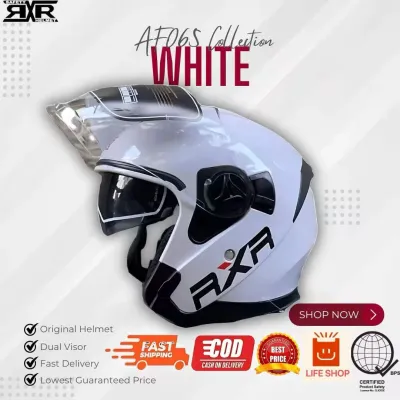
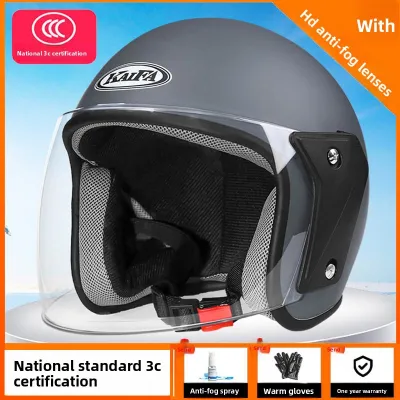
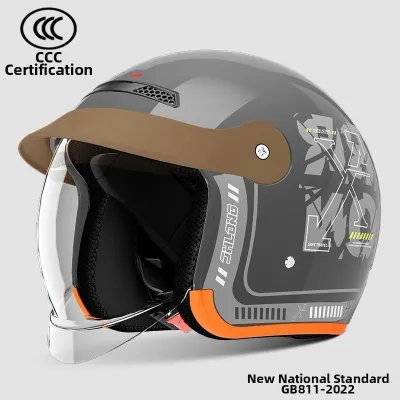
Prices are valid at publication and may change. Please refer to the product page for the latest price.
It is also important to remember that a ₱2,000 budget should ideally cover the helmet itself. When shopping online or traveling to physical stores, you must factor in additional costs such as shipping fees, local travel expenses, or optional accessories like a clear replacement visor or a helmet bag. Prioritizing the core safety of the helmet over cosmetic upgrades ensures that every peso spent goes directly toward protecting your head.
How to Verify Genuine Safety Certification Marks
In the Philippines, riding with an uncertified helmet is not only illegal but highly dangerous. The two primary safety marks to look for are the Import Commodity Clearance (ICC) sticker and the Philippine Standard (PS) mark, both administered by the Bureau of Philippine Standards (BPS) under the Department of Trade and Industry (DTI). Additionally, many high-quality imported helmets in Southeast Asia carry Singapore’s PSB certification, which is widely respected for its rigorous testing standards.

To avoid falling victim to counterfeit safety stickers, you must perform a close physical and visual inspection of the helmet. Legitimate ICC stickers are not simple paper decals; they are high-quality, tamper-evident holographic labels. When you tilt the helmet under direct light, the holographic elements should shift and reflect light clearly. Each genuine sticker features a unique serial number and a specific color scheme that corresponds to the year of import. If the sticker looks blurry, lacks a holographic sheen, or peels off easily in one clean piece, it is highly likely a fake.
Physical placement is another key indicator of authenticity. Genuine certification marks are typically affixed to the rear of the helmet shell, often protected under a clear coat of paint or firmly adhered to the lower edge. They should never be placed haphazardly over scratches, air vents, or brand logos. If you notice a sticker that is crooked, bubbling, or lifting at the edges, treat it with extreme suspicion.
When in doubt, you can cross-reference the certification details before making a purchase. The DTI regularly updates its list of approved helmet brands and importers on its official website. You can check if the brand and model of the helmet you are considering are officially registered. If a seller cannot provide the specific model name or if the brand does not appear on the official DTI list, it is safest to assume the helmet does not meet the required safety standards, regardless of any stickers affixed to it.
Prioritizing Essential Features Over Aesthetics
When shopping on a budget, it is easy to be distracted by aggressive styling, colorful graphics, or integrated sun visors. However, your primary focus must always be on the structural integrity of the helmet. The most critical component is the combination of the outer shell and the inner Expanded Polystyrene (EPS) liner. The outer shell is designed to prevent penetration and distribute the force of an impact, while the EPS liner deforms to absorb the kinetic energy. Look for helmets that specify a high-density or multi-density EPS liner, as this provides superior energy management during a crash.
Visor quality is another essential feature that directly impacts your safety and comfort during daily commutes. A good half-face helmet should feature an optically correct visor that does not distort your vision. Look for visors that offer scratch resistance and basic UV protection, which are crucial for riding under the harsh Philippine sun. If you frequently ride at night or during sudden rainstorms, ensure the visor is clear; tinted or mirrored visors should be avoided for nighttime use as they drastically reduce visibility.
The retention system, which consists of the chin strap and the buckle, is what keeps the helmet secured to your head during an accident. At the ₱2,000 price point, most helmets utilize a micrometric quick-release buckle. While convenient, you must inspect the quality of the buckle and the strap. The strap should be made of thick, heavy-duty nylon webbing, and the buckle mechanism should engage with a positive, metallic click. Ensure the strap is securely riveted to the inner metal tabs of the helmet shell rather than just stitched to the fabric liner.
Navigating Online Marketplaces and Physical Stores Safely
Sourcing a legitimate, certified helmet requires caution, especially when browsing online marketplaces. The digital space is filled with unauthorized sellers offering counterfeit helmets at suspiciously low prices. One of the biggest red flags in online listings is the absence of actual product photos. If a listing only uses generic manufacturer renders and fails to show real-life photos of the ICC or PS stickers, you should avoid it. Be skeptical of listings with vague descriptions that omit safety certifications or use broken English to bypass platform filters.
To protect your purchase, always verify the credentials of the online seller. Look for official brand stores, authorized distributors, or highly rated local motorcycle accessory shops with a long history of positive feedback. Read the critical reviews left by other buyers, paying close attention to any mentions of fake stickers, poor packaging, or damaged items upon arrival. Additionally, ensure the seller has a clear return and exchange policy, which is vital if the helmet does not fit correctly or arrives with defects.
While online shopping offers convenience, visiting a physical authorized dealership remains the safest and most reliable way to buy a helmet. Trying on a helmet in person allows you to verify the fit, feel the weight, and inspect the physical safety stickers yourself. A reputable physical store will also have knowledgeable staff who can help you measure your head size and guide you toward certified models that fit within your ₱2,000 budget.
Frequently Asked Questions (FAQ)
Can I legally ride with a half face helmet in the Philippines?
Yes, riding with a half-face (open-face) helmet is legal in the Philippines, provided the helmet meets the standards set by Republic Act No. 10054, also known as the Motorcycle Helmet Act of 2009. The law requires all motorcycle riders to wear standard protective helmets that carry the official Import Commodity Clearance (ICC) sticker or the Philippine Standard (PS) mark. Local traffic enforcers, including the Land Transportation Office (LTO) and the Metropolitan Manila Development Authority (MMDA), are authorized to inspect helmets during routine checkpoints to ensure they carry these genuine safety marks.
How often should a budget half face helmet be replaced?
As a general rule, any motorcycle helmet should be replaced every three to five years of regular use, or immediately after it has been involved in an impact or dropped onto a hard surface. Even if there is no visible damage to the outer shell, the inner Expanded Polystyrene (EPS) liner is designed for one-time impact absorption and will compress permanently during a crash or a severe drop. In the Philippines, environmental factors such as high humidity, intense tropical heat, sweat, and hair oils can accelerate the degradation of the EPS liner and the comfort padding, making regular replacement essential for maintaining optimal protection.
What should I do if the helmet feels too tight after purchase?
A newly purchased helmet should fit snugly, with the cheek pads pressing gently against your face without causing pain or pressure points on your forehead or temples. It is normal for a new helmet to feel slightly tight during the initial break-in period, as the comfort padding typically compresses by about 5% to 10% after a few hours of riding. However, if the helmet causes headaches, leaves deep red marks, or is painful to put on, the shell size is likely too small. You should never attempt to modify or shave down the inner EPS liner to create more space, as this severely compromises the helmet’s safety integrity; instead, contact the seller to exchange the helmet for a larger size or check if the manufacturer offers thinner replacement cheek pads.
Community discussion
Share your experience or ask a question. Comments are reviewed before publication.