
Finding a safe helmet for your daughter in the Philippines requires balancing strict safety standards with practical budget constraints. When shopping for a helmet for kids girl, the ₱500, ₱1,000, and ₱2,000 price points offer different levels of protection, materials, and comfort. This guide helps you navigate these budget tiers, verify essential safety certifications, and ensure a proper fit without compromising on the structural integrity your daughter needs on the road.
As a parent, your primary concern is keeping your child secure during every ride. The motorcycle gear market in the Philippines is filled with options, but not all of them provide the necessary protection. Understanding what each price tier offers allows you to make an informed decision that keeps your child safe while respecting your financial limits.
Setting Realistic Expectations for Each Budget Tier
When shopping with a budget of around ₱500, you are looking at the entry-level tier. At this price point, helmets are almost exclusively open-face or half-face designs. They typically feature a basic thermoplastic or ABS (Acrylonitrile Butadiene Styrene) outer shell paired with a single-density Expanded Polystyrene (EPS) foam inner liner. The comfort padding is usually thin and glued directly to the shell, meaning it cannot be removed for washing. While these helmets can meet basic local safety standards, they offer minimal ventilation and are best suited for low-speed, short-distance trips in highly controlled environments.
Products mentioned in this guide
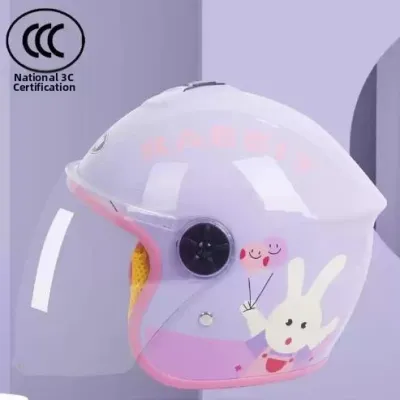
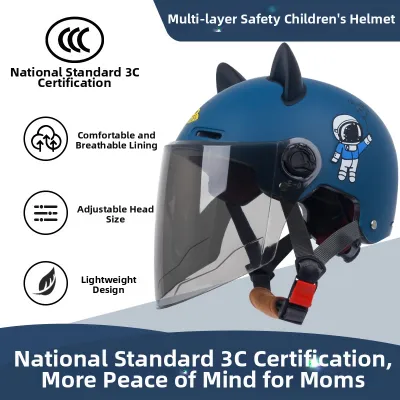
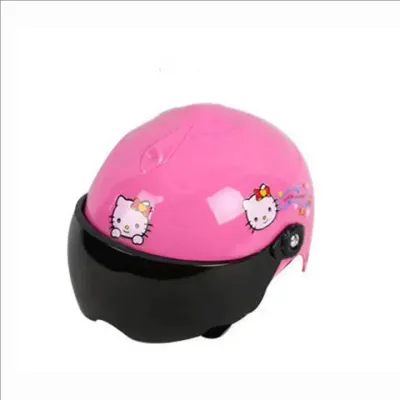
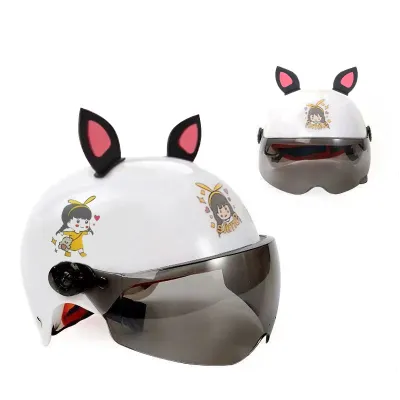
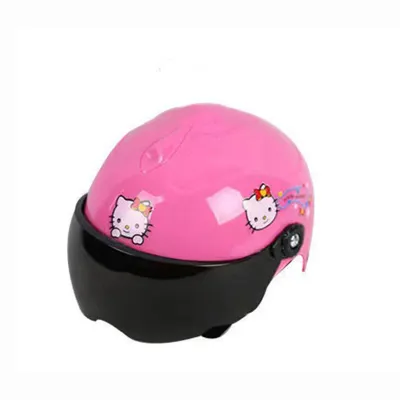
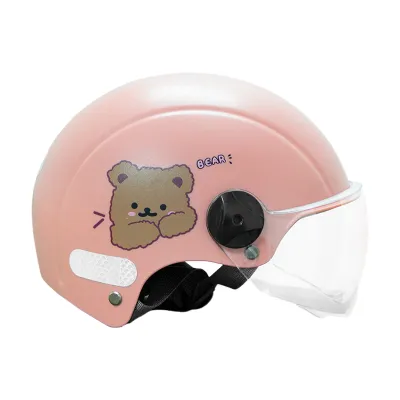
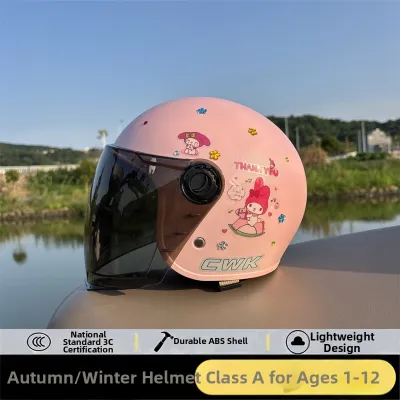
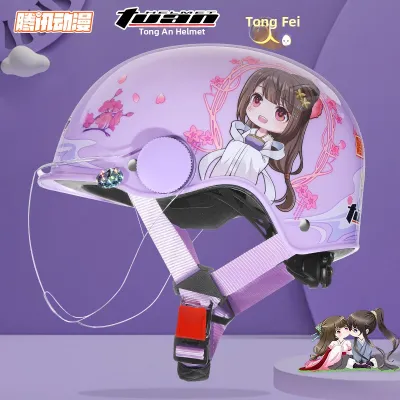
Prices are valid at publication and may change. Please refer to the product page for the latest price.
Stepping up to the ₱1,000 mid-range tier introduces significant improvements in both comfort and safety construction. In this price bracket, you will find better-engineered ABS shells and dual-density EPS liners, which absorb and distribute impact forces much more effectively. One of the most practical upgrades at this level is the inclusion of removable, washable comfort liners. In the hot and humid climate of the Philippines, the ability to wash the inner padding is essential for maintaining hygiene and preventing skin irritation. You will also find more reliable micrometric buckle systems that are easier to adjust and secure.
At the ₱2,000 tier, the options expand to include high-quality full-face helmets designed specifically for children. Full-face helmets provide critical protection for the chin and jaw, areas that sustain a high percentage of impacts during falls. This tier features advanced ventilation channels molded directly into the EPS liner, allowing cool air to enter through front intake vents and push hot, humid air out through rear exhaust ports. The materials used for the inner lining are often hypoallergenic and moisture-wicking. Additionally, helmets in this range frequently carry both local and recognized international safety certifications, offering the highest level of peace of mind.
When deciding which tier fits your needs, remember that cosmetic features like bright colors, cartoon graphics, or aerodynamic spoilers should never take priority over structural integrity. If a tight budget forces a choice between a plain, solid-colored certified helmet at ₱1,000 and a flashy, uncertified helmet with popular cartoon characters at ₱500, always choose the certified option. Your daughter’s safety depends entirely on the helmet’s ability to absorb impact, not its visual appeal.
How to Verify Safety Certifications and Build Quality
In the Philippines, the law requires all motorcycle riders, including children, to wear helmets that meet strict safety standards. The most critical marker to look for is the Import Commodity Clearance (ICC) sticker or the Philippine Standard (PS) quality mark. These certifications are issued by the Bureau of Philippine Standards (BPS) under the Department of Trade and Industry (DTI). Legitimate stickers are holographic, tamper-evident, and feature a unique serial number. You can verify these serial numbers through official government channels or mobile verification apps to ensure they are not counterfeit.

Beyond local stickers, look for recognized international safety standards printed on the back of the helmet shell or on the inner liner. The most common standards are ECE 22.05 or the newer, more stringent ECE 22.06 (European standards), and DOT (US Department of Transportation). A helmet that carries both an ECE certification and a local ICC sticker has undergone rigorous laboratory testing for impact absorption, penetration resistance, and retention system strength.
To assess the build quality yourself, perform a physical inspection of the helmet before purchasing. Press your thumbs firmly against the inner EPS foam liner; it should feel dense, rigid, and solid, similar to a hard cooler. If the foam feels soft, spongy, or crumbles easily under light pressure, it is a cheap novelty item that will fail during an accident. Next, try to squeeze the sides of the outer shell together. A safe helmet will resist flexing. If the shell bends easily or feels like thin toy plastic, it lacks the structural strength to protect against severe impacts.
Finally, inspect the chin strap and its anchor points. The strap should be securely riveted to the metal frame inside the helmet shell, not just sewn into the fabric lining. Give the strap a firm tug to ensure there is no play or looseness in the rivets. Avoid any helmet that relies on flimsy plastic clips or thin, easily frayed nylon straps, as these can snap or release during a fall, causing the helmet to fly off before impact.
Sizing and Fit: Ensuring the Helmet Actually Protects
A helmet can only protect your daughter if it fits her head perfectly. To find the correct size, you must measure her head circumference accurately. Take a flexible fabric tape measure and wrap it horizontally around her head, positioning it about 2.5 centimeters (one inch) above her eyebrows and just above her ears. This is the widest part of her head. Note the measurement in centimeters, as children’s helmet sizes are highly precise and vary significantly between different manufacturers.
Once you have the helmet, you must perform three essential fit tests to ensure it is safe to use. First, have your daughter put the helmet on and fasten the chin strap so that only two fingers can fit between the strap and her throat. The helmet should feel snug all the way around her head, gently pressing against her cheeks without causing painful pressure points. If her head moves freely inside the helmet, or if her cheeks do not touch the side pads, the helmet is too large.
Second, perform the “shake test.” Ask your daughter to shake her head vigorously from side to side and nod up and down. The helmet should move with her head, not slide independently. If the helmet rotates, slips down over her eyes, or shifts backward, it will not protect her during a crash and could even block her vision while riding.
Third, conduct the “roll-off test.” With the chin strap securely fastened, grasp the back of the helmet shell and try to pull it forward and off her head. Then, try to push it backward from the front. A properly fitting helmet will remain securely in place. If you can pull the helmet off or tilt it significantly in either direction, the retention system or the overall size is incorrect, and the helmet must not be used.
Many parents make the dangerous mistake of buying a larger helmet so their child can “grow into” it over several years. A loose helmet is incredibly dangerous; it can easily fly off during the initial phase of an accident, leaving the child’s head completely exposed to secondary impacts. If your daughter’s head measurement falls between two sizes, look for a helmet model that offers customizable interior padding. Some manufacturers provide thicker cheek pads that can be swapped out as the child grows, allowing you to maintain a safe, snug fit without compromising her safety.
Design and Comfort Features to Look For
The tropical climate of the Philippines presents unique challenges for helmet wearers. High temperatures and intense humidity mean your daughter will sweat quickly while riding. To ensure she is willing to wear her helmet consistently, look for interior liners made from breathable, moisture-wicking fabrics. Removable and washable liners are highly recommended, as they allow you to clean out sweat, dirt, and oils regularly, preventing unpleasant odors and skin breakouts.
You must also choose between full-face and open-face styles based on practical needs. Full-face helmets offer the maximum level of protection by covering the chin, jaw, and face. However, they are heavier and can feel restrictive or hot for younger children. Open-face helmets are lighter, cooler, and offer a wider field of vision, making them easier for toddlers or younger kids to tolerate. Consider your daughter’s age, neck strength, and the typical length of your rides when making this choice.
To encourage your daughter to wear her helmet without a fuss, involve her in the selection process. Once you have filtered out all the unsafe, uncertified options and narrowed the list down to a few certified, properly sized models within your budget, let her choose the final color or graphic design. This simple step gives her a sense of ownership and makes putting on her safety gear an exciting part of the ride rather than a chore.
Pre-Purchase Checklist and Red Flags to Avoid
Before you finalize your purchase, whether at a local motorcycle accessory shop or through an online marketplace, run through a quick checklist to protect your investment. First, verify the seller’s return and exchange policy. Because a proper fit is absolutely critical for safety, you must be able to exchange the helmet easily if it does not pass the fit tests upon arrival. Second, check the manufacturing date, which is usually printed on a white sticker inside the helmet under the comfort liner. Avoid buying helmets that have been sitting on a shelf for more than three or four years, as the protective materials degrade over time even when unused.
Be highly vigilant against common red flags that indicate a counterfeit or unsafe product. An unusually lightweight helmet that feels like a toy is a major warning sign; real motorcycle helmets require a certain amount of mass to house the protective EPS liner and rigid outer shell. Watch out for strong, toxic chemical or glue smells coming from the interior, which often point to cheap, unregulated manufacturing processes. Flimsy plastic buckles that bend easily or release with a gentle tug should be avoided immediately in favor of robust metal micrometric or double-D ring fasteners.
Finally, remember to calculate the total cost of ownership. When buying online, factor in shipping fees and potential taxes to ensure the purchase stays within your budget tier. You should also check the availability of replacement parts, such as clear visors. A scratched visor can severely impair your daughter’s vision, especially during night rides or sudden tropical downpours, so being able to buy a cheap replacement visor easily is a major practical advantage.
Frequently Asked Questions (FAQ)
How often should a child's helmet be replaced?
A child’s helmet must be replaced immediately after any accident or drop onto a hard surface, even if there is no visible damage. The inner EPS liner is designed to compress upon impact to absorb energy, and once compressed, it cannot protect the head a second time. Additionally, you must replace the helmet as soon as your daughter outgrows her current size, if the straps show signs of fraying, or after five years of regular use due to natural material degradation from sweat, UV exposure, and humidity.
Can my daughter wear a bicycle helmet for motorcycle riding?
No, your daughter must never wear a bicycle helmet while riding a motorcycle or scooter. Bicycle helmets are designed and tested for much lower impact speeds and do not provide the coverage or energy absorption required for motorized travel. Motorcycle helmets feature thicker outer shells, denser EPS liners, and more secure retention systems that are legally mandated and physically necessary to protect against high-speed impacts on public roads.
Community discussion
Share your experience or ask a question. Comments are reviewed before publication.