
To find the correct Daytona clutch lining variant for your Honda ADV 160, you must cross-reference the specific dimensions of your original equipment manufacturer (OEM) clutch assembly with the aftermarket manufacturer’s official fitment catalog. Because the ADV 160 utilizes a specific Continuously Variable Transmission (CVT) configuration, assuming that any generic 160cc scooter lining will fit can lead to severe transmission slippage or mechanical damage. The most reliable method is to verify the exact part number designated for the ADV 160, checking the physical shoe length, pivot pin diameter, and spring tension compatibility before finalizing your purchase.
Understanding Daytona Clutch Lining Variants
Aftermarket clutch linings are engineered to modify how your scooter’s engine power is transferred to the rear wheel. When exploring the options available from Daytona, you will generally encounter three primary categories: standard replacement, heavy-duty, and performance-oriented profiles. Each of these profiles is designed with a specific balance of friction materials, engagement characteristics, and heat resistance to address different riding demands.
Standard replacement linings are designed to mimic the behavior of your original factory components. These linings typically use organic compounds that prioritize smooth, quiet engagement at lower engine speeds. They are highly suitable for riders who prefer a predictable, comfortable ride and want to maintain the original feel of their scooter’s transmission system without putting extra stress on other CVT components.
Products mentioned in this guide
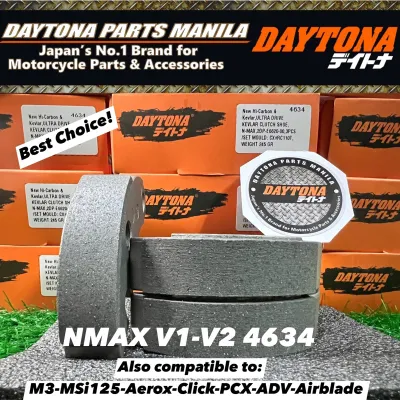
Prices are valid at publication and may change. Please refer to the product page for the latest price.
Heavy-duty variants are built to withstand more demanding operating conditions. These linings often incorporate semi-metallic fibers or reinforced compounds that resist wear under constant load. If you frequently carry heavy cargo, ride with a pillion passenger, or navigate stop-and-go traffic in congested urban areas, a heavy-duty lining helps prevent premature wear and maintains consistent grip even as temperatures rise inside the CVT casing.
Performance-oriented lining profiles focus on maximizing grip and reducing engagement delay. These variants often feature aggressive friction materials, such as carbon-infused or Kevlar-reinforced compounds, which bite into the clutch bell more rapidly. This rapid engagement can improve throttle response and reduce power loss during acceleration, though it may result in a firmer, more abrupt engagement feel that some riders might find less comfortable for casual cruising.
Because compound formulas, physical dimensions, and specific variant names can change across different production batches and manufacturing years, relying solely on a general category name is never sufficient. You must always verify the exact part number provided by the manufacturer to ensure that the friction material and shoe design align perfectly with your scooter’s mechanical requirements.
Verifying Fitment for the Honda ADV 160
Ensuring a perfect physical fit is the most critical step when upgrading your scooter’s clutch system. The Honda ADV 160 features a distinct clutch assembly that requires precise alignment with the clutch bell and the primary drive shaft. To verify compatibility, you must first understand the physical dimensions of your OEM clutch shoe assembly, including the overall shoe diameter, the width of the friction pads, and the specific layout of the pivot pins.

When evaluating an aftermarket lining, do not rely on visual inspections alone. You should cross-reference the dimensions of the aftermarket part with your original components. A proper fit requires that the aftermarket clutch shoes sit flush within the clutch bell with the correct clearance. If the shoes are too large, they will drag against the bell constantly, causing extreme heat buildup and rapid wear. Conversely, if they are too small, the clutch will fail to engage properly, leading to severe slippage and loss of acceleration.
The most reliable way to confirm fitment is to consult the manufacturer’s official fitment chart or product packaging. Authorized dealers and official product catalogs list compatible scooter models alongside their corresponding part numbers. When reviewing these charts, look specifically for the Honda ADV 160 designation. Be aware that minor design changes between model years can sometimes affect transmission specifications, so verifying the exact year of your scooter is highly recommended.
A common mistake among scooter owners is assuming that all 160cc scooters from the same manufacturer share identical transmission components. While the ADV 160 shares some engine architecture with models like the PCX 160 or the Click 160, the clutch shoe diameter, pivot pin placement, and clutch spring tension specifications can differ. Installing a lining intended for a different model without verifying these exact specifications can result in poor performance, abnormal vibration, or physical damage to your CVT system.
Matching Lining Material to Your Riding Style
Selecting the right friction material is essential for tailoring your scooter’s performance to your daily riding environment. The material composition of the clutch lining directly influences how the clutch engages with the bell, how much heat the system can dissipate, and how long the components will last under specific conditions.
For daily commuting in typical urban environments, standard organic or semi-metallic materials are generally the most practical choice. These materials offer a balanced performance profile, providing smooth and progressive engagement that makes navigating slow-moving traffic comfortable. They also tend to be gentler on the clutch bell, minimizing the risk of premature wear or scoring on the inner surface of the bell, which helps maintain a quiet and vibration-free ride over time.
If your daily routes involve carrying heavy loads, riding with a passenger, or climbing steep inclines—such as those found in mountainous regions or elevated residential areas—upgrading to a more robust material may be beneficial. Sintered, ceramic, or Kevlar-reinforced linings are engineered to handle extreme thermal stress. These advanced materials maintain their frictional properties at much higher temperatures than standard organic compounds, preventing the clutch from slipping when the transmission is under heavy load.
However, upgrading to highly aggressive friction materials involves clear operational trade-offs that you must consider. Harder materials can cause increased wear on the clutch bell, potentially leading to glazing—a condition where the inner surface of the bell becomes polished and loses its grip, resulting in clutch shudder. Additionally, performance linings may alter the engagement RPM, requiring the engine to reach higher speeds before the clutch bites, which can increase fuel consumption and produce more noise during take-off.
Installation Requirements and Safety Boundaries
Replacing a scooter’s clutch lining is a precise mechanical task that requires proper preparation, the right tools, and a strict adherence to safety protocols. Because the CVT system operates under high rotational speeds and spring tension, attempting this procedure without the correct equipment can lead to severe personal injury or permanent damage to your vehicle’s drivetrain.
Before beginning the installation, you must gather specialized CVT tools. A standard socket set is not sufficient for this job. You will need a dedicated clutch bell holder or a universal holder tool to safely secure the bell while loosening the retaining nut. Additionally, a clutch spring compressor is absolutely essential when disassembling the clutch shoe assembly, as the large center spring is under significant tension and can fly off with dangerous force if released improperly. A calibrated torque wrench must also be used to tighten all fasteners to the exact specifications outlined in your vehicle’s service manual.
Before installing the new clutch linings, take the time to inspect and clean the surrounding CVT components. Use a dedicated brake and parts cleaner to remove any accumulated clutch dust, grease, or debris from the inside of the clutch bell. Inspect the inner surface of the bell for signs of uneven wear, deep grooves, or blue discoloration, which indicates excessive heat damage. You should also check the condition of the drive belt for cracks or fraying, and examine the variator rollers for flat spots, replacing any worn parts as necessary to ensure the new clutch operates optimally.
It is vital to recognize your mechanical limits and establish clear stop conditions during a DIY installation. If you encounter stripped threads on the crankshaft or clutch shaft, observe severe, uneven wear patterns on the clutch bell, or cannot find the official torque specifications for your specific model, stop immediately. In these situations, do not attempt to force the components together or guess the tightness of the bolts. Instead, reassemble the vehicle loosely if safe to do so, or transport the components to a qualified motorcycle mechanic who has the professional tools and expertise to complete the job safely.
Sourcing Authentic Parts in the Philippines
With the popularity of the Honda ADV 160 in the Philippines, the market for aftermarket parts is extensive, which also increases the risk of encountering counterfeit products. Installing a fake clutch lining can compromise your safety, as substandard materials can disintegrate under high heat, leading to sudden transmission failure while riding.
To ensure you are purchasing a genuine Daytona clutch lining, always source your parts from authorized distributors, official brand stores on reputable e-commerce platforms, or well-established local motorcycle specialty shops. Genuine manufacturers often maintain official digital storefronts on major online marketplaces, which provide a secure way to purchase authentic components directly from the source or verified retail partners.
When inspecting a product, look closely for common red flags of counterfeit items. Suspiciously low pricing is often the first indicator of a fake part; if a deal seems too good to be true, it likely is. Examine the packaging quality carefully, looking for blurry printing, misspelled words, or flimsy materials. Genuine Daytona products typically feature high-quality packaging, clear labeling, unique part numbers, and often include holographic security seals or scratch-off verification codes that allow you to confirm authenticity on the manufacturer’s website.
Finally, always request and keep your purchase receipt. Authorized sellers will provide a clear receipt and explain the warranty terms or return policies associated with aftermarket transmission components. Having this documentation is essential if you encounter any manufacturing defects or fitment issues before or during the initial installation process, ensuring your investment is fully protected.
Frequently Asked Questions (FAQ)
Can I use a clutch lining designed for other 160cc scooters on the ADV 160?
While many 160cc scooters from the same manufacturer share similar engine platforms, you should never assume that their clutch linings are universally interchangeable. Even minor differences in model design can result in variations in clutch shoe diameter, pivot pin placement, and the tension of the clutch springs. Installing a lining that is not explicitly rated for the Honda ADV 160 can lead to improper engagement, excessive vibration, or physical damage to the CVT housing. Always verify the exact part number against the manufacturer’s official fitment guide or your scooter’s service manual before purchasing.
What are the early warning signs that the clutch lining needs inspection?
Several observable symptoms can indicate that your clutch lining is worn, contaminated, or failing. You may experience a noticeable shuddering or vibration when accelerating from a complete stop, which often points to glazed linings or uneven wear. Other common signs include the engine revving excessively without a corresponding increase in speed (slipping), a delayed engagement where the scooter takes longer to move after twisting the throttle, or a distinct burning smell coming from the CVT cover after riding up steep hills or in heavy traffic. If you notice any of these signs, perform a comprehensive inspection of the entire CVT system, including the clutch bell, drive belt, and rollers, to identify the root cause.
Community discussion
Share your experience or ask a question. Comments are reviewed before publication.