
To find the correct SRF radiator model for your Honda Click or Yamaha Mio, you must match the radiator’s physical dimensions, mounting points, and hose configurations to your scooter’s specific model year and engine displacement. There is no single “universal” radiator that fits all scooters, nor is there one that fits all generations of a single model line. A radiator designed for a Honda Click 125i will not align with the mounting brackets or hose routes of a Honda Click 160, just as a Yamaha Mio i 125 radiator cannot be installed on a Yamaha Mio Aerox.
Before making a purchase, you must identify your scooter’s exact factory model code, measure your stock radiator’s core thickness and pipe angles, and verify these details against the seller’s technical specifications. Upgrading your cooling system can help manage engine temperatures in hot, humid tropical climates and congested traffic, but only if the replacement part fits perfectly without modifying the frame or forcing the coolant hoses. This guide provides the step-by-step verification process to ensure you select a compatible, high-performing radiator for your specific machine.
Understanding SRF Radiator Compatibility for Scooters
Scooter cooling systems are highly compact and engineered to operate within tight physical boundaries under specific thermal loads. Unlike larger motorcycles with spacious frames, automatic scooters like the Honda Click and Yamaha Mio house their radiators behind side fairings, directly adjacent to the engine block. Because space is extremely limited, even a minor discrepancy of a few millimeters in radiator thickness or bracket placement will prevent the fairings from closing or cause the radiator to rub against moving parts.
Products mentioned in this guide
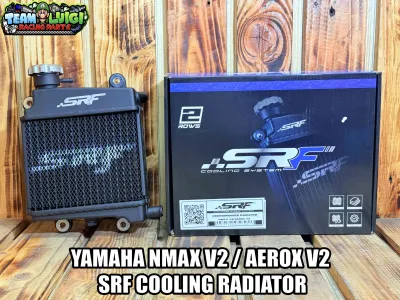
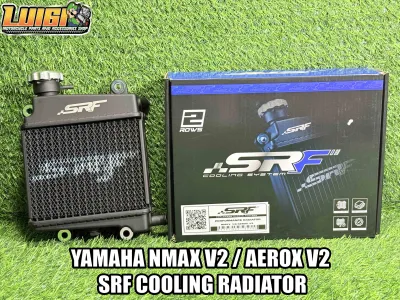
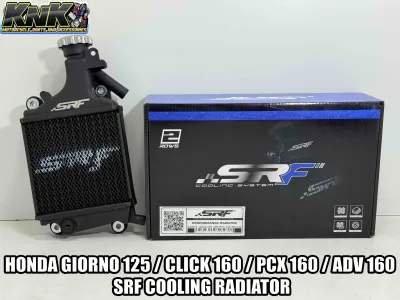
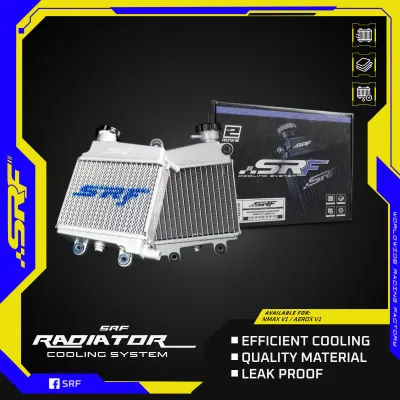
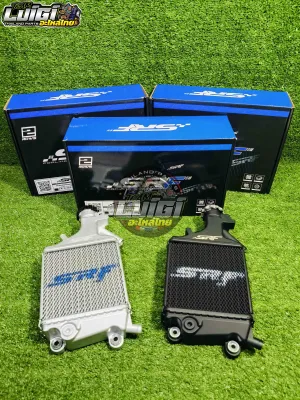
Prices are valid at publication and may change. Please refer to the product page for the latest price.
Engine displacement is the primary factor determining a radiator’s required cooling capacity and physical size. A 125cc engine generates less heat than a 150cc or 155cc engine, meaning their respective cooling systems are designed with different coolant flow rates, tube dimensions, and surface areas. Attempting to install a radiator meant for a lower-displacement model on a high-performance scooter can lead to insufficient heat dissipation, causing the coolant to boil and the engine to overheat during prolonged idling in heavy traffic. Conversely, a larger radiator may not physically clear the internal frame members of a smaller scooter.
Chassis mounting points also vary significantly across different model years and sub-variants. Manufacturers frequently update frame designs during mid-generation face-lifts or full model redesigns to improve structural rigidity or accommodate new bodywork. A radiator designed for a first-generation Honda Click 125i utilizes different mounting tab locations compared to the newer Game Changer or v3 editions. Forcing a radiator onto incompatible mounting points by using zip ties, bending the brackets, or leaving bolts out introduces severe vibration, which eventually cracks the aluminum welds and causes catastrophic coolant loss.
Furthermore, forcing an incompatible radiator puts immense stress on the rubber coolant hoses. If the inlet or outlet pipes on the aftermarket radiator are angled differently from the stock unit, the hoses must be bent at sharp angles to connect. This restriction limits coolant flow, increases pressure on the water pump seals, and accelerates hose wear, leading to sudden bursts while riding. To prevent these costly failures, you must treat radiator selection as a precise, model-specific task rather than a general upgrade.
How to Identify Your Exact Honda Click or Yamaha Mio Variant
To avoid purchasing the wrong radiator, you must determine the exact variant and production year of your scooter rather than relying on the commercial name alone. Commercial names like “Honda Click” or “Yamaha Mio” span multiple generations, engine sizes, and fuel delivery systems, each requiring distinct replacement parts. The most reliable way to confirm your scooter’s identity is by locating the vehicle identification number (VIN) and the engine number stamped directly onto the chassis.

On most Honda Click models, the frame number is located under the seat utility box near the rear tail section, while the engine number is stamped on the left side of the crankcase near the rear wheel. For Yamaha Mio models, the VIN is typically found under the seat or on the frame tube behind the front fender, and the engine number is located on the lower crankcase. Write these numbers down and cross-reference them with your Certificate of Registration (CR) or the official owner’s manual to identify the precise factory model code.
You can also use distinct visual and technical cues to differentiate between generations. For instance, the Honda Click 125i and Click 150i (v2 or “Game Changer” models) share similar body panels but have different internal hose routing and mounting brackets compared to the newer Honda Click 160, which features a completely redesigned frame and engine architecture. In the Yamaha Mio lineup, the differences are even more pronounced; an air-cooled Mio Sporty or Mio i 125 does not use a radiator at all, whereas liquid-cooled models like the Mio Aerox 155 or Mio Engine variants require highly specific radiator configurations that cannot be interchanged.
If you are still uncertain about your scooter’s exact sub-variant, contact an authorized local dealership with your VIN and engine number. The dealership’s service department can look up the exact parts catalog for your vehicle, providing you with the original equipment manufacturer (OEM) part number for the radiator. Having this OEM number allows you to compare the mounting layout and port configuration directly with aftermarket SRF radiator listings to guarantee a match.
Key Specifications to Check Before Buying an SRF Radiator
When browsing aftermarket listings for an SRF radiator, you must carefully analyze the technical specifications and physical dimensions provided by the seller. Do not rely solely on product titles that claim compatibility with your scooter model. Instead, use a digital caliper or a precise ruler to measure your stock radiator and compare those figures against the aftermarket product’s specifications.
First, verify the outer diameter of the inlet and outlet pipes, as well as their exact angles of orientation. The radiator hoses must slide onto these pipes smoothly and secure tightly with hose clamps without being stretched or kinked. If the aftermarket radiator features 18mm pipes but your stock hoses are designed for 15mm connections, you will face leaks or split hoses. Additionally, check the position of the filler neck and the overflow pipe to ensure they align with your scooter’s coolant reservoir hose routing.
Second, examine the physical dimensions of the radiator core, including its width, height, and thickness. While a thicker core with more cooling rows can theoretically improve heat dissipation in hot climates, it also projects further outward from the mounting surface. You must measure the clearance between your stock radiator and the inner surface of the plastic fairings, as well as the distance to the front wheel fender at full suspension compression. An oversized radiator core can rub against the fairings, causing annoying vibrations and structural wear, or obstruct the movement of the front forks.
Third, confirm the mounting bracket configuration and fan shroud compatibility. Some SRF radiator models are designed as direct OEM replacements, meaning they feature pre-drilled, threaded holes that align perfectly with your stock cooling fan shroud and frame bolts. Other models may be designed for racing applications and might lack the mounting tabs for the stock electric fan, requiring custom brackets or an aftermarket fan setup. Always check the product description or ask the seller if the radiator accepts the stock fan without modification.
Finally, review the material composition and construction details of the radiator. High-quality aftermarket radiators typically feature fully welded aluminum construction, where both the cooling core and the end tanks are made of aluminum and joined by professional welds. This design is highly durable and handles the high pressures of a hot cooling system better than stock radiators that use plastic end tanks crimped onto an aluminum core. Ensure the product listing specifies a fully brazed aluminum core to guarantee long-term reliability under daily riding conditions.
Installation Considerations and Safety Boundaries
Replacing a scooter’s radiator involves handling critical engine cooling components, which directly impacts the vehicle’s operating safety and longevity. Before beginning the installation, you must understand the safety boundaries and mechanical steps required to complete the job successfully. Working on a cooling system while the engine is hot can cause severe steam burns; always allow the scooter to cool completely before loosening any hoses or caps.
One of the most critical steps during installation is the proper bleeding of the cooling system. When you drain the old coolant and install the new SRF radiator, air pockets will inevitably become trapped inside the engine block and radiator tubes. If you do not bleed this air out, the water pump will lose prime, preventing coolant from circulating and causing the engine to overheat within minutes of starting. Always follow the manufacturer’s instructions for bleeding air, which typically involves running the engine with the radiator cap off and gently squeezing the hoses until no more air bubbles rise to the filler neck.
Before tightening all the mounting bolts and filling the system with coolant, perform a thorough dry-fit of the new radiator. Mount the radiator loosely onto the frame and temporarily reinstall the side fairings and front panels. Check for any points of contact where the radiator core or tanks might rub against the plastic bodywork, wiring harnesses, or brake lines. If you detect any rubbing, adjust the mounting position or use rubber dampening washers to isolate the radiator from vibration, which can wear holes in the aluminum over time.
You must establish clear stopping conditions during the installation process to prevent damaging your scooter or voiding warranties. If you find that the radiator’s mounting brackets do not align with your frame holes, or if the coolant hoses must be bent sharply to connect, do not attempt to drill new holes in the frame, weld custom tabs, or force the hoses. These misalignments indicate that you have received the incorrect radiator model for your specific scooter variant. Stop the installation immediately, preserve the product packaging, and contact the seller to arrange an exchange for the correct model.
Where to Verify Fitment and Purchase Authentic Parts
To ensure you receive an authentic SRF radiator that matches your scooter’s specifications, you must purchase from reputable sources and carefully verify the seller’s credentials. The market contains various aftermarket parts, and purchasing from unverified sellers increases the risk of receiving counterfeit items, poorly welded replicas, or incorrect model variants that do not fit your Honda Click or Yamaha Mio.
Start by cross-referencing the seller’s listed part numbers with official SRF product catalogs or authorized distributor databases in the Philippines. Authentic SRF radiators are packaged with clear labeling that indicates the specific motorcycle or scooter models they are designed for, along with batch numbers or security holograms. If a seller cannot provide a clear part number or if the packaging lacks official branding and labeling, treat the item with caution.
When shopping on online marketplaces or ecommerce platforms, evaluate the listing by looking for unedited, high-resolution photos of the actual product rather than generic stock images. Check the buyer reviews specifically for your scooter model; look for feedback from owners of the Honda Click 125i, Click 150i, or Yamaha Mio Aerox who have successfully installed the radiator. Pay close attention to comments regarding fitment accuracy, weld quality, and whether any modifications were required during installation.
Finally, always review the seller’s return, refund, and warranty policies before finalizing your purchase. A reliable seller will offer a clear return window if the radiator does not match the described specifications or if you discover a manufacturing defect during the dry-fit process. Avoid sellers who state that all sales are final or refuse to accept returns for fitment issues, as this leaves you with no recourse if the radiator turns out to be incompatible with your specific scooter variant.
Frequently Asked Questions (FAQ)
Can I interchange radiators between Honda Click and Yamaha Mio models?
No, you cannot interchange radiators between Honda Click and Yamaha Mio models. Honda and Yamaha design their scooters with entirely different engine architectures, water pump placements, frame layouts, and coolant hose routing. A radiator designed for a Honda Click will not align with the mounting brackets or hose connections of a Yamaha Mio, and attempting to force a fit will cause severe coolant leaks, physical damage to the frame, and engine overheating. Always purchase a radiator model specifically labeled for your exact scooter make and model.
Does an SRF radiator package include the cooling fan and hoses?
Aftermarket radiator packages vary depending on the specific model and kit version you purchase. Many SRF radiators are sold as bare core replacements, which means they include only the aluminum radiator body and require you to transfer your stock electric cooling fan, mounting rubber grommets, and coolant hoses. Other premium kits may include upgraded silicone hoses or custom fan shrouds. You must read the product description carefully or message the seller directly to confirm exactly what components are included in the package before buying.
Will installing an aftermarket radiator affect my scooter's warranty?
Yes, installing an aftermarket radiator will typically void the manufacturer’s warranty for your scooter’s cooling system and any related engine components. Because the radiator is a critical component responsible for regulating engine temperature, vehicle manufacturers will not cover repairs for engine damage, head gasket failures, or water pump issues if an aftermarket part is installed. If your scooter is still under its factory warranty period, consult your local authorized dealership to understand the warranty implications before making any modifications to the cooling system.
Community discussion
Share your experience or ask a question. Comments are reviewed before publication.