
Finding a true XXXL motorcycle raincoat in the Philippines is a unique challenge for riders who need reliable protection during heavy tropical downpours. Most standard rain gear is sized for walking or light outdoor activities, which fails to account for the active physical posture of riding a motorcycle. In the local market, where sudden cloudbursts and high humidity are daily realities, riders need gear that offers complete coverage without restricting movement. Because specific model availability and stock levels fluctuate constantly across online marketplaces, the most reliable way to secure the right gear is to understand the technical specifications, design differences, and sizing verification steps. This guide provides the practical framework to help you select a heavy-duty, high-performance raincoat that actually fits over your existing riding gear and keeps you dry during the wettest monsoon months.
Why Standard XXXL Sizing Often Fails Motorcyclists
Standard clothing sizes are designed for static, upright positions, which do not translate well to the active ergonomics of riding. When you sit on a motorcycle, your arms reach forward to grip the handlebars, your knees bend, and your torso hunches slightly. This posture pulls the fabric tight across your back and shoulders, causing standard sleeves to slide up your forearms and pants to ride up your shins. A motorcycle-specific XXXL raincoat is engineered with these ergonomics in mind, featuring articulated joints, pre-curved sleeves, and a longer back hem to ensure that your lower back remains covered even when leaning forward on your motorcycle.
Another critical failure point of standard sizing is the interface between your protective gear. A proper motorcycle raincoat must accommodate the overlap with your helmet and gloves. Standard collars are often too loose, allowing water to run down your neck, or too tight to close over a riding jacket collar. Motorcycle-specific designs feature high, adjustable collars with soft linings and secure closures that seal out water without chafing. Similarly, the cuffs must be wide enough to fit over or tuck securely into your riding gloves, utilizing hook-and-loop straps to prevent wind from forcing rain up your sleeves.
Products mentioned in this guide
Prices are valid at publication and may change. Please refer to the product page for the latest price.
Furthermore, excess material presents a significant safety hazard at higher speeds. Standard oversized raincoats often have loose, billowing fabric that flaps violently in the wind. This flapping is not only distracting and noisy, but it can also cause rider fatigue over long distances. In worst-case scenarios, loose fabric can catch on handlebars, footpegs, or even the moving parts of the motorcycle, such as the drive chain or rear wheel. A dedicated motorcycle raincoat uses adjustment straps at the waist, upper arms, and calves to cinch down excess material, maintaining a streamlined profile that resists wind drag.
Two-Piece Suits vs. Rain Ponchos: Evaluating Your Options
When navigating wet roads, choosing between a two-piece rain suit and a specialized motorcycle rain poncho depends heavily on your typical commute length, riding speed, and storage capacity. Both styles serve distinct purposes, and understanding their structural differences will help you make an informed decision.

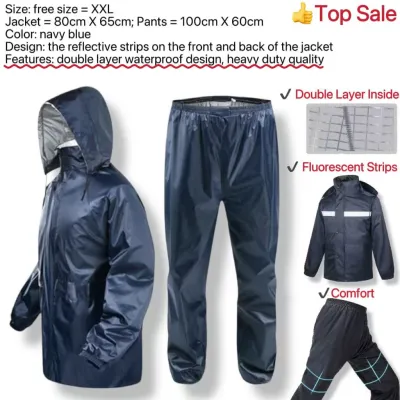
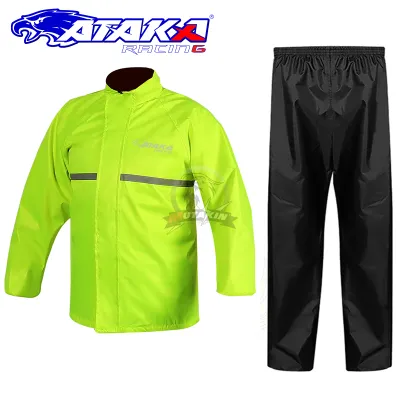
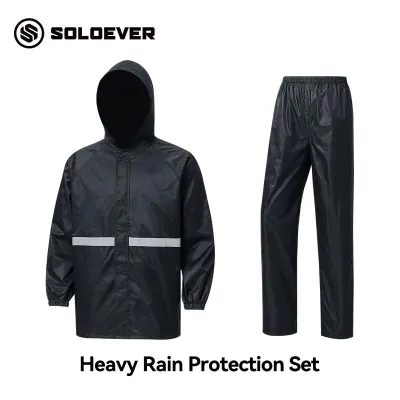
Two-piece suits, consisting of a separate jacket and trousers, represent the standard for long-distance riding and daily commutes in heavy downpours. This configuration provides complete, 360-degree protection for your entire body, ensuring that water cannot splash up from the road surface onto your legs. When evaluating two-piece options, look for trousers with reinforced seat panels, as this area experiences constant friction and pooling water on the motorcycle saddle. Adjustable ankle straps or wide zippered gussets are also essential, allowing you to pull the pants over bulky riding boots without tearing the inner lining.
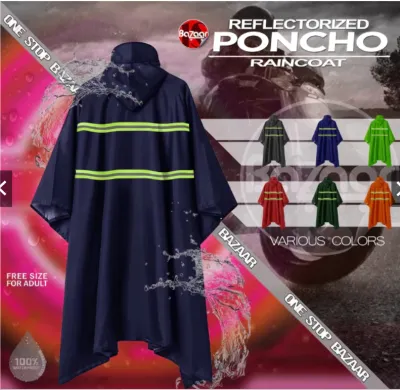
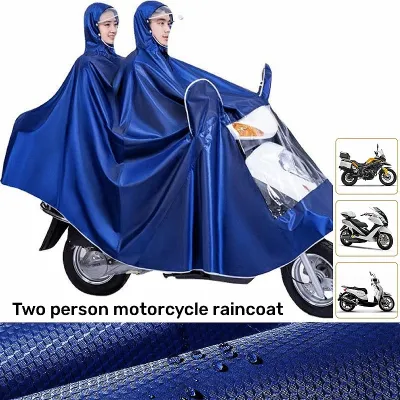
In contrast, motorcycle-specific rain ponchos offer rapid deployment, making them highly convenient for sudden, short-lived tropical showers. They are particularly useful for riders who carry large backpacks, as the loose drape can easily cover both the rider and their luggage. However, standard ponchos are highly susceptible to wind lift. If you opt for a poncho, you must verify that it features weighted hems to keep the fabric down and heavy-duty arm snaps or inner hand straps that secure the material to your handlebars or body. Without these features, a poncho can easily blow upward, blocking your vision or tangling in your controls.
The trade-offs between these two styles extend to breathability and storage. Two-piece suits are generally bulkier and require more storage space under your seat or in a top box, but they offer superior wind resistance and warmth in cooler, rainy weather. Ponchos pack down much smaller and allow for excellent airflow from underneath, which can be a relief in hot, humid conditions. However, they fail to provide adequate leg protection against heavy road spray and are unsuitable for high-speed travel on expressways where wind forces are extreme.
Critical Features to Verify for Heavy Rain Protection
To ensure your XXXL raincoat can withstand intense tropical downpours, you must look beyond basic marketing claims and scrutinize the technical specifications of the materials and construction. The distinction between “waterproof” and “water-resistant” is critical. Water-resistant coatings, such as Durable Water Repellent (DWR), are temporary chemical treatments applied to the outer fabric that cause water to bead up and roll off. While useful, these coatings eventually wear off and cannot withstand the high-pressure impact of rain hitting your body at riding speeds. True waterproof gear relies on an impermeable inner membrane or heavy-duty materials like polyvinyl chloride (PVC) or polyurethane (PU) coated nylon.
Even the most waterproof fabric will fail if the seams are not properly sealed. When reviewing product details, verify that the raincoat features taped or welded seams. Taping involves applying a hot-melt adhesive tape over the stitched seams on the inside of the garment, sealing the needle holes. Welded seams use heat and pressure to fuse the fabric panels together, creating a completely seamless, watertight bond. Additionally, pay close attention to the front zipper, which is a primary entry point for water. A reliable motorcycle raincoat must feature a double storm flap—a strip of waterproof fabric that folds over the zipper and secures with snaps or hook-and-loop fasteners to block wind-driven rain.
Managing interior moisture is just as important as blocking external rain, especially in the hot, humid climate of the Philippines. Wearing a completely sealed waterproof suit can quickly turn into a personal sauna, leading to heavy sweat and interior condensation that leaves you just as wet as the rain would. To prevent this, look for raincoats equipped with passive ventilation systems. These typically include covered mesh vents across the upper back, under the arms, or along the chest. These vents are designed to let warm, moist air escape while utilizing fabric overhangs to prevent rain from entering, keeping you comfortable during long, humid rides.
Safety and Visibility Checks for Night and Low-Light Riding
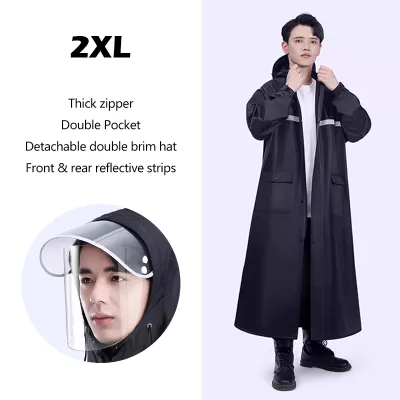
Riding in the rain drastically reduces visibility for all road users. Wet helmet visors, fogged windshields, and spraying road grime make it incredibly difficult for car drivers to spot motorcyclists. Therefore, your XXXL raincoat must serve as a highly visible safety barrier. When selecting gear, do not rely on small, printed brand logos for visibility. Instead, look for wide, retroreflective strips that are strategically placed across the chest, upper back, and sleeves. These strips are designed to bounce light directly back to the source, making you highly visible to oncoming and trailing traffic even in pitch-black conditions.
Color choice plays an equally vital role in daytime and twilight safety. While black or dark grey raincoats are popular for hiding road dirt, they blend in dangerously well with dark, wet asphalt and grey rain clouds. Opting for high-contrast colors, such as high-visibility neon yellow, bright orange, or vibrant green, significantly increases your chances of being seen by other motorists. If you prefer a darker main body color, ensure that the upper torso and shoulders feature large panels of high-visibility fabric to maintain a strong visual presence on the road.
Finally, you must verify that the physical cut of your XXXL raincoat does not compromise your motorcycle’s built-in safety features. Because XXXL garments have a significant amount of fabric, a poorly designed or overly long jacket hem can drape over your rear fender when you are seated. This excess material can easily block your motorcycle’s tail light, brake light, or rear turn signals, creating an immediate hazard for vehicles behind you. Before riding, sit on your motorcycle in your full gear and have someone verify that all lights remain completely unobstructed by the raincoat.
How to Verify Sizing and Claims When Shopping Online
Purchasing an XXXL raincoat online requires a systematic approach to avoid the common trap of “Asian sizing,” where an advertised XXXL may actually fit like a standard medium or large. To ensure a proper fit, you must take accurate physical measurements of your body while wearing your complete riding setup. Put on your thickest riding jacket, chest protectors, and riding pants, then use a flexible measuring tape to record your chest circumference, waist, sleeve length, and inseam. These are the actual dimensions your raincoat must accommodate.
Never rely on generic size tags or your standard t-shirt size when browsing online marketplaces. Instead, locate the seller’s specific size chart, which is usually provided in the product images or description. Compare your measured dimensions—with your riding gear on—directly against the chart. If your measurements fall near the upper limit of a specific size, always size up. A slightly loose raincoat is far better than one that is too tight, as tight fabric puts immense stress on the seams and zippers when you move, leading to premature failure and water leaks.
Before finalizing your purchase, carefully review the seller’s return and exchange policies to ensure you can swap the item if the fit is incorrect. Additionally, spend time reading user reviews, specifically filtering for comments from buyers who mention their height, weight, and whether they wear the raincoat over protective armor. Look for real-world feedback regarding how the material holds up in heavy downpours and whether the zippers or seams have shown signs of leaking. This crowd-sourced information is invaluable for verifying the manufacturer’s claims before you spend your hard-earned money.
Frequently Asked Questions (FAQ)
How should I clean and store my motorcycle raincoat to maintain its waterproofing?
To preserve the waterproof integrity of your motorcycle raincoat, always consult the manufacturer’s care label before cleaning. Avoid using harsh household detergents, fabric softeners, or bleach, as these chemicals can strip away water-resistant coatings and degrade waterproof membranes; instead, use a mild, tech-wash soap designed for outdoor gear. Never machine wash on a heavy cycle or use a machine spin dryer, as the intense agitation can delaminate the waterproof backing and tear sealed seams. Instead, gently hand wash the garment in cool water, rinse thoroughly, and hang it to air-dry completely in a shaded, well-ventilated area. Ensure the raincoat is entirely dry before folding or storing it in your under-seat compartment or top box, as storing damp gear promotes the growth of mold, mildew, and unpleasant odors, which rapidly break down the fabric. Keep the stored gear away from direct sunlight and high-heat sources like your motorcycle’s exhaust pipe.
Can I use a regular oversized raincoat instead of a motorcycle-specific one?
Using a standard, non-motorcycle oversized raincoat for riding poses serious safety and functional risks. Regular raincoats are constructed from lightweight materials that lack the wind resistance and durability required to withstand highway speeds, often tearing or shredding under the pressure of high winds. The loose, unadjustable fabric of a standard raincoat will flap violently, causing severe distraction, rider fatigue, and the dangerous potential of the material catching on moving motorcycle parts like the drive chain, footpegs, or wheels. Furthermore, standard rainwear lacks the specialized ergonomic cut needed for a comfortable riding posture, meaning the sleeves and pants will ride up, exposing your limbs to the elements. They also lack the critical seam reinforcement, heavy-duty zipper storm flaps, and abrasion resistance necessary to keep you dry and protected in the event of a slide or prolonged exposure to high-velocity rain.

Community discussion
Share your experience or ask a question. Comments are reviewed before publication.