
Choosing the right jack for your home garage depends on your vehicle’s clearance, your storage space, and how often you perform maintenance. For most DIY enthusiasts working on flat concrete, a hydraulic floor jack offers the best balance of stability, lifting speed, and safety. However, high-clearance vehicles like SUVs or pickups might benefit from the compact vertical lift of a bottle jack, while scissor jacks should remain strictly in your trunk for emergency roadside tire changes. Understanding how these tools operate under tropical garage conditions—where humidity and floor surfaces vary—ensures you select a lifting setup that keeps both you and your vehicle secure.
Core Differences: Floor, Bottle, and Scissor Jacks
A hydraulic floor jack features a long, low-profile chassis equipped with caster wheels, allowing you to roll it easily under low-clearance vehicles. Its wide steel frame distributes weight across a larger surface area, which provides exceptional lateral stability when raising a vehicle. The long pump handle offers excellent leverage, enabling quick lifts with minimal physical effort, making it the standard choice for frequent undercarriage maintenance. In humid environments like the Philippines, the steel chassis and hydraulic pistons of a floor jack require regular inspection to prevent rust from degrading the seals and moving parts.
Both floor jacks and bottle jacks rely on hydraulic principles to multiply force. When you pump the handle, a small plunger pushes hydraulic fluid through a one-way valve into a larger cylinder, forcing the main piston upward. This fluid pressure allows a single user to lift several tons of vehicle weight with minimal physical exertion. In contrast, a scissor jack relies entirely on mechanical advantage, where the physical rotation of a threaded screw pulls the hinges together to raise the load, which requires significantly more physical effort and introduces friction wear on the metal threads.
Products mentioned in this guide
Prices are valid at publication and may change. Please refer to the product page for the latest price.
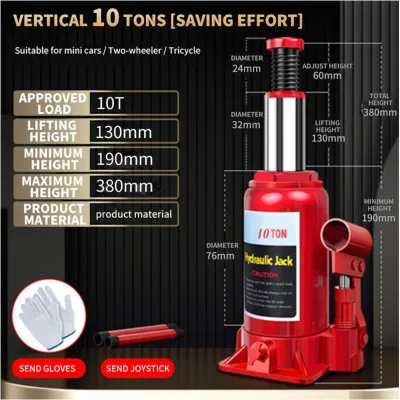
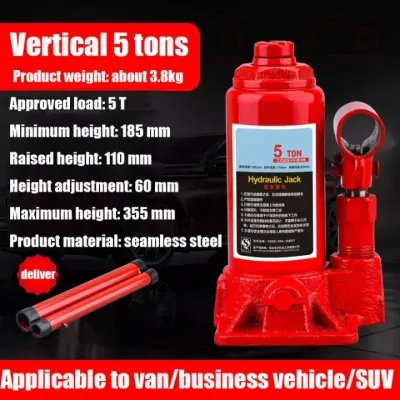
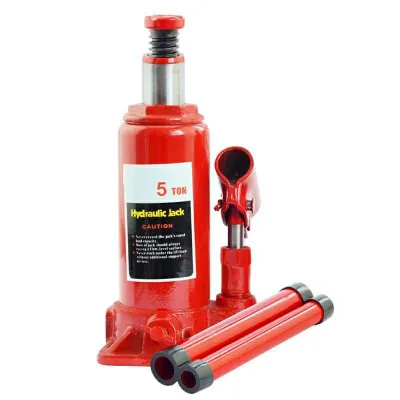
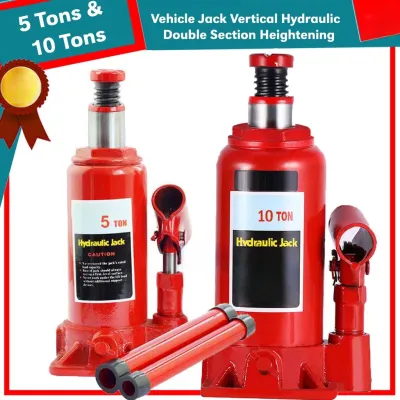
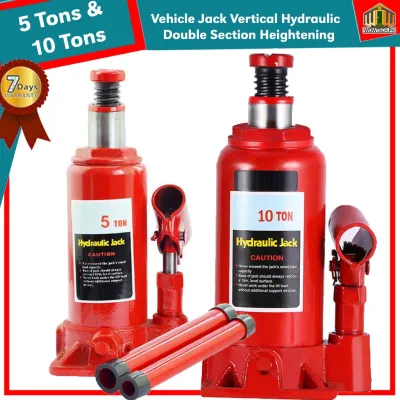
A bottle jack utilizes a vertical hydraulic piston housed in a cylindrical body, resembling a bottle. This design concentrates high lifting capacity into a very compact footprint, making it ideal for raising heavy, high-clearance vehicles like pickup trucks and SUVs. However, its narrow base offers less lateral stability than a floor jack, and its tall minimum height prevents it from sliding under low-slung sedans. Because they operate vertically, bottle jacks must be stored upright to prevent hydraulic fluid from leaking out of the reservoir bypass valves.
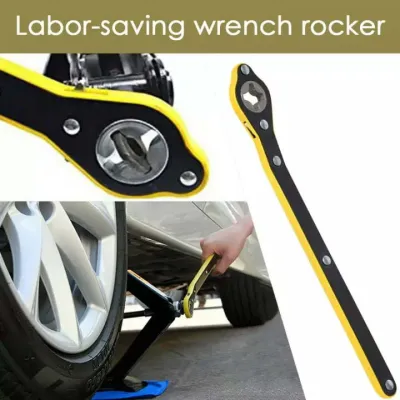
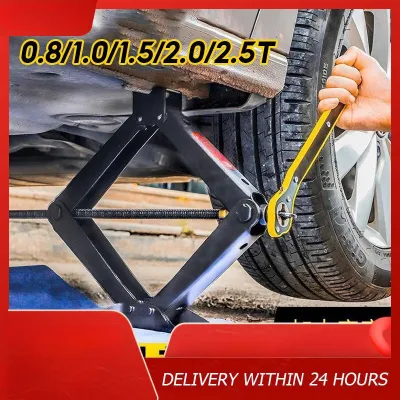
A scissor jack relies on a mechanical lead screw to draw its diagonal arms together, raising the vehicle through a diamond-shaped expansion. These jacks are lightweight, highly portable, and designed to fit into spare tire compartments for emergency roadside wheel swaps. Because they have a narrow footprint and rely on mechanical threads that wear over time, they lack the stability and durability required for regular garage maintenance. Using a scissor jack repeatedly for routine garage work increases the risk of thread stripping, especially when exposed to moisture and dirt.
Matching the Jack to Your Vehicle and Garage Space
Before purchasing any lifting equipment, you must verify your vehicle’s specifications by consulting the owner’s manual. Check the vehicle’s curb weight and gross vehicle weight rating (GVWR) to ensure your chosen tool has a rated capacity that safely exceeds the load it will lift. You must also locate the manufacturer’s designated lifting points, as lifting from an incorrect spot can damage the chassis or cause the vehicle to slip.

When calculating the required capacity of your jack, remember that a vehicle’s weight is rarely distributed evenly. Front-engine vehicles typically carry more weight over the front axle, meaning the jack will experience a higher load when lifting the front end compared to the rear. As a general safety margin, select a jack with a rated capacity that can support at least sixty percent of your vehicle’s total curb weight, and never use a jack rated for less than the weight of the axle you are lifting.
Your garage environment plays a critical role in tool selection and safety. Hydraulic floor jacks require a flat, smooth, and hard concrete surface to roll forward as they lift, which keeps the saddle centered under the vehicle’s lift point. If your garage floor has rough finishes, cracks, or soft asphalt, a rolling floor jack can bind, whereas a bottle jack might sink or tilt if the surface bearing capacity is insufficient. In tropical regions, concrete floors can sweat or accumulate moisture, reducing traction; always ensure the floor is dry and clean before positioning your jack.
Measure the clearance under your vehicle’s frame and compare it to the jack’s minimum saddle height and maximum stroke. Low-profile sedans require a jack with a low entry height, often found only in specialized floor jacks. Conversely, lifted trucks require a jack with a high maximum stroke to reach the frame and lift the tires off the ground, a requirement where bottle jacks often excel due to their vertical extension. Always verify these dimensions against the manufacturer’s specifications before making a purchase.
Essential Safety Rules and Lifting Limits
Working under a raised vehicle carries inherent risks, making strict adherence to safety protocols mandatory. You must never place any part of your body under a vehicle supported solely by a hydraulic or mechanical jack. Jacks are designed strictly for lifting, not for holding a load; you must always lower the vehicle onto rated jack stands positioned at the manufacturer’s designated support points before beginning any work.
Perform a thorough pre-lift inspection of both your equipment and the work area before raising the vehicle. Ensure the ground is completely level, clear of debris, and capable of supporting the concentrated weight. Check that the jack’s saddle aligns perfectly with the vehicle’s designated lift point, and verify that the vehicle’s parking brake is engaged and the wheels remaining on the ground are securely choked with heavy-duty wheel chocks.
Proper maintenance of your lifting equipment is a critical safety factor that is often overlooked. Hydraulic jacks can trap air in their systems over time, leading to a spongy feel or a failure to reach maximum lift height; you must periodically bleed this air according to the manufacturer’s instructions. For mechanical scissor jacks, keeping the lead screw clean and lightly lubricated with grease prevents binding and premature thread wear, ensuring the tool operates smoothly when needed in an emergency.
Establish clear stop conditions and abort the lift immediately if you observe any signs of equipment failure. Stop lifting if you notice hydraulic fluid leaks, structural bending, or unusual creaking from the jack frame. Never attempt to exceed the rated capacity of your lifting equipment or force the jack past its maximum stroke limit, as doing so can lead to sudden, catastrophic failure.
Decision Framework: Which Jack Should You Buy?
To choose the right tool, evaluate your regular maintenance habits and your garage’s storage capacity. If you perform frequent oil changes, brake jobs, or suspension work and have ample floor space, a high-quality floor jack is the most practical investment. Its stability and ease of positioning make it the safest and most efficient option for routine DIY garage tasks.
If you own a high-clearance SUV or pickup truck and have limited storage space, a bottle jack offers a compact and powerful alternative. It stores easily on a shelf or in a tool cabinet while providing the vertical reach necessary for taller vehicles. However, you must pair it with a flat, solid base plate if you ever need to use it on less stable surfaces.
Keep your scissor jack stored in your vehicle’s trunk exclusively for emergency roadside tire changes. Do not integrate a scissor jack into your regular garage maintenance routine, as its mechanical design is not built for the repeated cycles of home workshop use.
Finally, inspect your vehicle’s undercarriage to determine if you need specialized adapters before lifting. Many modern vehicles feature pinch weld seams that can bend under a flat jack saddle, requiring a slotted rubber or polyurethane adapter. Always verify that any adapter you use fits securely onto your jack’s saddle and matches the vehicle’s chassis profile perfectly.
Frequently Asked Questions (FAQ)
Can I use a scissor jack for regular oil changes in my garage?
No, you should not use a scissor jack for regular oil changes or any routine garage maintenance. Scissor jacks are designed strictly for temporary, emergency roadside use, such as changing a flat tire, and have a very narrow base that offers minimal lateral stability. For any undercarriage work, you must use a stable floor jack or bottle jack, and always secure the vehicle on rated jack stands before crawling underneath.
Do I need a specific jack adapter for my vehicle's pinch welds?
You may need a specific adapter if your vehicle’s designated lift points are located on thin pinch weld seams. Consult your vehicle’s owner’s manual to identify the exact lift points and check for any structural warnings regarding pinch welds. To verify compatibility, ensure the adapter slot fits the depth and width of your vehicle’s pinch weld, and check that the bottom of the adapter sits flush and secure inside your jack’s saddle.
Community discussion
Share your experience or ask a question. Comments are reviewed before publication.