
Choosing between a Flyman chain cutter and other budget-friendly brands for routine motorcycle and bicycle maintenance in the Philippines requires looking past marketing claims and focusing on verifiable tool specifications. In a tropical climate where high humidity and sudden downpours accelerate chain wear, regular chain replacement and adjustment are essential tasks for daily commuters and garage hobbyists alike. Without independent laboratory data to declare a universal winner, determining which budget tool performs better depends on evaluating physical build indicators, material labels, and exact chain compatibility. This guide provides a structured framework to assess these budget tools, helping you select a reliable option that prevents damage to your vehicle’s drivetrain.
When working on chain-driven vehicles, using the wrong tool or applying force incorrectly can easily bend links, damage seals, or ruin the master link. Budget tools can perform adequately for light-to-medium duties, but their success relies entirely on matching the tool’s physical limits to the specific job at hand. By understanding what to look for in terms of steel quality, machining tolerances, and mechanical design, you can make an informed purchase that keeps your vehicle running safely without overspending on professional-grade shop equipment.
Understanding Chain Cutter Specifications for Daily Repairs
To select a chain cutter that will not fail during its first use, you must first identify the core mechanical specifications that dictate cutting performance. Chain sizes are standardized by pitch and width, which are typically represented by three-digit numbers such as 415, 420, 428, or 520. Standard bicycle chains are relatively thin and require a delicate, highly precise drive pin, whereas heavier motorcycle chains demand a much thicker pin and a robust body to withstand the force required to push out a rivet. Before purchasing any budget tool, verify that its documented capacity explicitly covers the exact chain size installed on your vehicle.
Products mentioned in this guide
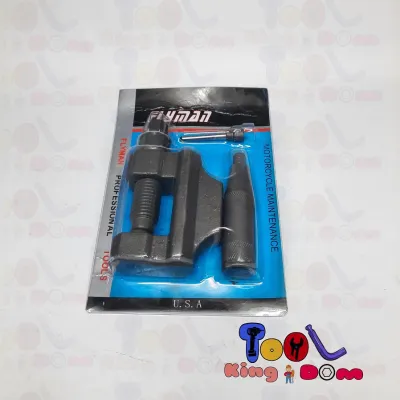
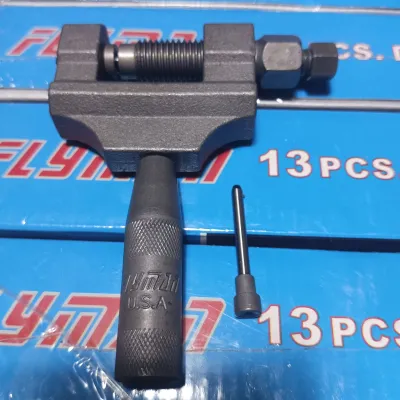
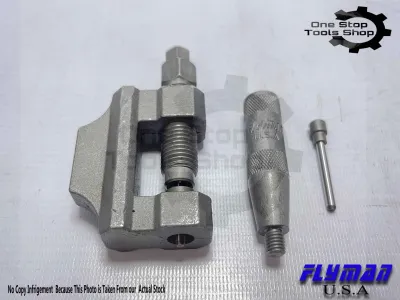
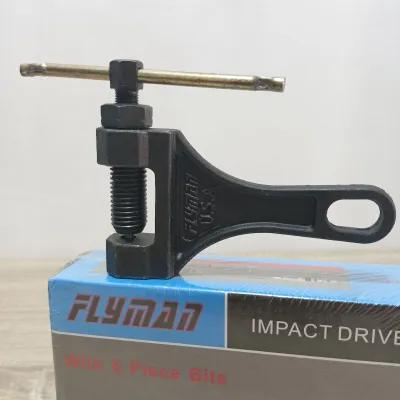
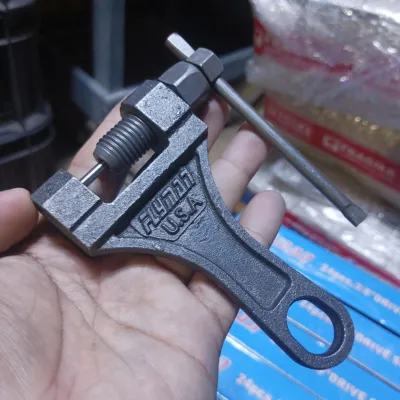
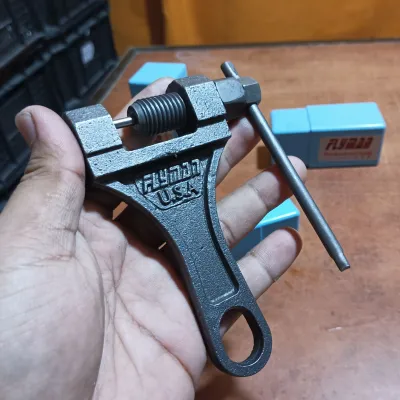
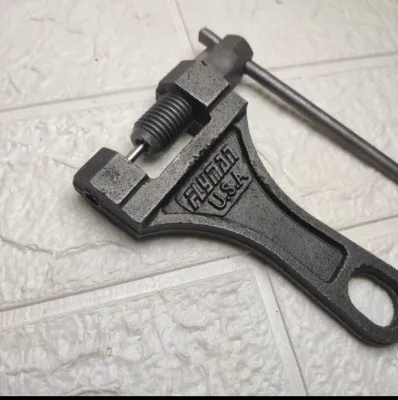
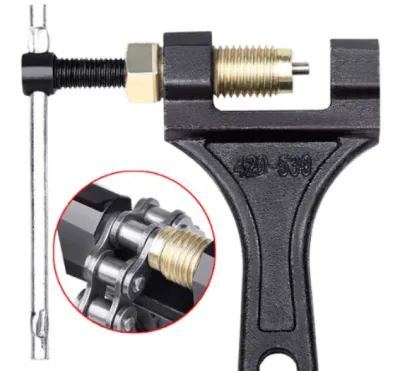
Prices are valid at publication and may change. Please refer to the product page for the latest price.
The drive pin is the most critical component of any chain cutter, as it bears the direct force of pushing the rivet out of the link. A drive pin that is too large for the chain pitch will catch on the outer plates, deforming the link and ruining the chain. Conversely, a pin that is too small may slip off the rivet head, bending under pressure or damaging the surrounding metal. Additionally, the thread pitch of the driving bolt determines how much torque is translated into linear force; fine threads allow for gradual, controlled pressure, which is essential for preventing sudden slips.
Alignment mechanisms are another vital specification to inspect. A quality chain cutter must feature an adjustable anvil or a guide bush that holds the chain perfectly perpendicular to the drive pin. If the chain is allowed to tilt even slightly during the extraction process, the lateral force will bend the drive pin or crack the tool’s cast body. When comparing budget brands, look for models that include a secure clamping mechanism to lock the chain link firmly in place before you begin turning the handle.
Evaluating Build Quality and Material Indicators
Because budget-friendly tools do not undergo the rigorous quality control of premium industrial brands, you must learn to judge their durability through observable physical traits. Start by looking for material stamps on the tool body and drive pin. Chrome Vanadium steel (often marked as Cr-V) is generally preferred for hand tools due to its resistance to abrasion and high torque limits, while basic carbon steel is more prone to bending under heavy loads. Many budget manufacturers use cast iron for the main body, which can be brittle; look for clean casting lines without visible air bubbles or hairline cracks.

Heat treatment is another indicator of durability, particularly on the drive pin and the tip of the driving bolt. Heat-treated steel often exhibits a darker, matte finish or a slight discoloration near the tip, indicating that the metal has been hardened to resist deformation. If the drive pin appears highly polished and soft to the touch, it may not have undergone sufficient hardening, making it susceptible to mushrooming or bending when pressed against a hardened chain rivet.
Machining tolerances can be evaluated by turning the driving bolt by hand before applying it to a chain. The threads should feel smooth and consistent throughout the entire length of the bolt, without excessive play or wobbling inside the tool body. Loose threads indicate poor manufacturing tolerances, which can cause the drive pin to drift off-center under load. Additionally, inspect the ergonomics of the handle; a longer T-bar or a handle that accommodates an external wrench allows you to apply torque smoothly and safely, reducing the risk of the tool slipping from your grip.
Flyman vs. Competing Budget Brands: What to Verify Before Buying
When comparing Flyman chain cutters with other budget options on an online marketplace or at a local hardware store in the Philippines, it is crucial to verify the product details upon receipt. Packaging claims on budget tools can sometimes be generic or misleading, so you should cross-reference the physical tool with the advertised specifications. Check that all described accessories, such as spare drive pins or different-sized anvils, are actually included in the package and fit securely into the main tool body.
Warranty terms and return policies offer a practical safety net when buying budget tools. Since manufacturing variances are more common in this price bracket, purchase from local retailers or authorized online storefronts that offer a straightforward return or replacement policy. A seller who provides a clear window for returns in case of manufacturing defects is always preferable to one offering no after-sales support. If a tool arrives with rough threads, a bent pin, or a misaligned anvil, utilize the return policy immediately rather than attempting to force the tool to work.
Understanding the common failure points of budget chain cutters can help you avoid accidents in your garage. The most frequent issues include stripped threads on the driving bolt, bent or snapped drive pins, and cracked cast bodies. These failures typically occur when a user attempts to force a chain that exceeds the tool’s maximum capacity, or when the drive pin is misaligned with the rivet. By inspecting the tool for straightness and lubricating the threads before each use, you can mitigate these risks and extend the operational life of a budget tool.
Decision Framework: Which Budget Chain Cutter Fits Your Garage?
To make a final decision, evaluate your specific repair scenarios alongside the physical characteristics of the tools available to you. If you primarily maintain standard underbone motorcycles, scooters, or bicycles, and the Flyman chain cutter’s labeled specifications match your chain sizes (such as 428 or smaller), it represents a practical, accessible choice. Ensure that the specific model you select features a replaceable drive pin, as this allows you to service the tool rather than replacing the entire unit if the pin eventually wears out.
Choose alternative budget brands if you find an option that offers verifiable material advantages, such as a documented Chrome Vanadium body, smoother machined threads, or a more comprehensive warranty for your specific chain type. If you regularly work on larger displacement motorcycles that use heavy-duty, sealed O-ring or X-ring chains, you must verify that the tool is explicitly rated for these high-tensile applications. Sealed chains require significantly more force to break, and using an underrated budget tool can result in sudden tool failure or personal injury.
Before applying any force to a new chain cutter, always consult your vehicle’s service manual to confirm the exact chain pitch, width, and master link type. Never attempt to modify the tool or use improvised extensions on the handle to gain more leverage, as this exceeds the design limits of budget-grade metals. If a chain rivet does not push out with moderate, steady hand pressure, stop immediately to check the alignment and verify that you are not attempting to push a riveted pin that requires grinding down first.
Frequently Asked Questions (FAQ)
Can a budget chain cutter safely handle heavy-duty motorcycle chains?
A budget chain cutter can only handle heavy-duty motorcycle chains if the manufacturer’s maximum capacity label explicitly states compatibility with that specific chain size and type, such as 520 or larger. Heavy-duty chains, especially sealed O-ring or X-ring varieties, feature hardened steel rivets that require immense force to push out. If the chain exceeds the tool’s stated limit, or if you must apply excessive, unsafe force that causes the tool body to flex, stop immediately. Forcing the tool can cause the drive pin to shatter or the cast body to snap. In such cases, consult a professional mechanic or use a heavy-duty shop press to avoid damaging your chain or injuring yourself.
How do I maintain a budget chain cutter to prevent the drive pin from bending?
To extend the life of a budget chain cutter and prevent the drive pin from bending, you must perform regular maintenance and ensure correct alignment during use. After every repair, clean any metal shavings or debris from the threads of the driving bolt using a wire brush. Apply a few drops of light machine oil or multi-purpose lubricant to the threads and the tip of the drive pin to reduce friction and wear. When using the tool, always double-check that the drive pin is perfectly centered on the chain rivet before applying torque. Finally, store the tool in a dry, sealed toolbox to protect it from the high humidity of the Philippine climate, which can cause rust and weaken the metal components over time.
Community discussion
Share your experience or ask a question. Comments are reviewed before publication.