
Your Ford vehicle requires a specific Automatic Transmission Fluid (ATF) specification—such as Mercon V, Mercon LV, or Mercon ULV—determined strictly by its model, year, and transmission design. There is no single “universal” Ford transmission fluid. To prevent severe mechanical damage, you must identify the exact specification designated by the manufacturer for your specific gearbox and verify that any fluid you purchase explicitly displays that exact certification on its label.
In tropical climates like the Philippines, where high ambient temperatures and heavy stop-and-go traffic put extra thermal stress on your vehicle, choosing the correct transmission fluid is critical. Operating a vehicle with the wrong fluid can lead to overheating, poor shifting performance, and premature transmission failure. Always consult your vehicle’s documentation or a qualified professional before performing any fluid service.
Why Guessing Your Ford ATF Specification Risks Transmission Damage
Using an incorrect transmission fluid in your Ford vehicle introduces severe mechanical and financial risks. Modern automatic transmissions are highly complex systems engineered with precise tolerances, specific clutch plate materials, and intricate hydraulic valve bodies. Each Ford transmission family requires a fluid with a highly specific viscosity profile and a tailored package of friction modifiers to ensure smooth gear engagement and proper heat dissipation.
Products mentioned in this guide
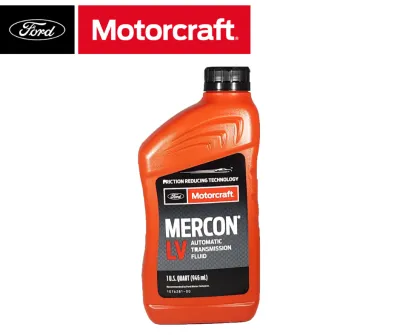
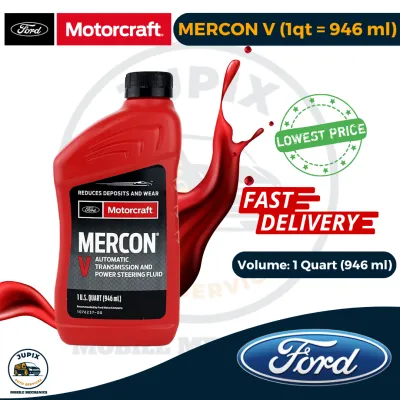
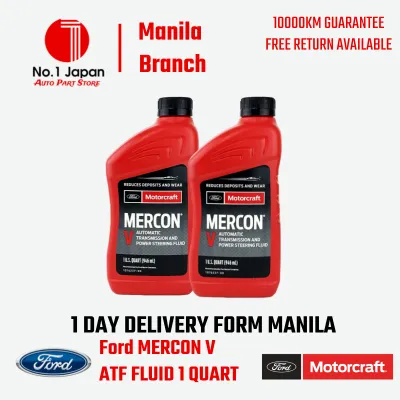
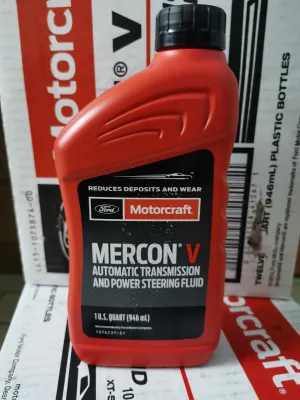
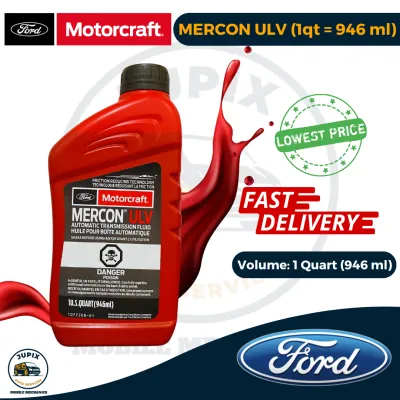
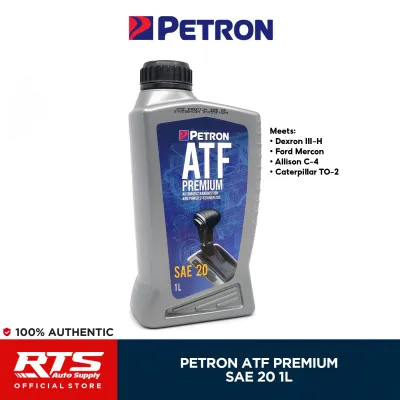
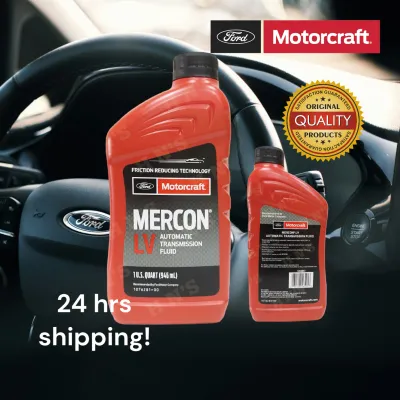
Prices are valid at publication and may change. Please refer to the product page for the latest price.
If you use a fluid with the wrong viscosity or incompatible friction modifiers, the internal clutches may slip or engage too harshly. This friction mismatch leads to accelerated wear on the clutch bands, increased operating temperatures, and eventual shuddering during gear shifts. Over time, these localized thermal spikes can degrade the internal seals, leading to fluid leaks and catastrophic internal component failure.
Beyond physical damage, using an unapproved fluid can void your powertrain warranty coverage. Dealership service centers routinely analyze fluid samples when assessing major transmission warranty claims, and the presence of non-compliant or incorrect fluid specifications is a common ground for claim denial. Relying on generic or unverified “universal” fluids that claim to cover every vehicle on the road often fails to meet the strict engineering and thermal standards established by Ford for its specific transaxle and transmission designs.
3 Reliable Ways to Find Your Exact Ford ATF Requirement
To avoid costly errors, you must identify the manufacturer-recommended fluid specification for your specific vehicle model, year, and engine configuration. The most authoritative source of information is your vehicle’s official owner’s manual. Inside, navigate to the maintenance, lubrication, or fluid capacities section, where you will find a detailed table listing the exact Ford specification code (such as WSS-M2C938-A for Mercon LV) alongside the recommended service intervals.

If you do not have access to the physical owner’s manual, you can often find the required specification directly on the vehicle itself. Open the hood and locate the transmission dipstick, if your vehicle is equipped with one. The handle or the metal blade of the dipstick is frequently stamped with the required fluid type, such as “Mercon V” or “Mercon LV.” For sealed transmissions without a dipstick, the specification or part number is sometimes printed on a label affixed to the transmission oil pan or near the fill plug.
When physical indicators are missing or illegible, you can use your vehicle’s unique 17-character Vehicle Identification Number (VIN) to confirm the factory fill requirement. Providing this number to the parts department of an authorized Ford dealership or entering it into an official Ford parts catalog database will retrieve the exact build specifications of your vehicle. This method eliminates any ambiguity, especially for model years where Ford transitioned between different transmission designs mid-production.
Decoding Common Ford Mercon ATF Specifications
The Mercon family of fluids consists of distinct, highly engineered standards rather than simple viscosity grades. For example, Mercon V is a conventional or synthetic-blend fluid designed for older four- and five-speed transmissions, featuring specific friction characteristics required for those older clutch materials. In contrast, Mercon LV (Low Viscosity) is a fully synthetic fluid engineered for modern six-speed and some eight-speed transmissions, offering lower viscosity to improve fuel efficiency and better thermal stability under load.
It is a common misconception that newer transmission fluids are backward-compatible with older specifications. Backward or forward compatibility is generally not guaranteed across different Mercon generations due to evolving clutch materials, electronic control systems, and valve body designs. For instance, Mercon LV has a significantly lower viscosity than Mercon V; using Mercon LV in a transmission designed for Mercon V can cause low hydraulic pressure, clutch slippage, and severe wear. Conversely, using Mercon V in a system designed for Mercon LV can restrict fluid flow in tight valve passages, leading to harsh shifts and overheating.
The introduction of ultra-low viscosity fluids like Mercon ULV (Ultra-Low Viscosity) for modern 10-speed transmissions further highlights this specialization. These fluids are formulated for extremely tight tolerances and specific operating pressures that older fluids cannot support. Therefore, you must match the exact specification label required by your transmission rather than assuming a newer or higher-tier version serves as an automatic upgrade for an older gearbox.
How to Verify the Right ATF Before You Buy
Before purchasing any transmission fluid, you must perform a careful inspection of the product packaging to ensure it matches your vehicle’s requirements. Look at the back label of the bottle for explicit Ford specification approval wording, such as “Meets Ford Mercon LV” or “Approved for Mercon V.” This wording indicates that the fluid manufacturer has formulated and tested the product to comply with Ford’s specific engineering standards.
Be cautious of vague marketing claims on product labels. Avoid fluids that only state they are “recommended for use in,” “suitable for,” or “compatible with” Ford vehicles without displaying an official specification certification or licensing number. These phrases often indicate that the fluid has not undergone formal testing or licensing processes to guarantee compliance with Ford’s strict friction and viscosity parameters.
Additionally, inspect the physical packaging of the fluid before purchase. Ensure that the bottle features intact, tamper-evident seals under the cap to prevent contamination from dust, moisture, or incorrect fluids. Store any unused fluid in its original, tightly sealed container in a cool, dry place away from direct sunlight, as exposure to high humidity and extreme temperature fluctuations can introduce moisture contamination, rendering the fluid unsafe for use in your transmission.
Frequently Asked Questions (FAQ)
Can I mix different Mercon ATF specifications if I am low on fluid?
No, you should not mix different Mercon ATF specifications, even if your fluid level is low. Mixing fluids with different viscosity profiles and friction modifier packages can unpredictably alter the chemical and physical properties of the mixture. This can lead to poor shift quality, clutch slippage, accelerated wear, and localized overheating. If you must add fluid in an emergency and accidentally use an incorrect specification, you should have the transmission system completely drained and refilled with the correct fluid as soon as possible to prevent long-term damage.
Is it safe to use a multi-vehicle ATF in my Ford?
Using a multi-vehicle ATF is only safe if the product label explicitly lists the exact Ford Mercon specification required by your vehicle as an approved standard. Many multi-vehicle fluids use broad friction modifier packages designed to compromise between different manufacturer requirements, which may not fully satisfy the precise friction and thermal demands of your specific Ford transmission. Always prioritize fluids that carry the official, licensed Ford specification over generic multi-vehicle formulations to ensure optimal performance and protect your transmission’s lifespan.

Community discussion
Share your experience or ask a question. Comments are reviewed before publication.