
If you are searching for a “Gen1 canister exhaust” to install on a “Yamaha Raider 150,” you will immediately run into a fundamental naming conflict. The Raider 150 is manufactured by Suzuki, not Yamaha. Consequently, a Gen1 Raider 150 exhaust canister and header pipe assembly will not directly fit any Yamaha motorcycle model without major, custom modifications.
Understanding the distinction between these motorcycle brands and their respective generations is essential before purchasing any aftermarket exhaust parts. Online marketplaces often list parts with overlapping search terms, which can easily confuse riders looking for a quick, bolt-on upgrade. To avoid costly purchasing mistakes, you must understand what a Gen1 canister exhaust actually is, why cross-brand installation is highly problematic, and how to verify compatibility for your specific underbone motorcycle.
What Defines a Gen1 Canister Exhaust?
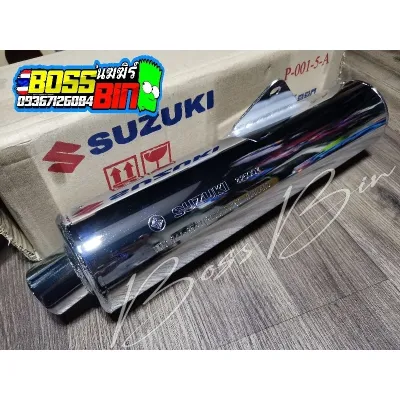
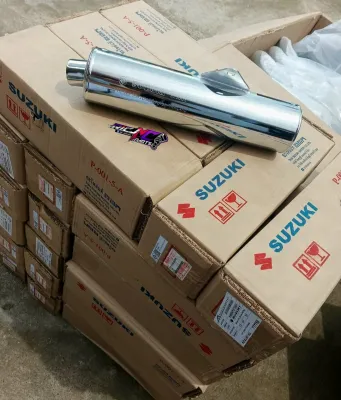
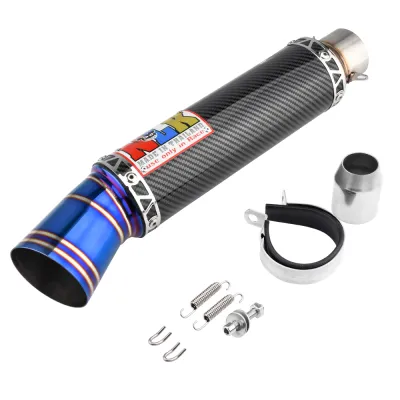
In the underbone motorcycle community, a “canister” exhaust refers to a cylindrical or oval-shaped aftermarket muffler. Unlike bulky, heavily baffled stock mufflers designed to suppress sound and control emissions, canister exhausts feature a straight-through or minimally baffled core. This design is highly favored by riders looking for significant weight reduction and a deeper, louder sound profile. The canister body is typically constructed from stainless steel, aluminum, or carbon fiber, offering a sporty aesthetic that mimics professional racing setups.
Products mentioned in this guide
Prices are valid at publication and may change. Please refer to the product page for the latest price.
The term “Gen1” designates a specific era of the Suzuki Raider 150, which was produced roughly between 2004 and 2010. This first-generation model utilized a carburetor-fed, double-overhead-cam (DOHC) 150cc engine. Because motorcycle designs evolve, subsequent generations—such as the Gen2 and the fuel-injected Raider R150 FI—introduced changes to the frame geometry, exhaust port angles, and mounting brackets. Therefore, a “Gen1” exhaust is specifically engineered to align with the physical layout of these early carburetor-era Suzuki models.
From a performance standpoint, installing a canister exhaust reduces the overall weight of the motorcycle, which can slightly improve the power-to-weight ratio. The straight-through design also allows for freer exhaust gas scavenging at high engine speeds. However, simply bolting on a new canister will not automatically result in major horsepower gains. To realize actual performance improvements, the engine’s air-fuel mixture must be adjusted through carburetor jetting or ECU remapping to match the increased airflow.
Clarifying the "Yamaha Raider 150" Compatibility
The phrase “Yamaha Raider 150” is a common misnomer resulting from brand confusion in the underbone market. Suzuki produces the Raider 150 (also known as the Satria F150 in neighboring Southeast Asian markets). Yamaha’s direct competitor in this high-performance underbone segment is the Sniper 150 (also known as the MX King 150). Because both motorcycles occupy the same 150cc sporty underbone category, aftermarket listings on ecommerce platforms occasionally combine these keywords to capture more search traffic, leading buyers to believe the parts are interchangeable.

In reality, cross-brand compatibility for exhaust systems is virtually nonexistent without extensive modification. Exhaust systems are precision-engineered to match the exact physical dimensions of a specific engine block and frame. Suzuki’s DOHC engine block has a unique exhaust port angle, bolt-hole spacing, and header pipe routing that differs fundamentally from Yamaha’s SOHC engine layout. Trying to mount a Suzuki Raider exhaust onto a Yamaha Sniper 150 will result in a header pipe that does not line up with the cylinder head, potentially damaging the engine studs if forced.
Furthermore, the frame mounting points on a Suzuki Raider and a Yamaha Sniper are completely different. The hanger bracket on a Gen1 Raider canister is positioned to align with the Suzuki frame’s passenger footpeg mount. If you attempt to install this system on a Yamaha model, the canister will not line up with the Yamaha’s mounting points, leaving the exhaust unsupported and prone to breaking under vibration. Before buying any exhaust component, locate the chassis plate or vehicle identification number (VIN) on your motorcycle frame to verify the exact manufacturer, model name, and year of production.
Critical Specifications to Verify Before Installation
To ensure a safe, leak-free installation on your motorcycle, you must carefully verify several physical specifications. First, measure the header pipe inlet diameter and inspect the flange design. The flange must match the cylinder head’s exhaust port size and bolt pattern exactly. An improperly fitted flange will prevent a tight seal, leading to hot exhaust gas leaks that can damage engine components, cause loud popping sounds, and reduce engine backpressure.
Next, evaluate the mounting brackets and hangers. The exhaust canister must be firmly secured to the motorcycle frame to handle constant road vibrations. Check that the distance, angle, and bolt size of the muffler hanger match your frame’s existing mounting holes. Using rubber-insulated bushings on the hanger bracket is highly recommended to absorb vibrations and prevent metal fatigue or cracking over time.
You must also replace the exhaust port crush gasket during installation. Reusing an old, compressed copper or aluminum gasket is a primary cause of exhaust leaks. Always install a brand-new gasket that matches your engine’s specifications to ensure a complete, airtight seal at the cylinder head.
Finally, perform a thorough clearance check before riding. Ensure that the header pipe and canister body do not interfere with the rear tire, swingarm, rear shock absorber, or rear brake caliper. You must also verify that the exhaust does not touch any plastic fairings or wire harnesses, as the extreme heat generated by the exhaust system can easily melt these components. Check these clearances again with the suspension fully compressed to simulate real-world riding conditions.
Noise Regulations and Safety Boundaries
Before upgrading to an aftermarket canister exhaust, you must consider the legal and safety implications. In the Philippines, the Land Transportation Office (LTO) and local government units (LGUs) strictly enforce noise ordinances on public roads. Open canister exhausts that lack proper baffling or decibel reducers (DB killers) often exceed the legal decibel limits. Operating a motorcycle with an excessively loud exhaust can result in heavy traffic fines, the confiscation of your aftermarket exhaust, or even vehicle impoundment.
Additionally, modifying your stock exhaust system can have warranty implications. If your motorcycle is still covered by a manufacturer’s warranty, replacing the stock exhaust with an aftermarket unit may void the warranty on the engine, fuel injection system, and related electrical components. Always review your vehicle’s warranty terms and consult with an authorized dealer before making modifications.
For your personal safety, always refer to the motorcycle manufacturer’s service manual and the aftermarket exhaust’s installation instructions before starting the job. If you are not confident in your mechanical skills or lack the proper tools, have the system installed by a qualified professional mechanic. A poorly installed exhaust can leak toxic carbon monoxide gas near the rider or suffer structural failure while riding, posing a severe safety hazard on the road.
Frequently Asked Questions (FAQ)
Will a Gen1 Raider exhaust fit a Yamaha Sniper 150?
No, a Gen1 Suzuki Raider 150 exhaust will not directly fit a Yamaha Sniper 150. The engine block shapes, exhaust port angles, header pipe routings, and frame mounting points are completely different between the Suzuki and Yamaha platforms. Forcing a fitment requires extensive custom fabrication, which can compromise exhaust flow, structural integrity, and engine safety.
Does a canister exhaust improve top speed?
A canister exhaust alone will not significantly increase your motorcycle’s top speed. While it reduces weight and improves high-RPM exhaust gas flow, actual performance gains are marginal on a stock engine. To achieve noticeable improvements in top speed and acceleration, you must pair the exhaust upgrade with proper engine tuning, such as carburetor jetting adjustments or ECU remapping, to maintain a balanced air-fuel ratio.
Community discussion
Share your experience or ask a question. Comments are reviewed before publication.