
When deciding between Genuine Honda HCF-2 and aftermarket Continuously Variable Transmission (CVT) fluids, the optimal choice depends on your vehicle’s warranty status, budget, and driving conditions. Genuine Honda HCF-2 remains the safest and most recommended choice for maintaining factory warranty compliance and ensuring the exact friction characteristics required by Honda’s Earth Dreams CVT systems. However, high-quality aftermarket fluids that explicitly state compliance with Honda HCF-2 specifications serve as viable, cost-effective alternatives for out-of-warranty vehicles. Crucially, “universal” multi-vehicle CVT fluids are not acceptable substitutes and must be avoided entirely. Choosing the wrong fluid can lead to catastrophic transmission failure, a particularly costly mistake in the Philippines where a complete CVT replacement at an authorized dealership can easily exceed ₱150,000 to ₱250,000.
Why Honda HCF-2 Specifications Matter for Your CVT
Unlike conventional automatic transmissions that use planetary gear sets and torque converters to shift gears, a CVT relies on a high-tension steel belt or chain riding between two variable-diameter pulleys. The transmission fluid in a CVT must perform a highly complex double duty: it must provide enough lubrication to prevent wear on the metal components while simultaneously offering high steel-on-steel friction to prevent the belt from slipping under load. If the fluid lacks the correct friction coefficient, the belt will slip against the pulleys, scoring the metal surfaces and leading to immediate transmission failure.
In newer Honda models featuring Earth Dreams technology—such as the Honda Civic, City, CR-V, Brio, and HR-V from the mid-2010s onward—the transmission operates under tighter tolerances, higher hydraulic pressures, and elevated thermal demands. Honda developed the HCF-2 specification specifically to meet these updated performance profiles. This fluid features specialized shear-stable polymers and unique friction modifiers designed to maintain optimal pressure and grip even under extreme operating temperatures.
Products mentioned in this guide
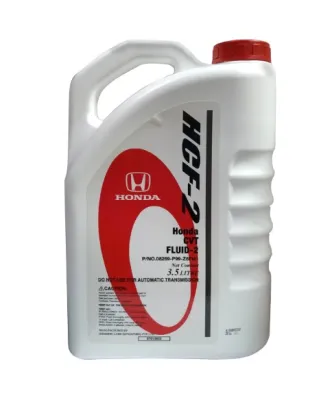
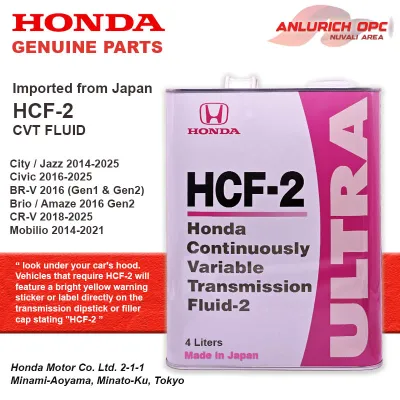
![[3.5 LITERS] Honda HCF-2 CVT Fluid - Genuine Honda Auto Parts - FOR UNITS 2016 AND UP](https://img.lazcdn.com/g/p/11b4f22ea05248815085bbcc9cc7f1c7.jpg_400x400q80.jpg_.webp)
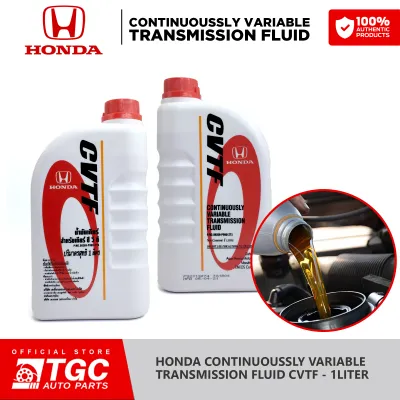
Prices are valid at publication and may change. Please refer to the product page for the latest price.
Contrast this with older Honda CVT systems. For years, older models utilized Honda Multi-Matic Fluid (HMMF) or standard CVTF. These older formulations have entirely different viscosity profiles and friction properties. Using HMMF or a generic “universal” CVT fluid in a modern transmission that requires HCF-2 will likely result in belt slippage, severe transmission shudder, accelerated wear of the pulley faces, and eventual catastrophic failure. Always consult your vehicle’s owner’s manual or check the transmission dipstick or fill plug area to verify the exact fluid designation before purchasing any product.
Comparing Genuine and Aftermarket HCF-2 Fluids
Formulation and Friction Characteristics
Genuine Honda HCF-2 is engineered alongside the transmission hardware itself. This co-development ensures that the fluid’s shear stability, anti-shudder durability, and torque transfer capabilities match the exact metallurgy of the pulleys and belt. The proprietary additive package in Genuine HCF-2 contains specific anti-foaming agents. Foam is highly dangerous in a hydraulic system like a CVT because air bubbles compress under pressure, leading to sudden drops in hydraulic pressure, which in turn causes the pulleys to lose their grip on the belt.

Reputable aftermarket lubricant manufacturers analyze these performance characteristics and formulate their products using advanced additive packages to mimic the OEM fluid’s behavior. However, there is a critical distinction in labeling. Some aftermarket brands label their products as “universal” or “suitable for use in most CVTs,” which often means the fluid is a compromise designed to work passably across dozens of different transmission designs. For a Honda CVT, you should only consider aftermarket products that explicitly state they “meet or exceed Honda HCF-2 specifications” on their technical data sheets, rather than vague marketing claims.
Warranty Coverage and Dealership Policies
Maintaining your vehicle’s warranty is a major consideration, especially for newer cars in the Philippines. If your Honda is still covered by the manufacturer’s powertrain warranty, using any fluid other than Genuine Honda HCF-2 can complicate future claims. In the event of a transmission issue, authorized dealerships will inspect the service history.
If they discover a non-OEM fluid was used, they may deny warranty coverage, placing the burden of proof on you to demonstrate that the aftermarket fluid did not cause the failure. This process often requires independent laboratory analysis of the fluid, which is costly and time-consuming. Using Genuine Honda HCF-2 during the warranty period eliminates this administrative risk entirely and is the default recommendation for leased or warrantied vehicles.
Long-Term Reliability and Wear Protection
Honda CVTs are highly sensitive to fluid degradation. In the tropical climate of the Philippines, vehicles frequently operate under severe driving conditions. This includes stop-and-go traffic in intense city heat, climbing steep mountain roads like those in Baguio, or navigating waterlogged streets during the monsoon season. High operating temperatures accelerate fluid oxidation and break down critical friction modifiers.
Genuine Honda HCF-2 has a proven, documented track record of maintaining its viscosity and protective properties over its designated service interval under these harsh conditions. While premium aftermarket fluids from established global brands can offer comparable thermal stability, lower-tier or generic alternatives may degrade rapidly, leading to micro-slippage that damages the pulley surfaces. If you choose an aftermarket fluid, you must monitor its color and smell more frequently and consider adhering to a severe-duty maintenance schedule, which typically halves the standard service interval.
Cost, Availability, and Convenience
In the Philippine market, cost and convenience are major practical factors. Genuine Honda HCF-2 is primarily available through authorized Honda dealerships or specialized automotive parts importers. It carries a premium price, typically ranging from ₱700 to ₱1,100 per liter. Given that a standard drain-and-fill requires approximately 3.5 to 4 liters, the cost of fluid alone can be substantial.
In contrast, reputable aftermarket fluids from recognized brands are widely distributed across local auto supply shops in major cities and official brand stores on online marketplaces. These aftermarket options generally cost between ₱400 and ₱600 per liter, offering significant savings, especially for DIY enthusiasts. However, the high demand for both OEM and aftermarket fluids has led to an influx of counterfeit products in online spaces. Suspiciously low prices—such as a liter of “Genuine Honda HCF-2” selling for ₱300 or less—are a primary indicator of counterfeit fluids that can ruin your transmission within a few thousand kilometers.
Decision Framework: Which Fluid Should You Choose?
To simplify your decision, consider your specific vehicle status, maintenance habits, and risk tolerance.
Choose Genuine Honda HCF-2 if:
- Your vehicle is still under warranty: Protect your factory powertrain warranty from being voided due to unauthorized fluid use.
- You prefer zero guesswork: Avoid the hassle of comparing technical data sheets and compatibility charts.
- You service at the dealership: Ensure your service history remains spotless and fully documented by authorized technicians.
- It is the first fluid change: Establish a solid baseline of reliability for a relatively new vehicle.
Choose a Reputable Aftermarket HCF-2 if:
- Your vehicle is out of warranty: Save money on routine maintenance for an older Honda model.
- You are a DIY enthusiast: Perform regular drain-and-fill operations at home using high-quality, cost-effective fluids.
- The specifications match perfectly: Verify that the fluid's technical data sheet explicitly lists compliance with "Honda HCF-2" (not just generic CVT compatibility).
- You purchase from verified sources: Ensure you are buying from official brand stores or authorized local distributors.
Verify First if:
- You are unsure of the vehicle's history: Check if the transmission has previously been serviced with aftermarket or OEM fluid.
- The product packaging is vague: Avoid any fluid that does not explicitly name "HCF-2" on the label.
- The seller is unverified: Do not risk purchasing transmission fluid from unauthorized online sellers offering suspiciously low prices.
How to Verify Compatibility and Avoid Counterfeits
Before purchasing any transmission fluid, always cross-reference the exact specification code in your vehicle’s owner’s manual with the product label. If the manual calls for HCF-2, do not accept any fluid that only lists HMMF or generic CVTF compliance. If instructions conflict, or if the fluid type is not explicitly covered, stop and consult the vehicle manufacturer or a qualified professional.
To protect your transmission from counterfeit products, buy fluid exclusively from authorized physical dealerships, reputable brick-and-mortar automotive supply chains, or official brand flagship stores on major ecommerce platforms. When inspecting a physical bottle, check the print quality of the labels; blurry text, misaligned logos, or spelling mistakes are clear signs of a fake. Look for intact security seals, holographic stickers, and clearly stamped batch numbers with production dates. Genuine Honda HCF-2 fluid typically has a distinct light amber or yellowish tint; if the fluid you pour out is bright red or green, double-check the label immediately, as these are common colors for generic multi-vehicle fluids.
When performing the fluid change, safety is paramount. Ensure the vehicle is parked on a level surface, securely supported by heavy-duty jack stands, and the engine has cooled completely to prevent severe burns from hot fluid. Always refer to your vehicle’s original manufacturer instructions for the exact torque specifications of the drain plug and fill plug. If you are unfamiliar with transmission maintenance, seek the assistance of a qualified professional.
Additionally, if your vehicle’s service history is unknown or if the fluid is severely degraded, a simple drain-and-fill is much safer than a high-pressure machine flush. Honda explicitly warns against using high-pressure flushing machines on their CVTs, as the pressure can dislodge internal debris, clog delicate control valves, and cause immediate transmission failure. A simple gravity drain-and-fill replaces about 40% to 50% of the fluid safely; repeating this process after a short drive is the approved method for a more thorough fluid refresh.
Frequently Asked Questions (FAQ)
Can I mix Genuine Honda HCF-2 with an aftermarket CVT fluid?
We strongly advise against mixing Genuine Honda HCF-2 with aftermarket CVT fluids. Different brands utilize unique chemical bases, viscosity index improvers, and proprietary additive packages. Mixing them can cause a chemical mismatch, altering the fluid’s critical friction coefficient and thermal stability. This can result in immediate transmission shudder, belt slippage, or accelerated wear of internal components. If you decide to transition from Genuine Honda fluid to an aftermarket alternative, perform a complete drain-and-fill cycle rather than topping off existing fluid.
Is Honda HCF-2 the same as HMMF or standard CVTF?
No, Honda HCF-2 is not the same as Honda Multi-Matic Fluid (HMMF) or standard CVTF, and they are absolutely not interchangeable. HCF-2 is a second-generation fluid formulated specifically for the high-torque, high-heat environments of newer Earth Dreams CVT systems. HMMF and older CVTFs were designed for first-generation Honda CVTs and lack the necessary shear stability and friction characteristics required by modern transmissions. Using the wrong fluid type can cause severe mechanical slippage, belt damage, and complete transmission failure. Always verify the required fluid specification in your owner’s manual before purchasing.
Community discussion
Share your experience or ask a question. Comments are reviewed before publication.