
Selecting a motorcycle helmet in the Philippines requires balancing comfort, cost, and safety. Riding through congested metropolitan thoroughfares, navigating unpredictable weather, and enduring intense tropical heat make the physical weight of your gear a critical factor. A lighter helmet directly translates to less neck strain and better focus on the road. For riders considering a gillie carbon helmet, finding the right balance involves understanding how different price points deliver on weight reduction, interior comfort, and crucial safety certifications. Choosing the best option means matching your specific riding habits and budget to the structural and safety features offered at each tier.
Why Choose a Carbon Fiber Helmet for Philippine Roads?
Carbon fiber is highly valued in motorcycle gear manufacturing due to its exceptional strength-to-weight ratio. Unlike standard polycarbonate or ABS plastic shells, which rely on sheer material thickness to resist impacts, carbon fiber composites utilize woven carbon strands bound by high-strength resins. This structure absorbs and disperses impact forces across a wider surface area while remaining significantly lighter than traditional materials.
On Philippine roads, where stop-and-go traffic along major thoroughfares like EDSA or C5 is a daily reality, a lightweight helmet is a necessity rather than a luxury. Long commutes in heavy traffic put a continuous physical toll on a rider’s neck and shoulders. A heavy helmet increases the leverage force on your neck during sudden braking or hours spent in a static riding position. By switching to a lightweight carbon shell, you significantly reduce muscle fatigue, keeping your neck comfortable and your head highly mobile.
Products mentioned in this guide
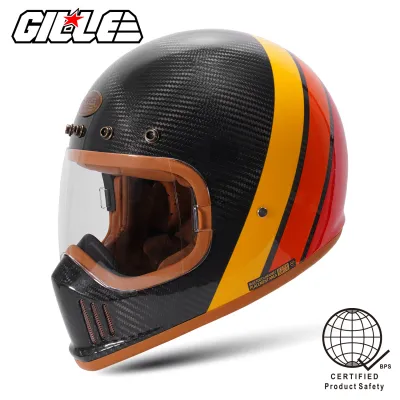
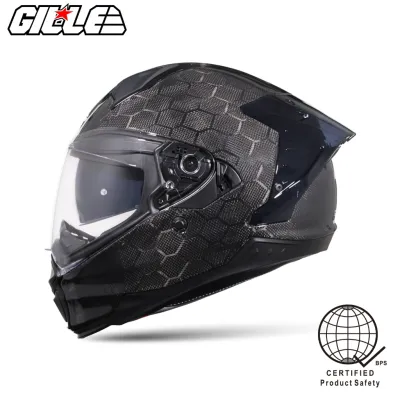
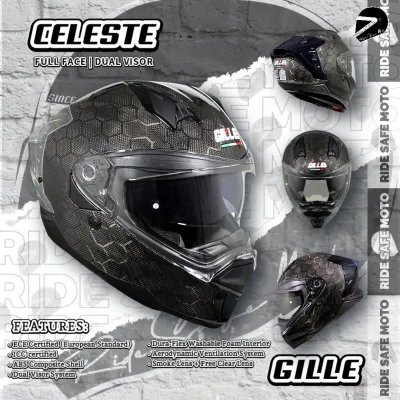
Prices are valid at publication and may change. Please refer to the product page for the latest price.
Our tropical climate presents another major challenge, as high temperatures and humidity levels can quickly cause heat exhaustion. A heavy, poorly ventilated helmet traps heat, accelerating fatigue and reducing reaction times. Carbon fiber helmets, by virtue of their advanced manufacturing processes, often feature more sophisticated, integrated ventilation channels that work in tandem with the lightweight shell to keep you cool.
Gillie has established a notable presence in the local motorcycle community by offering carbon fiber helmets that bridge the gap between high-end professional racing gear and daily commuter budgets. Riders look to this brand to experience the physical benefits of carbon fiber without the prohibitive cost of premium European imports. To make an informed purchase, it is essential to understand what features and safety baselines you actually get at different price levels.
Budget Tier: Entry-Level Carbon Options and Safety Baselines
Entry-level carbon fiber options in the Philippine market typically sit in the ₱7,000 to ₱10,000 price range. This tier is highly popular among daily commuters, delivery riders, and beginners who are looking to upgrade from heavy thermoplastic helmets to their first lightweight shell without overspending.

At this price point, you can expect a basic carbon composite shell, which often mixes carbon fiber with fiberglass layers to keep production costs manageable. These helmets usually feature standard single-density Expanded Polystyrene (EPS) liners, a reliable micrometric quick-release buckle or a standard double D-ring strap, and basic intake and exhaust vents. While they are not as light as pure carbon models, they still offer a noticeable weight reduction compared to standard plastic helmets.
To maintain a lower price, manufacturers often produce fewer outer shell sizes for budget models. This means a single shell size might cover medium, large, and extra-large fits, with the manufacturer using thicker or thinner interior comfort padding to adjust the size. As a result, the helmet may have a slightly bulkier external profile, and the overall weight will be higher than that of a pure, high-grade carbon fiber model.
The comfort liners in budget models are usually basic polyester blends that, while removable and washable, may not wick moisture as rapidly as premium fabrics. The aerodynamic profiling is also simpler, meaning you might experience more wind noise and slight lifting or buffeting when riding at highway speeds. However, for city commuting and moderate speeds, these models offer excellent value.
Even at a budget-friendly price, safety cannot be compromised. Before purchasing any entry-level carbon helmet, riders must verify that the model carries valid safety certifications. Look for the physical Import Commodity Clearance (ICC) sticker required by the Philippine government, alongside international safety standards such as ECE 22.05 or DOT. Always verify these certifications against official manufacturer documentation to ensure the helmet is legally compliant and safe for public roads.
Mid-Range Tier: Balancing Weight, Comfort, and Daily Usability
Mid-range carbon helmets typically span from ₱10,000 to ₱17,000. This segment is widely considered the “sweet spot” for active daily commuters, long-distance touring riders, and weekend enthusiasts who want genuine carbon fiber performance without paying a premium for track-specific features.
Mid-range options usually feature a higher concentration of pure carbon fiber in the shell matrix, resulting in a noticeable weight reduction compared to entry-level composite models. Additionally, these helmets often utilize multi-density EPS liners, which feature varying foam densities strategically placed to absorb both high-speed impacts and lower-speed jolts more effectively, offering superior head protection.
Riding in the humid Philippine climate means sweating is inevitable. Mid-range helmets combat this by using advanced, moisture-wicking, hypoallergenic interior liners that dry quickly and are fully removable for easy washing. These technical fabrics feel smoother against the skin, reducing chafing during long hours on the road and keeping the interior smelling fresher for longer.
At this level, the shell undergoes more rigorous aerodynamic design to minimize wind buffeting and drag, which is especially beneficial when cruising on expressways or navigating windy mountain passes like the Marilaque Highway. The ventilation systems are more sophisticated, featuring adjustable multi-port intakes and rear extractors that create a venturi effect, actively pulling hot, humid air away from your scalp.
This tier offers the most balanced package for riders who prioritize comfort, daily usability, and modern features like integrated sun visors or pre-cut pockets for Bluetooth communication systems. It delivers the true benefits of a lightweight carbon shell without the added cost of professional racing certifications or extreme, track-focused designs.
Premium Tier: Advanced Safety Certifications and Track Focus
Premium carbon helmets generally start above ₱18,000 and can go significantly higher. This tier is designed specifically for track-day enthusiasts, sportbike owners, and riders who demand the absolute highest level of structural integrity, high-speed stability, and advanced safety technology.
Premium helmets utilize high-grade carbon weaves, such as 3K or 12K carbon, woven in multi-axis patterns to maximize tensile strength and puncture resistance while achieving the lowest possible weight. The manufacturing process uses advanced resin-infusion techniques to eliminate excess weight, resulting in a featherlight shell that minimizes neck fatigue even under extreme G-forces.
These models are engineered with aggressive aerodynamic profiles, often featuring prominent rear spoilers to stabilize the helmet at high speeds and prevent lift when tucked behind a motorcycle’s windscreen. They also include crucial safety features like an Emergency Quick Release System (EQRS), which allows emergency responders to easily remove the cheek pads and slide the helmet off a rider’s head without putting strain on the spine in the event of an accident.
Premium carbon helmets are built to meet or exceed the most rigorous international standards, such as the newer ECE 22.06 certification or FIM homologation for professional racing, alongside local ICC requirements. These standards involve strict testing for rotational impacts, penetration resistance, and visor durability, providing the ultimate peace of mind.
The interior fit of a premium track-focused helmet is typically much snugger and more contoured to prevent any movement at high speeds. While this secure fit is excellent for safety and high-speed stability, it may feel restrictive to casual commuters. Additionally, the shell and gasket designs are optimized for maximum noise isolation, keeping wind roar to a minimum during fast rides.
How to Verify Safety Certifications and Authenticity
Ensuring your helmet is genuine and certified is a life-saving step. Start by examining the physical labels. Look for the ECE or DOT certification marks permanently sewn onto the chin strap or printed on the rear of the helmet. In the Philippines, legally compliant helmets must display a genuine, holographic Import Commodity Clearance (ICC) or Philippine Standard (PS) sticker on the back of the shell.
The market has seen a rise in counterfeit carbon fiber helmets, which pose a catastrophic risk in an accident. Fake helmets often use cheap ABS plastic covered with a water-transfer carbon-fiber print, or a thin, non-structural layer of carbon fiber wrapped over weak materials. These counterfeits lack the impact-absorbing EPS liners and structural strength of genuine helmets, meaning they can easily shatter upon impact.
To protect yourself, avoid buying helmets from unauthorized online marketplaces, unverified social media sellers, or suspicious physical shops offering prices that seem too good to be true. Genuine carbon fiber manufacturing is an expensive, high-precision process; any “carbon” helmet sold at an impossibly low price is almost certainly a dangerous counterfeit.
Always purchase your gear from authorized physical motorcycle accessories boutiques, official brand distributors, or verified flagship online stores. Buying from authorized channels guarantees that the helmet is authentic, covers you under the manufacturer’s warranty, and ensures you have access to genuine replacement parts like visors, base plates, and cheek pads.
Use a physical inspection checklist at the point of purchase to verify the helmet’s quality before handing over your money:
- Check the EPS Liner: Remove the comfort padding and inspect the black or grey Expanded Polystyrene (EPS) liner underneath. It should be firm, uniform, free of cracks, and securely bonded to the outer shell without any visible gaps or loose glue.
- Test the Visor Mechanism: Open and close the visor several times. It should operate smoothly through its detents, lock securely when fully closed, and form a tight, flush seal against the eyeport's rubber gasket to prevent wind and rain from entering.
- Verify the Manufacturing Date: Look for a production stamp or sticker, typically located under the comfort liner or on the EPS. Avoid purchasing helmets that have been sitting on a shelf for more than three to four years, as the protective materials degrade over time even when unused.
- Inspect the Chin Strap and Buckle: Examine the chin strap for high-quality stitching and ensure there is no fraying. Test the double D-ring or micrometric buckle to ensure it locks firmly and releases smoothly without catching or slipping.
Frequently Asked Questions (FAQ)
How long does a carbon fiber helmet last?
The general rule of thumb is to replace your motorcycle helmet every 5 to 7 years from the date of manufacture, or 5 years from the date of purchase, whichever comes first. While the outer carbon fiber shell is highly durable and does not degrade easily, the critical internal components do. The Expanded Polystyrene (EPS) liner, which is responsible for absorbing impact energy, gradually hardens and loses its shock-absorbing capabilities over time due to exposure to sweat, hair oils, cosmetics, extreme heat, and UV rays.
Additionally, any helmet that has been involved in a crash, dropped from a significant height, or sustained a hard impact must be replaced immediately. Even if the outer carbon shell looks completely undamaged, the internal EPS liner may have compressed to absorb the force, rendering it useless for any future impacts.
Is a carbon helmet safer than a fiberglass one?
A helmet’s safety is not determined by its shell material alone, but by the entire system, including the multi-density EPS liner, shell construction, and overall design. Both carbon fiber and high-quality fiberglass can pass the same rigorous safety standards, such as ECE 22.06. Therefore, a certified fiberglass helmet is just as capable of protecting your head as a certified carbon fiber helmet.
The primary advantage of carbon fiber is its exceptional strength-to-weight ratio. It allows manufacturers to build a helmet that meets the highest safety standards while remaining significantly lighter than a fiberglass counterpart. This weight reduction minimizes neck fatigue and physical strain, which indirectly improves safety by keeping the rider more comfortable, alert, and focused on the road.
How should I clean the interior of my carbon helmet?
Before performing any maintenance, always consult your specific helmet model’s user manual and care instructions, as cleaning procedures can vary. If your helmet features a removable interior, gently pull out the cheek pads and comfort liner. Hand-wash these components in lukewarm water using a mild, non-chemical soap, such as baby shampoo. Avoid using harsh household detergents, bleach, or fabric softeners, as these can destroy the moisture-wicking properties of the technical fabrics and cause skin irritation.
After washing, gently squeeze out the excess water without wringing or twisting the liners, which can warp their plastic inserts. Allow the liners to air-dry completely in a well-ventilated, shaded indoor area away from direct sunlight or high-heat sources like hair dryers, as extreme heat can shrink or damage the materials.
To clean the outer carbon fiber shell, wipe it down using a clean, soft microfiber cloth dampened with warm water. Never use harsh chemical solvents, glass cleaners, or abrasive polishes, as these can permanently degrade the protective clear coat, damage the underlying carbon resin structure, and weaken plastic ventilation components.
Community discussion
Share your experience or ask a question. Comments are reviewed before publication.