
When navigating busy Philippine roads, whether commuting through urban traffic or cruising along provincial highways, your helmet is your most critical piece of safety gear. For women riders seeking a balance of convenience, ventilation, and style, a half-face helmet is a highly popular choice. However, selecting the right helmet involves much more than finding an appealing design or a favorite color. In the Philippines, road safety and legal compliance are deeply intertwined, making it essential to understand local standards before making a purchase.
A certified half-face helmet must carry specific safety marks to prove it can protect your head during an impact. For women riders, finding a helmet that fits correctly is equally vital, as a poorly fitting helmet compromises safety and causes severe physical discomfort. This guide explains the mandatory Philippine safety certifications, details the anatomical fit considerations for women, and outlines how to select a helmet that performs exceptionally well in hot, humid tropical conditions.
Understanding Helmet Safety Certifications in the Philippines
To legally ride a motorcycle on public roads in the Philippines, your helmet must comply with national safety laws enforced by the Land Transportation Office (LTO). Under Republic Act No. 10054, also known as the Motorcycle Helmet Act, all motorcycle riders must wear standard protective helmets. The Bureau of Philippine Standards (BPS), a division under the Department of Trade and Industry (DTI), is responsible for testing and certifying these helmets to ensure they meet strict safety baselines.
Products mentioned in this guide
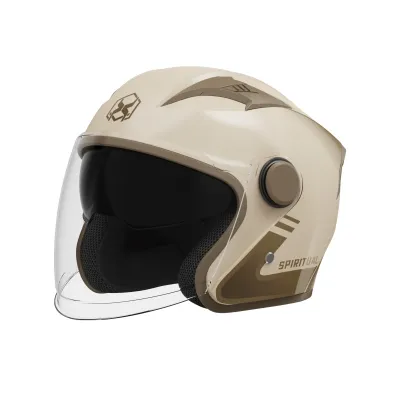
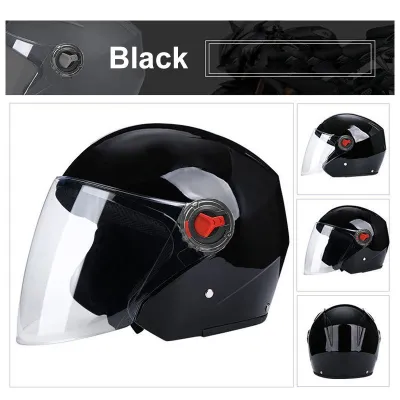
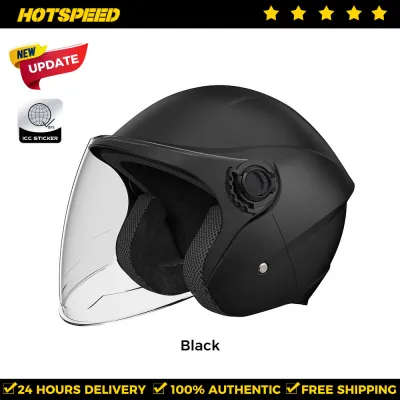
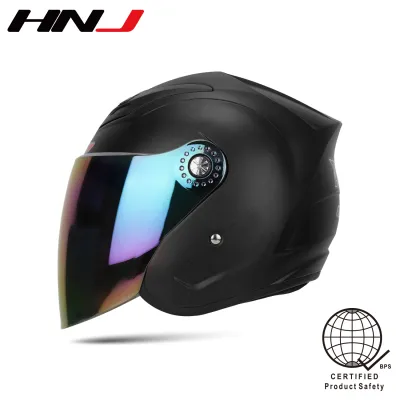
Prices are valid at publication and may change. Please refer to the product page for the latest price.
The BPS issues two primary compliance marks: the Philippine Standard (PS) quality mark and the Import Commodity Clearance (ICC) sticker. The PS mark is typically found on helmets manufactured locally, certifying that the production facility and the products meet national quality standards. Because the majority of premium and mid-range helmets sold in the Philippines are manufactured abroad, the ICC sticker is the safety mark you will encounter most frequently. Imported helmets must undergo rigorous batch testing at BPS-accredited laboratories to verify their structural integrity, chin strap strength, and impact absorption before receiving these stickers.
A common point of confusion is how international safety standards relate to local road legality. Many high-quality helmets carry certifications such as the United States Department of Transportation (DOT) standard, the Economic Commission for Europe (ECE) standard, or the Snell Memorial Foundation certification. While these international standards are highly rigorous, they do not automatically grant legal status on Philippine roads. Under current LTO regulations, a helmet bearing only a DOT or ECE sticker is still technically non-compliant unless it also displays the official BPS-issued ICC or PS sticker. This means you must verify that the local importer has processed the shipment and applied the genuine holographic ICC sticker to the shell.
Identifying a genuine ICC or PS sticker requires close inspection, as counterfeit safety labels are common in unauthorized markets. A genuine ICC sticker is a small, holographic label featuring a unique serial number and a security print that reflects light dynamically when tilted. It is typically applied to the back or lower side of the helmet’s outer shell, often protected under a clear coat or firmly adhered to the surface. The serial number on the sticker can be verified through official DTI databases. If a sticker looks like a simple paper printout, lacks holographic properties, or has a generic serial number printed repeatedly across different helmets, it is a counterfeit.
The danger of riding with an uncertified or “novelty” half-face helmet cannot be overstated. Genuine certified helmets feature a thick inner liner made of Expanded Polystyrene (EPS), which acts as the primary shock absorber during an impact. When a crash occurs, the EPS liner collapses progressively, absorbing the kinetic energy and slowing down the deceleration of your brain inside the skull. Novelty helmets, often sold cheaply in unauthorized roadside shops, typically lack this EPS liner entirely, featuring only a thin layer of soft comfort foam beneath a flimsy plastic shell. In an accident, these uncertified helmets offer virtually zero impact protection, failing to prevent severe head trauma.
Design and Fit Considerations for Women Riders
Head Shape and Shell Sizing
Achieving a safe fit is one of the most critical aspects of helmet selection, yet many riders overlook how head shape influences overall safety. Human heads generally fall into three shape categories: round oval, intermediate oval, and long oval. Most riders in the Asian market tend to have rounder head shapes, whereas many Western-designed helmets are built for intermediate or long oval profiles. If a rider with a round head shape wears a long oval helmet, they will experience painful pressure points on the sides of their head, while a round oval helmet on a long oval head will cause forehead discomfort.

When looking for a half-face helmet for women, simply purchasing a “small” or “extra-small” version of a standard unisex helmet is often insufficient. Many manufacturers design their helmet shells in only one or two physical outer sizes, using thicker or thinner internal padding to create different fit sizes (such as XS, S, M, and L). For a petite rider, wearing a small size that uses a large outer shell results in a disproportionate “bobblehead” appearance. This introduces serious safety risks, as a physically oversized shell increases aerodynamic drag and wind resistance, which can destabilize the rider at higher speeds and put unnecessary leverage on the neck during a fall. High-quality manufacturers offer helmets with multiple shell sizes, ensuring that smaller head sizes utilize a physically smaller, lighter outer shell.
Weight and Neck Fatigue
The physical weight of a helmet plays a significant role in rider endurance and safety, particularly for individuals with smaller neck and shoulder frames. During daily commutes, your neck muscles constantly work to stabilize your head against wind resistance, road vibrations, and sudden movements. A heavy helmet accelerates muscle fatigue, leading to tension headaches, shoulder pain, and reduced situational awareness. Over time, chronic neck strain can affect your reaction times and overall riding posture.
To mitigate neck fatigue, look for helmets constructed from advanced, lightweight materials. While entry-level helmets typically use standard ABS plastic shells, which tend to be heavier, mid-range and premium options utilize advanced polycarbonate, fiberglass composites, or carbon fiber. Carbon fiber and fiberglass offer exceptional strength-to-weight ratios, allowing the helmet to absorb high impact forces while remaining remarkably light. When shopping, always check the manufacturer’s specifications for the exact weight of the helmet, which is typically measured in grams (e.g., 1,100g to 1,400g for half-face models). Additionally, pay attention to the helmet’s center of gravity; a well-balanced helmet should distribute its weight evenly across your head rather than feeling front-heavy or back-heavy when you tilt your head.
Hair and Eyewear Compatibility
Daily usability often depends on practical design features that accommodate hairstyles and personal accessories. For women riders, managing hair inside a helmet can be a constant challenge. Standard helmet liners can snag long hair, pull on ponytails, or cause friction frizz. Some modern helmets feature interior comfort liners designed with anti-snag fabrics or specialized rear cutouts that accommodate low ponytails or buns without pushing the helmet forward or creating uncomfortable pressure points against the skull.
Hygiene is another crucial factor, as sweat, hair oils, makeup, and sunscreen quickly accumulate on the helmet’s interior fabric. Over time, this buildup can lead to skin irritation, acne, and unpleasant odors. It is highly recommended to choose a helmet with a fully removable, washable, and hypoallergenic interior liner. Being able to easily snap out the cheek pads and crown liner for a gentle wash ensures that your riding gear remains clean and fresh.
Furthermore, eyewear compatibility is essential for riders who wear prescription glasses or sunglasses. Helmets with dedicated eyewear channels feature small recesses in the temple padding, allowing the frames of your glasses to slide in smoothly without pressing against your temples. Additionally, many half-face helmets come equipped with an integrated, drop-down inner sun visor. This retractable shield can be deployed with a simple lever on the side of the shell, providing instant UV protection during bright daytime rides and eliminating the need to wear separate sunglasses under your primary visor.
Essential Features for Tropical Riding Conditions
Visor and Sun Protection
Riding in the Philippines presents unique environmental challenges, characterized by intense tropical sunlight, sudden downpours, and high humidity. The primary visor of your half-face helmet serves as your first line of defense against these elements. It must be optically correct to prevent visual distortion, which can cause eye strain and misjudgment of road distances. Ensure the visor is rated for high UV protection to shield your eyes and face from harmful ultraviolet rays during long daytime rides.
Scratch resistance is another vital feature for longevity. Road debris, sand, and small pebbles kicked up by other vehicles can quickly scratch an unprotected visor, scattering light and severely reducing visibility, especially during night riding. Additionally, sudden tropical rain showers can instantly fog up your visor due to the temperature differential between the warm air inside the helmet and the cool rain outside. To combat this, look for visors that are Pinlock-ready. A Pinlock lens is an auxiliary anti-fog insert that clips onto the inside of the primary visor, creating a sealed pocket of air that prevents condensation from forming, ensuring clear vision even in torrential downpours.
An integrated, retractable inner sun shield is highly beneficial for the variable weather of the tropics. When riding under the intense midday sun, deploying the dark inner visor protects your eyes from blinding glare. As you transition into a shaded tunnel, an underground parking lot, or ride home after sunset, you can instantly retract the inner shield with a single touch, maintaining optimal visibility through the clear outer visor without needing to stop and swap shields.
Ventilation and Moisture Management
In a hot and humid climate, proper airflow is not just a matter of comfort; it is a critical safety factor. Heat exhaustion can impair a rider’s concentration, slow down reflexes, and lead to dizziness. Half-face helmets naturally offer more airflow around the chin and mouth compared to full-face models, but they still require engineered ventilation channels across the top of the head to keep the scalp cool.
An effective ventilation system relies on the Venturi effect to pull heat and moisture away from your head. Look for helmets featuring adjustable intake vents on the forehead or crown, which scoop cool air into the helmet, and rear exhaust ports that allow the hot, stagnant air to escape. The internal EPS liner should have deep, molded channels that guide the incoming air across your scalp before venting it out the back.
Complementing the physical vents is the moisture-management capability of the interior fabric. High-quality helmets utilize advanced moisture-wicking materials (such as Coolmax or similar proprietary fabrics) that actively draw sweat away from your skin and spread it across a larger surface area for rapid evaporation. Hypoallergenic and antibacterial treatments are also valuable, as they inhibit the growth of odor-causing bacteria and mold in the damp, humid environment of a motorcycle gear bag. While chin curtains are more common on full-face models, some hybrid half-face designs include removable lower wind deflectors; for tropical riding, ensure these components are breathable or easily detachable to maximize airflow when navigating slow, congested urban traffic.
How to Verify Authenticity and Ensure a Proper Fit
In-Store Fitting and Measurement
When purchasing a helmet, getting the correct physical size is paramount. To find your baseline size, use a soft fabric measuring tape to measure the circumference of your head. Wrap the tape horizontally around your head, positioning it about 2.5 centimeters (one inch) above your eyebrows and just above your ears. Take the measurement multiple times to ensure accuracy, and compare the result to the specific manufacturer’s size chart, as sizing can vary significantly between different brands.
Once you have identified your size, visit an authorized physical retailer to try on the helmet. When you put the helmet on, it should feel snug and secure around your entire head, without any localized pressure points. The cheek pads should press firmly against your cheeks—often described as causing a slight “chipmunk cheek” effect—without restricting your ability to breathe or talk comfortably. If the helmet slides on easily without any resistance, or if it moves when you shake your head, it is too large.
To verify the fit, perform two essential physical tests: the shake test and the roll-off test. For the shake test, fasten the chin strap securely and shake your head vigorously from side to side and up and down. The helmet should move with your head; if the helmet slips, rotates, or slides down over your eyes, the fit is too loose. For the roll-off test, reach behind your head, grasp the bottom edge of the helmet shell, and attempt to push it forward and off your head. If the helmet starts to roll off or slide forward significantly, adjust the chin strap or try a smaller shell size, as a loose helmet can easily fly off your head during a secondary impact in an accident.
Online Purchasing and Verification
While purchasing gear online offers convenience and access to a wider selection, it also increases the risk of encountering counterfeit products. To protect yourself, only buy helmets from official brand flagship stores, authorized online distributors, or highly reputable local motorcycle accessory retailers. Be extremely cautious of listings on general online marketplaces that offer premium helmet brands at prices that seem too good to be true, as these are almost always low-quality counterfeits that do not meet safety standards.
Upon receiving your online purchase, perform a thorough inspection before wearing the helmet on the road. First, locate the holographic ICC or PS sticker on the shell and verify its authenticity. The sticker should be perfectly adhered, with clean edges and distinct holographic patterns. Check the manufacturing date, which is typically printed on a label stitched to the chin strap or stamped onto a sticker inside the EPS liner. Avoid using helmets that have been sitting in storage for several years, as materials can degrade even when unused. Ensure the package includes the original box, high-quality protective dust bag, user manual, and any warranty cards.
Under no circumstances should you purchase a second-hand or used helmet. Even if a used helmet looks pristine on the outside, it is impossible to verify its history. The internal EPS liner is designed for one-time use; it compresses to absorb impact energy and does not spring back. If the previous owner dropped the helmet from a significant height or was involved in a minor mishap, the EPS liner may have sustained invisible micro-fractures that destroy its protective capabilities. Additionally, the EPS material naturally degrades over time when exposed to sweat, hair oils, and environmental pollutants, making an older, used helmet highly unreliable in a crash.
Frequently Asked Questions (FAQ)
Is a DOT or ECE helmet automatically legal without an ICC sticker?
No, a helmet bearing only a DOT or ECE certification sticker is not automatically legal for road use in the Philippines. While these international standards represent high levels of safety and engineering, Philippine law specifically mandates that all motorcycle helmets must display a local Bureau of Philippine Standards (BPS) issued ICC or PS mark. If you are stopped at a Land Transportation Office (LTO) or local traffic checkpoint, officers look specifically for the authorized holographic local sticker. Riding with a helmet that lacks this local certification mark can result in heavy fines and the confiscation of your license, regardless of the helmet’s international safety pedigree. Always ensure your imported helmet has been officially processed and stickered by an authorized Philippine distributor.
How often should a half-face helmet be replaced?
As a general rule, helmet manufacturers recommend replacing your helmet every three to five years from the date of first use, or five years from the date of manufacture. Over time, the protective materials—particularly the Expanded Polystyrene (EPS) inner liner and the outer resin shells—naturally degrade due to exposure to UV radiation, extreme tropical heat, sweat, hair care products, and daily wear. More importantly, you must replace your helmet immediately after any crash, drop, or significant impact. Even if the outer shell shows no visible cracks or scratches, the internal EPS liner may have compressed to absorb the force of the fall. Once compressed, the EPS liner loses its ability to absorb future impacts, leaving you unprotected in a subsequent accident.
Can I just buy a smaller men's helmet instead of a women's model?
Yes, you can safely wear a smaller size of a unisex or men’s helmet, provided that it passes all fit, shake, and roll-off tests, and carries the mandatory ICC or PS safety certification. Safety is determined by the physical fit and structural integrity of the helmet, not its marketing label. However, purchasing a women-specific helmet often provides distinct advantages. Women-specific models are frequently engineered with lighter overall weights to accommodate smaller neck structures, and their internal padding is often tailored to fit narrower jawlines and rounder head profiles. They may also feature practical design elements such as hair-friendly, anti-snag liners and ponytail cutouts that make daily commuting significantly more comfortable than a standard scaled-down men’s helmet.
Community discussion
Share your experience or ask a question. Comments are reviewed before publication.