
Quick Answer: OEM or Aftermarket for Your ADV 160?
Choosing the right honda adv 160 break pad depends primarily on your daily riding conditions, budget, and performance expectations. Genuine Honda OEM brake pads are the ideal choice if you prioritize a guaranteed factory fit, predictable lever feel, and a compound engineered specifically to match the motorcycle’s original Anti-lock Braking System (ABS) calibration. For riders who use their scooter for daily commuting in standard urban traffic, OEM pads offer a reliable, low-noise, and rotor-friendly solution.
On the other hand, reputable aftermarket brake pads are highly suitable if you require specialized performance characteristics. These alternatives are excellent for riders who frequently carry heavy pillion loads, traverse steep mountainous terrain, or ride aggressively and demand a stronger initial bite. Aftermarket options also provide a wider range of price points and material compositions, allowing you to tailor your braking setup to your specific budget.
Because brakes are the most critical safety system on your motorcycle, any modification or replacement requires absolute precision. If you are uncertain about part compatibility, compound selection, or the installation process, always consult a qualified mechanic at an authorized service center before operating your vehicle.
Products mentioned in this guide
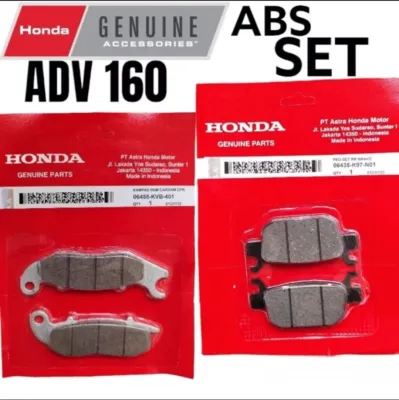
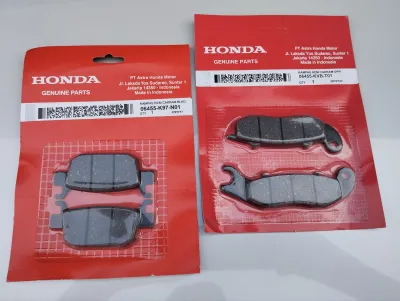
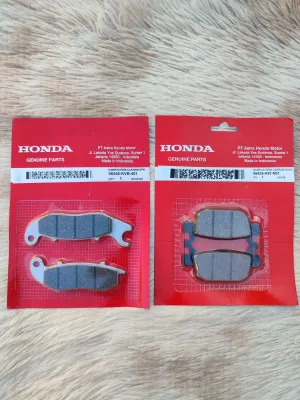
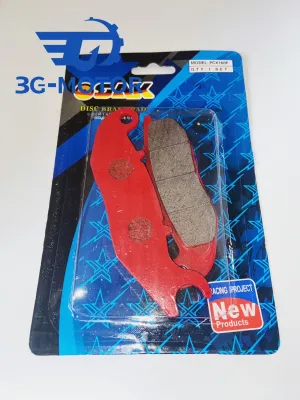
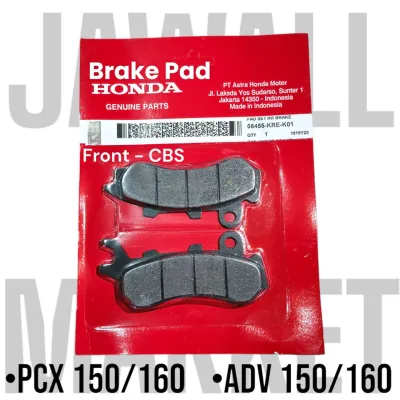
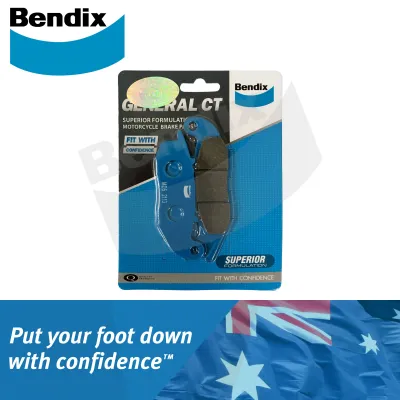
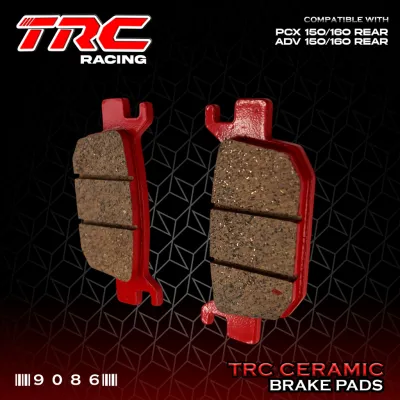
Prices are valid at publication and may change. Please refer to the product page for the latest price.
Understanding Brake Pad Specifications for the ADV 160
Before purchasing a replacement honda adv 160 break pad, you must understand the physical and technical specifications of your motorcycle’s braking system. The Honda ADV 160 utilizes a dual-disc braking setup, but the front and rear calipers are completely different in design and size. The front brake features a twin-piston caliper, while the rear brake relies on a single-piston caliper, meaning the front and rear brake pads have distinct shapes, dimensions, and part numbers that cannot be interchanged.

When sourcing parts, you must verify the exact manufacturer part numbers to ensure proper fitment. Using a pad with even a minor dimensional variance can lead to uneven wear, caliper binding, or catastrophic brake failure. Always cross-reference the aftermarket brand’s application catalog specifically for the ADV 160 rather than relying on generic “scooter brake pad” labels.
Friction materials play a decisive role in how your brakes perform under different thermal loads. The three most common categories of friction materials include:
- Organic Compounds: Made from fibers, resins, and lubricants. These pads are soft, quiet, and highly gentle on brake rotors, but they wear down relatively quickly and are prone to brake fade under high temperatures.
- Semi-Metallic Compounds: A blend of synthetic materials and metallic fibers. They offer a balanced middle ground with improved heat resistance and durability compared to organic pads, though they may produce slightly more brake dust and noise.
- Sintered Metallic Compounds: Created by fusing metallic particles under intense heat and pressure. Sintered pads deliver exceptional stopping power, outstanding wet-weather performance, and high resistance to thermal fade, but they run hotter and accelerate the wear of your stock brake rotors.
To maintain optimal safety, regularly inspect your brake pads using the wear indicator grooves cut into the friction material. If the wear groove is no longer visible, or if the friction material has worn down to a thickness of two millimeters or less, replace the pads immediately to prevent metal-on-metal contact with the brake disc.
Genuine Honda OEM Brake Pads: What to Expect
Genuine Honda OEM brake pads are engineered as an integrated component of the ADV 160’s chassis and braking dynamics. Honda engineers select a specific friction coefficient that complements the hydraulic pressure of the master cylinders and the electronic thresholds of the ABS module. This precise calibration ensures that when you pull the brake lever, the deceleration is progressive and predictable, reducing the likelihood of abrupt wheel lockups before the ABS intervenes.
For typical daily commuting and light touring, OEM pads deliver highly consistent wear rates and excellent longevity. They are designed to operate quietly across a wide temperature range, meaning you will rarely experience squealing or grinding noises during early morning starts or during slow, stop-and-go city riding. Furthermore, the OEM compound is formulated to minimize rotor wear, preserving the thickness and service life of your expensive factory brake discs over tens of thousands of kilometers.
Sourcing genuine OEM parts requires vigilance, as counterfeit components are common on online marketplaces. To guarantee authenticity, purchase your replacement pads directly from authorized Honda 3S dealerships or highly reputable motorcycle parts distributors. Genuine Honda parts are packaged in official branded boxes or blister packs featuring clear holographic security labels, precise batch numbers, and country-of-origin markings.
Reputable Aftermarket Brake Pads: Performance and Value
Opting for reputable aftermarket brake pads allows you to customize your ADV 160’s braking characteristics to match your specific riding style. Many established third-party manufacturers design specialized compounds that alter the braking profile. For instance, some aftermarket sintered pads are formulated to provide a much sharper initial bite, giving the rider immediate deceleration feedback with minimal lever effort, which is highly valued during spirited riding.
When exploring aftermarket options, evaluating brand reputation is essential to avoid substandard products. Look for manufacturers that hold international safety and quality certifications, such as the European ECE R90 standard, which guarantees that the pad performs within close parameters of the original equipment. Reading verified user feedback from local riding clubs can also provide realistic insights into how a specific compound behaves under local road conditions.
However, choosing aftermarket pads involves clear trade-offs that you must monitor closely:
- Accelerated Rotor Wear: High-friction sintered aftermarket pads are significantly harder than OEM organic or semi-metallic pads, which can cause your brake rotors to wear down much faster.
- Lever Modulation Changes: A highly aggressive initial bite can make the brake lever feel grabby, requiring a more delicate touch to avoid triggering the ABS prematurely on slippery surfaces.
- Cold Noise: Some high-performance compounds require a brief warm-up period to reach their optimal operating temperature, during which they may emit a noticeable squeal or metallic hiss.
OEM vs. Aftermarket: Comparing Key Decision Factors
To make an informed choice, you must weigh several practical factors against your daily riding environment. The tropical climate of the Philippines introduces unique challenges, including intense engine and brake heat during summer traffic jams, followed by sudden, heavy downpours that submerge roads and coat brake components in grit and water.
Stopping Power and Lever Feel
Under dry, hot conditions, both OEM and high-quality aftermarket pads provide sufficient stopping power for the ADV 160. However, during sudden monsoon downpours, organic OEM pads can suffer from a temporary loss of bite as water films coat the friction surfaces. Sintered aftermarket pads excel in these wet conditions, as their metallic composition quickly disperses water and maintains a stable friction coefficient, offering superior peace of mind during wet-season commutes.
Durability and Rotor Friendliness
If your primary goal is to maximize the lifespan of your brake rotors, OEM pads are generally the safer investment. They wear down gradually while preserving the smooth surface of the disc. Conversely, if you frequently ride through hilly regions with steep descents where brake fade is a major concern, the high heat tolerance of aftermarket sintered pads is highly advantageous, even if it means replacing your brake rotors sooner.
Price-to-Value and Availability
OEM brake pads carry a standardized price at authorized dealers, typically ranging from ₱800 to ₱1,500 per set depending on whether you are replacing the front or rear. Aftermarket pads offer a broader price spectrum. Premium performance brands may cost more than OEM, while budget-friendly aftermarket options can cost significantly less. Be cautious of ultra-cheap aftermarket pads selling for under ₱300, as these often use low-grade bonding agents that can delaminate under thermal stress.
Comparison Matrix
Use the following template to compare your options when shopping at local dealers or online stores:
| Evaluation Factor | Genuine Honda OEM Pads | Aftermarket Sintered Pads | Aftermarket Semi-Metallic |
|---|---|---|---|
| Initial Bite | Moderate & Progressive | Sharp & Immediate | Balanced & Linear |
| Wet Weather Performance | Moderate | Excellent | Good |
| Rotor Wear Rate | Low | High | Moderate |
| Expected Lifespan | High (under normal use) | Very High | Moderate |
| Estimated Price Range | ₱800 – ₱1,500 | Variable (Premium) | Variable (Budget to Mid) |
| Best Suited For | Daily city commuting | Heavy loads & wet seasons | Budget-conscious riders |
Installation, Bedding-In, and Safety Guidelines
Replacing your motorcycle’s brake pads is a high-responsibility task. If you choose to perform the replacement yourself, you must strictly follow the official Honda ADV 160 service manual. Ensure you use a calibrated torque wrench to tighten the caliper mounting bolts and pad pins to their exact factory specifications. Loose caliper bolts can lead to a loss of control, while over-tightened bolts can strip the aluminum threads of the fork legs or swingarm mount.
Before installing the new pads, thoroughly clean the caliper assembly. Use a dedicated aerosol brake cleaner and a soft brush to remove accumulated brake dust, road grime, and salt residue from the caliper pistons. Never use petroleum-based solvents, gasoline, or penetrating oils like WD-40 near your braking components, as these will contaminate the new friction material and ruin the rubber piston seals.
Once the new pads are installed, you must perform a proper bedding-in (or burnishing) procedure before riding at high speeds. This process transfers a microscopic, even layer of friction material from the pad to the brake rotor, ensuring optimal contact and preventing glazing. Follow these steps in a safe, traffic-free area:
- Accelerate the motorcycle to approximately 40 to 50 km/h.
- Apply moderate, steady pressure to both brake levers to slow the vehicle down to about 10 km/h. Do not bring the motorcycle to a complete stop, as this can cause uneven material transfer and create hot spots on the rotor.
- Release the brakes and ride slowly for a minute to allow the components to cool down.
- Repeat this acceleration and deceleration cycle 10 to 15 times.
Always monitor your motorcycle for immediate stop-riding conditions. If you experience a spongy or soft brake lever feel (which indicates air in the hydraulic lines), hear unusual grinding or scraping noises, or notice that the ABS warning light on the dashboard remains illuminated after moving, stop riding immediately. Do not operate the motorcycle until the system has been thoroughly inspected and cleared by a qualified professional mechanic.
Frequently Asked Questions (FAQ)
Can I mix OEM and aftermarket brake pads on the front and rear?
Yes, you can safely run genuine Honda OEM brake pads on one wheel and reputable aftermarket pads on the other. Because the front and rear braking systems on the ADV 160 operate on independent hydraulic circuits, mixing brands between the front and rear calipers will not compromise mechanical safety. However, you must never mix different brands or compounds within the same caliper. Keep in mind that using a highly aggressive aftermarket pad on the rear while keeping a milder OEM pad on the front will alter your motorcycle’s front-to-rear braking bias, requiring you to adjust your braking habits accordingly.
How do I know if my ADV 160 brake pads are counterfeit?
Counterfeit brake pads are highly dangerous as they often use inferior friction materials that can crack, crumble, or separate from the metal backing plate under high heat. To identify fakes, inspect the packaging closely for blurry printing, spelling errors, or missing holographic security labels. Genuine Honda pads feature clean, crisp labeling with a distinct batch code stamped onto both the packaging and the metal backing plate of the pads. Additionally, be highly suspicious of prices that are significantly lower than authorized dealer retail rates; if a deal seems too good to be true, it is likely a counterfeit product.
Do aftermarket brake pads void the Honda warranty?
In general, replacing wear-and-tear consumables like brake pads with high-quality aftermarket alternatives does not void your overall motorcycle warranty. However, the warranty protection is highly specific. If an aftermarket brake pad causes direct damage to other components—such as scoring the brake rotors due to an excessively hard compound, or causing caliper damage due to improper fitment—Honda will not cover the cost of repairing those specific damaged parts. To safeguard your warranty, ensure that any aftermarket parts you install are certified for the ADV 160 and are installed correctly.
Community discussion
Share your experience or ask a question. Comments are reviewed before publication.