
Choosing the right tank pad for your Honda ADV 160 depends on whether you prioritize physical knee grip for active riding, scratch protection from daily commuting, or a specific aesthetic upgrade. Because this adventure-style scooter features a unique center tank console design, the ideal pad must balance functional protection with precise fitment that does not interfere with the fuel cap or surrounding body panels. For daily riders navigating tropical humidity and sudden downpours, selecting a durable material that resists UV degradation and maintains its adhesive bond is just as critical as choosing the visual style.
Identifying Your Riding Needs and Protection Goals
Before browsing online marketplaces or local motorcycle accessory shops, you must evaluate how you actually use your Honda ADV 160. If your daily route involves navigating congested city streets, frequent stop-and-go traffic, and tight parking spaces, your primary concern is likely scratch protection. Commuters frequently scuff the center tank area with belt buckles, jacket zippers, or heavy bags placed between their knees. For these riders, a broad, scratch-resistant protective film or a durable textured decal is often the most practical choice to preserve the scooter’s factory finish.
Conversely, if you take your adventure scooter on weekend tours, winding mountain roads, or light off-road trails, your physical interaction with the machine changes. Active riding requires using your knees to grip the center console to stabilize your body during braking and cornering. In this scenario, a smooth film offers little assistance, making a raised, rubberized 3D grip pad a far more functional addition. This style provides the necessary friction to reduce rider fatigue and improve overall handling control.
Products mentioned in this guide
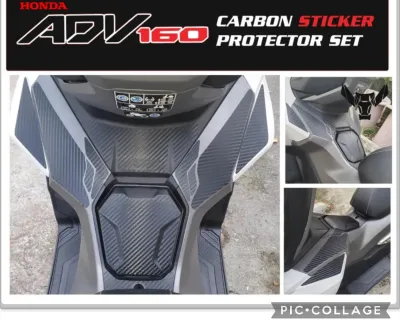
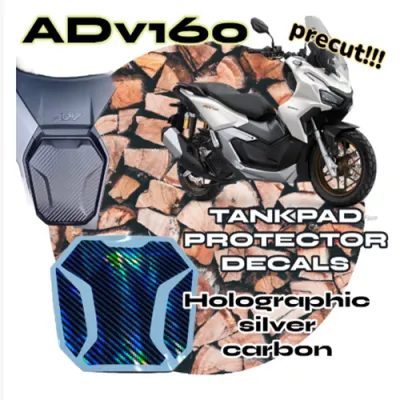
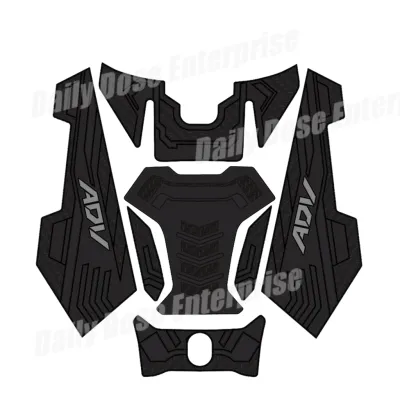
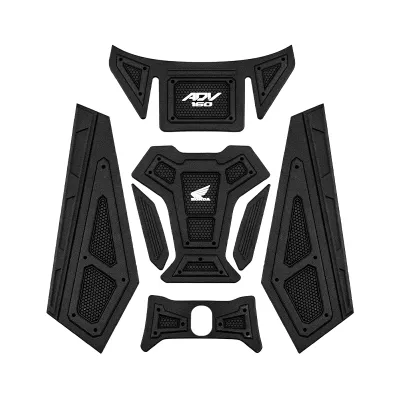
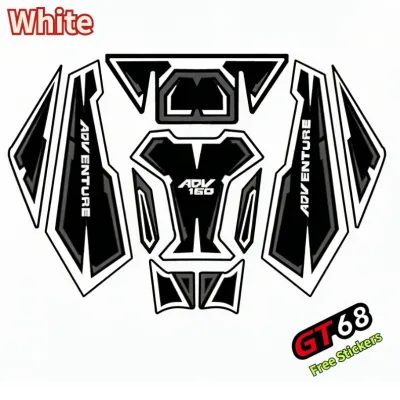
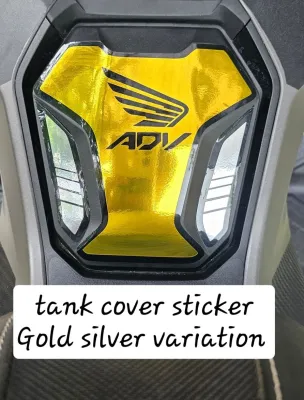
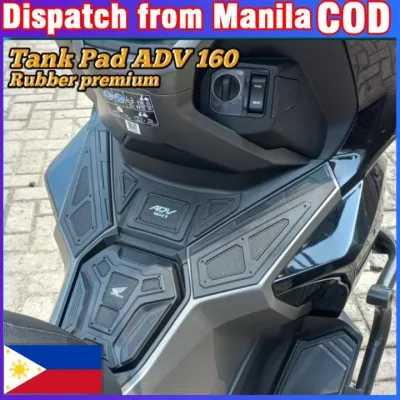
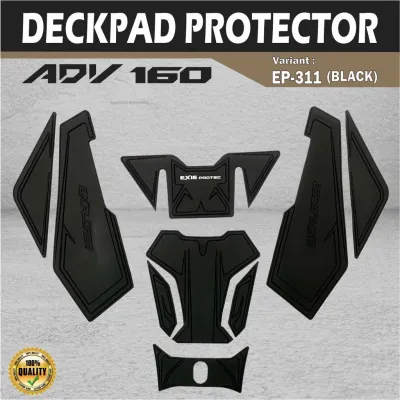
Prices are valid at publication and may change. Please refer to the product page for the latest price.
You must also inspect the current condition of your scooter’s paint. Applying an adhesive pad over pristine factory paint requires a different approach than trying to cover up existing deep scuffs or fading clear coat. If the paint is already compromised, aggressive adhesives can pull the clear coat away during future removal. Finally, consider your maintenance routine. Highly textured pads with deep grooves tend to trap road grime, dust, and rainwater, requiring more frequent and detailed cleaning compared to smooth, wipe-clean protective films.
Comparing Tank Pad Styles for the Honda ADV 160
Selecting the right accessory requires comparing how different materials perform across key categories: grip level, physical protection, long-term durability, and visual integration with the ADV 160’s rugged styling. While some options excel at absorbing impacts from loose debris, others focus purely on maintaining a factory-original look or offering maximum rider feedback.

Because the Honda ADV 160 features distinct body lines and a central fuel lid, universal tank pads rarely fit correctly without awkward overlapping or blocking functional parts. You must verify the exact dimensions and cutouts with the manufacturer’s product specifications before purchase. The following sections break down the four primary styles available to help you determine which matches your specific riding profile.
3D Grip Pads for Knee Support and Control
Textured 3D grip pads are designed specifically for riders who want to maximize physical contact and control. Typically manufactured from thick, vulcanized rubber or raised polyurethane, these pads feature knurled, honeycomb, or studded patterns that bite gently into riding pants or jeans. This mechanical grip allows you to lock your lower body in place during sudden stops or sharp turns, taking the pressure off your wrists and lower back.
While highly functional, these rubberized textures require specific maintenance in tropical climates. Dust, mud, and road grime easily settle into the recessed patterns, which can reduce the effectiveness of the grip over time if not cleaned regularly. Additionally, the thick, rugged appearance of 3D pads can clash with the sleek, urban aesthetic of the scooter if you prefer a minimalist look. They are best suited for riders who prioritize physical utility and a rugged, adventure-ready appearance.
Carbon Fiber and Textured Films for a Sporty Look
For riders seeking a sporty, high-performance aesthetic, carbon fiber-style tank pads are a popular choice. It is important to distinguish between genuine carbon fiber inserts and vinyl carbon-look decals. Genuine carbon fiber pads are rigid, thicker, and offer excellent impact protection against flying gravel, but they carry a higher price point and require highly precise installation. Carbon-look vinyl films, on the other hand, are highly flexible, easier to apply, and budget-friendly, though they offer less physical impact absorption.
Both options provide excellent scratch resistance and are typically treated with UV-resistant top coats to prevent yellowing or cracking under intense sunlight. This style complements the angular, modern bodywork of the Honda ADV 160, adding a premium, racing-inspired accent to the center console while shielding the paint from daily wear.
Clear Protective Films for Invisible Paint Defense
If you love the original factory color of your Honda ADV 160 and want to keep its design completely unaltered, clear Paint Protection Film (PPF) is the ideal solution. These films are virtually invisible once applied correctly, allowing the scooter’s paint and graphics to show through while providing a tough barrier against rock chips, keys, and abrasive dust.
When shopping for clear films, look for products that explicitly guarantee UV stability and non-yellowing properties on their packaging. Lower-quality clear vinyl can quickly turn yellow and brittle when exposed to constant sunlight and tropical heat, ruining the clean look of your scooter. Because clear PPF is thin and flexible, it must be pre-cut precisely to match the ADV 160’s specific tank contours and fuel cap surround to prevent the edges from lifting or trapping dirt.
Custom Graphics and Decals for Personalization
Custom graphics and printed decals allow you to personalize your scooter with unique colors, patterns, or branding that matches your helmet and riding gear. These decals are usually made from thin vinyl and are designed primarily for visual customization rather than heavy-duty impact protection. While they easily shield the paint from light fingernail scratches and dust, they will not offer the cushioning of a thick rubber pad or the self-healing properties of high-grade PPF.
When choosing custom decals, pay close attention to the material thickness and the adhesive specifications. High-quality decals use automotive-grade adhesives that bond securely to plastic fairings but can still be peeled away cleanly without leaving a stubborn, paint-damaging residue. Always verify with the seller that the graphic kit is scaled specifically for the Honda ADV 160, as even minor sizing discrepancies can lead to overlapping edges that peel up in the wind.
Verifying Fitment, Adhesives, and Material Quality
Before purchasing any tank pad, you must perform a thorough compatibility check. Many online listings advertise “universal” tank pads, but these are often designed for larger sportbikes with wide, flat fuel tanks. The Honda ADV 160 has a highly contoured center console with sharp angles, plastic seams, and a central fuel filler door. A universal pad will likely overlap these seams or block the fuel lid entirely, leading to peeling edges and water ingress. Look for listings that explicitly state compatibility with the Honda ADV 160 and feature photos of the product installed on the actual vehicle.
Next, examine the manufacturer’s specifications regarding the adhesive backing. The adhesive must be formulated specifically for automotive paint and plastics. Some cheap, industrial-grade adhesives can react chemically with the scooter’s clear coat or ABS plastic fairings, causing permanent clouding, bubbling, or paint peeling when the pad is eventually removed. Look for reputable adhesive brands listed on the product packaging, which are engineered to withstand high temperatures and moisture without degrading the underlying surface.
Finally, check user reviews and product photos to confirm that the pad’s thickness and shape do not interfere with the operation of the fuel cap or any nearby panels. The pad should sit comfortably within the flat sections of the console, leaving a small gap around the edges of the fuel lid and body seams. This prevents the pad from being compressed or lifted when you open the fuel door to refuel, ensuring long-term durability.
Installation Preparation and Safety Boundaries
Proper surface preparation is the single most important factor in ensuring your tank pad adheres permanently and looks professional. Begin by thoroughly washing the center console area with a mild, wax-free motorcycle shampoo to remove road grime, dust, and mud. Once dry, use a dedicated wax remover or a mild isopropyl alcohol solution on a clean microfiber cloth to strip away any leftover polish, wax, or silicone-based detailing sprays. These detailing products create a slick barrier that will prevent the adhesive from bonding correctly.
Ensure the scooter’s surface is completely cool to the touch and parked in a shaded, dust-free environment before starting the application. Applying adhesives to hot plastic under direct sunlight can cause the glue to cure too quickly, leading to bubbles, misalignment, or premature failure. Carefully align the pad with the fuel cap and body lines before peeling off the backing paper. You can use low-tack painter’s tape to mark the alignment boundaries. Once positioned, press firmly from the center outward to expel any trapped air bubbles, and follow the manufacturer’s recommended curing time—typically 24 to 48 hours—before exposing the scooter to rain, washing, or high-speed riding.
You must establish clear safety boundaries during this process. Stop the installation immediately if you notice the adhesive has an unusually harsh, chemical smell that seems to soften the plastic fairing, or if a small test application causes the paint to bubble or discolor. If your scooter has aftermarket paint, a damaged clear coat, or deep existing scratches, do not attempt to apply or remove adhesive pads without consulting a professional detailer or automotive painter, as the adhesive can easily pull the compromised paint layers away from the plastic bodywork.
Frequently Asked Questions (FAQ)
Will removing a tank pad damage the Honda ADV 160 paint?
Removing a tank pad is generally safe for factory paint if done slowly and with the correct technique. To minimize the risk of damage, use gentle heat from a household hairdryer to soften the adhesive backing before attempting to peel the pad off. Avoid using high-heat industrial heat guns, which can easily warp the scooter’s plastic fairings or melt the adhesive into a permanent mess. Slowly peel the pad back at a sharp angle, applying heat continuously to the lifting edge. If your scooter has fading, cracked, or aftermarket paint, test a very small corner first, as these surfaces are highly susceptible to peeling. If you encounter stubborn adhesive residue that does not rub off easily with your fingers, consult a professional detailer rather than scraping the surface with sharp tools or harsh chemical solvents that could permanently scratch or cloud the clear coat.
How do I clean a 3D grip tank pad without ruining the texture?
To clean a textured 3D grip tank pad without degrading its material or adhesive, use a mild, pH-neutral motorcycle soap mixed with warm water and a soft-bristled brush. Gently scrub the recessed grooves of the pattern to lift trapped dirt, dust, and sweat residue. Never use harsh chemical solvents, degreasers, or abrasive scouring pads, as these can break down the rubber or polyurethane compound, making it sticky, brittle, or smooth. When washing your scooter, avoid directing high-pressure water from a pressure washer directly at the edges of the tank pad, as the intense pressure can force water under the adhesive backing and cause it to lift. Always refer to the specific care instructions provided on the product packaging to ensure compatibility with your cleaning products.
Community discussion
Share your experience or ask a question. Comments are reviewed before publication.