
To optimize your Honda Beat FI V2, choosing the right roller weights and drive belt specifications is essential. The ideal setup depends on your daily riding conditions, balancing quick acceleration for heavy city traffic against smooth top-speed cruising for open roads. By fine-tuning your honda beat fi v2 torque drive set, you can customize how the Continuously Variable Transmission (CVT) responds to your throttle inputs, ensuring your scooter performs efficiently under local tropical conditions.
Understanding the Honda Beat FI V2 Torque Drive Set and CVT Dynamics
The Continuously Variable Transmission (CVT) of your scooter relies on a delicate balance of mechanical forces to transfer power from the engine to the rear wheel. At the heart of this system is the drive pulley (variator), which houses the roller weights, and the rear clutch assembly, often referred to as the torque drive set. Connecting these two components is the drive belt, which acts as the physical link that translates engine revolutions into forward motion.
As you twist the throttle, the engine speed increases, causing the variator to spin. This rotation generates centrifugal force, pushing the roller weights outward along their ramps. This movement forces the movable face of the variator closer to the fixed face, squeezing the drive belt and forcing it to ride higher up the pulley. Simultaneously, the belt pulls deeper into the rear torque drive sheaves against spring tension, dynamically changing the gear ratio from low to high.
Products mentioned in this guide
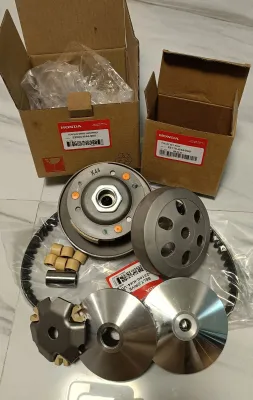

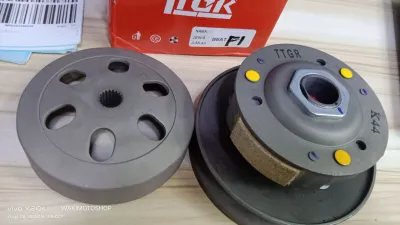
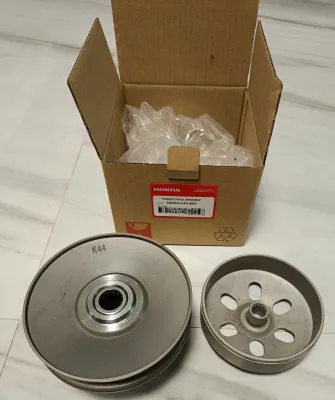
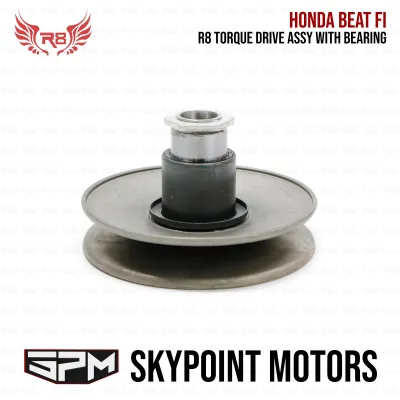

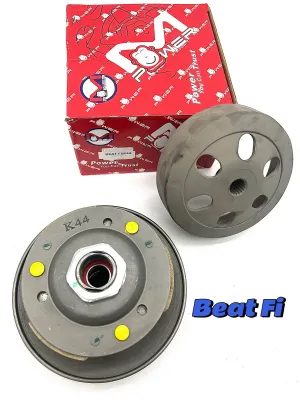
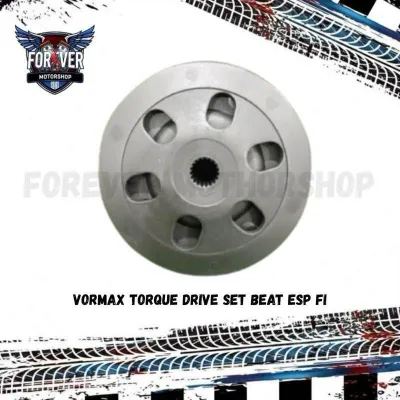
Prices are valid at publication and may change. Please refer to the product page for the latest price.
Tuning this system is not about chasing a single performance metric. Instead, it is a practical exercise in matching the transmission’s shift characteristics to your typical riding environment. Whether you navigate the congested streets of Metro Manila or climb the steep inclines of Antipolo, adjusting these components allows you to position the engine’s power band exactly where you need it most.
Decoding Roller Weights: Balancing Acceleration and Top Speed
Roller weights are the primary tuning elements for regulating how quickly your CVT shifts gears. The physical principle governing these small components is straightforward: centrifugal force. Lighter roller weights require higher engine speeds (RPM) to push them outward, meaning the transmission stays in a lower gear ratio longer. This delay provides rapid initial acceleration and superior hill-climbing power, making it easier to pull away from stoplights or carry heavy loads.

Conversely, heavier roller weights move outward at lower engine speeds, shifting the CVT into a higher gear ratio much sooner. This characteristic lowers the engine RPM at cruising speeds, which can improve fuel efficiency and provide a smoother ride on long, flat highways. However, if the rollers are too heavy, the engine may struggle to find its power band, resulting in sluggish acceleration and a frustrating lag when you twist the throttle.
To select the optimal weight, consider your daily riding environment in the Philippines:
- Stop-and-Go City Traffic or Hilly Routes: If your daily commute involves navigating dense traffic, climbing steep flyovers, or carrying a passenger (backrider), consider using roller weights that are slightly lighter than the original equipment manufacturer (OEM) baseline. This configuration keeps the engine responsive and quick off the line.
- Highway Cruising and Solo Riding: If you frequently ride on long, open stretches of provincial roads with minimal stops, a setup slightly heavier than stock can lower your cruising RPM, reduce engine vibration, and save fuel.
Avoid extreme modifications when selecting your weights. Going excessively light will cause the engine to over-rev without producing actual forward speed, leading to high fuel consumption, extreme CVT heat, and premature belt wear. On the other hand, going too heavy causes severe clutch shudder during take-offs and prevents the scooter from reaching its natural top speed. Always consult your Honda Beat FI V2 owner’s manual or an authorized service guide to verify the exact stock OEM roller weight as your mandatory baseline before making any incremental adjustments.
Drive Belt Specifications: Dimensions, Angles, and Durability
The drive belt is the unsung hero of the honda beat fi v2 torque drive set, subjected to constant friction, high heat, and intense tension. When replacing or upgrading this component, you must pay close attention to three critical specifications: pitch length, top width, and the side-cut angle. These dimensions dictate how the belt sits within the pulley sheaves and how efficiently it transfers power without slipping.
The length of the belt directly influences the total gear ratio range of your CVT. A belt that is slightly too long may allow the belt to ride higher on the front variator, theoretically increasing top speed, but it risks slipping or hitting the inner transmission case if it exceeds the physical travel limits of the pulley. Conversely, a belt that is too short will limit your top-speed potential by preventing the transmission from shifting into its highest ratio.
Equally important are the width and side-cut angle of the belt. The angle of the belt’s edges must perfectly match the angle of the variator and clutch pulley faces. A mismatch here reduces the contact surface area, causing the belt to slip, generate excessive heat, and wear out rapidly. This slippage not only hurts your acceleration but can also glaze the pulley faces, compounding your performance issues.
When choosing a replacement, you will generally choose between standard OEM rubber belts and reinforced aftermarket upgrades made from Kevlar or aramid fibers. Standard OEM belts offer excellent flexibility, quiet operation, and a smooth ride for daily commuting. Reinforced belts, while slightly stiffer, offer superior resistance to high temperatures and stretching, making them ideal for modified engines or scooters that regularly carry heavy cargo in hot, tropical climates.
Safety Boundary: Never force a drive belt onto your CVT that does not strictly adhere to the manufacturer’s recommended width and angle specifications. Using an incompatible belt can lead to sudden, catastrophic failure at high speeds, locking up your transmission and creating a severe safety hazard on the road.
Building a Balanced Setup and Testing Safely
Achieving the perfect balance in your Honda Beat FI V2 transmission requires a systematic, patient approach. The golden rule of CVT tuning is to change only one variable at a time. For instance, if you want to experiment with lighter roller weights, install them while keeping your stock drive belt and clutch springs. This isolation allows you to accurately measure the impact of the weight change without confusing the results with other mechanical adjustments.
Once you have installed your chosen components, perform a thorough post-installation safety inspection before hitting the open road:
- Check Belt Tension: Ensure the belt is seated correctly in both pulleys and has the appropriate amount of slack.
- Listen for Noise: Spin the rear wheel by hand and listen for any abnormal rubbing, clicking, or scraping sounds within the CVT casing.
- Observe Clutch Engagement: Start the engine on its center stand and gently apply throttle to monitor the RPM at which the clutch engages and the rear wheel begins to spin.
Remember that CVT components wear out as a complete system. When you open the transmission case to service the torque drive set, take the time to inspect the drive face, the plastic slider pieces on the variator ramp, the torque cam guide pins, and the inner surface of the clutch bell. Worn slider pieces or a grooved torque cam can cause erratic shifting, mimicking the symptoms of incorrect roller weights.
Because the CVT operates under high rotational forces, proper assembly is critical. If you do not possess the specialized tools—such as a fly-wheel holder, a reliable torque wrench, and high-temperature CVT grease—it is highly recommended to have a qualified motorcycle mechanic perform the installation. Ensuring the variator nut and clutch nut are torqued to the exact factory specifications prevents them from backing off during operation, protecting your engine from catastrophic damage.
Frequently Asked Questions (FAQ)
Can I mix different roller weights in the variator?
Yes, alternating different roller weights is a common tuning technique used to achieve intermediate overall weights. For example, you can alternate three lighter rollers and three heavier rollers in a strict, symmetrical pattern (e.g., light, heavy, light, heavy, light, heavy) to keep the variator balanced. However, the weight difference between the two sets should be minimal—ideally within 1 to 2 grams—to prevent uneven side-loading, which can cause premature wear on the variator boss, roller guide walls, and slider pieces.
How do I know when the drive belt needs replacement?
You should inspect your drive belt every 8,000 to 10,000 kilometers, or sooner if you notice a loss in top speed or a slipping sensation under acceleration. Physical signs of wear include visible cracks along the inner teeth, frayed cords on the sides, glazing on the contact surfaces, or a measurable reduction in the belt’s overall width. Even if the belt looks visually intact, it should be replaced according to the recommended service intervals in your Honda owner’s manual to prevent sudden breakage while riding.
Community discussion
Share your experience or ask a question. Comments are reviewed before publication.