
When upgrading or maintaining your scooter’s transmission, choosing the correct center spring honda click 125 setup requires a clear understanding of OEM versus aftermarket options. The center spring, often referred to as the contra or torque spring, directly dictates how your scooter shifts under various loads and speeds. While a genuine Honda OEM center spring offers unmatched daily reliability, consistent fuel efficiency, and long-term durability, aftermarket springs with stiffer ratings allow you to tune your acceleration, hill-climbing power, and throttle response to suit specific riding conditions in the Philippines.
Selecting the right component requires balancing your daily riding habits, your scooter’s current modifications, and the physical trade-offs of transmission stiffness. A spring that is too soft leads to sluggish acceleration and belt slippage, while an excessively stiff spring causes the engine to over-rev, increases fuel consumption, and accelerates wear on the drive belt and pulleys. Understanding how this single component interacts with your roller weights and front pulley is the key to achieving a smooth, reliable ride through congested city streets or steep mountain passes.
How the Center Spring Affects Your Click 125's Performance
The Continuously Variable Transmission (CVT) of the Honda Click 125 relies on a delicate balance of centrifugal force and mechanical resistance to constantly adjust the gear ratio. At the heart of the rear pulley assembly sits the center spring. Its primary function is to apply constant lateral clamping force on the rear pulley sheaves, squeezing the drive belt. This clamping force ensures that the belt does not slip under load and dictates how easily the belt can sink into the rear pulley as the front pulley expands.
Products mentioned in this guide
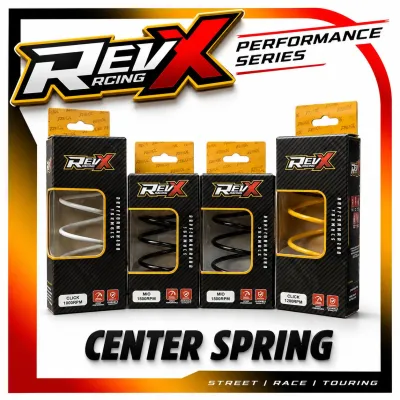
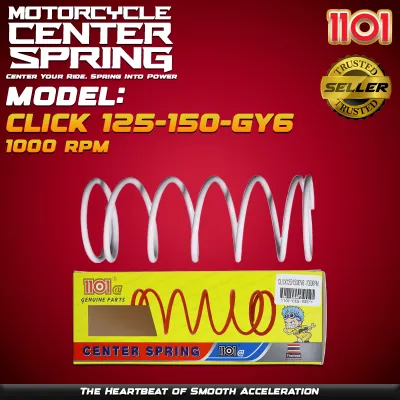
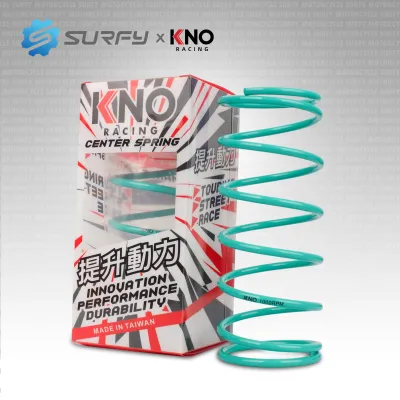
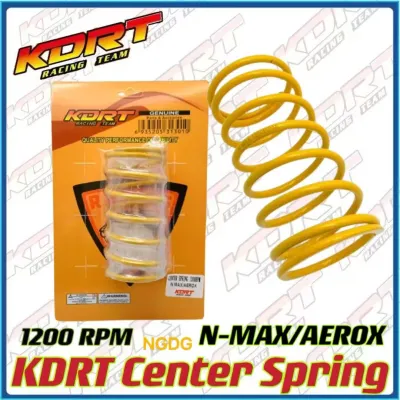
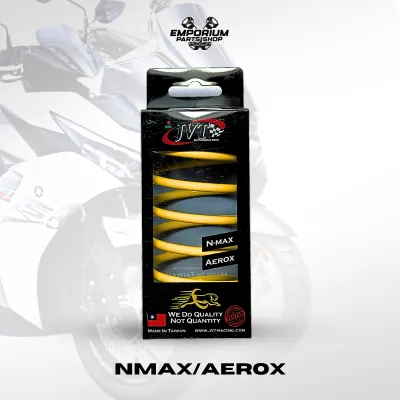
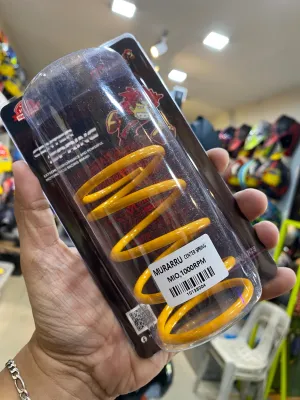
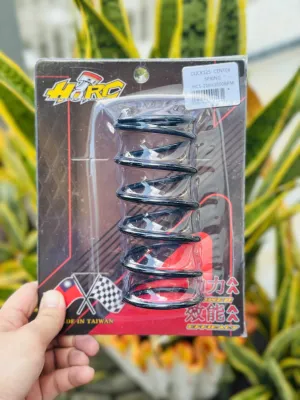
Prices are valid at publication and may change. Please refer to the product page for the latest price.
The stiffness of the center spring directly controls the timing of the transmission shift, which is the transition from a low gear ratio (optimized for low-end acceleration) to a high gear ratio (optimized for high-speed cruising). When you open the throttle, the front pulley’s roller weights fling outward, forcing the front sheaves together and trying to pull the belt deeper into the rear pulley. The center spring acts as the opposing force. A stiffer spring resists this movement, keeping the belt higher in the rear pulley for a longer duration, which forces the engine to run at a higher RPM before upshifting. Conversely, a softer spring allows the transmission to upshift earlier, dropping the engine RPM quickly to conserve fuel.
CVT tuning is an interconnected system rather than a collection of isolated upgrades. The center spring, the roller weights (flyweights) in the front pulley, and the clutch springs must work in harmony. If you install a stiffer center spring without adjusting your roller weights, the front pulley may struggle to overcome the rear spring’s resistance, preventing the transmission from reaching its full overdrive ratio. Conversely, pairing lightweight rollers with a soft OEM spring can cause the transmission to lag or shift unpredictably. Achieving the ideal setup requires evaluating these components as a single, unified system.
OEM Center Springs: The Baseline for Daily Reliability
The genuine Honda OEM center spring is engineered with a specific design philosophy: balancing smooth power delivery, optimal fuel economy, and long-term mechanical durability under standard operating conditions. Honda engineers design this spring to match the stock engine output and the factory-specified roller weights of the Click 125. This ensures that the scooter shifts smoothly at an RPM range where the engine is at its most fuel-efficient, making it highly practical for daily commuting in stop-and-go traffic across metropolitan areas.

For the vast majority of riders, the OEM center spring is the ideal choice. If your Honda Click 125 is primarily used for daily transport, city commuting, or occasional highway cruising, the stock spring provides a “plug-and-play” maintenance experience. It requires no complex calculations or trial-and-error tuning. Furthermore, because the OEM spring applies moderate, factory-approved tension, it minimizes friction and heat buildup within the CVT casing. This preservation of low operating temperatures directly translates to a longer lifespan for your drive belt, slider pieces, and pulley faces.
However, the OEM center spring has clear limitations when paired with modified CVT components or subjected to extreme riding conditions. If you install heavier roller weights or upgrade to a high-friction aftermarket clutch, the stock spring may fail to provide sufficient back-shifting speed. This results in a delayed downshift when you slow down and then accelerate again, leaving the scooter in too high of a gear ratio and causing a sluggish response. Additionally, under heavy loads—such as carrying a pillion passenger up steep inclines—the OEM spring’s clamping force may be insufficient, leading to drive belt slippage and localized heat damage.
Before purchasing, verify the specific part number against your vehicle’s model year and documentation, as minor revisions in dimensions or tension can occur between different generations of the Click 125 (such as the V1, V2, or V3). Installing a spring designed for a different model year can lead to subtle alignment issues, improper belt seating, or unexpected shifting characteristics. Always consult your official Honda owner’s manual or an authorized dealer parts catalog before finalizing your purchase. Genuine OEM Honda center springs typically cost around ₱200 to ₱400, making them an affordable and highly reliable option for standard maintenance.
Aftermarket Center Springs: Tuning for Specific Riding Needs
Aftermarket center springs are designed for riders who want to modify their scooter’s shifting behavior to match specific performance goals. These springs are typically categorized by their stiffness, often rated using equivalent RPM values such as 1000 RPM, 1500 RPM, or 2000 RPM. These ratings do not mean the spring increases your engine’s maximum RPM; instead, they indicate that the spring requires a higher centrifugal force—equivalent to the engine revving that much higher—before it allows the rear pulley to open and upshift. Aftermarket tuning springs generally range from ₱300 to ₱800 depending on the brand and materials used.
Light to Medium Stiffness (e.g., 1000 RPM Equivalent)
A light to medium aftermarket center spring, commonly referred to as a 1000 RPM spring, is designed for mild tuning setups. This spring is slightly stiffer than the stock OEM spring, providing a subtle but noticeable adjustment to the scooter’s acceleration profile. By resisting the expansion of the front pulley slightly longer, it keeps the transmission in a lower gear ratio during initial acceleration, allowing the engine to climb into its powerband more quickly when pulling away from a complete stop.
This level of stiffness is highly beneficial for riders navigating dense city traffic where quick, responsive bursts of acceleration are required to overtake safely. It is also an excellent option if you have slightly reduced your roller weights and want to maintain a crisp throttle response without sacrificing your top-end cruising speed or significantly increasing your fuel consumption. The 1000 RPM spring offers a practical middle ground, delivering improved low-to-mid-range punch while keeping mechanical strain and heat generation within safe, manageable limits.
High Stiffness (e.g., 1500 to 2000 RPM Equivalent)
High-stiffness aftermarket springs, such as 1500 RPM and 2000 RPM variants, are engineered for aggressive tuning, heavy-duty utility, or highly specific riding environments. These springs exert a massive amount of lateral force on the drive belt, ensuring that the rear pulley remains closed under high torque loads. This makes them highly effective for riders who frequently carry heavy cargo, ride with a pillion passenger daily, or regularly traverse steep, mountainous roads like those in Tagaytay or Antipolo.
However, installing a high-stiffness spring introduces significant mechanical trade-offs that must be carefully managed. Because the engine must rev much higher to force the transmission to upshift, your cruising RPM will increase dramatically, leading to higher fuel consumption and louder engine noise. The immense clamping force also generates extreme friction and heat within the CVT housing, which can rapidly degrade the drive belt and cause premature wear on the pulley sheaves. If the spring stiffness exceeds the structural limits of your other CVT components, it can even cause the drive belt to slip at high speeds or prevent the front pulley from ever reaching its maximum overdrive ratio, severely reducing your scooter’s top speed.
Decision Matrix: Matching the Spring to Your Setup
To help you select the most appropriate center spring for your Honda Click 125, it is helpful to analyze how different spring types align with specific riding profiles, mechanical setups, and expected performance outcomes. The table below outlines these relationships to guide your decision-making process.
| Riding Profile / Setup | Recommended Spring Type | Expected Performance Outcome | Primary Trade-offs |
|---|---|---|---|
| Stock Setup / Daily Commuter<br>• Factory roller weights<br>• Standard daily city riding<br>• Focus on fuel economy | OEM Honda Center Spring | • Smooth, predictable shifting<br>• Maximum fuel efficiency<br>• Longest belt and pulley lifespan | • Sluggish acceleration under heavy loads<br>• Slower downshift response during sudden deceleration |
| Mild Tuning / City Aggressive<br>• Slightly lighter roller weights<br>• Frequent stop-and-go overtaking<br>• Solo rider seeking responsiveness | Light Aftermarket (e.g., 1000 RPM) | • Crisper throttle response<br>• Improved low-to-mid-range acceleration<br>• Faster back-shifting | • Minor decrease in fuel efficiency<br>• Slightly higher cruising RPM |
| Heavy Load / Hilly Terrain / Full CVT Tune<br>• Lightweight rollers<br>• High-angle climbs<br>• Upgraded clutch and bell | Medium to High Aftermarket (1500–2000 RPM) | • High climbing power<br>• Elimination of belt slip under extreme torque<br>• Immediate throttle response | • Significantly higher fuel consumption<br>• Accelerated belt and pulley wear<br>• Risk of reduced top-end speed |
Before installing any upgraded center spring, you must validate the compatibility of your entire CVT system. A stiffer center spring increases the tension across the entire drive belt. If your front pulley’s main drive spring or roller weights are too light, they will lack the mechanical force needed to push the belt down into the rear pulley sheaves at high speeds. This imbalance prevents the front pulley from shifting fully, leaving your engine screaming at high RPMs while your actual road speed remains limited. Always check your drive belt’s tension and alignment during installation to ensure the entire system operates within safe physical parameters.
Installation, Break-In, and Safety Guidelines
Replacing the center spring on a Honda Click 125 involves working with high-tension components and precise torque specifications. To perform this task safely and effectively, you must gather the correct tools before beginning. Never attempt to disassemble the clutch assembly using makeshift tools, as this can result in severe personal injury or permanent damage to your scooter’s transmission.
Because replacing the center spring requires disassembling the rear pulley under high spring tension, you must follow the original-vehicle service instructions and safety guidelines. If you do not have the proper safety equipment or mechanical experience, seek qualified installation from a professional motorcycle mechanic before attempting this modification.
Essential Tools for the Job
- Clutch Holding Tool (Flywheel Holder / Y-Tool): To secure the clutch bell and outer pulley face while loosening or tightening the holding nuts.
- Socket Wrench Set: Specifically including 19mm and 39mm (or 41mm, depending on your specific aftermarket clutch nut size) sockets.
- Clutch Spring Compressor Tool: This tool safely compresses the large center spring, allowing you to remove the clutch nut without the spring violently releasing and launching the clutch components.
- Torque Wrench: Crucial for tightening the clutch shaft nut and clutch bell nut to the manufacturer’s exact torque specifications.
Before installing your new center spring, take the opportunity to perform a thorough inspection of the surrounding CVT components. Remove the rear pulley assembly and inspect the slider pins and their guide grooves for flat spots or excessive play. Clean out any degraded, hardened grease from the torque cam grooves and apply a high-quality, high-temperature CVT grease specifically formulated for sliding sheaves. Avoid getting grease on the pulley faces or the drive belt, as lubricants are only safe for their label-authorized internal uses and will cause severe belt slippage if they contact the drive surfaces.
Examine the drive belt thoroughly. Look for cracks along the inner teeth, fraying along the outer edges, or any signs of glazed, shiny sidewalls which indicate previous belt slippage. If the belt measures below the manufacturer’s wear limit, replace it alongside the spring. A worn belt paired with a new, stiff center spring is highly prone to snapping under the increased lateral tension.
A newly installed center spring requires a brief break-in period to allow the metal coil to settle and seat properly within the clutch seats. For the first 50 to 100 kilometers of riding, avoid full-throttle acceleration runs, prolonged high-speed cruising, or carrying excessively heavy loads. Allow the spring to undergo gradual heat cycles through moderate, varied city riding. This settling period ensures the spring maintains consistent tension over its operational lifespan and prevents premature sagging.
CVT maintenance carries inherent safety risks. If you encounter a seized clutch nut, stripped threads on the input shaft, or if you do not possess a proper clutch spring compressor, stop immediately and consult a qualified motorcycle mechanic. Attempting to force a compressed clutch assembly apart without the proper safety tools can cause the clutch plate to fly off with immense force, risking severe facial or hand injuries. Additionally, if your scooter exhibits severe belt slip, loud squealing noises, or violent chassis vibrations immediately after reassembly, do not ride the vehicle. These symptoms indicate an assembly error, such as an unseated belt, improper torque on the retaining nuts, or grease contamination on the pulley faces, requiring immediate professional inspection.
Frequently Asked Questions (FAQ)
What are the signs of a weak or sagging center spring?
A weak or sagging center spring fails to provide adequate lateral tension on the drive belt, resulting in distinct performance symptoms. You will typically experience a noticeable loss of low-end acceleration, as the transmission upshifts too quickly and bogs down the engine. Another common sign is a sluggish throttle response when trying to accelerate from a cruising speed, as the weak spring cannot force a rapid downshift. Visually, a worn spring will have a shorter free length than the manufacturer’s service limit, and it may display heat discoloration (blue or dark brown spots) from excessive friction and slippage.
Does a stiffer center spring increase the top speed of the Click 125?
No, a stiffer center spring does not increase the top speed of the Honda Click 125. Its primary function is to alter the acceleration rate and shift timing by resisting the expansion of the front pulley. If the center spring is excessively stiff, it can actually decrease your top speed. This occurs because the front pulley’s roller weights may lack the force required to fully overcome the spring’s resistance at high speeds, preventing the drive belt from reaching the outermost edge of the front pulley and stopping the transmission from shifting into its maximum overdrive ratio.
How often should the center spring be replaced during routine maintenance?
Unlike engine oil or drive belts, the center spring does not have a strict, mandatory mileage-based replacement interval. Instead, it should be thoroughly inspected during major CVT servicing, which is typically recommended every 15,000 to 20,000 kilometers. You should replace the spring if its measured free length falls below the specification outlined in your Honda service manual, if it exhibits physical deformation or heat damage, or if you experience unresolved acceleration lag despite having brand-new roller weights and a clean drive belt.
Community discussion
Share your experience or ask a question. Comments are reviewed before publication.