
For owners of the Honda Click 125 in the Philippines, optimizing the continuously variable transmission (CVT) is one of the most effective ways to tailor the scooter’s performance to daily riding demands. Choosing the right flyball honda click 125 options involves balancing acceleration, top speed, and fuel efficiency. The standard stock weight for most modern Honda Click 125 models is either 15 grams or 18 grams, depending on the specific model year and generation. Aftermarket options typically range from lighter 11-gram to 14-gram sets for aggressive acceleration, to heavier 16-gram to 18-gram sets for smooth highway cruising. Trusted brands in the local market include Honda Genuine Parts for stock reliability, alongside premium aftermarket names like Dr. Pulley, JVT, Koso, RS8, and Sun Racing. Selecting the ideal weight requires understanding how these small components interact with your CVT system under local riding conditions, such as Metro Manila’s stop-and-go traffic or steep provincial inclines.
Understanding the Role of Flyball Weights in Your Click 125
The continuously variable transmission (CVT) of your Honda Click 125 relies on a seamless mechanical balance to transfer power from the engine to the rear wheel. At the heart of this system is the variator assembly, which houses six cylindrical rollers commonly referred to as flyballs in the Philippines. As the engine speed increases, the crankshaft rotates the primary drive face. This rotational motion generates centrifugal force, which pushes the flyball weights outward along the curved ramps inside the variator. As the rollers slide outward, they force the movable drive face closer to the stationary drive face. This action squeezes the rubber V-belt, forcing it to ride higher up the pulley, which effectively shifts the transmission into a higher gear ratio. Conversely, when the engine slows down, the pressure from the clutch spring on the rear pulley pushes the belt back down, forcing the flyballs to return to their starting positions.
To make informed modifications, you must first establish your scooter’s original equipment manufacturer (OEM) baseline. For the Honda Click 125i, the factory roller weight has varied across generations. The first-generation Click 125i models typically utilized 18-gram rollers, whereas the subsequent v2 and v3 generations transitioned to lighter 15-gram rollers to improve low-end responsiveness. You can verify your specific model’s baseline by consulting your owner’s manual, visiting an authorized Honda dealership, or having a technician inspect the markings on the currently installed rollers. Knowing your baseline is crucial because any performance adjustments you make will be relative to this starting point.
Products mentioned in this guide
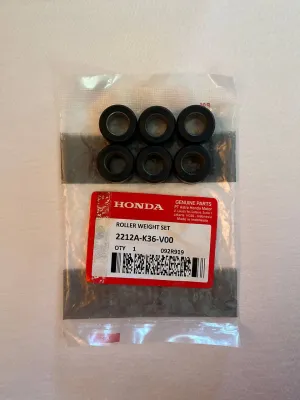
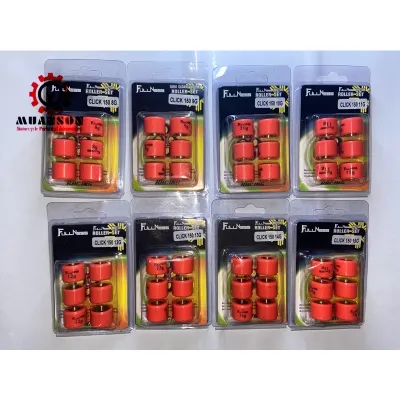
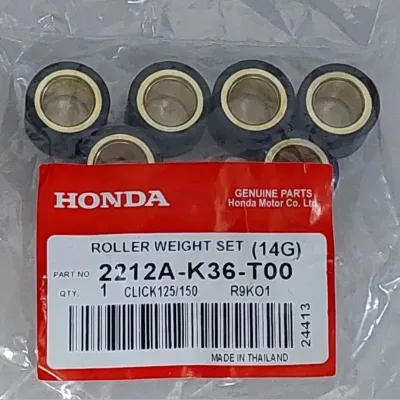
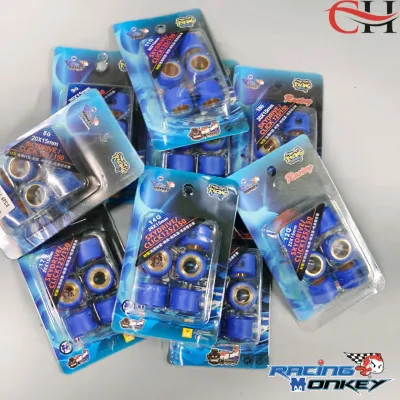
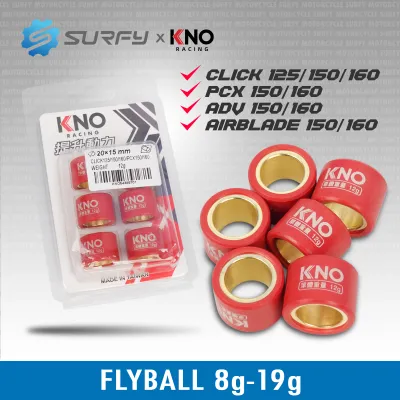
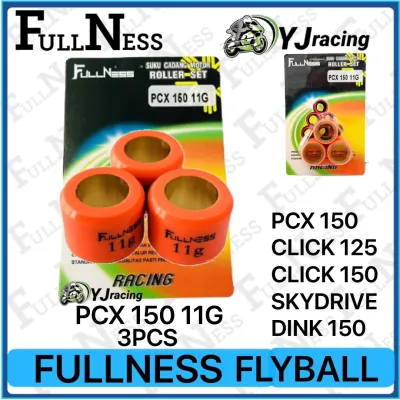
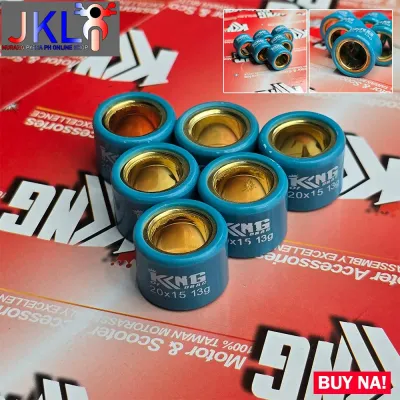
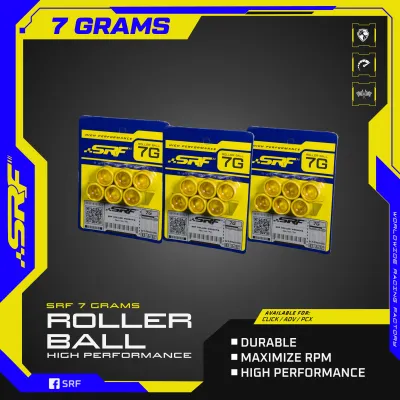
Prices are valid at publication and may change. Please refer to the product page for the latest price.
Over time, the constant sliding and rolling action inside the variator causes the flyballs to wear down. The most common physical symptom of worn rollers is the development of flat spots on their outer plastic shells. When a roller is no longer perfectly round, it cannot slide smoothly up the variator ramps, leading to erratic shifting. You might notice a sudden loss of top-end speed, sluggish acceleration from a complete stop, or an engine that screams at high RPMs without a corresponding increase in road speed. In some cases, severely worn rollers can cause the drive belt to slip or generate a distinct rattling noise from the CVT casing. If you experience any of these symptoms, it is time to open the CVT cover and inspect the rollers before physical damage spreads to the variator face or the drive belt.
How Flyball Weight Options Change Your Riding Experience
Modifying the weight of your flyballs directly alters the engine speed (RPM) at which your CVT shifts gears. Lighter flyball weights require more rotational speed to generate the centrifugal force needed to push the variator face outward. Consequently, the engine stays in a higher RPM range before the transmission shifts to a higher gear ratio. This characteristic makes lighter rollers, ranging from 11 grams to 14 grams, highly popular among riders who navigate the congested streets of Metro Manila, Cebu, or Davao. The higher RPM delivery provides immediate throttle response, allowing you to quickly zip through stop-and-go traffic, overtake safely, or climb steep inclines like those in Antipolo, Tagaytay, or the Marilaque Highway, even when carrying a pillion passenger or heavy delivery cargo.

Conversely, heavier flyball weights generate the required centrifugal force at lower engine speeds. This causes the variator to push outward sooner, shifting the transmission into a higher gear ratio at lower RPMs. Heavier rollers, typically ranging from 16 grams to 18 grams, are ideal for riders who prioritize long-distance provincial travel or highway cruising on flat terrain. By keeping the engine RPMs lower at cruising speeds, heavier weights reduce engine vibration, lower mechanical noise, and can significantly improve fuel efficiency. The ride feels smoother and more relaxed, making it a preferred choice for daily commuters who travel long stretches of national highways.
However, altering your flyball weights involves a direct compromise, and you cannot maximize both acceleration and top speed simultaneously. Installing rollers that are too light will cause the engine to rev excessively, hitting the rev limiter early and severely reducing your top-end speed while increasing fuel consumption and engine wear. On the other hand, installing rollers that are too heavy will make the scooter feel incredibly sluggish off the line, struggling to accelerate from traffic lights or climb basic flyovers. As a general rule of thumb, tuning experts recommend staying within 1 to 3 grams of your OEM baseline. Drastic deviations can place unnecessary strain on the engine’s crankshaft, accelerate drive belt wear, and potentially lead to dangerous power loss when you need to accelerate out of a hazardous road situation.
Furthermore, the tropical climate and high humidity of the Philippines can exacerbate CVT heat buildup. When you run extremely light weights, the sustained high-RPM operation generates intense friction heat inside the CVT housing. This heat can soften the outer shell of the flyballs, accelerate belt degradation, and cause the clutch lining to glaze over. Ensuring that your weight selection matches your actual riding environment—rather than just chasing theoretical performance gains—is essential for maintaining the long-term reliability of your daily commuter.
How to Identify Trusted Flyball Brands in the Philippines
When shopping for replacement flyballs in the Philippines, you will find two primary paths: original equipment manufacturer (OEM) parts and aftermarket brands. Genuine Honda Parts are the standard for riders who value reliability, predictability, and long-term durability. These stock rollers are engineered specifically to match the engine’s power band and ensure full compliance with your motorcycle’s warranty. However, if you are looking to fine-tune your scooter’s performance or experiment with different weight configurations, the aftermarket segment offers a wide range of specialized options designed to withstand high-performance demands.
Evaluating the reliability of an aftermarket brand requires looking closely at manufacturing tolerances and material composition. High-quality flyballs feature a solid brass or copper inner core encased in an advanced, heat-resistant outer shell made of self-lubricating nylon or Teflon (polytetrafluoroethylene) compounds. These materials are critical because they minimize friction against the variator walls and resist flat-spotting under the intense heat of tropical riding conditions. Trusted brands also maintain strict quality control, ensuring that every roller in a six-piece set weighs exactly the same. Even a fraction of a gram of variance between rollers can cause unbalanced rotational forces, leading to severe CVT vibrations and premature bearing wear.
To secure genuine parts, you must navigate local purchasing channels carefully. The safest option is to buy directly from authorized Honda 3S dealerships or official brand flagship stores on recognized online marketplaces. If you prefer shopping at physical retail stores, seek out highly reputable local motorcycle specialty shops that are authorized dealers for premium aftermarket brands. Be cautious of small, unverified roadside shops that may unknowingly stock counterfeit goods.
Counterfeit flyballs are a widespread issue in the Philippine motorcycle market, and using them can lead to catastrophic CVT failure. To spot counterfeits, inspect the packaging closely for blurry printing, spelling mistakes, or the absence of official brand security holograms. Genuine premium brands, such as Dr. Pulley (famous for their sliding roller design), JVT, Koso, RS8, and Sun Racing, use high-quality packaging with distinct batch numbers. If you hold the rollers, counterfeit items often have visible plastic molding seams, inconsistent weights when placed on a digital scale, or brass cores that are loosely fitted into the plastic shell. Additionally, be highly skeptical of prices that seem too good to be true; a genuine aftermarket set typically costs between ₱300 and ₱800, so any product priced significantly lower is highly likely to be a substandard imitation.
Safe Installation and CVT Maintenance Boundaries
Replacing the flyball weights on your Honda Click 125 is a precise mechanical task that requires the correct tools and a strict adherence to safety protocols. Before starting, ensure you have a dedicated CVT holding tool (often called a Y-tool or flyman) to safely lock the primary pulley in place. Never attempt to jam a screwdriver or chisel into the variator cooling fins to prevent it from spinning, as this can easily chip the aluminum face and ruin the balance of the engine. Furthermore, a calibrated torque wrench is absolutely essential. The primary drive face nut must be tightened to the exact torque specification defined in the official Honda Click 125 service manual—typically around 59 Newton-meters (N·m)—to prevent the assembly from coming loose during operation.
Opening the CVT casing to replace your flyballs provides an excellent opportunity to perform a comprehensive inspection of the entire transmission system. Before installing the new rollers, check the three plastic slide pieces on the ramp plate; if they are loose or worn, they should be replaced to prevent metal-on-metal wear. Inspect the face of the variator pulley for deep grooves or scoring that could damage your belt. Examine the drive belt itself for any signs of cracking, fraying, or excessive side wear, and check the clutch bell for glazing or discoloration caused by excessive heat. Cleaning the entire CVT housing with a dedicated brake and parts cleaner—ensuring you follow the product label’s safety instructions—helps remove accumulated belt dust and road grime that can cause component slippage.
While many riders enjoy performing DIY maintenance, you must recognize your personal mechanical boundaries. If you do not own a torque wrench, a proper CVT holding tool, or if you lack experience with motorcycle transmissions, it is highly recommended to have the installation performed by a qualified motorcycle mechanic at an authorized service center. Improper installation, such as failing to align the splines on the crankshaft before tightening the nut, or using an impact wrench without verifying the torque, can strip the crankshaft threads. This mistake can lead to the variator nut backing off at high speeds, resulting in immediate transmission lockup, severe engine damage, and a catastrophic loss of control on the road.
Once the new flyballs are safely installed and the CVT cover is securely bolted back on, you must perform a proper break-in procedure. Avoid aggressive, full-throttle acceleration or high-speed highway runs for the first 50 to 100 kilometers of riding. This gentle break-in period allows the new rollers to seat properly against the variator ramp walls and ensures that the outer shells wear evenly. Taking this precaution helps maximize the lifespan of your new flyballs and guarantees a smoother, more consistent shifting performance for thousands of kilometers to come.
Frequently Asked Questions (FAQ)
Can I mix different flyball weights in my Honda Click 125?
While some riders and tuners mix different flyball weights (for example, alternating three 12-gram rollers with three 15-gram rollers) to customize the RPM shifting curve, this practice is generally not recommended for daily commuters. Mixing weights can cause uneven wear on the variator ramp tracks and the rollers themselves, leading to unbalanced rotational forces. Over time, this imbalance can cause noticeable CVT vibrations, erratic acceleration, and increased wear on the crankshaft bearings. For a smooth, reliable, and predictable ride under daily commuting conditions in the Philippines, it is best to stick to a uniform set of six identical flyballs.
How often should I replace the flyball weights?
There is no single, fixed mileage interval for replacing flyball weights, as wear depends heavily on your riding style, daily payload, and local traffic conditions. However, a good rule of thumb is to inspect the rollers every 8,000 to 12,000 kilometers, which aligns with standard CVT cleaning intervals. If you frequently ride in heavy Metro Manila traffic or carry heavy loads, your rollers may develop flat spots sooner. Always replace the flyballs immediately if you observe any flat spots, cracks in the outer shell, or if the inner brass core begins to separate from the plastic sleeve during your routine inspections.
Will changing the flyball weight void my motorcycle's warranty?
Yes, installing aftermarket flyball weights or altering the factory transmission specifications can void the manufacturer’s powertrain warranty on a new Honda Click 125. Honda’s official warranty generally covers defects in materials and workmanship under stock operating conditions. If a transmission failure occurs and the service center discovers non-OEM parts or modified components inside the CVT, they may deny your warranty claim. If your scooter is still within its warranty period, it is highly recommended to use only Honda Genuine Parts and have all maintenance performed by an authorized Honda dealer.
Community discussion
Share your experience or ask a question. Comments are reviewed before publication.