
Choosing the right fly ball weight—commonly referred to as roller weights—for your Honda Click 125i depends entirely on your daily riding environment, load requirements, and performance priorities. If you frequently navigate congested city streets or climb steep, hilly terrain, opting for lighter fly balls can provide quicker acceleration and a more responsive throttle. Conversely, if your daily commute involves long stretches of highway where maintaining a steady cruising speed is key, heavier fly balls can help lower engine speeds and reduce vibrations. Because modifying these weights directly alters how your scooter’s continuously variable transmission (CVT) behaves, finding the right balance requires understanding how these small components affect your overall ride.
The Honda Click 125i is a highly popular automatic scooter, valued for its fuel efficiency and nimble handling. However, the factory transmission setup is designed as a general compromise to suit a wide variety of riders and conditions. By customizing the weight of your fly balls, you can tailor the scooter’s power delivery to better match your specific needs, whether you are looking for a more spirited acceleration from a standstill or a more relaxed engine note during high-speed travel.
How Roller Weights Dictate Your Click 125i's Performance
The CVT system in your Honda Click 125i relies on centrifugal force to shift gears smoothly without manual intervention. Inside the front pulley, or variator, sit six cylindrical fly balls. As the engine spins, centrifugal force pushes these weights outward along the variator ramps, forcing the pulley faces closer together and squeezing the drive belt outward to change the transmission ratio. The weight of these fly balls determines how quickly or slowly this transition occurs relative to your engine’s revolutions per minute (RPM).
Products mentioned in this guide
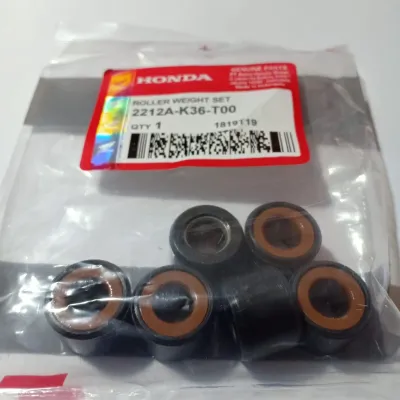
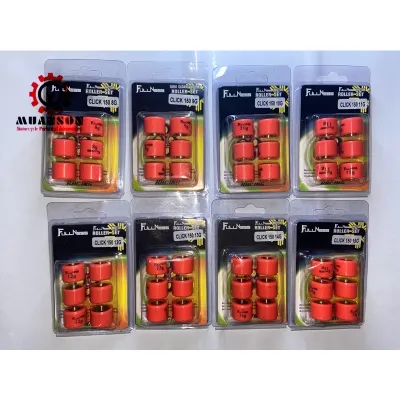
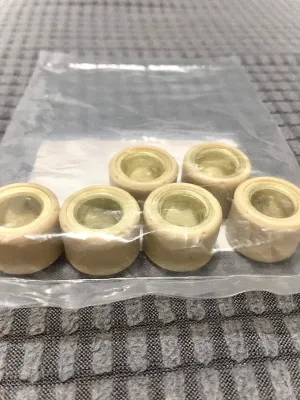
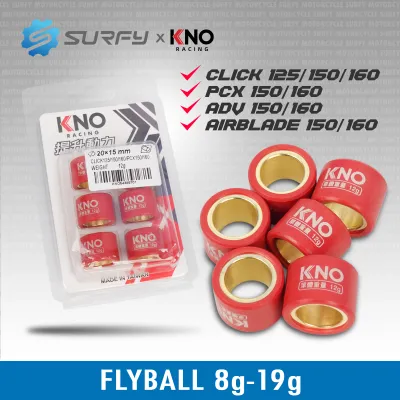
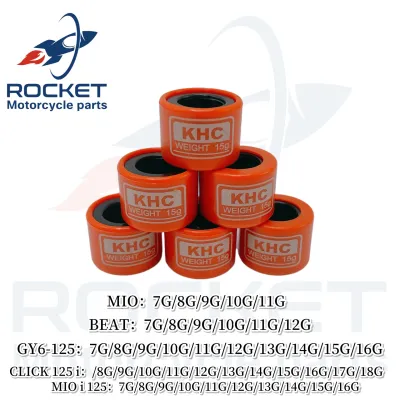
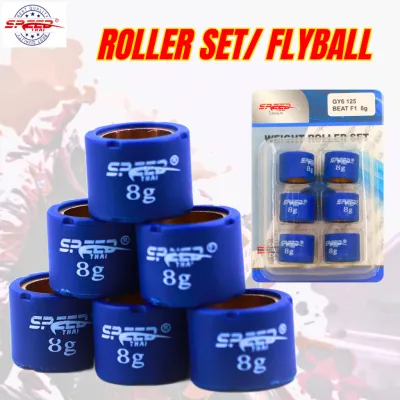
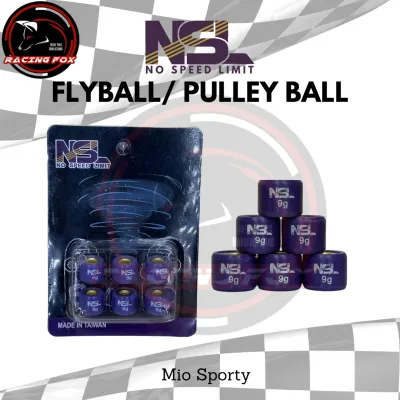
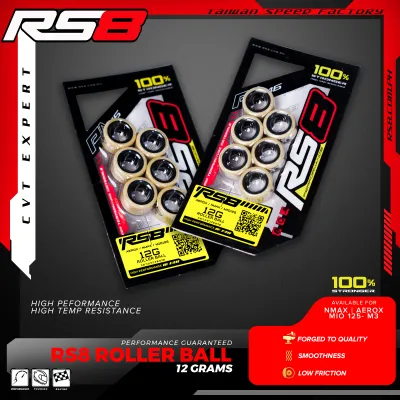
Prices are valid at publication and may change. Please refer to the product page for the latest price.
Lighter fly balls require higher engine RPMs to generate the centrifugal force needed to push them outward. Consequently, the engine revs higher before the transmission shifts into a higher gear ratio. This delay keeps the scooter in its lower gear range longer, allowing the engine to operate closer to its peak power band during initial acceleration. This results in a more immediate throttle response, making it easier to pull away from a complete stop or climb steep inclines without the engine bogging down.
Heavier fly balls, on the other hand, slide outward much faster and at lower engine RPMs. This rapid movement forces the variator to shift into a higher gear ratio early in the acceleration curve. By keeping the engine RPMs lower at any given road speed, heavier weights favor a higher top speed and a more relaxed, quieter cruising experience on open roads.
Adjusting your fly ball weight is always a compromise between low-end torque feel and high-end speed. If you deviate too far from the factory baseline in either direction, you will sacrifice performance on one end of the spectrum. Lighter weights improve acceleration but can cause the engine to run at excessively high RPMs at high speeds, reducing your maximum velocity. Heavier weights can make the scooter feel sluggish and unresponsive off the line, even if they offer a smoother ride once you reach cruising speeds.
Selecting the Right Weight Direction for Your Riding Style
To determine which direction to take when adjusting your Honda Click 125i’s fly balls, you must analyze your typical daily routes and riding habits in the Philippines. The tropical climate, high humidity, and distinct road conditions all play a role in how your transmission manages heat and load.

For riders who spend most of their time in stop-and-go city traffic, such as navigating the dense streets of metropolitan areas, a lighter fly ball setup is highly beneficial. The constant deceleration and acceleration at traffic lights, intersections, and congested lanes demand quick throttle response. Lighter weights allow you to zip through tight spaces safely and regain momentum instantly after slowing down, reducing the lag often felt with stock setups under heavy traffic conditions.
If your daily ride consists of long-distance travel, provincial bypass roads, or highway cruising, a heavier fly ball configuration is more suitable. Lowering the engine’s operating RPM at cruising speeds reduces the overall vibration felt through the handlebars and floorboard. This not only makes long journeys significantly more comfortable but also reduces wear on internal engine components over time by preventing the engine from running at high revs during sustained high-speed travel.
Carrying heavy loads regularly—such as riding with a pillion passenger, carrying heavy delivery cargo, or climbing steep mountain passes like those in Antipolo or Benguet—demands a lighter setup. When a scooter carries extra weight up an incline, the engine needs to stay within its power band to maintain momentum. Lighter fly balls prevent the transmission from shifting up too early, ensuring the engine has enough torque to conquer steep climbs without losing speed or overheating the clutch.
For mixed-use scenarios where you split your time evenly between city commuting and highway cruising, keeping the weights close to the original manufacturer specifications is usually the most practical choice. If you still want to experiment, making minor adjustments of just one gram lighter or heavier than the baseline allows you to fine-tune the performance without severely compromising either acceleration or top-end comfort.
When evaluating these mixed-use scenarios, it is helpful to keep a riding log for a week. Note how often you find yourself wishing for quicker acceleration versus how often you feel the engine is revving too high on open stretches. If your commute is highly variable, a minor reduction in weight can provide a noticeable boost in responsiveness without causing a drastic drop in fuel economy or top speed on the highway.
Inspecting Current Rollers and Verifying Baseline Specifications
Before purchasing any aftermarket fly balls, you must verify the baseline specifications of your specific Honda Click 125i model year. Because manufacturers occasionally update transmission specifications across different generations of the same model, you should always consult your owner’s manual or contact an authorized Honda dealer to confirm the exact original equipment manufacturer (OEM) weight and dimensions. Attempting to tune your CVT without knowing your starting point makes it incredibly difficult to predict how weight changes will affect performance.
Physical inspection of your current fly balls is a critical first step before making any modifications. Over thousands of kilometers of riding in dusty and humid tropical environments, fly balls gradually wear down. The most common sign of wear is the development of flat spots on their round outer shells. Flat spots prevent the rollers from sliding smoothly up and down the variator ramps, leading to jerky acceleration, hesitation, or a noticeable drop in top speed. If you notice flat spots, chunking, or exposed metal cores, the rollers must be replaced immediately.
When selecting replacement fly balls, you must ensure that their outer diameter and width match your variator’s specifications exactly. While you can experiment with different weights, the physical dimensions of the rollers are non-negotiable. Installing rollers that are even slightly too large or too small can cause them to bind inside the variator, leading to severe transmission damage, belt slippage, or sudden mechanical failure while riding. Always verify the physical dimensions on the product packaging or manufacturer documentation before installation.
Additionally, pay close attention to the material composition of the replacement rollers. High-quality aftermarket rollers typically feature self-lubricating plastic or carbon-composite sleeves surrounding a brass or copper core. These materials are engineered to withstand the high temperatures generated inside the CVT case during long rides in tropical heat. Using low-quality, unbranded rollers can lead to rapid degradation, where the plastic sleeve melts or cracks, causing catastrophic failure of the variator assembly and potentially leaving you stranded on the road.
When you open the CVT cover for inspection, also take the opportunity to clean the accumulated belt dust from the variator ramps. Dust buildup acts as an abrasive, accelerating the wear on both the fly balls and the aluminum ramps of the variator itself. A clean, smooth ramp surface is just as important as having perfectly round rollers for achieving seamless gear transitions.
CVT Modification Boundaries and Professional Installation
Modifying your scooter’s CVT system carries inherent safety risks and mechanical boundaries that must be respected. The transmission operates under high rotational speeds and contains heavy springs under tension. Before attempting any disassembly or adjustment, you must refer to your vehicle’s original service manual for specific torque values, safety warnings, and component limits.
A critical safety boundary is the absolute necessity of using proper CVT holding tools during disassembly and reassembly. Attempting to loosen or tighten the variator nut or clutch bell nut using makeshift tools, such as screwdrivers or pliers wedged into the fins, can easily chip the aluminum pulleys, bend the crankshaft, or cause severe personal injury if a tool slips. A dedicated flywheel holder or a properly calibrated impact wrench is essential to secure the components safely. Furthermore, all nuts must be tightened to the manufacturer’s exact torque specifications using a torque wrench to prevent them from backing off while the engine is running.
When altering your fly ball weights, you must also evaluate the condition of the surrounding CVT components. The drive belt, variator slides, and the rear clutch’s contra spring work in unison with the fly balls. For instance, if your drive belt is worn thin or your contra spring has lost its tension over time, installing new fly balls will not yield the desired performance improvements. A worn belt will slip, and a weak spring will fail to backshift properly, masking the effects of your weight adjustments.
If you are unsure about measuring component wear, using specialized tools, or achieving the correct torque settings, you should stop and consult a qualified motorcycle mechanic. Professional installation ensures that your CVT is tuned safely, all components are cleaned and lubricated correctly, and the road legality and safety of your motorcycle are fully preserved. When budgeting in ₱ for maintenance, factor in the cost of both the replacement rollers and professional labor to ensure the job is done correctly and safely.
A professional mechanic can also inspect the clutch lining and the torque drive for any signs of glazing or grease leakage, which are common issues in humid climates. Ensuring that the entire transmission system is in optimal health before fine-tuning the roller weights prevents you from chasing performance issues that are actually caused by other worn-out parts.
Frequently Asked Questions (FAQ)
Can I mix different fly ball weights in the variator?
While it is technically possible to mix different fly ball weights to achieve an intermediate average weight, this practice is generally discouraged for daily riders. If you choose to mix weights, you must alternate them precisely (for example, three light and three heavy weights placed in an alternating pattern) to maintain rotational balance. However, even with perfect placement, different weights experience different levels of centrifugal force, which can lead to uneven wear on the variator ramps, increased engine vibration, and inconsistent belt travel over time. For reliable daily commuting, it is highly recommended to use a uniform set of six identical fly balls.
Uneven wear on the variator ramps can ruin the pulley permanently, requiring a costly replacement of the entire variator assembly. Furthermore, the slight imbalance can transmit vibrations through the crankshaft, potentially damaging the engine bearings over long-term use. Investing in a single, matched set of high-quality rollers of the correct weight is always the safer and more cost-effective decision for the longevity of your Honda Click 125i.
Will changing the roller weight affect my fuel consumption?
Yes, changing your roller weights will directly impact your fuel consumption because it alters the engine’s operating RPM. If you install lighter fly balls, your engine will run at higher average RPMs to maintain the same road speeds, which typically increases fuel consumption, especially during long highway cruises. Conversely, heavier fly balls keep the engine RPMs lower at cruising speeds, which can improve fuel efficiency on open roads. However, if the weights are too heavy for your riding conditions, you may find yourself twisting the throttle wider to force the scooter to accelerate, which can actually decrease fuel efficiency in stop-and-go city traffic.
Ultimately, the impact on your fuel economy depends heavily on your riding style and how you manage the throttle. A rider who installs lighter weights for quick city overtaking but maintains a smooth, progressive throttle hand may see only a negligible drop in fuel efficiency. On the other hand, aggressive throttle inputs combined with extremely light rollers will lead to a noticeable increase in fuel stops. Finding the right balance ensures you get the performance you want without sacrificing too much efficiency.
Community discussion
Share your experience or ask a question. Comments are reviewed before publication.