
Choosing the right flyball weight for your Honda Click 125i depends entirely on your daily riding environment and what you want from your scooter. If you spend your commute navigating the tight, stop-and-go traffic of busy city streets, lighter flyballs can help you gain quicker low-end acceleration to overtake safely. Conversely, if your daily route consists of long, open provincial highways where you want to maintain a steady cruising speed at lower engine revolutions, heavier flyballs are generally more suitable. Tuning your continuously variable transmission (CVT) is always a compromise, as gaining performance in one area typically means sacrificing it in another.
Understanding How Flyball Weight Affects CVT Performance
The CVT system in your scooter relies on centrifugal force to shift gears smoothly. Inside the variator pulley, the flyballs (also known as roller weights) slide outward as the engine speed increases. This outward movement forces the pulley faces together, pushing the drive belt to a wider diameter and effectively shifting the transmission into a higher gear ratio.
When you install lighter flyballs, it takes higher engine revolutions (RPM) to generate the centrifugal force needed to push the rollers outward. As a result, the engine stays in its lower gear ratio longer, which keeps the RPM higher during initial acceleration. This setup gives you a more responsive throttle feel and quicker acceleration from a complete stop, but it can limit your top-end speed and cause the engine to run louder and hotter at high speeds.
Products mentioned in this guide
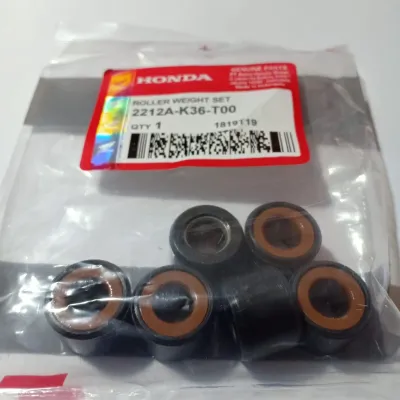
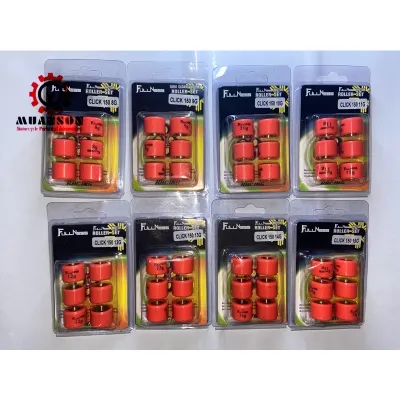
![[KV] Click 125/150 Genuine FLYBALL Set 14G (BLACK) 2212A-K36-T00 From Thailand](https://img.lazcdn.com/g/p/036611b45cedcb3393bfb9ce6179a98c.jpg_400x400q80.jpg_.webp)
![[RCP]Honda Click 125/150 Genuine FLYBALL Set 9G (BLACK) 2212A-K36-T00 -Thailand](https://img.lazcdn.com/g/p/f4d7f4656d782cd847d02f57f44ec037.jpg_400x400q80.jpg_.webp)
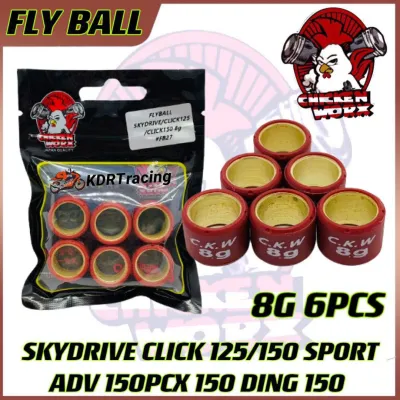
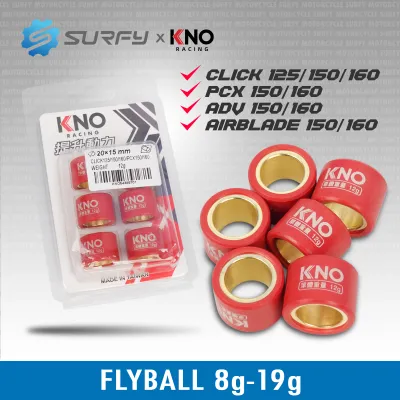
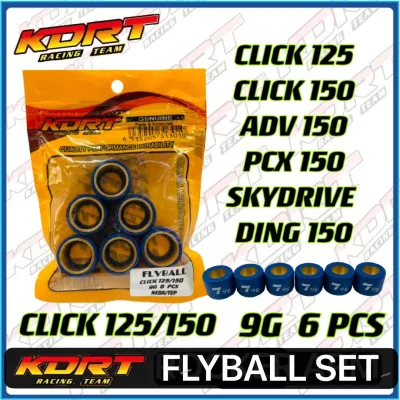
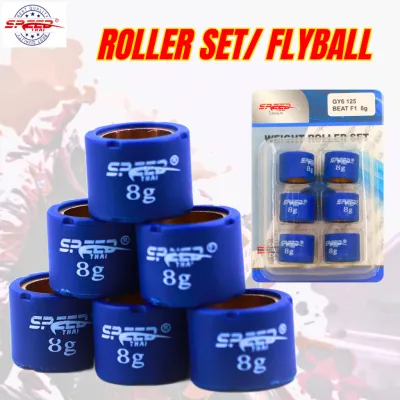
Prices are valid at publication and may change. Please refer to the product page for the latest price.
Heavier flyballs, on the other hand, slide outward at lower engine speeds. This causes the variator to shift into a higher gear ratio much earlier in the acceleration curve. While this keeps the engine RPM lower and improves fuel economy during steady cruising, it can make the scooter feel sluggish or unresponsive when you try to accelerate quickly from a standstill or climb steep inclines.
Achieving the desired performance requires a careful balance between these weights and other transmission components. For instance, the tension of your CVT’s contra spring and the physical condition of your drive belt directly influence how quickly the pulleys open and close. Modifying only the flyball weight without considering the overall state of these parts can lead to uneven belt wear, slippage, or unexpected drops in performance.
Matching Flyball Weight to Your Daily Riding Conditions
To select the most effective flyball setup, you must evaluate where and how you ride your scooter every day. In tropical urban environments where traffic congestion is a constant challenge, low-speed maneuverability is crucial. A lighter flyball configuration is highly beneficial for city commuting, as it provides the immediate throttle response needed to zip through tight spaces, handle frequent stops, and climb steep flyovers or parking ramps without straining the engine.

For riders who frequently travel along open provincial roads or bypass highways, the priorities shift toward efficiency and comfort. A heavier flyball setup allows you to maintain cruising speeds of 60 to 80 km/h at a much lower engine RPM. This reduction in engine speed not only lowers fuel consumption but also minimizes engine vibration, leading to a smoother ride and less wear on internal engine components over long distances.
Many riders experience a mix of both worlds, facing heavy morning traffic followed by fast-moving highway stretches on their daily commute. If your route is highly varied, keeping the original equipment manufacturer (OEM) weight is often the most reliable choice. Alternatively, some riders opt for a very mild adjustment—such as dropping or adding just one gram relative to the stock weight—to achieve a subtle shift in performance without severely compromising either acceleration or top-speed efficiency.
Verifying Specifications and Planning the Upgrade
Before purchasing any aftermarket parts, you must verify the exact specifications of your scooter’s original components. The standard flyball weight and dimensions can vary slightly depending on the specific model year of your Honda Click 125i. Always consult your official owner’s manual or visit an authorized Honda service center to confirm the stock roller weight, outer diameter, and width before making any modifications.
When sourcing replacement parts, look for high-quality rollers that match the precise physical dimensions required for your variator. Using flyballs with incorrect dimensions can cause them to bind inside the variator ramps, leading to severe transmission damage, belt slippage, or sudden loss of power while riding. Ensure the aftermarket brand you choose is known for using durable, heat-resistant materials that can withstand the high friction and temperatures common in tropical riding conditions.
Modifying a CVT system carries inherent safety risks, especially if you are unfamiliar with motorcycle mechanics. If you plan to change multiple components at once—such as installing a stiffer contra spring alongside new flyballs—it is highly recommended to have the work performed by a qualified mechanic. Proper installation requires specific tools, such as a holding tool and a torque wrench, to ensure the variator nut is tightened to the manufacturer’s exact torque specifications. An improperly tightened variator can come loose during operation, leading to catastrophic transmission failure and potential loss of vehicle control.
Frequently Asked Questions (FAQ)
Can I mix different flyball weights in the same variator?
While some riders mix different weights to find a custom middle ground, doing so carries significant mechanical risks. If you mix weights, they must be placed in a strictly alternating pattern to maintain rotational balance. Even then, the lighter rollers will experience different forces than the heavier ones, often leading to uneven wear, flat spots, and increased vibration. The standard and safest practice is to install a fully matched set of six identical rollers.
Will changing the flyball weight void my Honda warranty?
Modifying your scooter’s CVT with aftermarket parts can affect your manufacturer’s warranty. Generally, if a failure occurs in the transmission or engine and the manufacturer determines that the aftermarket flyballs or improper installation caused the damage, your warranty claim for those components may be denied. To protect your warranty, consider having all maintenance and adjustments performed by an authorized dealer using genuine parts.
How often should I inspect or replace the CVT flyballs?
You should inspect your flyballs during your regular CVT cleaning and maintenance, which is typically recommended every 8,000 to 10,000 kilometers, or more frequently if you ride daily in dusty or highly humid environments. Open the variator to check the rollers for flat spots, cracks, or physical deformation. If any roller shows signs of wear, replace the entire set immediately to ensure smooth shifting and prevent damage to the variator walls.

Community discussion
Share your experience or ask a question. Comments are reviewed before publication.