
The Honda Click 125i V2, widely known in the Philippines as a highly reliable automatic scooter, is a dominant force on local roads due to its fuel efficiency and sharp styling. However, to keep this scooter running at its peak, maintaining its Continuously Variable Transmission (CVT) is absolutely essential. The CVT system is responsible for transferring power from the engine directly to the rear wheel, and over time, components like the belt, rollers, and clutch shoes naturally wear down.
Selecting the best CVT set depends entirely on your daily riding conditions, budget, and performance expectations. While original equipment manufacturer (OEM) parts offer unmatched durability and preserve your scooter’s warranty, aftermarket upgrade kits allow you to customize how the power is delivered. By evaluating your specific commuting habits, diagnosing wear symptoms early, and verifying critical component specifications, you can make an informed decision that ensures a safe, efficient, and enjoyable ride across both congested city streets and open highways.
Identifying Your CVT Needs: Replacement vs. Upgrade
Before purchasing any new transmission components, you must accurately diagnose the current condition of your scooter’s CVT system. A worn-out transmission will exhibit distinct physical symptoms that degrade your riding experience and compromise safety. One of the most common warning signs is a slipping belt, where the engine revs high but the scooter fails to accelerate proportionally. You might also experience delayed acceleration, a noticeable loss of top-end speed, or a persistent dragging sensation during low-speed take-offs.
Products mentioned in this guide
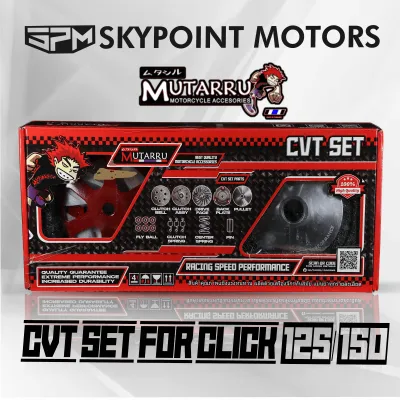
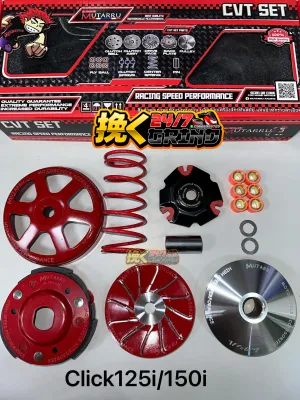
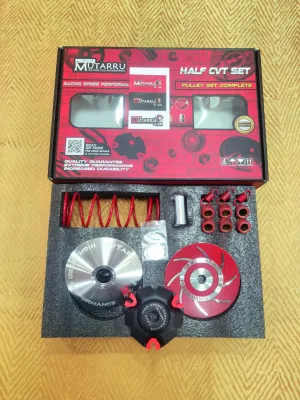
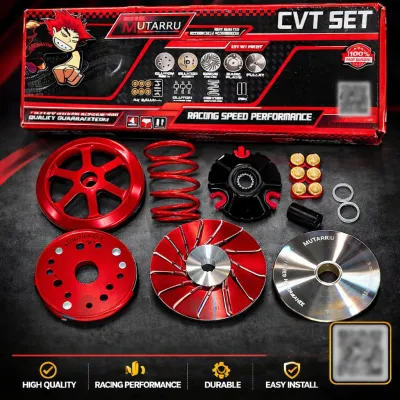
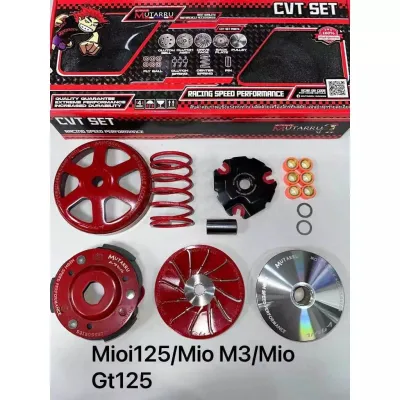
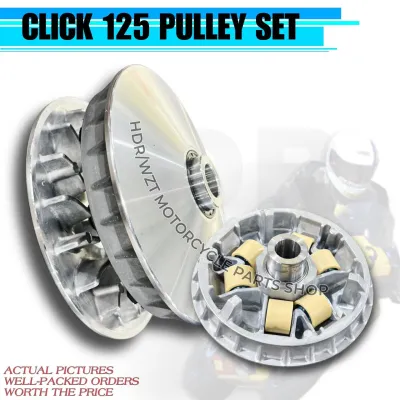
Prices are valid at publication and may change. Please refer to the product page for the latest price.
In the Philippines, riders frequently refer to a shuddering or vibrating sensation during initial acceleration as “panginginig.” This common issue usually points to accumulated dust, worn slide pieces, or glazed clutch linings inside the assembly. Recognizing these symptoms early allows you to address transmission wear before it leads to a complete breakdown on the road.
Understanding the difference between a standard replacement and a performance upgrade is crucial for setting realistic expectations. A direct factory replacement focuses on restoring your scooter to its original specifications, ensuring the exact balance of fuel economy, smooth power delivery, and long-term reliability designed by Honda. On the other hand, an upgrade involves altering the transmission’s physical characteristics—such as changing pulley ramp angles or adjusting spring tension—to shift the engine’s power band.
Your primary use case should dictate which path you choose for your Honda Click 125i V2. If your daily route consists of heavy stop-and-go traffic in Metro Manila, prioritizing a highly durable, fuel-efficient stock setup is often the most practical choice. Conversely, if your weekly riding involves navigating steep provincial bypass roads, carrying heavy cargo, or riding with a pillion passenger regularly, a mild performance upgrade can provide the extra torque needed to climb inclines without straining the engine.
It is vital to remember that upgrading your CVT is not a cure for underlying engine, fuel system, or electrical issues. If your scooter is suffering from low engine compression, a clogged fuel injector, a dirty air filter, or worn spark plugs, modifying the transmission will not restore lost power. Always ensure that the base engine is in excellent mechanical health and properly maintained according to your owner’s manual before attempting to modify or upgrade the transmission components.
OEM vs. Aftermarket CVT Components: What to Expect
When shopping for CVT components in the local market, you will generally choose between Honda Original Equipment Manufacturer (OEM) parts and various aftermarket alternatives. OEM parts are manufactured to meet the exact tolerances, material specifications, and quality control standards set by the vehicle manufacturer. Because they are designed specifically for the Click 125i V2, they offer a guaranteed fit, predictable service life, and excellent fuel economy. For riders whose scooters are still within the official warranty period, using genuine OEM parts is the only way to ensure compliance and avoid voiding the manufacturer’s coverage.

Aftermarket CVT components, which are widely available in local motorcycle shops and online marketplaces, offer a different set of advantages. These parts are often engineered to modify the scooter’s stock performance characteristics. For example, aftermarket variators may feature redesigned roller guide ramps with steeper angles to force the belt to shift faster, while upgraded clutch shoes might use high-friction carbon compounds to grab the clutch bell more aggressively. Stiffer main springs and lightweight rollers are also common aftermarket additions designed to keep the engine in its optimal power band during acceleration.
However, choosing aftermarket parts involves clear trade-offs that every rider must consider. While an aftermarket kit can make your scooter feel significantly snappier and more responsive, the increased friction and higher operating RPMs can accelerate the wear of your drive belt and clutch lining. Additionally, altered pulley angles can cause the belt to flex more severely, potentially reducing its overall lifespan. You may also notice a slight drop in fuel efficiency and an increase in engine vibration, especially if the aftermarket components are not perfectly matched to one another.
Safety should always be your top priority when selecting transmission parts, which is why you must avoid unbranded or suspiciously cheap imitation components. The local market contains many counterfeit parts labeled as “genuine” that are actually made from low-grade alloys or substandard rubber compounds. A low-quality drive belt is highly susceptible to snapping under load at high speeds, which can instantly lock up your rear wheel and cause a catastrophic loss of control. Similarly, poorly cast aftermarket pulleys can crack or shatter inside the crankcase, causing severe engine damage and presenting an immediate physical hazard to the rider.
Recommended CVT Configurations for Your Riding Style
Because the availability of specific aftermarket brands can fluctuate in the Philippines, focusing on structured, scenario-based configurations is the most reliable way to plan your purchase. When visiting your local mechanic or parts dealer, you can request specific component combinations tailored to your daily riding environment.
Stock Replacement Setup for Daily Commuting
The stock replacement configuration is designed specifically for daily commuters, delivery riders, and anyone who relies on their Honda Click 125i V2 as a dependable, low-maintenance workhorse. This setup prioritizes maximum fuel economy, smooth power delivery, and the longest possible service intervals under typical tropical driving conditions.
To achieve this, your component strategy should rely entirely on a full OEM set or high-quality, certified OEM-equivalent parts. This includes the genuine Honda drive belt, stock 15-gram roller weights, the standard clutch assembly with stock clutch shoes, and the original-specification main spring. Operating this configuration ensures that your scooter performs exactly as the manufacturer intended, maintaining a smooth, quiet ride and preserving excellent fuel mileage under sensible riding habits.
When purchasing these parts, always verify the exact part numbers designated for the Click 125i V2 variant. Although some components from the Click 125i V1 or the Click 150i may look visually identical, they often feature subtle dimensional differences, such as slight variations in belt width or roller weight. Installing mismatched parts can lead to uneven belt wear, erratic shifting behavior, and premature failure of the variator faces.
Mild Upgrade Setup for Mixed City and Highway Riding
For riders who frequently transition between congested city traffic and open provincial highways, a mild upgrade setup offers a balanced compromise. This configuration is ideal for those who want improved overtaking power and a slightly more responsive throttle without sacrificing the daily usability and reliability of their scooter.
The component strategy for this setup involves swapping out a few key parts while keeping the rest of the system close to stock. You can install a high-durability, reinforced aftermarket drive belt designed to handle increased thermal stress. Pair this with slightly lighter roller weights—such as reducing the stock 15-gram rollers to 13-gram or 14-gram options—which allows the engine to rev slightly higher before shifting, giving you a snappier launch. To prevent the belt from slipping under sudden acceleration or when climbing steep inclines, you can install a slightly stiffer main spring, typically rated at 1000 RPM to 1200 RPM.
This configuration results in a noticeably quicker throttle response, making it much easier to overtake slower vehicles on two-lane roads or maintain speed when climbing hills. The trade-off is a very minor increase in fuel consumption and slightly higher engine noise during acceleration. When implementing this setup, it is crucial to match the roller weights and spring stiffness carefully; changing only the rollers without adjusting the spring, or vice versa, can cause the transmission to shift erratically and reduce overall efficiency.
Performance Setup for Enthusiast and Track Use
The performance configuration is a complete transmission overhaul designed for enthusiasts, track-day participants, or riders who regularly carry heavy loads up highly demanding terrains. This setup maximizes acceleration and throttle responsiveness, but it requires a commitment to more frequent maintenance and higher operating costs.
This aggressive strategy utilizes a complete aftermarket CVT kit. It features a modified variator pulley with optimized ramp angles and a specialized face angle (often machined to 13.5 or 14 degrees) to accelerate belt movement. This is paired with lightweight rollers (typically between 11 grams and 12 grams), high-grip carbon-infused clutch shoes, a grooved or lightweight clutch bell designed to dissipate heat rapidly, stiffer clutch springs, and a high-performance 1500 RPM main spring.
The expected outcome of this setup is immediate, aggressive acceleration and a much higher engine RPM engagement point. While this configuration makes the scooter incredibly fast off the line, your top-end speed may vary depending on the specific pulley angles and roller weights chosen. The primary limitation of this setup is its high wear rate; the increased friction and heat will significantly shorten the lifespan of the drive belt and clutch shoes. This configuration requires regular inspections and tuning, making it unsuitable for casual riders who prefer a hands-off maintenance approach.
Critical Specifications to Verify Before Purchase
To ensure that your selected CVT set is physically compatible and operates safely on your Honda Click 125i V2, you must verify several critical technical specifications before finalizing your purchase. Never assume compatibility based solely on generic product labeling or category terms.
- Belt Dimensions: The drive belt must match the exact length, width, and cog angle specified for the Click 125i V2. A belt that is even slightly too long will slacken, causing it to slap against the interior of the aluminum crankcase, slip under load, or fail to reach the outer edges of the pulleys, which reduces your top speed. Conversely, a belt that is too short will sit too deep in the rear pulley, causing excessive tension that can lead to premature snapping, high bearing wear, or severe damage to the input shafts.
- Roller Weights (Grams): Roller weights directly control how quickly the variator opens to shift the transmission ratio. Lighter rollers require higher centrifugal force—and therefore higher engine RPM—to slide outward and push the pulley face forward. This keeps the scooter in a lower gear ratio longer, improving acceleration at the expense of top-end speed and fuel economy. Heavier rollers slide outward at lower RPMs, shifting the transmission into a higher ratio sooner, which favors fuel economy and cruising comfort but slows down initial acceleration. Always refer to the manufacturer’s tuning chart rather than guessing weight combinations.
- Spring Stiffness: Your CVT utilizes two types of springs that must be balanced: the large main spring (center spring) and the three small clutch springs. The main spring controls the rate at which the rear pulley opens, maintaining constant tension on the drive belt. A spring that is too stiff will prevent the pulley from opening fully, limiting your top speed and placing unnecessary strain on the engine. The small clutch springs control the RPM at which the clutch shoes expand to grip the clutch bell; stiffer springs delay engagement, resulting in high-revving, jerky take-offs that are highly impractical for daily city commuting.
- Clutch and Bell Compatibility: Any aftermarket clutch shoes and clutch bell must match the exact spline count, shaft diameter, and inner bell diameter of the Click 125i V2. An incorrect spline count will prevent the clutch assembly from seating properly on the input shaft, which can strip the splines during operation and cause a complete loss of drive power.
Before installing any new components, physically compare the new parts side-by-side with the old ones you removed. Check for identical dimensions, mounting hole alignments, and spline patterns. Additionally, inspect the packaging of branded aftermarket parts for holographic security labels, unique serial numbers, or manufacturer authenticity seals to ensure you are not installing a dangerous counterfeit product.
Installation Safety and Break-In Guidelines
Working on your scooter’s transmission carries significant safety and mechanical risks. It is strongly recommended to have your new CVT set installed by a qualified mechanic at an authorized service center or a reputable motorcycle repair shop. Proper installation requires specialized automotive tools, including a universal clutch holder or flyman wrench, a high-quality torque wrench, and specialized pullers. Attempting to disassemble or assemble these components using improvised tools like hammers, chisels, or uncalibrated impact wrenches can easily bend the crankshaft, strip vital threads, or crack the cast-aluminum pulley faces.
Adhering to the manufacturer’s specified torque values is critical for safety and component longevity. Over-tightening the main nuts on the variator or clutch assembly can strip the threads on the crankshaft or input shaft, resulting in an incredibly expensive engine repair that requires splitting the crankcase. Under-tightening these nuts is even more dangerous; the intense vibrations and rotational forces of daily riding can cause the nuts to back off completely while you are in motion. If the variator or clutch assembly detaches at high speed, it can instantly lock the transmission, shatter the outer casing, and cause a sudden, catastrophic loss of vehicle control.
Before assembling the new components, the mechanic must thoroughly clean the entire interior of the CVT crankcase. Over thousands of kilometers, worn drive belts and clutch shoes deposit a thick layer of fine rubber dust and friction material inside the housing. This dust, combined with any road grime or moisture, can contaminate the new clutch linings and pulley faces, leading to immediate belt slippage and severe vibrations. Use a dedicated brake and parts cleaner that is formulated specifically for metal components to evaporate quickly without leaving any oily residue, and ensure that the pulley faces are completely dry and free of grease before installing the new belt.
Once the installation is complete, you must observe a strict break-in period for the first 100 to 200 kilometers of riding. This initial phase is essential to allow the flat edges of the new drive belt to seat properly against the angled faces of the pulleys, and to let the new clutch shoes wear down slightly to match the exact curvature of the clutch bell. During this break-in period, avoid sudden full-throttle acceleration, carrying heavy passenger loads, or maintaining sustained high speeds on the highway. Allowing these parts to bed in gradually prevents localized overheating, ensures optimal grip, and significantly extends the overall lifespan of your new transmission system.
Frequently Asked Questions (FAQ)
How often should the CVT belt be replaced on the Click 125i V2?
While the official Honda manufacturer manual recommends inspecting the drive belt every 8,000 kilometers and replacing it around the 20,000 to 24,000-kilometer mark, the actual lifespan of your belt depends heavily on your riding environment. In the Philippines, the combination of intense tropical heat, high humidity, and prolonged idling in heavy stop-and-go city traffic accelerates the thermal degradation of the rubber compound.
You should have your belt physically inspected during every regular Preventive Maintenance Schedule (PMS). Look closely for signs of dry rotting, deep cracks between the cogs, fraying fabric edges, or a shiny, glazed appearance on the contact faces. If you have modified your CVT with lighter rollers or stiffer springs, or if you regularly ride through flooded streets during the monsoon season, your belt will experience significantly higher stress and should be replaced much earlier to prevent a sudden failure on the road.
Will installing an aftermarket CVT set void the motorcycle warranty?
Yes, installing non-OEM transmission components, such as aftermarket variators, lightweight rollers, stiffer springs, or modified clutch assemblies, will generally void the manufacturer’s warranty on the transmission system and any directly related engine components. Authorized dealerships in the Philippines strictly enforce these terms, as aftermarket parts alter the operating parameters and stress levels designed for the stock engine.
If your Honda Click 125i V2 is still within its official warranty period, it is highly recommended to stick exclusively to genuine Honda OEM parts for all maintenance and repairs. If you are determined to upgrade your transmission, you should consult your specific dealership’s service advisor beforehand to understand the exact boundaries of your warranty coverage and avoid unexpected out-of-pocket expenses for engine or drivetrain repairs.
Community discussion
Share your experience or ask a question. Comments are reviewed before publication.