
Finding the right Continuously Variable Transmission (CVT) set for your Honda Click 125i V3 is essential for maintaining its efficiency, responsiveness, and overall ride quality. As one of the most popular automatic scooters navigating both congested city streets and steep provincial roads, this motorcycle relies heavily on its transmission to translate engine power into smooth motion. Whether you are experiencing performance drop-offs from daily wear or looking to tailor your scooter’s acceleration characteristics to your specific riding style, understanding the available CVT options is the first step toward a successful upgrade.
The CVT system is a dynamic assembly of pulleys, rollers, a drive belt, and a clutch system that constantly adjusts the gear ratio based on engine speed and load. Over time, these components naturally wear down due to friction and heat, leading to a noticeable decline in performance. By exploring the different categories of CVT sets—ranging from standard factory replacements to highly tunable aftermarket kits—you can make an informed decision that balances reliability, performance, and budget.
Identifying Your Honda Click 125i V3 Transmission Needs
Before purchasing any new transmission components, you must first determine whether your scooter requires a standard maintenance replacement or a performance-oriented upgrade. This decision should be guided by the physical condition of your current CVT system and your daily riding requirements. Ignoring the early warning signs of transmission wear can lead to more severe mechanical issues and decreased fuel efficiency over time.
Products mentioned in this guide
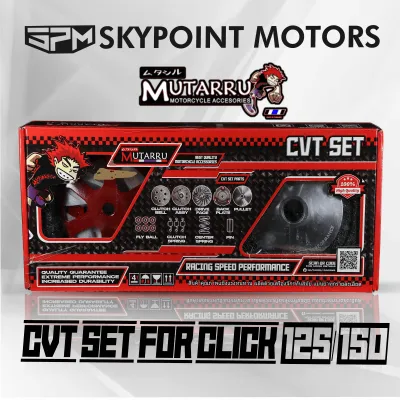
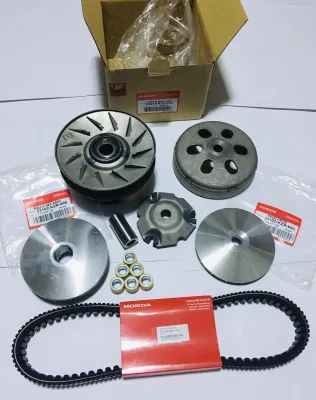
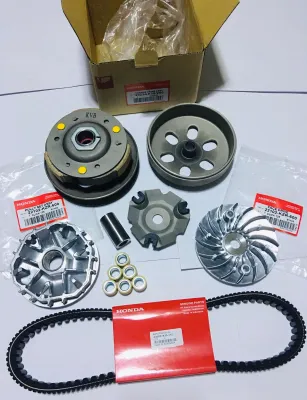
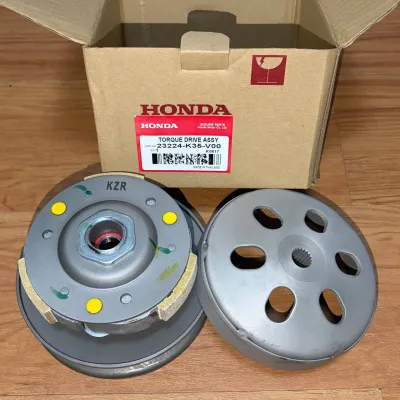
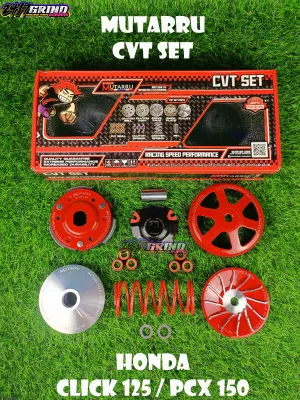
Prices are valid at publication and may change. Please refer to the product page for the latest price.
Common signs of CVT wear are often easily observable during daily operation. If you notice the engine revving highly without a corresponding increase in speed, the drive belt may be slipping due to wear or oil contamination. A delayed throttle response or a distinct dragging sensation when accelerating from a complete stop often points to flat spots on the roller weights or a glazed clutch lining. Additionally, unusual rattling, squealing, or metallic noises coming from inside the left-side crankcase cover typically indicate worn slide pieces, weak springs, or failing bearings that require immediate attention.
Your typical riding environment plays a crucial role in deciding which CVT configuration is most suitable. For daily stop-and-go commuting in dense urban traffic, a setup that prioritizes smooth low-end engagement, minimal vibration, and excellent fuel economy is highly desirable. Conversely, if your daily route involves navigating steep inclines, carrying heavy passenger loads, or traveling long distances on open highways, you may benefit from a configuration that optimizes torque delivery and mid-range acceleration.
It is important to maintain realistic expectations regarding how transmission modifications affect your scooter’s overall behavior. While aftermarket CVT kits can significantly improve acceleration or increase top speed by altering how the belt travels along the pulleys, these changes often come with trade-offs. For instance, configuring your transmission for aggressive off-the-line acceleration usually requires the engine to operate at higher revolutions per minute (RPM), which can slightly increase fuel consumption and accelerate the wear rate of internal components. Balancing these factors ensures you select a system that aligns with your long-term riding goals.
Categories of CVT Sets for the Click 125i V3
When exploring the market for CVT sets, you will generally find options categorized into three distinct groups: OEM replacement kits, entry-level performance kits, and full system upgrades. Each category serves a specific purpose, catering to different rider preferences, budgets, and mechanical skill levels.

OEM Replacement Kits
Original Equipment Manufacturer (OEM) replacement kits are designed to restore your Honda Click 125i V3 to its original factory specifications. These kits utilize standard pulley angles, factory-weight rollers, and original-spec clutch components to ensure maximum reliability and predictable handling. Choosing an OEM replacement is highly recommended for riders who prioritize long-term durability, consistent fuel economy, and the quiet, smooth operation engineered by the manufacturer. Because these parts conform strictly to factory tolerances, they offer the most straightforward installation process with minimal risk of compatibility issues.
Entry-Level Performance Kits
Entry-Level performance kits are designed for riders seeking a noticeable improvement in throttle response and initial acceleration without making drastic modifications to the engine. These kits typically feature modified front drive pulleys with optimized ramp angles and slightly lighter roller weights, often referred to locally as flyballs. By reducing the weight of the rollers, the engine is allowed to reach its optimal powerband more quickly, resulting in a punchier feel when pulling away from traffic lights. These kits generally retain the stock rear pulley and clutch assembly, making them a cost-effective way to enhance daily rideability.
Full System Upgrades
Full system upgrades represent the most comprehensive option, designed for advanced tuning and aggressive riding styles. These complete packages replace almost the entire transmission assembly, including the front variator, lightened outer clutch bells, high-friction clutch shoes, stiffer center springs, and modified torque drivers. The combination of a lightened clutch bell and stiffer clutch springs delays clutch engagement to a higher RPM, providing a highly responsive launch. Additionally, the redesigned grooves on the aftermarket torque driver alter the shifting characteristics under load, ensuring continuous power delivery during high-speed cruising and uphill climbs.
Critical Factors for Selecting the Right CVT Kit
Selecting the correct CVT set requires careful attention to technical specifications and compatibility. Because minor differences in component dimensions can lead to poor performance or severe engine damage, you must verify several critical factors before making a purchase.
First and foremost, you must verify the exact model compatibility of the CVT kit. The Honda Click 125i has gone through multiple design iterations, with the V3 featuring specific crankcase dimensions, shaft splines, and belt lengths that may differ from older V1 or V2 models. Furthermore, components designed for larger displacement models, such as the Click 150i or Click 160, are not directly interchangeable with the 125i V3 due to differences in crankshaft diameters and transmission case spacing. Always cross-reference the manufacturer’s part numbers and compatibility charts to ensure the kit is explicitly engineered for the Click 125i V3.
Another essential factor is matching the component weights and pulley angles to your specific riding conditions. The weight of the roller wheels directly dictates the shifting behavior of the front pulley. If you frequently carry a pillion passenger or navigate hilly terrain, slightly lighter rollers can help keep the engine in its torque band to prevent bogging down. However, if your priority is high-speed cruising on flat roads, maintaining a weight closer to the stock specification helps keep engine RPMs lower, preserving fuel and reducing engine strain. Additionally, the angle of the pulley face—typically ranging from 13.5 to 14 degrees on aftermarket options—must match your belt type to prevent premature belt wear.
Finally, you must evaluate your purchasing channels and budget realistically. Due to the popularity of the Honda Click 125i V3, counterfeit transmission components are common in the market. To avoid purchasing substandard parts that could fail catastrophically under load, prioritize buying from authorized physical dealers or highly rated, verified sellers on reputable online marketplaces. When planning your budget, remember to account not only for the cost of the CVT kit itself, which can range from a few thousand Pesos (₱) to more premium price points, but also for the cost of professional installation, specialized tools, and potential fine-tuning parts like extra roller weights.
Safety, Installation, and Pre-Purchase Checks
Working on a motorcycle’s transmission involves high-speed rotating assemblies that require strict adherence to safety protocols and installation guidelines. Before installing any new CVT components, it is vital to understand the safety boundaries and perform a thorough inspection of the surrounding parts.
Before mounting your new CVT set, take the time to inspect related wear items inside the transmission casing. A brand-new pulley or clutch assembly will not perform correctly if paired with a worn, cracked, or stretched drive belt. Check the condition of the crankshaft and input shaft oil seals; any signs of oil or grease leakage inside the CVT housing must be addressed immediately, as lubricants will contaminate the belt and clutch shoes, causing severe slippage and heat buildup. Additionally, inspect the kickstarter gear assembly and clean out any accumulated clutch dust from the housing using an approved brake and parts cleaner.
While some riders may feel comfortable performing basic maintenance, the installation of performance CVT kits often requires professional expertise and specialized equipment. Proper assembly requires the use of a holding tool (such as a flyman wrench or pulley holder) and a calibrated torque wrench to tighten the primary and secondary pulley nuts to the exact specifications outlined in the Honda Click 125i V3 service manual. Utilizing an impact wrench without verifying the final torque can easily strip the delicate threads of the crankshaft or leave the nuts loose, both of which can lead to catastrophic transmission failure while riding.
Lastly, consider the impact of aftermarket modifications on your vehicle’s warranty and long-term reliability. Installing non-OEM transmission parts may void the manufacturer’s warranty on the engine and drivetrain components. If your scooter is still within its warranty period, consult with your dealer before making any modifications. Always keep the original factory parts in safe storage, as they can serve as reliable backups should you ever need to troubleshoot performance issues or return the vehicle to its stock configuration.
Frequently Asked Questions (FAQ)
Can I use a Honda Click 160 CVT set on my 125i V3?
No, you cannot use a Honda Click 160 CVT set on a Honda Click 125i V3. The Click 160 utilizes a completely redesigned engine platform featuring different crankcase dimensions, a larger crankshaft diameter, and a wider drive belt compared to the 125i V3. Attempting to install components designed for the 160cc model will result in severe fitment issues, potential damage to the crankshaft splines, and improper belt alignment, which can cause immediate transmission failure.
How often should I clean and maintain an upgraded CVT set?
An upgraded or performance-oriented CVT set generally requires more frequent maintenance than a standard OEM setup. Because performance kits often operate at higher RPMs and utilize high-friction clutch materials, they generate more heat and wear dust inside the transmission casing. It is highly recommended to open, inspect, and clean your upgraded CVT system every 3,000 to 5,000 kilometers, especially when riding in hot, humid, or dusty tropical environments. During these inspections, clean away accumulated dust, check the roller weights for flat spots, and ensure the slide pieces move freely along the ramp plate.

Community discussion
Share your experience or ask a question. Comments are reviewed before publication.