
The Continuously Variable Transmission (CVT) system translates your Honda Click 125i V3’s engine power into smooth, twist-and-go acceleration. In the Philippines, where this scooter endures intense tropical heat and congested city roads, maintaining the transmission is vital for reliability. A compatible CVT set must match the exact belt length, pulley angles, and roller weight dimensions designed for this third-generation model. Relying on generic components or parts designed for older Click generations can lead to severe belt slippage, rapid wear, and sudden transmission failure on the road.
Essential Components Included in a Complete CVT Set
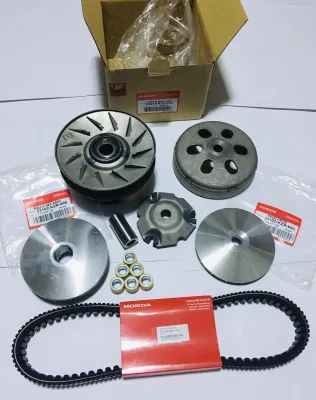
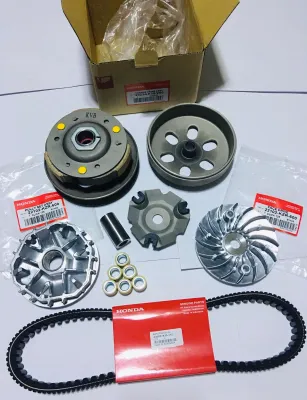
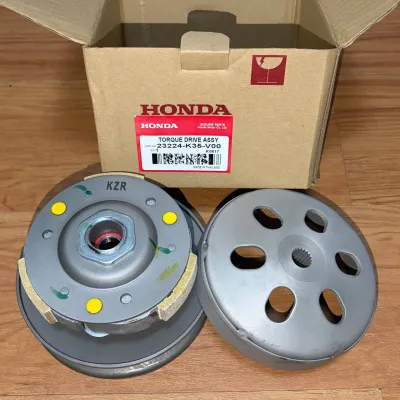
When shopping for a “CVT set” online or at local motorcycle parts shops, you will quickly notice that the term can mean different things depending on the seller. A truly comprehensive CVT overhaul kit typically includes several critical wear items: the drive belt (V-belt), a set of six roller weights, the drive pulley (variator) assembly with its ramp plate and slide pieces, and the rear clutch assembly, which consists of the clutch shoes, clutch bell, and torque spring.
However, many product listings offer only partial kits, sometimes containing just the drive belt and roller weights, or only the front pulley assembly. It is essential to read the product description carefully to understand exactly what is included. If your goal is routine maintenance to restore factory performance, a basic kit with a belt, rollers, and slide pieces may suffice. If you are experiencing low-speed shuddering, you may need a complete set that includes the rear clutch bell and clutch shoes to resolve the underlying wear issues.
Products mentioned in this guide
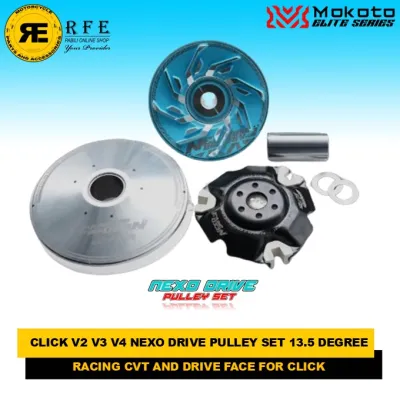
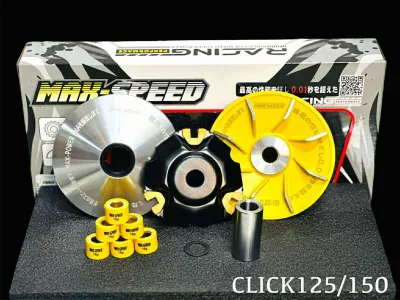
Prices are valid at publication and may change. Please refer to the product page for the latest price.
Key Specifications to Verify for Click 125i V3 Fitment
The Honda Click 125i V3 features specific engine and transmission refinements that distinguish it from earlier versions. To ensure safe and proper operation, you must verify several key parameters against your owner’s manual or the official Honda parts catalog rather than assuming all 125cc scooter parts are interchangeable.

Drive Belt Dimensions and Part Numbers
The drive belt is under constant tension and must withstand high friction. For the Click 125i V3, you must verify the exact OEM part number specified by Honda for this generation. The belt’s width, overall length, and tooth profile (the shape of the inner cogs) must match the factory specifications perfectly. Installing a belt that is even slightly too long or too narrow will cause the belt to slip within the pulleys, leading to poor acceleration, a drop in fuel mileage, and excessive heat buildup. In worst-case scenarios, an incorrect belt profile can cause the belt to twist or snap at high speeds, locking up the rear wheel and creating a severe safety hazard.
Roller Weight Sizes and Gram Ratings
Roller weights, commonly referred to as flyballs in the local riding community, control how quickly your transmission shifts ratios as engine speed increases. These rollers must match the physical dimensions—specifically the outer diameter and width—of the V3’s variator pockets. Mismatched physical sizes will cause the rollers to bind, preventing the transmission from shifting smoothly.
Additionally, you must consider the gram rating of the rollers. Standard stock weights are engineered to provide a balanced, fuel-efficient ride suitable for daily commuting. If you choose to customize your setup, lighter roller weights will allow the engine to rev higher before shifting, giving you quicker acceleration from a standstill—a popular modification for navigating stop-and-go traffic in urban areas. Conversely, heavier rollers keep engine RPMs lower, which can improve top-speed cruising and fuel economy on open highways. Unless you are tuning for a specific, verified riding scenario, sticking to the manufacturer’s recommended stock weight is highly recommended for daily reliability.
Clutch Assembly and Pulley Compatibility
The remaining drivetrain components, such as the clutch shoes and pulley faces, must align precisely with the V3’s engine output shaft. The pulley face angles must match the angle of your drive belt to ensure maximum grip and minimal wear. Furthermore, the clutch assembly must feature high-quality, heat-resistant lining materials capable of enduring the stop-and-go traffic typical of Philippine roads. Ensure that the aftermarket set includes durable slider pieces and clutch springs with tension ratings compatible with the V3’s power band. Mismatched spring rates can cause the clutch to engage too early or too late, resulting in a jerky ride or excessive engine strain.
OEM vs. Aftermarket CVT Sets: What to Consider
Deciding between Original Equipment Manufacturer (OEM) Honda parts and aftermarket CVT sets depends on your budget, riding habits, and performance goals. OEM sets are the safest choice for most riders. They guarantee perfect fitment, standard durability, and predictable performance, ensuring your scooter operates exactly as the manufacturer intended. OEM components are engineered to withstand standard riding conditions and offer excellent longevity when maintained properly.
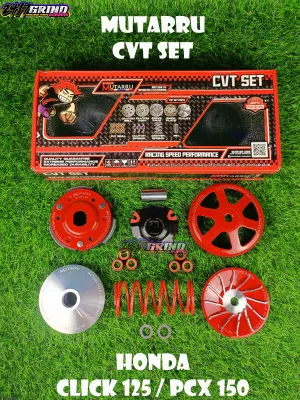
Aftermarket CVT sets are popular among riders looking to customize their scooter’s performance. Some premium aftermarket brands offer reinforced Kevlar drive belts, which provide superior tensile strength and resistance to stretching under heavy loads. Other kits feature performance-tuned variators with optimized ramp curves to smooth out acceleration flat spots.
However, choosing aftermarket parts comes with risks. The local market has a significant presence of counterfeit components packaged to look like genuine OEM or high-end aftermarket brands. These low-quality counterfeits often fail prematurely, leading to expensive engine or transmission damage. When considering aftermarket options, ensure the product explicitly states compatibility with the Click 125i V3’s specific engine code. Always purchase from authorized distributors, check for clear warranty terms, and avoid deals that seem too cheap to be genuine.
How to Verify Compatibility Before Purchasing
To prevent purchasing the wrong parts and experiencing delays during installation, follow a systematic verification process. Start by locating the exact model year and engine code on your scooter’s chassis plate, typically found under the seat or near the frame. This code is your primary reference when cross-checking parts.
Next, consult the official Honda parts catalog or speak with a technician at a trusted dealership to obtain the exact part numbers for your V3’s CVT components. When browsing online marketplaces or visiting physical shops, do not rely solely on product titles that claim to fit “all Honda Click models.” Visual similarity to older V1 or V2 parts does not guarantee V3 fitment, as minor changes in shaft diameters, pulley splines, or casing clearances can prevent a part from fitting.
Always ask the seller to confirm the specific part numbers included in the CVT set. If you are unsure about any specification, consult a qualified motorcycle mechanic before finalizing your purchase. Because incorrect installation can damage your transmission and compromise road safety, having a professional mechanic install your new CVT set using a calibrated torque wrench is highly recommended.
Frequently Asked Questions (FAQ)
Can I use a CVT belt from the Honda Click 125i V2 on the V3?
Although the drive belts for the V2 and V3 generations may look identical to the naked eye, they often feature subtle differences in length, width, or tooth profile to accommodate updated engine casings and pulley ratios. Using a V2 belt on a V3 model can lead to belt slippage, accelerated wear on the pulleys, or clearance issues within the CVT casing. Always verify the exact OEM part number in your official service manual to ensure you are installing a belt designed specifically for the V3.
How often should the CVT set be replaced on a Click 125i V3?
You should refer to the official Honda maintenance schedule for the precise inspection and replacement intervals of your CVT components. Generally, the drive belt should be inspected every 8,000 to 12,000 kilometers and replaced around every 20,000 to 24,000 kilometers. However, the actual lifespan of these parts depends heavily on your riding habits, passenger load, and local environmental conditions. Frequent stop-and-go riding in hot, dusty, or humid climates can accelerate wear, making regular visual inspections for cracks, flat spots on rollers, and clutch wear vital during routine oil changes.
Community discussion
Share your experience or ask a question. Comments are reviewed before publication.