
Your Honda Click’s continuously variable transmission (CVT) relies on a set of small, cylindrical components known as flyballs (or roller weights) to determine how and when your engine transfers power to the rear wheel. Choosing the right gram weight is the most effective way to customize your scooter’s performance, whether you are navigating the congested, stop-and-go traffic of metropolitan streets or climbing steep provincial inclines. By altering the weight of these flyballs, you directly shift the balance between quick, low-end acceleration and smooth, high-speed cruising.
How Flyball Gram Weights Control Your Honda Click's CVT
To understand how flyballs work, you must look at the mechanics of the front pulley system. As your Honda Click’s engine spins, centrifugal force pushes the flyballs outward along the ramp plate inside the variator. This outward movement forces the movable variator face closer to the fixed face, squeezing the drive belt and forcing it to ride higher on the pulley. This action effectively shifts the transmission into a higher gear ratio, much like shifting up on a manual motorcycle.
The mass of the flyballs dictates how easily this shifting process occurs. Lighter flyballs require higher engine revolutions per minute (RPM) to generate enough centrifugal force to push the variator outward, keeping the scooter in a lower gear ratio longer to maximize acceleration. Conversely, heavier flyballs slide outward at lower RPMs, forcing an earlier upshift that drops engine speeds and favors higher cruising velocities.
Products mentioned in this guide
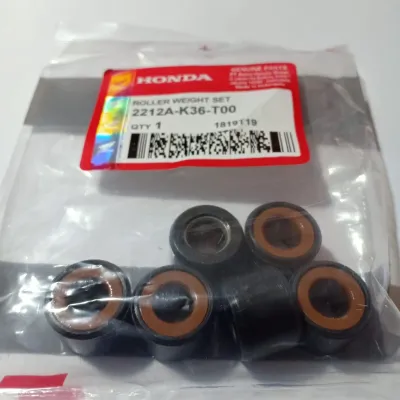
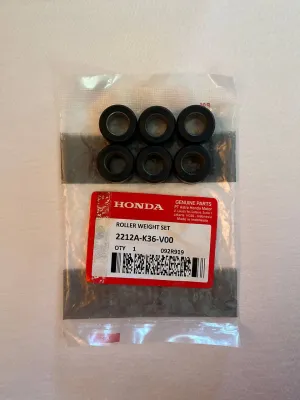
![[KV] Click 125/150 Genuine FLYBALL Set 14G (BLACK) 2212A-K36-T00 From Thailand](https://img.lazcdn.com/g/p/036611b45cedcb3393bfb9ce6179a98c.jpg_400x400q80.jpg_.webp)
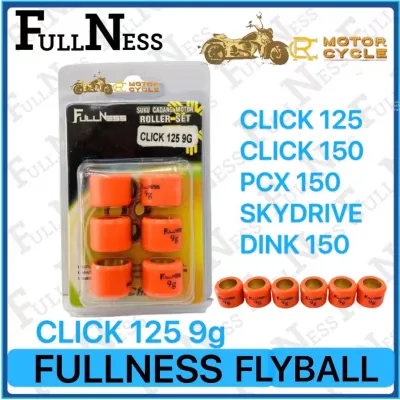
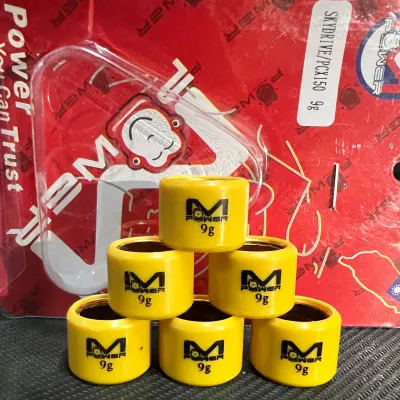
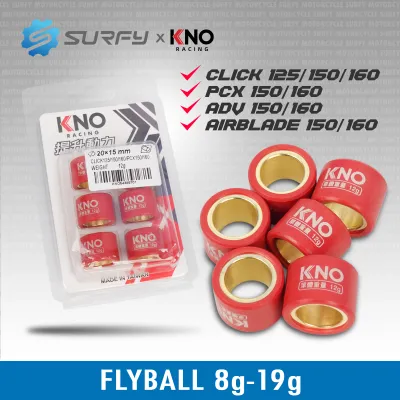
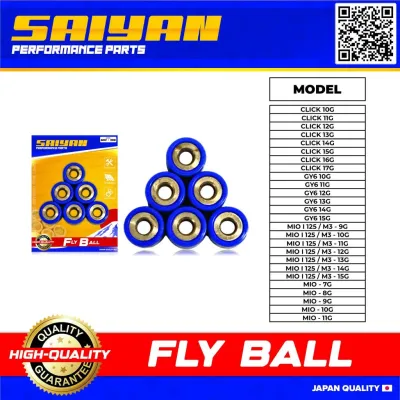
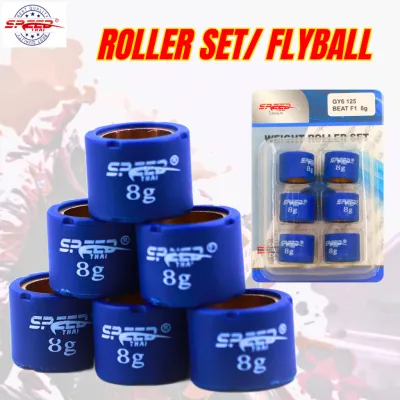
Prices are valid at publication and may change. Please refer to the product page for the latest price.
Achieving peak performance requires matching these weights to your engine’s specific power band. If the weights are poorly matched, your engine may rev loudly without transferring actual power to the wheels, or it may struggle to climb into its optimal power range, leaving your scooter feeling sluggish and unresponsive.
Lighter vs. Heavier Flyballs: Matching Your Riding Style
Your daily route and riding conditions should dictate your choice of flyball weights. For riders who spend most of their time navigating dense city traffic, frequent stoplights, or steep mountain roads, lighter flyballs are generally preferred. The higher RPM threshold allows the engine to quickly reach its power band, providing immediate throttle response and the low-end torque needed to climb hills or overtake safely at low speeds.

If your daily commute involves long stretches of open highway, bypass roads, or carrying heavy cargo, heavier flyballs offer distinct advantages. By forcing the CVT to upshift earlier, heavier rollers keep engine RPMs lower at sustained speeds. This reduces overall engine strain, minimizes vibrations through the chassis, and can improve fuel efficiency during long-distance travel.
However, straying too far from the factory specifications introduces mechanical risks. Installing flyballs that are too light can cause the engine to over-rev constantly, generating excessive heat within the CVT casing, accelerating belt wear, and causing belt slippage. On the other hand, excessively heavy flyballs will lug the engine, forcing it to work harder at low RPMs, which leads to sluggish acceleration, poor hill-climbing ability, and premature wear on the clutch lining.
Step-by-Step Guide to Choosing the Right Gram Weight
Before purchasing any aftermarket components, you must establish a baseline by checking your Honda Click’s owner’s manual or official original equipment manufacturer (OEM) parts catalog. The factory flyball weight varies significantly depending on whether you ride a Click 125i, 150i, or 160, as well as the specific model year. Knowing this baseline weight allows you to make calculated adjustments—typically changing the weight by only one to two grams per ball at a time.
When shopping on an online marketplace or at a local motorcycle shop, evaluate aftermarket options by reading the manufacturer’s specific application notes. Avoid generic packaging claims that promise universal speed increases, as CVT dynamics depend entirely on your specific engine displacement and setup.
When you are ready to test new weights, follow a systematic approach by changing only one variable at a time. Keep the stock clutch, belt, and springs intact during your initial tests so you can isolate the exact impact of the new flyballs. During your test ride, monitor the engine sound closely, check for any abnormal vibrations through the floorboard, and observe how the speedometer responds relative to your throttle input.
Always prioritize safety when performing transmission modifications. Because CVT work involves high-torque components and critical drive systems, ensure you follow original-vehicle torque specifications for the variator nut. If you experience severe CVT shuddering, unusual belt squeal, or an unexpected loss of power during your test ride, stop riding immediately. Under these conditions, or if you lack the specialized tools like a holding tool and torque wrench, consult a qualified motorcycle mechanic to perform the installation and diagnostic checks.
When to Inspect or Replace Your Current Flyballs
Over time, the constant sliding and rolling motion inside the variator will wear down even high-quality flyballs. During routine maintenance, inspect the rollers for visual indicators of degradation, such as flat spots, uneven outer wear, or cracks in the protective plastic coating. Flat spots prevent the rollers from sliding smoothly up the variator ramps, locking your transmission into a fixed ratio.
You can often diagnose worn flyballs through operational symptoms before even opening the CVT casing. If you notice erratic RPM fluctuations while maintaining a steady throttle, a sudden drop in your usual top speed, or a delayed, jerky response when accelerating from a complete stop, your rollers likely need replacement.
When replacing flyballs, always install a complete, matching set of six rollers to maintain perfect balance inside the variator. Additionally, take the time to inspect the variator boss, slide pieces, and the drive face for deep grooves or pitting. Damaged guide ramps or a worn boss can cause even brand-new flyballs to bind, leading to rapid wear and inconsistent shifting performance. In tropical climates with high humidity and heavy seasonal rains, keeping your CVT clean and dry is even more critical, as moisture and road grit can accelerate roller wear.
Frequently Asked Questions (FAQ)
Can I mix different gram weights in the variator?
Yes, you can mix different gram weights to fine-tune your CVT, but you must do so with extreme care. The overall shifting behavior will be determined by the average weight of the combined rollers; for example, alternating three 11-gram weights with three 13-gram weights yields an effective average of 12 grams.
However, mixing weights carries mechanical risks if not done symmetrically. You must alternate the weights evenly (e.g., light, heavy, light, heavy) to prevent uneven pressure on the variator face, which can cause severe vibration, accelerated wear on the drive face, and damage to the crankshaft bearing. Always check the guidelines of your aftermarket variator manufacturer, as some high-performance brands explicitly prohibit mixing weights.
Do I need to change the contra spring when changing flyball weights?
For minor adjustments to your flyball weights, you generally do not need to change the contra spring, provided your OEM belt tension remains within specification. The contra spring, located in the rear pulley assembly, controls the belt tension and resists the opening of the rear sheaves, working in direct opposition to the front flyballs.
You should only consider a stiffer contra spring if you are making drastic reductions in flyball weight or consistently carrying heavy loads. A stiffer spring keeps the belt tight and prevents slippage under high load, but pairing it with stock or heavy flyballs will prevent the transmission from upshifting fully, severely limiting your top speed.
Community discussion
Share your experience or ask a question. Comments are reviewed before publication.