
The second-generation Honda CR-V, produced between 2002 and 2006, is a highly durable SUV powered by Honda’s reliable K-series engines (the 2.0-liter K20A4 or the 2.4-liter K24A1). To keep this classic vehicle running smoothly, selecting the correct honda crv gen 2 engine oil viscosity is critical. The factory-recommended baseline for this generation is typically 5W-30 (or 5W-20 in some regions), which provides the optimal balance of cold-start protection and operating-temperature lubrication.
In the tropical climate of the Philippines, where high ambient heat and heavy traffic are daily realities, many owners wonder if they should deviate from these original specifications. Additionally, because these SUVs are now over two decades old, high mileage and natural engine wear often prompt questions about switching to thicker oils. Understanding how viscosity affects your engine’s internal components is the first step in making an informed decision.
Decoding Viscosity Grades: What the Numbers Mean for Your Engine
Engine oil viscosity is measured using the Society of Automotive Engineers (SAE) grading system, which you see on every bottle as a two-part code like 5W-30. The first part of the code, followed by the letter “W,” represents the oil’s cold-flow characteristics. The “W” stands for winter, indicating how easily the oil flows when the engine is cold. Even in a warm climate like the Philippines, where temperatures rarely drop below 20°C, cold-start protection remains essential. Most engine wear occurs during the initial startup before the oil pump can fully distribute the fluid to the top of the valvetrain.
Products mentioned in this guide
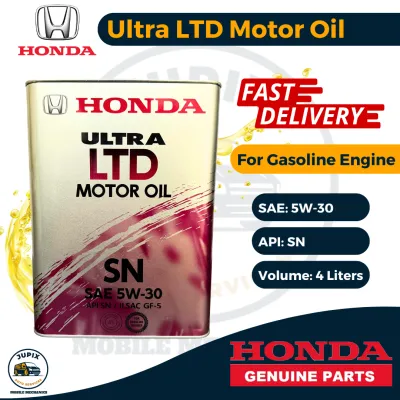

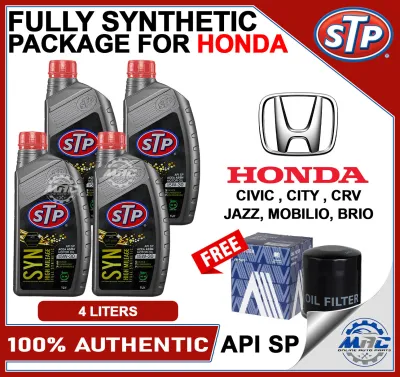


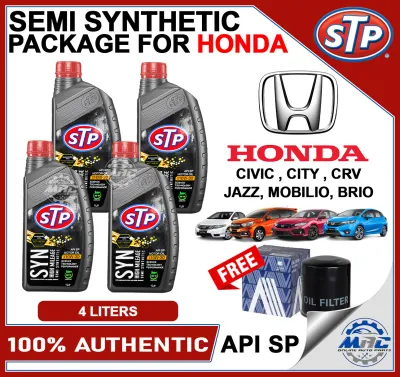
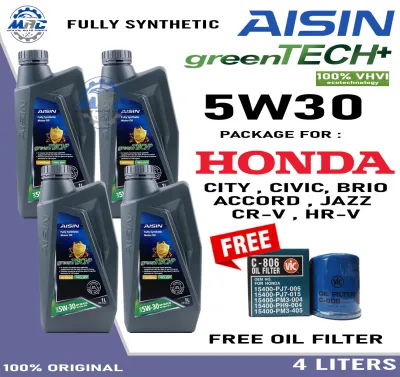

Prices are valid at publication and may change. Please refer to the product page for the latest price.
The second number in the code represents the oil’s viscosity, or thickness, at the engine’s normal operating temperature of 100°C. A higher second number means the oil maintains a thicker protective film under extreme heat.
Using an oil that is too thin at operating temperatures can lead to metal-on-metal contact, as the fluid film may shear under heavy loads. Conversely, choosing an oil that is too thick can restrict flow, increase internal friction, lower your fuel economy, and place unnecessary strain on the oil pump.
Finding the Factory Baseline for Your Specific CR-V
Before making any adjustments, you must establish your vehicle’s original factory baseline. The definitive source for this information is your Honda CR-V’s owner’s manual or the oil filler cap located under the hood. For the second-generation CR-V, Honda designated 5W-30 as the standard viscosity grade to ensure proper lubrication across all standard operating conditions.

Avoid guessing your oil requirements based on generic online forums or assuming that all CR-V generations share the same specifications. For instance, newer generations of the Honda CR-V are designed for ultra-thin oils like 0W-20 to maximize fuel efficiency. Pouring such a thin oil into a Gen 2 K-series engine can cause accelerated wear and high oil consumption due to the larger clearances of the older engine design.
Your manufacturer’s baseline should always serve as your starting point. Any decision to deviate from this baseline must be driven by verifiable vehicle conditions—such as high oil consumption or specific mechanical wear—rather than guesswork or casual recommendations.
Adapting to High Mileage and Tropical Climates
Operating a vehicle in the Philippines presents unique environmental challenges, including consistently high ambient temperatures and prolonged idling in heavy traffic. Over 15 to 20 years of service, the moving parts inside your CR-V’s engine naturally wear down. This wear increases the internal clearances between components like piston rings, cylinder walls, and crankshaft bearings. As these gaps widen, older engines may begin to consume lighter oils like 5W-30 more rapidly, leading to blue smoke from the exhaust or a dropping oil level between oil changes.
To combat this, some owners and mechanics in tropical climates choose to step up to a slightly thicker operating grade, such as 10W-30 or 10W-40. The thicker oil film helps seal the wider clearances, maintains adequate oil pressure when the engine is hot, and reduces the rate of oil consumption.
However, any change to a thicker viscosity must be treated as a conditional adjustment rather than a mandatory upgrade. Before permanently switching away from the factory baseline, you should consult a qualified mechanic, monitor your oil pressure, and listen closely for any unusual valvetrain noise.
This caution is particularly important for Honda’s i-VTEC system. The variable valve timing system relies on precise hydraulic oil pressure to engage and disengage the cam lobes. If the oil is excessively thick, it can slow down the response of the i-VTEC system or fail to pass through the delicate VTEC solenoid screens. This restriction can trigger a check engine light, cause rough idling, or reduce high-RPM performance.
Checking API Certifications and Ignoring Marketing Noise
While viscosity is a crucial factor, it is only half of the equation. To ensure your engine is fully protected, the oil you select must also meet modern performance standards. Always look for the American Petroleum Institute (API) certification mark on the bottle, which indicates that the oil has passed rigorous industry testing.
When the Gen 2 CR-V was manufactured, older API standards like SL or SM were the norm. Today, newer standards such as API SN and API SP are widely available. These modern specifications are fully backward-compatible, meaning they are safe to use in older engines and actually offer superior protection against sludge, varnish, and timing chain wear.
When shopping for oil, try to look past aggressive marketing claims. High-priced “racing” formulas or oils boasting exotic additives are rarely necessary for a daily-driven SUV. For standard commuting and family use, matching the correct viscosity grade and ensuring a modern API certification (like API SP) is far more important than paying a premium for brand-specific marketing.
Frequently Asked Questions (FAQ)
Can I mix different oil viscosity grades in an emergency?
Yes, but only in an emergency. If your oil level is dangerously low and you do not have access to your usual grade, topping off your engine with a different viscosity (such as adding 10W-40 to 5W-30) is acceptable to prevent the engine from running dry. However, mixing oils alters the overall viscosity and can dilute the specific additive packages of both fluids. You should treat this as a temporary fix and perform a complete oil and filter change as soon as possible to restore the correct formulation.
Will switching to a thicker oil stop my CR-V from burning oil?
Switching to a thicker oil like 10W-40 can slow down oil consumption if the loss is caused by minor wear around the piston rings or valve stem seals. However, a thicker oil is a temporary management strategy, not a cure for mechanical wear. If your engine has severely worn seals or damaged rings, no viscosity change will fix the underlying issue. Furthermore, using excessively thick oil to mask a mechanical problem can lead to poor lubrication during cold starts and can clog the fine mesh screens inside the VTEC solenoid, potentially causing severe top-end engine damage over time.
Community discussion
Share your experience or ask a question. Comments are reviewed before publication.