
Finding the right balance of stopping power and durability for your Honda CRF 250L depends heavily on matching the friction material to your specific riding conditions. Because this dual-sport motorcycle frequently transitions between congested city streets and muddy provincial trails, a single “perfect” brake pad does not exist. Instead, the ideal choice is determined by how well a pad’s material composition handles the heat, moisture, and debris of your typical routes. To make an informed decision, you must evaluate the trade-offs between sintered, semi-metallic, and organic compounds, while verifying compatibility with your bike’s original equipment manufacturer (OEM) specifications.
Understanding Brake Pad Materials for the CRF 250L
Brake pads are generally categorized into three primary material types: organic, semi-metallic, and sintered. Organic pads are made from a mixture of fibers, resins, and lubricants, such as rubber, glass, or Kevlar. These materials are relatively soft, providing a gentle, progressive bite that is highly predictable. Because they are soft, they cause minimal wear on your brake rotors, but they tend to wear down quickly when subjected to high heat or abrasive debris.
Semi-metallic pads introduce metallic fibers, such as copper or steel, into the organic mixture to increase heat resistance and durability. They offer a middle ground, providing stronger stopping power than pure organic pads while remaining relatively quiet and gentle on the rotors. However, they can still suffer from reduced performance when fully submerged in water or thick mud.
Products mentioned in this guide
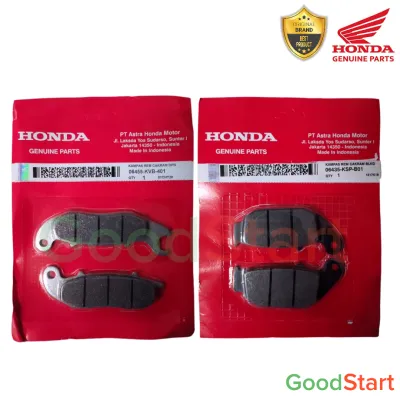
Prices are valid at publication and may change. Please refer to the product page for the latest price.
Sintered pads, or metallic pads, are manufactured by fusing metallic particles together under high pressure and temperature to create a dense, durable friction material. Sintered pads offer the strongest initial bite and maintain stopping power when wet, muddy, or hot. The trade-off is that they are highly abrasive, which accelerates rotor wear and can generate more brake noise.
When selecting replacement pads for your CRF 250L, always consult your motorcycle’s owner’s manual or service guide to check the recommended friction material. The original front and rear calipers are engineered to work within specific thermal and hydraulic limits. Deviating significantly from the manufacturer’s recommended material type can alter the braking bias and affect the overall handling of your motorcycle.
Key Factors Influencing Stopping Power and Durability
The environment in which you ride plays a massive role in how long your brake pads last and how quickly they can bring your motorcycle to a halt. In tropical climates like the Philippines, riders frequently encounter intense downpours, deep puddles, and muddy off-road trails. Wet and muddy conditions introduce abrasive grit between the pad and the rotor, which acts like sandpaper. Under these conditions, softer organic pads can wear down in a fraction of their normal lifespan, whereas sintered pads resist this abrasive wear much more effectively.

Conversely, daily commuting on paved roads in heavy city traffic presents a different set of challenges. Constant stop-and-go riding subjects the braking system to frequent, low-speed cycles that do not allow the pads to reach high operating temperatures. In this scenario, organic or semi-metallic pads often perform better because they do not require preheating to achieve their optimal coefficient of friction. Sintered pads, while highly durable, may feel slightly wooden or less responsive until they reach their ideal operating temperature.
The physical condition of your brake rotors and calipers also directly impacts perceived stopping power. A warped, grooved, or contaminated rotor prevents the brake pad from making full, even contact with the braking surface, leading to a spongy lever feel. Additionally, sticky caliper pistons can cause the pads to drag against the rotor continuously, generating excessive heat that leads to premature pad wear and severe brake fade during long descents.
Evaluating Brake Pad Categories for Dual-Sport Riding
Choosing the right replacement brake pads requires a clear understanding of how different categories perform in real-world dual-sport scenarios. Because the CRF 250L is designed for both highway cruising and rugged trail riding, aftermarket options are tailored to balance these contrasting demands in various ways.
OEM and Standard Replacement Pads
Original equipment manufacturer (OEM) and standard replacement pads are engineered to deliver predictable, consistent performance across a wide range of riding conditions. These pads typically utilize a balanced semi-metallic or specialized organic compound that matches the factory specifications of your CRF 250L. They offer a smooth, progressive bite that prevents the wheels from locking up unexpectedly on loose gravel or wet asphalt.
For riders who use their motorcycle primarily for daily commuting and light weekend trail riding, standard replacement pads offer excellent longevity and are highly rotor-friendly. They generate minimal brake dust and operate quietly, making them a reliable choice for urban environments.
Sintered and Performance Aftermarket Pads
Sintered aftermarket pads are the preferred choice for riders who demand maximum stopping power and durability under harsh conditions. The high metal content in these pads allows them to withstand extreme heat without experiencing brake fade, making them ideal for aggressive trail riding and steep descents. When riding through deep mud, river crossings, or heavy rain, sintered pads quickly clear water and debris from the contact patch to maintain a strong, reliable bite.
However, this high-friction performance comes with specific trade-offs. Sintered pads are significantly harder than organic or semi-metallic alternatives, which means they will wear down your brake rotors at a faster rate. They also require a brief warm-up period to reach their peak efficiency and can produce a noticeable squealing noise when cold or dusty.
Organic and Dual-Sport Specific Pads
Organic and dual-sport specific aftermarket pads are formulated to prioritize modulation and trail control over raw, high-temperature stopping power. These pads offer a very soft initial bite, allowing you to apply precise braking pressure without breaking traction on slippery surfaces like wet clay, wet grass, or loose rocks. This progressive feel is highly advantageous for technical off-road riding where locking up the front wheel could lead to an immediate fall.
The primary drawback of organic pads is their rapid wear rate, especially when exposed to mud, sand, and water. They are also highly susceptible to thermal degradation, meaning they can lose their stopping power if they become overheated during prolonged, heavy braking on paved roads.
How to Verify Compatibility and Safety Before Buying
Before purchasing any replacement brake pads, you must verify that they are fully compatible with your specific Honda CRF 250L model year. Motorcycle manufacturers often update caliper designs, mounting brackets, and pad dimensions during mid-generation refreshes. Always cross-reference the exact model year, engine displacement, and caliper type with the pad manufacturer’s official fitment catalog.
Safety should always be your top priority when selecting braking components. Look for recognized safety certifications and testing standards printed on the product packaging, such as the German TÜV certification, ECE R90 compliance, or specific friction ratings (such as HH ratings). These markings indicate that the pads have undergone rigorous testing to ensure they can withstand high temperatures and maintain structural integrity under extreme loads.
Additionally, you must inspect the physical condition of your brake rotors before installing new pads. Use a micrometer to measure the thickness of the rotor at several points around the braking surface, and compare these measurements to the minimum thickness specification stamped directly on the rotor carrier or listed in your service manual. If the rotor is worn below the limit, is deeply grooved, or shows signs of warping, it must be replaced immediately.
Decision Framework: Matching Pads to Your Riding Style
To select the most suitable brake pads for your CRF 250L, you should evaluate your primary riding habits and environmental conditions. If your daily routine consists of commuting through city traffic with occasional weekend rides on light, dry dirt roads, standard OEM or high-quality semi-metallic replacement pads are highly recommended. This combination provides a quiet ride, predictable stopping power, and excellent rotor longevity, keeping your maintenance costs low.
If your adventures frequently take you into wet, muddy terrain, steep mountain trails, or if you carry heavy luggage, sintered aftermarket pads are the logical choice. Their ability to resist abrasive wear from mud and maintain a strong bite in wet conditions outweighs the trade-off of accelerated rotor wear. Before upgrading, verify that your current brake rotors are rated for sintered materials, as some entry-level rotors are designed exclusively for organic pads.
For riders who focus almost entirely on technical, low-speed off-road trail riding where traction is limited, specialized organic or dual-sport pads are the ideal option. The superior modulation and progressive lever feel allow you to navigate tricky obstacles without locking up your wheels.
Installation and Break-In Safety Guidelines
Replacing brake pads is a critical safety task that directly affects the control and stopping ability of your motorcycle. If you are unsure about any part of the replacement process, or if your brake calipers require rebuilding or the hydraulic system needs bleeding, always consult a qualified motorcycle mechanic. Incorrectly installed pads or air trapped in the brake lines can lead to complete brake failure, posing a severe safety risk to you and other road users.
Once the new pads are installed, you must perform a proper break-in, or “bedding-in,” procedure as specified by the pad manufacturer. This process involves performing a series of controlled, gradual stops from moderate speeds to transfer a thin, even layer of friction material from the pad onto the rotor surface. Bedding-in ensures optimal contact, prevents glazing, and maximizes both stopping power and pad life.
Avoid immediate high-speed riding or aggressive, heavy braking immediately after installation. Until the pads and rotors have properly mated, your stopping distances will be significantly longer, and the brakes may feel spongy or unresponsive.
Frequently Asked Questions (FAQ)
Can I mix different brake pad brands or materials between the front and rear calipers?
Yes, you can use different materials or brands on the front and rear calipers, but you must do so with caution. Many dual-sport riders prefer a high-friction sintered pad on the front for maximum stopping power, combined with a softer organic or semi-metallic pad on the rear to prevent the rear wheel from locking up too easily on loose dirt. However, you should never mix different materials within the same caliper. Always ensure that the front and rear setups are chosen deliberately to maintain a balanced, predictable braking bias that suits your riding style.
How do I know if my CRF 250L brake rotors need replacing along with the pads?
You can determine if your rotors need replacement through visual, tactile, and physical measurements. Inspect the rotor surface for deep grooves, scoring, or a distinct blue discoloration, which indicates severe overheating. Run a fingernail gently across the braking surface; if you feel deep ridges or a pronounced lip at the outer edge, the rotor is heavily worn. Finally, use a micrometer to measure the rotor’s thickness. If the measurement is at or below the minimum thickness limit stamped on the rotor, it must be replaced to ensure safe operation.
Community discussion
Share your experience or ask a question. Comments are reviewed before publication.