
Finding the Correct Oil Viscosity for Your Honda Jazz
The ideal engine oil viscosity for your Honda Jazz is not a one-size-fits-all specification; it depends heavily on your car’s model year, generation, and specific engine code. For modern Honda Jazz generations, such as the third-generation GK or newer models equipped with modern i-VTEC engines, manufacturers typically recommend a low-viscosity 0W-20 oil. Older generations, like the first-generation GD or second-generation GE, often utilize 5W-30 or 10W-30 grades. To ensure you are using the correct formulation, always verify the exact specification in your vehicle’s Owner’s Manual or check the label printed on the oil filler cap inside the engine bay.
When shopping for your honda jazz oil, baseline quality is just as important as the viscosity numbers. Look closely at the oil container for official API (American Petroleum Institute) certification marks, such as the API “Starburst” or “Donut” symbols, which often carry ratings like API SP or ILSAC GF-6. These certifications guarantee that the oil meets modern standards for wear protection, deposit control, and fuel efficiency.
Decoding Viscosity Grades: What the Numbers Actually Mean
Understanding the Society of Automotive Engineers (SAE) multi-grade system helps demystify the numbers printed on every bottle of engine oil. A grade like 0W-20 or 5W-30 represents how the fluid behaves at extreme low and high temperatures.
Products mentioned in this guide
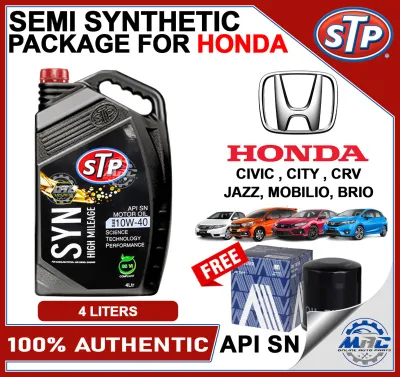
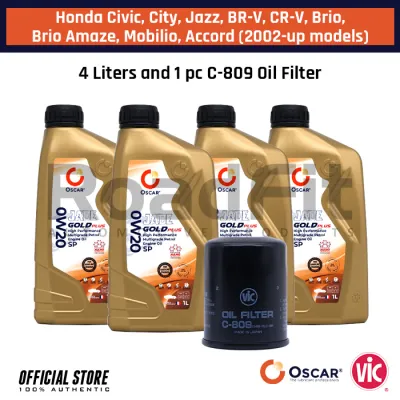
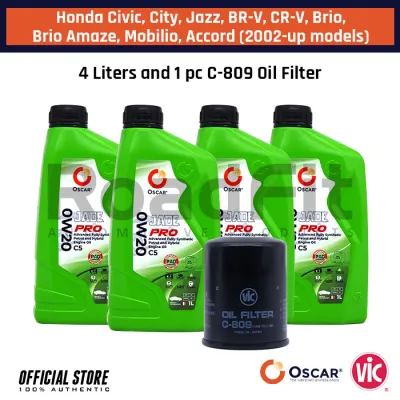
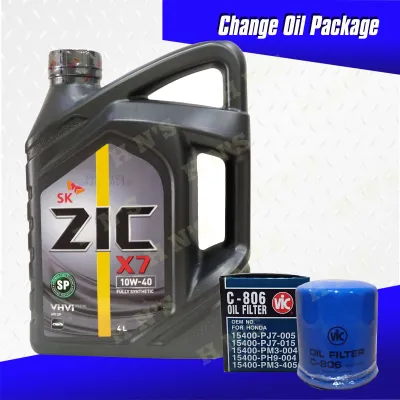

Prices are valid at publication and may change. Please refer to the product page for the latest price.

The first number, followed by the letter “W” (which stands for Winter), indicates the oil’s cold-flow capability. A lower number before the “W” means the oil remains more fluid at cold start-up, allowing it to pump quickly through the engine block to protect critical components during those vital first few seconds of operation. Even in tropical environments, initial startup is when a significant portion of engine wear occurs, making quick oil circulation essential.
The second number represents the oil’s kinematic viscosity at normal engine operating temperature, typically measured at 100 degrees Celsius. A higher second number indicates a thicker oil film at operating temperatures. For example, a 30-weight oil is thicker at operating temperature than a 20-weight oil. This thickness provides physical cushioning between moving metal parts.
A common misconception among vehicle owners is that a lower viscosity number, such as 0W-20, offers “weaker” protection than a thicker oil. In modern Honda engines, this is not the case. Modern i-VTEC engines are engineered with incredibly tight internal tolerances and clearances between moving parts. These tight spaces require a thinner, fast-flowing oil to penetrate and lubricate effectively. Using an excessively thick oil can actually prevent proper lubrication, increase internal drag, and reduce overall engine efficiency.
Choosing the Right Grade for Tropical Climates and City Driving
Operating a vehicle in the Philippines presents unique environmental and driving challenges. High ambient temperatures, intense tropical humidity, and notorious stop-and-go city traffic in metropolitan areas like Manila or Cebu put significant thermal stress on your engine. Under these conditions, the engine runs hot, and the cooling system works overtime to maintain stable operating temperatures.
Some drivers wonder if they should switch to a thicker oil to compensate for the hot climate. While a slightly higher viscosity (such as moving from a 0W-20 to a 5W-30) might be considered for older, high-mileage Honda Jazz engines that have experienced natural wear, this adjustment must be strictly conditional on what is permitted in your Owner’s Manual. Honda designs its cooling systems to regulate engine temperatures effectively, meaning the internal oil temperature remains within a controlled range regardless of external weather.
Heavy stop-and-go traffic is particularly harsh on engine oil. Idling in traffic for extended periods reduces airflow through the radiator, accelerating thermal breakdown and oil degradation. This environment can lead to the formation of harmful engine sludge if the oil is not designed to withstand prolonged heat.
You should strongly avoid arbitrarily choosing a thick, heavy-duty oil (such as a 15W-40 or 20W-50) simply because of local heat. Thicker oils place unnecessary strain on the oil pump, reduce fuel economy, and can seriously disrupt the hydraulic operation of the VTEC system, which relies on precise oil pressure to engage and disengage the variable valve timing.
Synthetic vs. Conventional: Which Formulation is Best?
When purchasing engine oil for your Honda Jazz, you will choose between three primary formulations: full synthetic, synthetic blend, and conventional motor oil. The formulation you choose directly impacts how well the oil maintains its viscosity over time.
Low-viscosity grades like 0W-20 are almost exclusively formulated as full synthetic oils. This is because conventional base oils cannot naturally achieve the ultra-low flow characteristics required for a 0W rating while remaining stable at high operating temperatures. Full synthetic oils are chemically engineered to offer superior molecular uniformity, which translates to excellent thermal stability and resistance to oxidation.
In contrast, conventional oils degrade much faster under heat, leading to quicker viscosity breakdown and a higher likelihood of sludge buildup. Synthetic blends offer a middle ground, combining synthetic and conventional base stocks to provide better protection than pure conventional oil at a slightly lower price point.
For optimal engine protection and longevity, full synthetic oil is highly recommended for the Honda Jazz. Full synthetic formulations align perfectly with Honda’s Maintenance Minder system, ensuring the oil maintains its protective properties throughout the entire service interval, even under demanding driving conditions.
Checking and Maintaining Your Engine Oil Level
Regularly checking your oil level is a simple, low-risk maintenance practice that prevents catastrophic engine damage. To get an accurate reading, park your Honda Jazz on level ground, turn off the engine, and allow it to sit for five to ten minutes so the oil can drain back down into the oil pan.
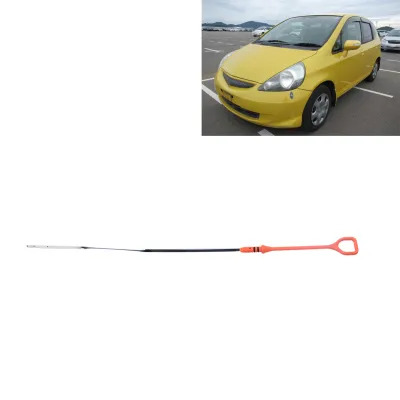
Locate the engine oil dipstick (typically featuring an orange or yellow handle), pull it out, and wipe it clean with a lint-free cloth. Reinsert the dipstick fully into its tube, then pull it out again to inspect the oil level. The oil film should rest between the two upper and lower indicator marks or holes on the tip of the dipstick.
While checking the level, observe the visual condition of the oil. Fresh or healthy oil displays a clear, amber or light brown color. If the oil appears milky or resembles coffee with milk, this indicates coolant contamination, which points to a blown head gasket or internal engine damage requiring immediate professional inspection. Excessively gritty or pitch-black oil filled with debris suggests the oil is overdue for a change.
If the level is low, top up the oil using the exact viscosity grade recommended for your engine. Pour the oil in small increments through the oil filler neck, checking the dipstick frequently to avoid overfilling. Overfilling can cause the crankshaft to whip the oil into a froth, introducing air bubbles that reduce the oil’s ability to lubricate and protect moving parts.
Frequently Asked Questions (FAQ)
Can I mix 0W-20 and 5W-30 oil in my Honda Jazz?
In an emergency scenario where your oil level is dangerously low, mixing 0W-20 and 5W-30 oil is acceptable to prevent the engine from running dry. However, mixing different viscosities alters the overall flow characteristics and compromises the specific protection profile designed for your engine. You should return to the manufacturer-recommended single viscosity and perform a complete oil and filter change as soon as possible.
How often should I change the engine oil in my Honda Jazz?
Rather than relying on generic, outdated mileage rules, you should follow the prompts of the Honda Maintenance Minder system on your dashboard. This system monitors engine operating conditions, start-up temperatures, and driving habits to calculate oil life. If your vehicle does not have this system, or if you frequently drive in severe conditions—such as heavy stop-and-go traffic, short trips under 8 kilometers, or extreme tropical heat—refer to the severe service schedule in your Owner’s Manual, which typically recommends more frequent oil changes.
Community discussion
Share your experience or ask a question. Comments are reviewed before publication.