
Quick Answer: Which PCX Radiator Fan Should You Buy?
Choosing between a genuine Honda OEM and a third-party aftermarket radiator fan for your Honda PCX depends on your daily riding conditions, budget, and tolerance for maintenance. The radiator fan is a critical component of your scooter’s liquid-cooling system, and making the wrong choice can lead to severe engine damage.
For riders who frequently navigate heavy, stop-and-go traffic in hot tropical conditions, take long provincial tours, or regularly carry heavy loads, the Genuine Honda OEM fan is the highly recommended investment. It guarantees factory-matched cooling performance, precise electrical compatibility, and long-term durability that keeps your engine operating within safe temperature limits.
An aftermarket radiator fan from a reputable, established brand is a practical, cost-effective choice for budget-conscious riders who primarily use their scooter for short, light city commutes during cooler hours, or for older, high-mileage PCX models where the cost of OEM parts is disproportionately high relative to the scooter’s current market value. However, you must avoid the cheapest, unbranded aftermarket fans, as they carry a high risk of electrical failure, poor airflow, and catastrophic engine overheating.
Products mentioned in this guide
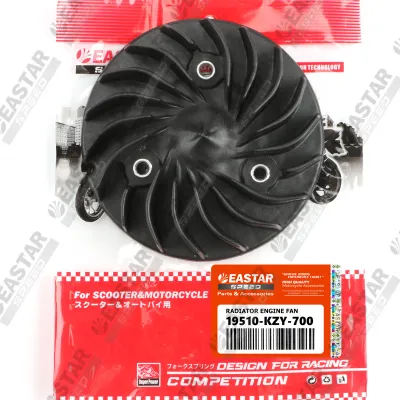
Prices are valid at publication and may change. Please refer to the product page for the latest price.
OEM vs Aftermarket PCX Fans: Comparing the Trade-Offs
While a radiator fan is a relatively small and hidden component, it plays a massive role in maintaining the thermal equilibrium of liquid-cooled scooters like the Honda PCX. When your scooter is idling at a red light or stuck in a gridlock, there is no natural wind passing through the radiator fins. The fan is the sole mechanism preventing the coolant temperature from spiking.

Deciding between an OEM and an aftermarket replacement requires weighing three primary factors: upfront purchase cost, cooling reliability under extreme heat, and the long-term build quality of the motor and blades. Below is a summary of how these two categories generally compare across these dimensions:
- Genuine Honda OEM Fan: High upfront cost, limited but highly reliable sourcing, perfect factory-spec cooling performance, low electrical draw, exceptional durability, and whisper-quiet operation.
- Reputable Aftermarket Fan: Moderate to low cost, highly accessible, variable cooling performance (ranging from OEM-matching to subpar), potential for higher electrical draw, moderate lifespan, and occasional minor fitment adjustments required.
- Unbranded/Ultra-Cheap Aftermarket Fan: Extremely low cost, highly accessible, poor airflow, high risk of premature motor seizure, high electrical resistance, and no quality control or warranty protection.
Price and Sourcing
Genuine Honda OEM radiator fans carry a premium price tag, typically ranging from ₱1,500 to ₱3,500 or more, depending on your specific PCX model year (such as the PCX 150 or PCX 160). These parts are manufactured under strict quality standards and are primarily sourced through authorized Honda 3S dealerships or official brand flagship stores. Because dealerships do not always keep specialized electrical parts in stock, you may have to wait several days or weeks for the part to be ordered and delivered.
In contrast, aftermarket radiator fans are widely available across local motorcycle parts shops and major online marketplaces. Prices for aftermarket alternatives are significantly lower, usually ranging from ₱400 to ₱1,200. This makes them highly attractive if you need an immediate, budget-friendly replacement.
When sourcing your replacement fan, you must factor in the total cost of ownership, including shipping fees, delivery times, and return policies. Electrical components bought online are frequently marked as non-returnable once opened or installed, meaning a defective ultra-cheap fan can quickly become a sunk cost. It is wise to check current local dealership pricing first; sometimes the price gap is smaller than expected, making the OEM path more accessible than online listings suggest.
Cooling Performance and Motor Specs
Your Honda PCX relies on a highly calibrated cooling loop. The engine control unit (ECU) monitors the engine coolant temperature (ECT) sensor and triggers the radiator fan relay when the temperature reaches a specific threshold (typically around 95°C to 100°C). Genuine OEM fans are engineered to deliver the exact cubic feet per minute (CFM) of airflow required to pull heat away from the radiator core rapidly, bringing the coolant temperature back down to safe operating levels within seconds.
Aftermarket fans exhibit highly variable performance. While some premium third-party manufacturers design their motors to match OEM airflow specifications, many budget options utilize weaker, lower-torque motors. These subpar motors spin slower and fail to pull sufficient air through the radiator fins, causing the fan to run continuously without successfully lowering the engine temperature.
Furthermore, you must pay close attention to the electrical specifications of any aftermarket fan. The PCX’s electrical system, powered by an ACG starter-generator, is sensitive to voltage fluctuations. An aftermarket fan motor with an excessively high amperage rating can overload the wiring harness, blow the main cooling fuse, or even damage the delicate circuits within the ECU. Always verify the motor’s amperage and voltage ratings on the product label or listing before purchasing.
Build Quality and Lifespan
Under the hood of your scooter, components are subjected to extreme heat cycles, road vibrations, and environmental exposure. Genuine Honda OEM fans are constructed using high-grade, glass-fiber reinforced polyamide or heat-resistant plastics (such as PA66-GF30). These materials resist warping, cracking, and degradation even after years of exposure to engine heat. Additionally, OEM fan blades are dynamically balanced at the factory to ensure they spin smoothly without causing vibrations that could stress the radiator shroud or mounting brackets.
Cheap aftermarket fans often compromise on materials, utilizing brittle, non-reinforced ABS plastics that can warp under intense engine bay heat. If the blades warp, they can begin to scrape against the radiator shroud, leading to plastic debris entering the radiator or causing the motor to seize entirely. Unbalanced blades also generate high-frequency vibrations that can loosen mounting bolts over time.
Another critical difference lies in the internal bearings of the fan motor. OEM motors utilize high-quality, sealed double-ball bearings designed to keep out road dust, grime, and water during heavy monsoon downpours. Many budget aftermarket alternatives use cheap sleeve bearings that dry out quickly in dusty environments, leading to loud grinding noises, increased electrical resistance, and premature motor failure.
When a Genuine Honda OEM Fan is the Better Investment
Paying the premium for a Genuine Honda OEM radiator fan is highly justified in several specific riding scenarios where reliability is non-negotiable. If your daily routine demands the absolute best from your scooter, cutting corners on cooling components can lead to expensive engine rebuilds.
Heavy Traffic and Tropical Climates
If you use your PCX for daily commuting through congested metropolitan areas like Manila, Cebu, or Davao, your engine faces some of the harshest thermal environments possible. Creeping along major highways in 34°C ambient heat means your radiator receives zero natural ram-air cooling. In this stop-and-go scenario, your radiator fan must cycle on and off constantly. The OEM fan’s superior heat dissipation, high CFM output, and robust thermal management ensure that your engine remains cool, protecting your cylinder head gasket from warping.
Touring and Heavy Loads
For riders who enjoy long-distance provincial tours, tackle steep mountain climbs (such as the Marilaque Highway or roads leading up to Baguio and Tagaytay), or frequently ride two-up with heavy luggage, the engine operates under sustained high loads. These conditions generate massive amounts of internal combustion heat. An OEM fan provides the guaranteed cooling capacity needed to handle these extreme loads, giving you peace of mind that your scooter will not leave you stranded on a remote mountain pass.
Peace of Mind and Warranty Protection
If your Honda PCX is relatively new or still covered under a manufacturer or dealership warranty, installing non-genuine electrical parts can void your coverage. OEM fans offer a true plug-and-play installation with zero modifications required. The connectors, mounting tabs, and wire lengths are identical to the factory-installed unit. Choosing OEM protects your broader investment in the scooter’s engine, stator, and ECU, ensuring that all electrical loads remain perfectly balanced within factory parameters.
When an Aftermarket PCX Fan Makes Sense
While OEM is the gold standard, there are practical, logical scenarios where a high-quality aftermarket radiator fan is a sensible and cost-effective alternative.
Short Commutes and Light Traffic
If your scooter is primarily used for quick, low-speed errands around your neighborhood, short office commutes, or riding during the cooler early morning and evening hours, your engine rarely reaches extreme thermal limits. Under these light-duty conditions, the radiator fan runs infrequently and for very short durations. A mid-tier, reputable aftermarket fan can easily handle these low-stress demands without requiring you to spend a premium on OEM parts.
Older or High-Mileage PCX Models
For older generations of the Honda PCX (such as early PCX 150 models) that have accumulated high mileage, the overall resale value of the scooter has naturally depreciated. Spending a significant sum on a brand-new OEM fan might represent a disproportionate percentage of the vehicle’s total worth. In this case, sourcing a reliable, well-reviewed aftermarket fan from an established third-party brand allows you to keep the scooter running safely and economically without over-investing in an aging asset.
Emergency Roadside Replacements
If your radiator fan fails unexpectedly during a road trip far from major cities, finding an authorized Honda 3S dealership with the exact OEM fan in stock can be incredibly difficult. Local roadside motorcycle repair shops are far more likely to carry universal or aftermarket parts designed for popular scooters like the PCX. In this emergency scenario, buying a reputable aftermarket fan gets you back on the road safely, preventing the high costs and logistical headaches of towing your scooter home.
Crucial Checks Before You Buy and Install
Before purchasing a replacement radiator fan, you must perform a series of diagnostics and compatibility checks. This ensures that you are addressing the actual root cause of your cooling issues and that your new part will install safely.
1. Diagnose the Root Cause First
Do not assume a rising temperature gauge automatically means your fan motor is dead. A failing fan can be a symptom of a different issue, or the fan itself might be perfectly fine. Before buying a replacement, perform these diagnostic steps:
- Check Coolant Levels: Ensure your coolant reservoir and the radiator itself are filled to the proper levels. Only open the radiator cap when the engine is completely cold to prevent severe steam burns.
- Inspect the Radiator Fins: Check for accumulated mud, road debris, or bent metal fins that physically block airflow. Clean the radiator gently with low-pressure water if necessary.
- Test the Fan Motor Directly: Locate the fan's electrical connector. Disconnect it from the main wiring harness and use jumper wires to apply 12V power directly from your scooter's battery to the fan terminals. If the fan spins smoothly and quietly, the motor is functional, and your issue lies elsewhere.
- Check Fuses and Relays: Inspect the cooling fan fuse in your fuse box. If it is blown, replace it with a fuse of the exact same amperage rating. You should also test the fan relay and the engine coolant temperature (ECT) sensor to ensure they are sending the correct signals to trigger the fan.
2. Verify the Connector and Interface
If you determine the fan is indeed faulty, double-check the physical and electrical interface of the replacement part. Honda PCX models have evolved across several generations (125cc, 150cc, and 160cc), and their electrical connectors and mounting brackets are not always interchangeable.
Always verify that the replacement fan features a direct plug-and-play connector that matches your scooter’s wiring harness. Avoid cutting, stripping, or splicing wires to force a non-compatible fan to fit. Poorly spliced wires introduce electrical resistance, which generates heat, degrades over time under exposure to moisture, and poses a serious short-circuit or fire risk.
3. Check Mounting and Shroud Fitment
When installing the new fan, ensure that it aligns perfectly with the existing plastic radiator shroud. The fan must sit flush against the mounting points. If you are installing an aftermarket fan, verify that it includes or accommodates the original rubber vibration isolators (bushings).
Before securing the radiator assembly back onto the scooter, manually spin the fan blades with your fingers. Ensure there is adequate clearance and that the blades do not strike or scrape against the inner walls of the plastic shroud. Any physical contact will quickly damage the blades, stress the motor, and cause loud noises once the engine is running.
4. Professional Safety Boundaries
Working on your scooter’s electrical and cooling systems carries inherent safety risks. Always consult your vehicle’s official manufacturer service manual for detailed disassembly steps, wiring diagrams, and torque specifications. Before starting any electrical work, always disconnect the negative battery terminal to prevent accidental short circuits.
If you are uncomfortable using a multimeter, testing live 12V electrical circuits, routing wires near hot engine components, or properly bleeding air from the cooling system after a radiator removal, do not attempt the installation yourself. Stop and consult a qualified motorcycle mechanic at an authorized service center to ensure the job is completed safely and correctly.
Frequently Asked Questions (FAQ)
Can an aftermarket fan cause my PCX to overheat?
Yes. If you install a low-quality, unbranded aftermarket fan, it can absolutely cause your Honda PCX to overheat. Subpar fans often feature weak motors that fail to pull enough air (low CFM) through the radiator core, especially when the scooter is idling in hot tropical traffic. Additionally, cheap motors are prone to premature seizure or electrical failure. To minimize this risk, always choose a reputable, well-reviewed aftermarket brand and verify that its electrical draw and airflow specifications match the original factory requirements.
How do I know if my PCX radiator fan is actually failing?
There are several common symptoms that indicate your PCX radiator fan is failing or has stopped working entirely:
- The high-temperature warning light on your dashboard illuminates, or your digital temperature gauge rises rapidly into the hot zone when idling in traffic.
- You notice coolant boiling over or leaking from the reservoir overflow tank.
- You do not hear the fan activate, or you do not feel hot air blowing out of the right-side radiator vent when the engine is hot and idling.
- The fan makes unusual grinding, squealing, or clicking noises when it spins, indicating worn-out internal bearings or warped blades scraping against the shroud.
Do I need to replace the fan shroud when changing the fan motor?
In most cases, you do not need to replace the plastic fan shroud when replacing a faulty radiator fan. The fan motor and blade assembly are typically designed to be unbolted and removed from the shroud, allowing you to reuse the original Honda plastic housing. However, you must carefully inspect the old shroud for any signs of physical damage, such as cracks, broken mounting tabs, or melted plastic caused by engine overheating. If the shroud is damaged or warped, it must be replaced alongside the fan to ensure proper airflow direction and secure mounting.
Community discussion
Share your experience or ask a question. Comments are reviewed before publication.