
Choosing the right primary clutch for your Honda Wave 125 is a critical decision that directly impacts the motorcycle’s power delivery, fuel efficiency, and long-term durability. As one of the most reliable and widely used underbone motorcycles in the Philippines, the Honda Wave 125 serves as a daily workhorse for commuting, delivery services, and family transport. When the primary clutch begins to slip or wear out, riders are faced with a common dilemma: should they invest in a genuine Honda Original Equipment Manufacturer (OEM) part, or opt for a more budget-friendly aftermarket alternative? Making the wrong choice can lead to recurring mechanical issues, increased maintenance costs, and potential engine damage.
The genuine Honda OEM primary clutch remains the default recommendation for daily commuters seeking exact factory fitment, balanced rotational weight, and long-term reliability under demanding riding conditions. Because it is engineered to meet strict factory specifications, it minimizes the risk of premature wear and ensures smooth power transfer. However, reputable aftermarket options serve as highly viable, budget-friendly alternatives for older motorcycles, light-duty casual riding, or emergency repairs when OEM parts are out of stock. To help you navigate this choice, the following decision framework outlines when to invest in genuine components and when a third-party alternative is appropriate.
- Choose OEM if: You rely on your Honda Wave 125 for heavy daily commuting, carry frequent heavy loads or pillion passengers, prioritize exact factory tolerances, and want to minimize the risk of premature spline wear, clutch chatter, or engine vibration.
- Choose Aftermarket if: You are working with a strict repair budget, restoring an older Wave 125 for casual neighborhood use, or need an immediate replacement because the OEM part is currently out of stock at local authorized dealerships.
- Verify first if: You are considering an aftermarket primary clutch; you must physically verify the internal spline count, hub depth, and overall machining quality against your original worn-out part before proceeding with the installation.
- Neither may fit if: The motorcycle's crankshaft splines are already stripped, rounded, or physically damaged; a new primary clutch of any brand cannot fix a worn crankshaft and will fail immediately, requiring professional engine machining or crankshaft replacement.
Role of the Primary Clutch and Signs of Wear
The primary clutch, often referred to by local mechanics as the clutch boss or inner clutch center, plays a vital role in the motorcycle’s semi-automatic transmission system. Mounted directly onto the engine’s crankshaft, this component acts as the mechanical bridge that transfers rotational power from the engine’s combustion stroke to the clutch plates and ultimately to the gearbox. It must handle high torque, rapid RPM transitions, and constant friction while maintaining precise alignment. Because the Honda Wave 125 relies on a centrifugal primary clutch paired with a manual-style secondary clutch, any wear on the primary unit directly degrades the overall rideability and responsiveness of the motorcycle.
Products mentioned in this guide
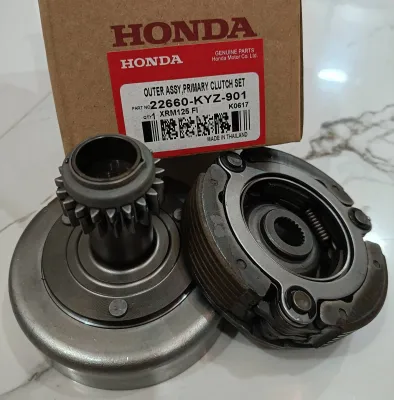
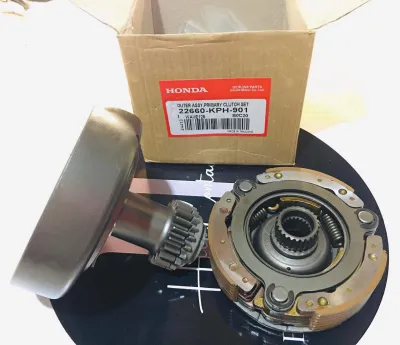
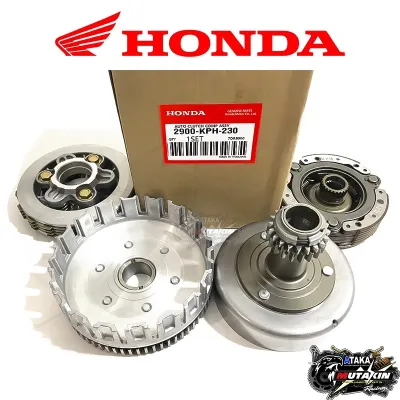
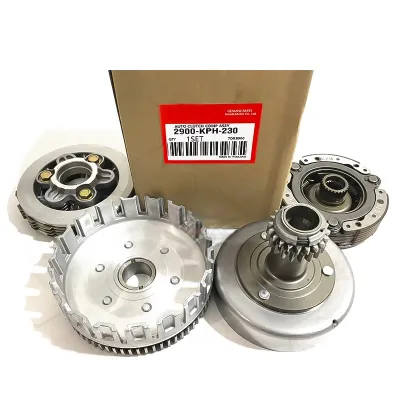
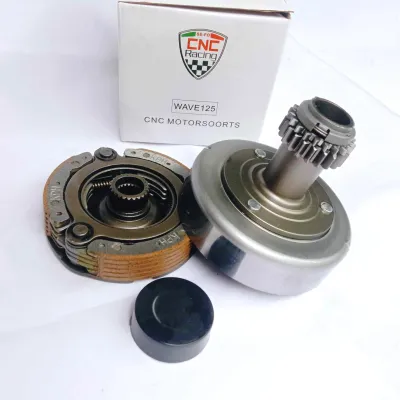
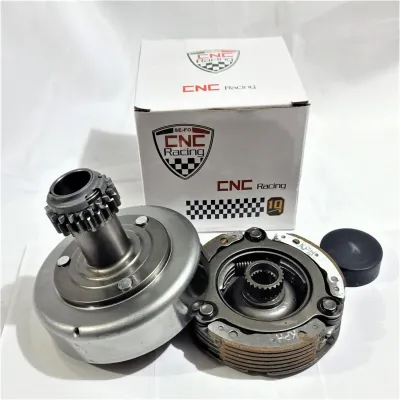
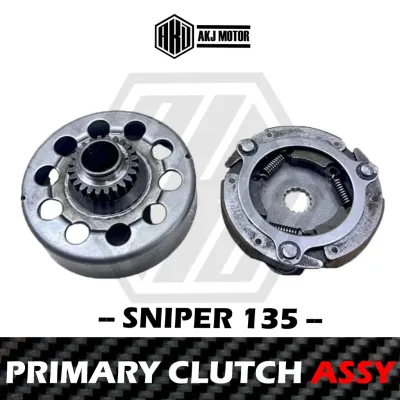
Prices are valid at publication and may change. Please refer to the product page for the latest price.
Recognizing the early warning signs of primary clutch failure can prevent minor issues from escalating into costly engine damage. One of the most common diagnostic signals is stripped internal splines, which causes the engine to rev high while the motorcycle struggles to accelerate, especially when climbing steep inclines or carrying heavy loads. Another clear symptom is excessive lateral play or wobble in the clutch assembly, which manifests as a distinct metallic chattering or rattling noise coming from the right side of the crankcase. Additionally, if the plate slots develop uneven wear grooves over time, the clutch plates will fail to slide smoothly, causing the clutch to drag, making gear shifts stiff, and making it extremely difficult to find neutral when idling.
Accurately diagnosing a faulty primary clutch requires a hands-on inspection that involves draining the engine oil and removing the right-side crankcase cover. Once inside, you must physically inspect the primary clutch assembly for physical play, visible wear on the splines, and deep ridges along the plate contact channels. It is highly recommended to inspect the outer clutch basket, or clutch housing, simultaneously during this process. A worn or wobbling primary clutch often inflicts secondary damage on the clutch basket, and replacing only one of these components while leaving a damaged counterpart in place will rapidly accelerate wear on the new part, failing to resolve the underlying issue.
Genuine Honda (OEM) Clutch: Fitment and Long-Term Reliability
Opting for a genuine Honda OEM primary clutch ensures that your motorcycle receives a component manufactured to the exact engineering standards of the original factory build. This guarantees perfect compatibility with the specific engine variant of your Honda Wave 125, whether it is an older carburetor model or a newer fuel-injected version. The precise spline count, hub diameter, and overall weight balance of the OEM clutch are meticulously calibrated to match the rotational mass of the crankshaft. This exact calibration ensures smooth power delivery across the entire RPM range and eliminates the risk of high-frequency engine vibrations that can gradually degrade internal engine bearings.

The superior durability of the genuine Honda primary clutch is rooted in its high-grade metallurgy and advanced heat-treatment processes. The internal splines are hardened to resist the immense shearing forces exerted by the crankshaft during rapid acceleration and heavy engine braking. Furthermore, the slots where the clutch plates slide are machined to extremely tight tolerances with an ultra-smooth finish. This prevents the edges of the clutch plates from digging into the aluminum or steel housing, ensuring consistent and predictable clutch engagement over tens of thousands of kilometers of riding in hot, humid tropical conditions.
Despite these clear mechanical advantages, choosing an OEM primary clutch has practical limitations, primarily regarding cost and sourcing. Genuine Honda parts command a premium price in the Philippines, which can be a significant financial burden for budget-conscious riders or commercial delivery riders. Additionally, availability can sometimes be an issue outside major urban centers. If local authorized motorcycle dealerships do not have the specific part number in stock, riders may face prolonged downtime while waiting for backordered parts to arrive from regional distribution hubs.
Another critical challenge when sourcing genuine parts is the prevalence of counterfeit components in the market. Due to the high demand for Honda parts, many unverified online marketplaces and informal shops sell cheap replicas packaged in convincing counterfeit boxes. These fake “genuine” clutches are often made from brittle, low-grade cast metals that can easily crack or strip under load, leading to catastrophic engine failure. To protect your investment and ensure your safety on the road, always purchase OEM parts exclusively from authorized Honda motorcycle dealerships or official brand flagship stores.
Aftermarket Alternatives: Budget Repairs and Quality Variance
Aftermarket primary clutches represent a highly popular alternative for riders seeking a cost-effective and immediate solution to transmission issues. In the Philippines, these third-party components are widely available in almost every local motorcycle parts shop, offering a convenient option for quick repairs. The primary appeal of aftermarket clutches is their significantly lower price point, which is often a fraction of the cost of a genuine OEM part. For owners of older Honda Wave 125 models or those who use their motorcycles primarily for short, casual trips, the cost savings of an aftermarket clutch can make it an attractive and practical choice.
However, the aftermarket segment is characterized by extreme quality variance, and the term “aftermarket” does not represent a single standard of manufacturing. The market is divided between reputable, established third-party brands that specialize in motorcycle transmission components and unbranded, ultra-cheap parts imported from anonymous manufacturers. High-quality aftermarket brands often utilize decent materials and maintain reasonable quality control, producing parts that offer reliable performance for standard daily commuting. Conversely, unbranded or generic parts are frequently manufactured with minimal quality oversight, resulting in significant dimensional inconsistencies and structural weaknesses.
Choosing a low-grade, unbranded aftermarket primary clutch introduces several mechanical risks that can compromise your motorcycle’s performance and safety. These inferior parts are often made from softer metal alloys that lack proper heat treatment, making the internal splines highly susceptible to stripping within a few months of use. Furthermore, slight weight imbalances in cheap castings can introduce noticeable engine vibrations at higher speeds, which not only ruins ride comfort but also places destructive lateral loads on the crankshaft and main engine bearings. Rough, unpolished plate slots on low-quality clutches can also cause the clutch plates to stick, leading to rapid friction material wear and contaminating your engine oil with metallic debris.
To mitigate these risks, riders must adopt a careful evaluation strategy when shopping for aftermarket alternatives. Instead of simply purchasing the cheapest option available on the shelf or online, focus on identifying established aftermarket brands that have a proven track record among local mechanics and riders. Look for products that feature clear, professional packaging, visible manufacturer markings, and positive, verifiable reviews from other Honda Wave 125 owners. Investing a little extra in a reputable aftermarket brand ensures a much safer balance between cost savings and mechanical reliability.
Critical Specifications to Verify Before Purchase
Before purchasing any primary clutch for your Honda Wave 125, it is essential to verify several critical specifications to ensure perfect compatibility and prevent installation headaches. Because the Wave 125 has undergone various design updates and engine iterations over the years, relying solely on a generic product label is a common pitfall. You must take proactive steps to measure and inspect the physical characteristics of the replacement part against your original OEM clutch to avoid purchasing an incompatible component.
The most critical interface to verify is the internal spline count and profile. The splines on the primary clutch must mesh perfectly with the splines on the engine’s crankshaft without any perceptible play. Before placing an order or leaving the parts shop, physically count the number of teeth on the inner hub of your removed OEM clutch and ensure the new part matches this count exactly. Attempting to force a clutch with an incorrect spline count or a slightly different spline profile onto the crankshaft will instantly strip the threads and teeth, resulting in a highly expensive crankshaft replacement.
In addition to the spline configuration, you must evaluate the weight, balance, and overall machining quality of the replacement clutch. A primary clutch that is significantly heavier or lighter than the factory specification will disrupt the engine’s rotating balance, causing severe vibrations and affecting fuel economy. Visually inspect the part under bright light; the splines should be sharp and cleanly cut, and the channels where the clutch plates slide must be completely smooth and free of burrs or casting flash. Any rough edges or imperfections along these channels will prevent the clutch plates from moving freely, leading to immediate clutch dragging and hard shifting.
To assist you in evaluating a replacement primary clutch before installation, use the following verification checklist to compare the new part against the expected OEM standards.
Primary Clutch Verification Checklist
| Specification | OEM Expectation | Aftermarket Verification Step |
|---|---|---|
| Spline Count | Exact match required to fit the crankshaft without play | Count the splines on your old part and verify the new part matches exactly before attempting installation. |
| Plate Slots | Smooth, clean surfaces with no burrs or casting flash | Run a clean fingernail or an old steel clutch plate along the slot to check for snags or rough edges. |
| Hub Depth | Matches original engine clearance and spacing | Place both parts side-by-side on a flat surface and measure the total height and inner recess depth. |
| Material Finish | Uniform, hardened steel appearance with precise machining | Inspect the casting for porous areas, tiny air bubbles, or uneven machining marks along the contact faces. |
Installation Safety, Torque Requirements, and Crankshaft Inspection
Replacing the primary clutch on a Honda Wave 125 is a precise mechanical procedure that demands strict adherence to safety protocols and manufacturer-recommended guidelines. Attempting this repair without the proper tools or ignoring critical torque specifications can result in catastrophic engine damage and compromise your safety on the road. Before beginning, ensure you have a dedicated clutch holding tool to secure the assembly safely and a high-quality, calibrated torque wrench to tighten all fasteners to their exact specifications. Never use an impact wrench or a hammer and chisel to tighten the primary clutch lock nut, as the uncontrolled force can easily bend the crankshaft, strip the threads, or crack the aluminum clutch boss.
Tightening the primary clutch lock nut to the exact torque value specified in your Honda Wave 125 service manual is absolutely critical. Under-torquing this nut will allow the clutch assembly to develop lateral play and wobble on the crankshaft during operation, which will rapidly destroy both the clutch splines and the crankshaft itself. Conversely, over-torquing the nut can stretch the threads, strip the fastener, or place excessive lateral pressure on the crankshaft’s main bearings, leading to severe internal engine damage. Always refer to the official service manual for your specific model year to obtain the correct torque value, and ensure the lock washer is properly bent into place to secure the nut.
Before sliding the new primary clutch onto the crankshaft, you must perform a rigorous inspection of the crankshaft splines. This is a vital safety boundary: if the crankshaft splines show any signs of rounding, flattening, pitting, or physical damage, stop the installation immediately. Installing a brand-new primary clutch—regardless of whether it is an OEM or aftermarket part—on a damaged crankshaft is a futile effort, as the existing wear on the shaft will cause the new clutch splines to strip almost immediately under load. If you detect any crankshaft damage, you must consult a qualified professional mechanic to undergo a proper crankshaft replacement or professional engine repair before proceeding.
Once the new primary clutch is installed and torqued to specification, reassemble the crankcase cover using a new gasket to prevent oil leaks, and refill the engine with fresh, manufacturer-recommended motorcycle oil. Before riding, start the engine and let it idle for several minutes while listening closely for any unusual metallic noises, chattering, or abnormal vibrations. Take the motorcycle for a gentle test ride in a safe, low-traffic area to verify smooth gear engagement, proper clutch release, and the absence of slipping. After the test ride, inspect the crankcase gasket area for any signs of oil weeping and re-check the engine oil level to ensure your Honda Wave 125 is fully roadworthy.
Frequently Asked Questions (FAQ)
Can I use a primary clutch from a different Honda underbone model on my Wave 125?
No, you should not attempt to use a primary clutch from a different Honda underbone model, such as the Wave 110, XRM 125, or TMX, on your Honda Wave 125 without explicit verification. While some of these models share similar engine designs and are built by the same manufacturer, the internal spline counts, hub depths, overall diameters, and rotational weights often vary significantly between different models and production years. Attempting to install an incompatible clutch based solely on visual similarity can result in stripped crankshaft splines, severe engine vibrations, or physical clearance issues inside the crankcase. Always verify the exact OEM part number or manufacturer compatibility list for your specific Wave 125 model year and engine code before making a purchase.
Do I need to replace the clutch plates when installing a new primary clutch?
Yes, it is highly recommended to replace the clutch friction plates and steel plates when installing a new primary clutch, especially if the old clutch failed due to worn, grooved, or damaged plate slots. When a primary clutch wears out, the plates often become warped, scored, or unevenly worn from operating in misaligned or damaged channels. Reusing these worn plates with a brand-new primary clutch will prevent the clutch from engaging smoothly, cause immediate dragging or slipping, and rapidly accelerate wear on the new clutch hub. Installing a fresh set of high-quality clutch plates alongside your new primary clutch ensures optimal transmission performance, smooth gear shifts, and a significantly longer service life for the entire assembly.
Community discussion
Share your experience or ask a question. Comments are reviewed before publication.