
Quick Guide: Which Helmet Rack Fits Your Space?
Choosing the right wall-mounted helmet storage system depends on three main factors: your available wall space, the number of helmets you need to store (typically ranging from 1 to 5 units), and whether you need to organize additional riding gear like gloves, keys, and jackets. A proper storage setup not only keeps your living space tidy but also protects your safety gear from accidental drops and damage.
For riders with limited wall space or tight entryways, basic single or multi-pack hooks offer the most compact and cost-effective solution. If you prefer a centralized “drop zone” for all your daily riding essentials, a shelf combo provides dedicated space for your helmet alongside compartments for smaller accessories. For collectors or riders with premium helmets who prioritize visual presentation and structural preservation, specialized display stands offer the best protection for the helmet’s internal liner.
This guide compares the three primary formats of wall-mounted helmet storage. By evaluating their space efficiency, gear capacity, and impact on helmet preservation, you can select the ideal setup to keep your gear secure, dry, and ready for your next ride.
Products mentioned in this guide
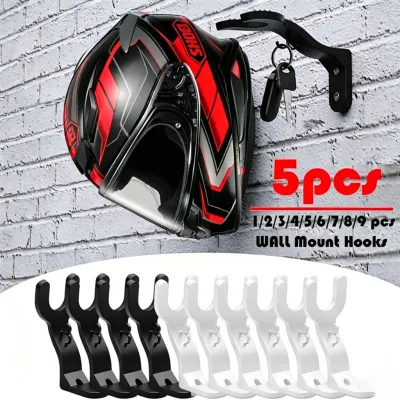
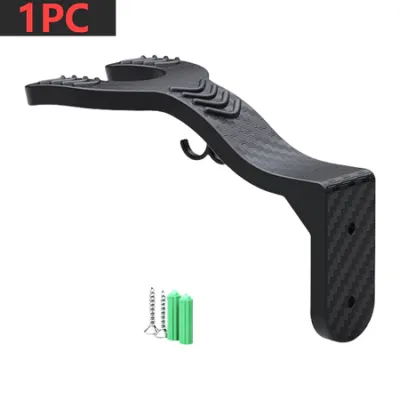
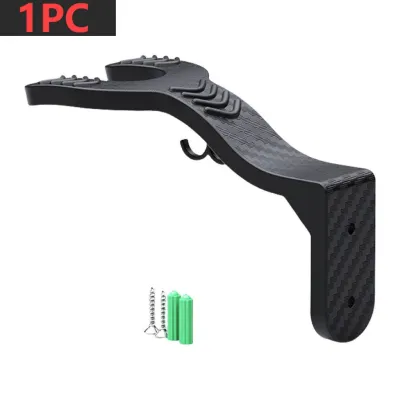
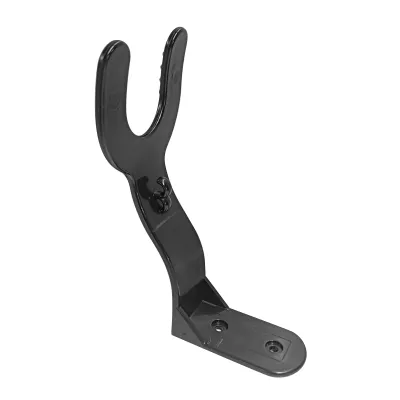
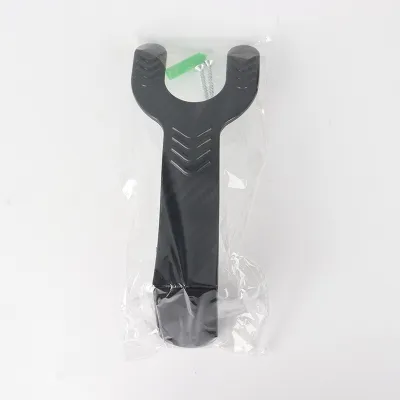
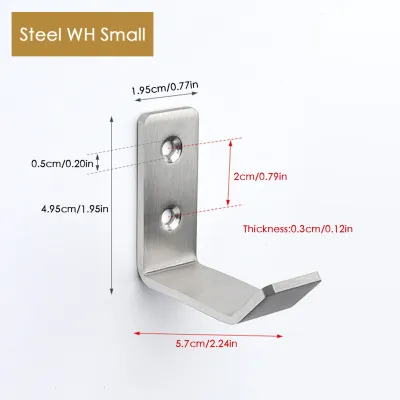
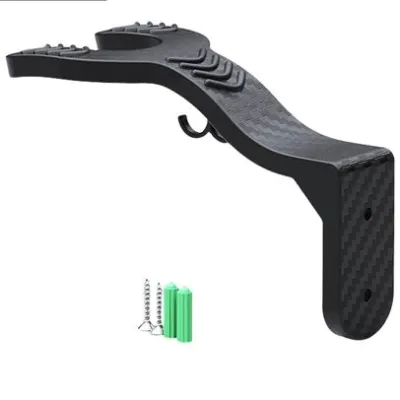
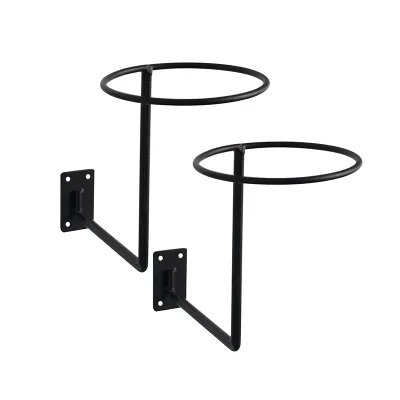
Prices are valid at publication and may change. Please refer to the product page for the latest price.
Helmet Hooks: Best for Tight Spaces and Quick Access
Space Efficiency and Capacity Scaling
Wall-mounted helmet hooks are the most minimalist storage option available. They are typically sold in configurations ranging from single units to 5-piece packs, allowing you to scale your storage as your gear collection grows. Because individual hooks have a very small footprint, you can mount them in tight spaces where larger furniture would not fit, such as behind doors, along narrow hallways, or in small garage corners. You can arrange multi-pack hooks in a staggered pattern on the wall to maximize vertical space, keeping multiple helmets accessible without taking up valuable horizontal wall width.

Helmet Protection and the EPS Liner
When using basic hooks, you must pay close attention to how the helmet rests on the hanger. The most critical component of your motorcycle helmet is the Expanded Polystyrene (EPS) foam liner, which is designed to crush upon impact to protect your head. Hanging a helmet directly on a thin, unpadded metal hook can concentrate the entire weight of the helmet onto a tiny surface area, causing localized compression of the EPS liner over time. To prevent this, look for hooks that feature wide, rubber-coated, or heavily padded contact points. These materials distribute the weight more evenly and prevent the hook from scratching or tearing the comfort liner.
Ideal Daily Use Cases
Helmet hooks are exceptionally well-suited for daily commuters who need to grab their gear quickly on the way out. Placing a hook near your main entryway allows you to hang your helmet immediately upon arriving home, keeping it off dining tables or floors. This setup is particularly convenient for riders living in compact studio apartments or condominiums where floor space is at a premium and entryways are narrow.
Key Limitations
The primary drawback of simple hooks is their lack of secondary storage. A basic hook holds your helmet but leaves no room for your riding gloves, intercom systems, keys, or riding jackets. Additionally, hanging a helmet by its chin strap or the bottom trim for extended periods can stretch the strap or damage the delicate rubber beadings around the base of the shell. Always check your helmet manufacturer’s instructions regarding storage guidelines, as some brands explicitly warn against hanging the helmet by its inner lining or strap.
Shelf Combos: Best for Gear Storage and Organization
Space and Utility Integration
Shelf combos serve as a comprehensive organization station for your riding gear. These units typically feature a flat top shelf with one or more helmet hangers mounted underneath, often accompanied by utility hooks for hanging heavy riding jackets or keys. This integrated design allows you to keep all your daily riding gear in a single, centralized location. Instead of searching through different rooms for your gloves, balaclava, intercom charger, and helmet cleaner, you can store them all together on a dedicated shelf.
Structural Stability and Mounting Requirements
Because shelf combos are designed to hold multiple items simultaneously, they are significantly heavier and bulkier than simple hooks. A single shelf combo holding a modular helmet, a heavy leather riding jacket, and various accessories can easily place a load of 5 to 10 kilograms on your wall. Consequently, these units require robust mounting hardware and must be installed onto strong structural surfaces. Mounting a heavy shelf combo on thin drywall without finding a stud, or using weak plaster anchors, carries a high risk of the shelf pulling away from the wall and damaging both your home and your expensive gear.
Ideal Entryway and Garage Setups
Shelf combos are perfect for spacious mudrooms, dedicated garage corners, or wide entryways. They work exceptionally well in homes with multiple riders, as a double or triple shelf unit can neatly organize everyone’s gear without cluttering the main living areas. Having a designated flat surface also makes it easier to charge helmet intercoms and action cameras right next to where the helmets are stored.
Spatial Demands and Visual Clutter
The main limitation of shelf combos is their physical size. They protrude significantly from the wall, making them unsuitable for narrow hallways or tight walk-spaces where you might accidentally bump into them. Furthermore, if you do not keep the shelf organized, it can quickly become a cluttered eyesore in your home. The open design also means that any dust or dirt on your gloves and keys will be visible, requiring regular cleaning to maintain a neat appearance.
Display Stands: Best for Showcasing Premium Helmets
Design and Helmet Preservation
Display stands are engineered specifically to preserve the structural integrity of high-end helmets while showcasing their design. Unlike narrow hooks, display stands typically feature a large, spherical wooden or metal dome, or a wide, contoured plate that closely matches the natural curvature of a human head. This design ensures that the weight of the helmet is distributed evenly across the soft comfort liner, completely eliminating the risk of compressing the safety-critical EPS foam. By supporting the helmet from the inside without putting pressure on the bottom trim or chin strap, display stands keep your helmet in its natural shape.
Aesthetic Appeal and Premium Materials
For riders who view their helmets as functional art, display stands offer a high level of visual refinement. These mounts often utilize premium materials such as matte black steel, solid oak, polished aluminum, or clear acrylic. They are designed to be minimalist, making the helmet appear as though it is floating on the wall. This makes them an excellent choice for living rooms, offices, or dedicated gear rooms where you want to highlight the graphic designs of your premium helmets.
Ideal for Collectors and Track Riders
Display stands are highly recommended for collectors, track-day enthusiasts, and riders who own expensive carbon-fiber or limited-edition helmets. If you own multiple high-value helmets that you do not wear every day, storing them on individual display stands keeps them safe from accidental scratches while turning your gear collection into a striking interior design feature.
Cost and Capacity Trade-Offs
The primary trade-off with display stands is their higher cost and limited utility. While a basic set of utility hooks is highly affordable, a single premium display stand can cost significantly more. Furthermore, these stands are strictly designed for helmet preservation and rarely include storage for other gear. They almost always accommodate only one helmet per mount, meaning you will need to purchase and install multiple individual stands if you have a larger collection.
Feature Comparison and Decision Framework
To help you finalize your choice, the table below compares the three main wall-mounted helmet storage formats across key practical dimensions.
| Feature | Helmet Hooks | Shelf Combos | Display Stands |
|---|---|---|---|
| Space Required | Minimal; highly compact | Moderate to high; protrudes from wall | Moderate; depends on dome size |
| Helmet Capacity | 1 to 5+ (highly scalable) | 1 to 3 helmets per unit | Typically 1 helmet per stand |
| Gear Storage | None (helmet only) | High (shelves, hooks, key holders) | None to minimal |
| Liner Protection | Low to moderate (requires padding) | Low to moderate (uses hook mounts) | Excellent (uses spherical/dome support) |
| Aesthetic Value | Basic; utilitarian | Functional; can look cluttered | High; gallery-style presentation |
| Typical Price Band | Budget-friendly (₱150 – ₱500) | Mid-range (₱600 – ₱1,500) | Premium (₱1,200 – ₱3,500+) |
Actionable Decision Rules
- Choose Hooks if: You have limited wall space, need to store multiple helmets on a budget, and prioritize quick, no-fuss access for your daily commute.
- Choose Shelf Combos if: You have a wider wall area near your main entrance or garage, and you want a single, organized "drop zone" to keep your helmet, riding jacket, gloves, and keys together.
- Choose Display Stands if: You own premium, expensive, or collectible helmets, want to prevent any long-term compression of the EPS safety liner, and want to display your gear as room decor.
Key Verification Checks Before Purchase
Before purchasing any wall-mounted rack, perform the following verification steps:
- Renter Restrictions: If you are renting your home, check your lease agreement regarding drilling holes into walls. Hooks and light stands may only require small screws, while heavy shelf combos require deep drilling that might require professional repair when you move out.
- Wall Material Check: Identify your wall type. Mounting hardware that works perfectly on drywall will fail on concrete, and vice versa. Ensure you purchase the correct wall plugs or anchors for your specific wall material.
- Helmet Compatibility: If your helmet has a unique shape, such as an adventure helmet with a prominent peak or an off-road helmet with an extended chin bar, verify that the rack's dimensions provide enough clearance from the wall so the helmet can hang straight without the visor or peak pressing against the paint.
Installation Safety and Wall Weight Limits
Wall Types and Anchoring Systems
In the Philippines, residential walls are most commonly constructed from concrete hollow blocks (CHB), solid concrete, or, in newer high-rise condominiums, drywall and fiber cement boards. Understanding your wall type is critical for a safe installation.
For concrete or hollow block walls, you must use a masonry drill bit and plastic wall plugs (commonly referred to as “tox” screws) or expansion bolts for heavier shelf units. For drywall or fiber cement boards, you must locate the wooden or metal studs behind the wall using a stud finder and screw directly into them. If you must mount a rack on drywall between studs, you must use heavy-duty toggle bolts; standard plastic expansion anchors are highly prone to pulling out under the dynamic load of placing and removing a helmet daily.
Weight Capacity Verification
Always check the manufacturer’s stated weight capacity for both the storage rack and the mounting hardware. A typical full-face motorcycle helmet weighs between 1.3 and 1.8 kilograms. However, when you place the helmet on the rack, you exert additional downward dynamic force. If you are installing a multi-helmet rack (holding 3 to 5 helmets) or a shelf combo loaded with a heavy riding jacket, the total weight can easily exceed 8 kilograms. Ensure your wall anchors are rated for at least double the static weight of your gear to provide a safe margin of error.
Safe Helmet Handling and Placement
When placing your helmet on the rack, do so gently to avoid putting unnecessary stress on the rack’s mounting points or the helmet itself. Avoid shoving the helmet onto the mount, as this can scratch the internal fabric liner or damage delicate aerodynamic spoilers on the back of racing helmets. If your helmet has a sensitive visor mechanism, ensure the mount does not press against the visor shield or force it into an unnatural position.
Environmental Maintenance and Humidity
Because of the high relative humidity in tropical climates like the Philippines, metallic wall mounts are highly susceptible to rust and corrosion over time. This is especially true in coastal areas where salt air accelerates metal degradation.
To ensure long-term safety, periodically inspect your mounting hardware for any signs of loosening, rust, or wall cracking. If you notice any play in the screws, tighten them immediately or reinstall the rack using fresh anchors. Additionally, storing a sweat-soaked helmet directly on a wall mount can trap moisture inside the liner, leading to mold growth and unpleasant odors. Always allow your helmet to air-dry completely in a well-ventilated area before placing it back on its wall-mounted rack.
Community discussion
Share your experience or ask a question. Comments are reviewed before publication.